
You’re looking at a car you’d normally buy. Clean enough, priced sensibly, seller sounds plausible. Then the line comes out: “The log book’s been lost,” or “It’s in the post.” In the retail market that often gets treated as an inconvenience. In the trade, it should change the appraisal immediately.
A lost log book v5 issue isn’t just about replacing paperwork. It’s about deciding whether the absence is innocent, sloppy, or useful to the person selling the vehicle. That distinction matters because once you buy it, you inherit the delay, the uncertainty, and in some cases the argument.
A Missing V5C Is More Than Just Missing Paperwork
The familiar version goes like this. A seller turns up with a vehicle that fits your stock profile. The car starts, drives, and presents well enough. The seller says the V5C was misplaced during a house move, or never arrived after a keeper change, or got damaged and thrown away.
Sometimes that’s true. Lost documents do happen.
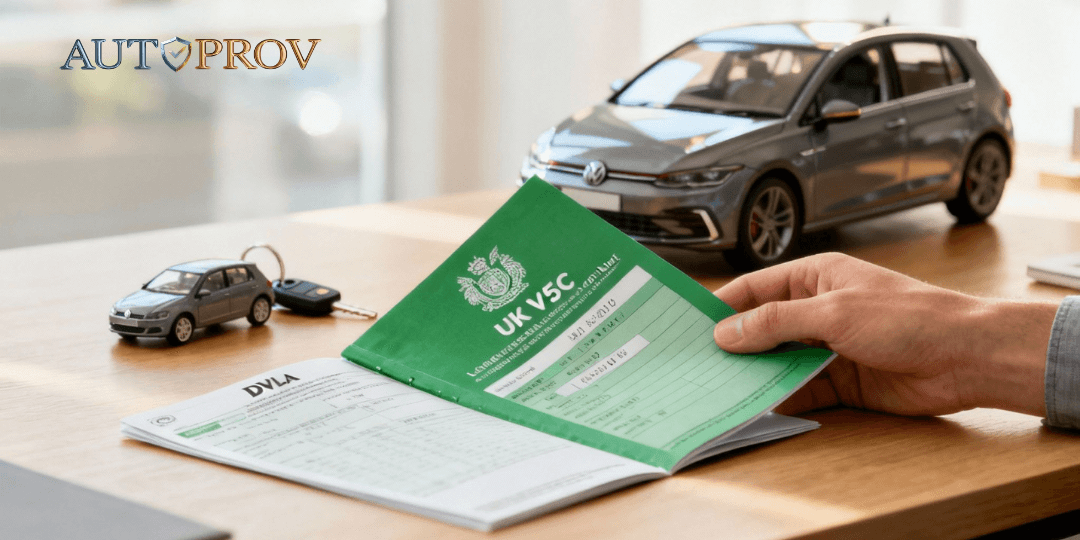
But in trade buying, the right question isn’t whether the explanation sounds possible. It’s whether the missing document removes an important layer of friction that would otherwise expose a problem. A V5C holds core registration information, including the registered keeper, first registration date, previous keeper count, vehicle details, VIN, and tax class. When that document is absent, you lose a quick way to compare the story you’re being told against the record you expect to see.

That’s where good deals become expensive mistakes. Missing paperwork can sit alongside keeper disputes, undeclared changes in the vehicle’s timeline, mileage concerns, or a seller who doesn’t want close scrutiny. You’re no longer just valuing a car. You’re valuing uncertainty.
Practical rule: Treat a missing V5C as a risk signal first and an admin problem second.
There’s a commercial reason to be strict about it. Recent UK motor trade data reported by the Used Car Association found a 28% rise in provenance disputes linked to incomplete paperwork, with 15% involving missing V5Cs, costing dealers an average of £4,200 per incident in returns and legal fees. You don’t need many of those to wipe out the margin on a batch of otherwise decent stock.
What the seller’s explanation does and doesn’t tell you
A believable explanation only tells you why the paper might be missing. It doesn’t tell you whether the vehicle history is clean.
A trader should separate those two issues:
- Administrative loss: The document may be lost, damaged, or delayed.
- Identity mismatch: The person presenting the car may not align neatly with the recorded keeper position.
- History concealment: The missing V5C may reduce the chances of immediate questions about prior keepers, timeline gaps, or inconsistent details.
- Process risk: Even if the car is legitimate, your resale, taxation, insuring, or disposal timetable may slow down.
The shift in mindset that protects margin
Retail buyers often ask, “How do I get a replacement?”
Trade buyers need to ask, “What am I buying into while I wait?”
That changes the workflow. Instead of accepting the absence and moving straight to price, you hold the appraisal open until the background makes sense. If it doesn’t, no amount of seller confidence fixes that.
A missing V5C doesn’t automatically make the vehicle wrong. It does mean the burden of proof moves upward. The cleaner the seller, the clearer the supporting records, and the more coherent the provenance, the easier it is to proceed. If those things don’t line up, the missing document stops being a paperwork issue and becomes a stock risk.
Securing a Replacement V5C The Official DVLA Routes
If the vehicle is otherwise viable, you still need to understand the official replacement routes properly. Dealers often hear mixed versions of the process from sellers, transport staff, and part-exchange customers. The facts matter because timing affects stock turn.
The DVLA launched its online duplicate V5C service in 2016. That moved replacement times from up to 6 weeks by post to 5 working days online, while keeping the replacement fee at £25 across online, phone, and post applications, according to the DVLA announcement on the online duplicate log book service.

Online is the route that usually makes sense
For eligible registered keepers, the DVLA online portal is the fastest route. The applicant needs the registration number, the VIN or chassis number, and the keeper’s name and postcode as they appear on DVLA records.
Trade relevance is simple. If the seller says they can “sort the log book quickly”, this is the process they should be using where eligible. If they can’t complete it because details don’t match, that itself is useful information.
Confused.com’s guide to replacing a lost V5C states that the DVLA online portal is the fastest route, with a >98% success rate and 5-working-day delivery, compared with postal V62 applications taking 2 to 6 weeks and showing a 15 to 20% failure rate due to data mismatches. For a dealer, that gap isn’t trivial. It affects prep planning, sale timing, and how long capital sits unproductive.
If you need a refresher on what sits on the certificate itself, AutoProv’s guide to the vehicle registration certificate is a useful reference.
The three official routes at a glance
Method Who it suits Key requirement Fee Typical timing Online Eligible registered keeper Matching DVLA keeper details plus VRM and VIN £25 5 working days Phone Some keeper situations Same core identity and vehicle details £25 Qualitatively slower than online Post using V62 Cases that can’t be resolved digitally Completed V62 and supporting details £25 4 to 6 weeks or longer if there’s an issue What usually goes wrong
The process is straightforward on paper. The failures are usually in the data.
Common friction points include:
- Keeper details don’t match
- The seller may use an old address, a shortened name, or details that no longer align with DVLA records.
- VIN errors
- One wrong digit in the chassis number is enough to create delay or rejection.
- The person applying isn’t the right party
- Traders often hear, “I’ll just get my partner to sort it.” If the registered keeper position is more complicated than presented, the application won’t cleanly resolve the underlying issue.
- The vehicle changed hands before the paperwork was settled In this situation, an admin issue starts to overlap with a provenance issue.
If the seller can’t successfully complete the correct DVLA route, don’t reduce that to bad luck. Treat it as information about the transaction.
What works in practice
When I’ve seen these handled well in trade, the strongest approach is simple. Ask the seller to complete the replacement process before funds move, or price the vehicle on the basis that you’re taking on the delay and uncertainty.
A professional seller with nothing to hide usually understands that. Resistance doesn’t prove wrongdoing, but it often tells you the vehicle won’t be a quick, clean acquisition.
A basic dealer checklist before you rely on the DVLA process
- Confirm seller position: Are they the registered keeper, or are they explaining around that point?
- Check identity against the story: Name, address history, and vehicle possession should make sense together.
- Get the core identifiers early: Registration number and VIN should be checked before any deposit or collection decision.
- Decide who carries the delay: Either the seller resolves the replacement, or you reflect the risk in your bid.
The official routes are useful. They are not a substitute for due diligence. A replacement V5C only tells you a document has been reissued. It doesn’t answer the deeper trade question of whether the vehicle’s background supports the buy.
Trade Due Diligence for Vehicles Without a V5C
Once the V5C is absent, the appraisal has to become more forensic. Many dealers, at this point, lose discipline. They do a basic vehicle history check UK search, see nothing immediately catastrophic, and carry on. That’s not enough.
A missing log book strips away one of the easiest cross-checks at point of purchase. What replaces it should be a layered process that tests the vehicle’s identity, the ownership story, and the commercial practicality of stocking it.

Start with identity, not optimism
Before pricing the car, confirm that the physical vehicle and the paper trail point to the same thing.
Check these first:
- Registration and VIN alignment: The plate, VIN plate, stamped VIN, and the records you’re checking should all agree.
- Vehicle specification consistency: Make, model, fuel type, engine details, and colour should make sense together.
- Seller possession: The person presenting the vehicle should have a coherent explanation for how they came to have it and why the V5C is missing.
This isn’t glamorous work, but it catches basic mistakes early. If you can’t settle identity, there’s no point debating margin.
Basic checks tell you facts. Provenance tells you context
A standard used car history report is still necessary. It gives you the factual base. But a dealer vehicle checks workflow needs more than isolated line items.
You’re trying to answer questions such as:
- Has the vehicle moved through hands unusually quickly?
- Does the keeper timeline feel normal for this type of stock?
- Are there mileage movements or testing patterns that don’t sit comfortably with the seller’s version?
- Does the vehicle show signs of being moved on before normal issues became obvious?
That’s where vehicle provenance work matters. A bare pass or fail mindset misses a lot. In the trade, the risk often sits in the pattern rather than a single dramatic flag.
For a broader look at extracting the right identifiers before purchase, AutoProv’s article on a vehicle details check is a practical reference.
The strongest buyers don’t just ask whether a check passed. They ask whether the timeline makes sense for the car in front of them.
A working due diligence sequence
A useful appraisal flow for a lost log book v5 case looks like this:
Stage What you’re checking Why it matters 1 Vehicle identity Prevents basic mismatch and clone exposure 2 Seller position Tests whether the transaction itself is coherent 3 MOT and mileage history Highlights inconsistencies in usage and timeline 4 Keeper and provenance pattern Surfaces rapid changes, gaps, or unusual sequence issues 5 Disposal and resale practicality Tells you whether the stock will move cleanly once bought What to ask the seller at appraisal
The quality of the answers matters as much as the answers themselves.
Use direct questions:
- When did you last have the V5C?
- A clear answer is more useful than a vague “some time ago”.
- Have your address or keeper details changed?
- This helps explain genuine DVLA mismatch issues.
- How long have you had the vehicle?
- Listen for whether that aligns with the broader history.
- Why wasn’t a replacement requested earlier?
- Delay isn’t proof of risk, but it often exposes whether the explanation is routine or improvised.
- Who insured, taxed, and used the vehicle recently?
- These points often reveal whether the person in front of you is central to the vehicle’s recent life or only loosely connected to it.
What works and what doesn’t
What works is building a view from several small points that support each other. The registration details fit. The VIN checks out. The MOT history feels believable. The seller’s explanation lines up with the record. The likely replacement route is straightforward. In that situation, the missing V5C may remain a nuisance but not a deal-breaker.
What doesn’t work is substituting confidence for evidence. Traders still get caught by polished private sellers, rushed part exchanges, and wholesale opportunities that feel cheap for a reason. A missing V5C often encourages speed because everyone wants to move past the admin issue. That’s exactly when buying discipline matters most.
The practical threshold
You don’t need every no-V5C car to be perfect. You do need the unresolved risk to be proportionate to the margin available.
A dealer who buys this type of stock well usually has a threshold in mind:
- If the story is coherent and the background supports it, proceed carefully.
- If the story is thin but the risk is manageable, negotiate harder.
- If the identity, timeline, and seller position don’t stack up, stop the deal.
That’s motor trade risk management in its most basic form. Not paranoia. Just refusing to let a missing document turn a routine buy into a costly argument six weeks later.
Decoding Risk Signals Uncovering Fraud Without a Log Book
The missing V5C matters because of what it can hide. Not always. But often enough that you should read it as a signal, not a standalone event.
Fraud in used stock rarely arrives with one obvious label on it. It shows up as small points that don’t quite settle. The seller can’t fully explain the keeper position. The vehicle has changed hands quickly. The identity markers need a second look. The mileage story sounds neat, but the pattern behind it is less tidy.
The risk types that deserve closer attention
A no-log-book transaction can overlap with several different problems.
Vehicle identity issues sit at the top of the list. If the V5C isn’t there, one quick means of checking the presented identity against expected registration details has gone. That doesn’t create cloning by itself, but it lowers the friction around it.
Keeper disputes are another common concern. The DVLA position is that the V5C shows the registered keeper, not legal ownership. In practice, though, unresolved keeper questions still create trade headaches. If the person selling can’t explain the vehicle’s recent administrative trail, you may end up holding stock that becomes harder to retail with confidence.
Mileage and usage anomalies also become harder to interpret without a coherent document trail. A mileage check UK process isn’t just about headline odometer readings. It’s about whether the vehicle’s use, servicing, testing pattern, and ownership sequence make sense together.
Rapid resale is rarely just a pricing story
One of the more revealing patterns is quick movement through hands. The missing V5C can sit alongside a vehicle that has been passed on before anyone had to answer awkward questions properly.
That matters because fast resale can mask several commercial problems:
- A known fault that the current seller doesn’t want to absorb
- A provenance concern that becomes obvious only when records are compared closely
- An administrative problem that keeps getting pushed to the next buyer
- A pricing tactic where the apparent bargain depends on you accepting uncertainty
A V5C gap doesn’t tell you what the problem is. It tells you where to look harder.
Look for combinations, not single alerts
Good dealers don’t overreact to one issue in isolation. They react to combinations.
A workable way to think about it is this:
Signal On its own In combination Missing V5C Could be administrative More serious if seller story is weak Unclear keeper explanation Could be untidy paperwork Elevated concern with rapid resale pattern Mileage discomfort Could be innocent inconsistency More serious with timeline gaps Identity detail mismatch Could be data entry error Higher concern if multiple identifiers conflict This is why basic checks can be insufficient. A standard report might show separate facts, but dealers need them interpreted as a connected history. If the data points don’t sit comfortably together, the right answer may be to pause rather than force the buy.
For deeper identity verification on the vehicle itself, including a key identifier many buyers overlook, AutoProv’s guide to an engine number check is worth keeping in your appraisal process.
What matters to your bottom line
Every fraud or dispute issue eventually becomes operational. It slows prep, delays sale readiness, creates customer challenge, or leaves you defending a deal you should have declined.
That’s why experienced buyers treat a missing V5C less like a form-filling matter and more like a diagnostic trigger. You’re not just replacing a certificate. You’re testing whether the car’s background can survive scrutiny once the easy reassurance of a paper document has gone.
Strategic Options Buy Sell Scrap or Walk Away
Once you’ve done the checks, the next decision is commercial. There isn’t one correct response to every no-V5C vehicle. The right route depends on the risk profile, the stock type, and how much margin exists after delay and uncertainty are priced in.

Option one is buy and manage the process
This suits cars where the identity is clear, the provenance is coherent, and the seller’s explanation is credible enough that the missing V5C looks administrative rather than strategic.
The advantage is obvious. You secure stock that others may avoid.
The drawback is equally obvious. You carry the delay, the admin burden, and the possibility that a straightforward replacement turns out not to be straightforward after all.
Option two is negotiate on risk, not just on inconvenience
This is often the most practical trade response. You don’t reject the car automatically, but you bid as though the missing paperwork has real cost.
That cost may include:
- Time off market: The stock may not move through prep and sale at your normal pace.
- Additional checking: You may need more verification before you’re comfortable retailing it.
- Buyer resistance later: Some retail customers become cautious when paperwork has been missing, even if the issue is later resolved.
- Exit flexibility: If the car doesn’t fit your forecourt later, disposal options may become less clean.
A disciplined bid reflects all of that.
Option three is walk away
Sometimes this is the best buying decision of the day.
If the seller position is vague, the background is awkward, and the margin only works if everything goes right, there’s no need to rescue the deal. Dealers get into trouble when they treat every incomplete transaction as a puzzle they can solve. Some vehicles aren’t under-documented. They’re under-explained.
If the risk can’t be described clearly, it can’t be priced accurately.
Scrapping and disposal need their own caution
No-V5C issues become particularly awkward when the vehicle is only worth exit money. Traders sometimes assume that because the unit is heading to scrap or low-value disposal, the paperwork matters less. That’s not how compliance works.
Data cited by the Scrap Metal Dealers Association for 2025 states that 19% of UK scrapping incidents involved missing V5Cs, leading to delayed payments averaging 14 days and 8% compliance fines for incomplete ATF records. For a wholesaler or dealer group moving tired stock, that’s a practical risk, not a technicality.
A simple decision framework
Situation Best-fit response Clear vehicle identity, coherent history, manageable delay Buy carefully Good car, but admin risk and weak convenience Negotiate harder Inconsistent story or unresolved provenance discomfort Walk away End-of-life stock with incomplete trail Check disposal route before committing If you’re assessing whether a low-value vehicle may already be in write-off territory, AutoProv’s explainer on write-off meaning for a car is a useful companion piece.
The core point is straightforward. A missing V5C doesn’t force one action. It forces a decision that reflects reality. Good traders make that decision early, not after the vehicle is already on site and tying up time, space, and cash.
Common Questions on Lost V5Cs in the Trade
Trade desks run into the same awkward scenarios repeatedly. The problem isn’t usually the form itself. It’s the grey area around who should act, what the absence really means, and whether the deal still makes sense.
Can a trader tax a vehicle without the V5C
Sometimes, but it depends on what documents are available and where the vehicle sits in the keeper process.
If the relevant reference details are available from the right DVLA paperwork, taxation can still be possible. If they aren’t, the missing V5C becomes more than an inconvenience because the vehicle can’t move through your normal workflow cleanly. For a dealer, that’s the bigger issue. Don’t assume “we’ll sort the tax later” if the paperwork position is already unclear.
Does the V5C prove ownership
No. The practical distinction is important.
The V5C identifies the registered keeper, not legal ownership. In trade terms, that means a clean-looking keeper record doesn’t by itself settle every title or dispute question. But the reverse is also true. When the V5C is missing, you lose a useful reference point for checking whether the vehicle’s administrative story matches the person presenting it.
What should I do if the seller’s ID doesn’t match the registered keeper story
Slow the deal down.
There may be an innocent explanation. Family use, bereavement cases, company cars, and recently moved households can all create complexity. But unless the explanation is coherent and supportable, you shouldn’t treat it as routine.
A good working approach is:
- Ask for the relationship to the vehicle clearly: Why is this person selling it?
- Check whether the explanation is stable: If the story changes when you press for dates or names, that matters.
- Escalate your provenance checks: The weaker the seller alignment, the stronger your independent verification needs to be.
- Be ready to decline: Some transactions create more exposure than they’re worth.
Is a missing V5C always a deal-breaker
No. Plenty of genuine vehicles are sold with missing paperwork.
What matters is whether the rest of the evidence is strong enough to support the purchase. Dealers get caught when they turn “not always a deal-breaker” into “probably fine”. Those aren’t the same thing.
Should I ask the seller to replace the V5C before I buy
In many cases, yes.
That keeps the burden where it belongs and tests whether the seller can complete the process against the DVLA record. If they can, your position improves. If they can’t, you’ve learned something important before money changes hands.
The request itself is useful. A straightforward seller usually sees it as reasonable. A difficult reaction often tells you the deal won’t become cleaner later.
What if the car is cheap enough to justify the hassle
That depends on what you mean by cheap.
If “cheap” only covers the visible admin delay, you may still be underpricing the risk. A proper decision should reflect the chance of slower resale, more checking, customer questions later, and the possibility that the missing V5C sits beside another unresolved issue.
Are the rules different for vehicles from Northern Ireland
They can be, because Northern Ireland registration administration has involved different processes through the DVA. In practice, if you’re handling a vehicle with any cross-jurisdiction paperwork complexity, treat it as a separate appraisal issue rather than assuming the standard mainland process applies neatly.
The mistake here is overconfidence. If the vehicle already lacks its key registration document, don’t layer assumptions on top.
What should be in my file if I do buy a no-V5C vehicle
A dealer file should let someone else understand why you proceeded.
That usually means keeping:
- Seller identification and explanation
- Vehicle identity checks
- History and provenance notes
- Any written record around the replacement process
- A pricing note showing the risk was considered
If your buyer, prep manager, or compliance lead looked at the file later, they should be able to see that the decision wasn’t casual.
For a practical backgrounder on the document itself and how it fits into the wider trade process, AutoProv’s guide to the car logbook in the UK is worth bookmarking.
A missing V5C only becomes dangerous when it’s treated casually. The stronger approach is simple. Verify the identity, test the seller’s story, read the vehicle’s provenance in context, and let the margin justify the risk, not the other way round.
AutoProv helps UK dealers, traders, and wholesalers make better buying calls when the paperwork doesn’t tell the full story. If you need deeper vehicle provenance, ownership pattern analysis, mileage context, and trade-focused risk signals beyond a basic vehicle history check UK search, AutoProv provides the kind of decision support that’s built for point-of-purchase appraisal.
Frequently Asked Questions
AI-Generated Content Notice
This article was created with the assistance of artificial intelligence technology. While we strive for accuracy, the information provided should be considered for general informational purposes only and should not be relied upon as professional automotive, legal, or financial advice. We recommend verifying any information with qualified professionals or official sources before making important decisions. AutoProv accepts no liability for any consequences resulting from the use of this information.
From our AI insights
- Navigating Hidden Finance Claims: CRA 2015 Insights
Discover how hidden finance claims affect UK car dealers under CRA 2015 and strategies to manage them.
- Navigating CCR 2013: Niche Insights for UK Motor Traders
Explore niche insights on CCR 2013 for UK motor traders, focusing on compliance and cancellation rights.
- Decoding CRA 2015: Dealer's Guide to 30-Day Rejections
Explore CRA 2015's 30-day rejection rights from a dealer's perspective, highlighting key compliance strategies.
Related Articles

Understanding the Consumer Rights Act 2015 in the UK Motor Trade
Explore the Consumer Rights Act 2015 and its impact on UK car buyers and sellers, offering essential protections and insights.

Understanding UK Automotive Regulations
Explore the complexities of automotive regulations in the UK, covering DVLA, FCA, MOT, and more.
What is a V5C Document: A Quick UK Log Book Guide
If you've ever bought or sold a car in the UK, you've definitely come across the V5C. It's often just called the 'log book', and it’s the official Vehicle Registration Certificate issued by the DVLA.
Published by AutoProv
Your trusted source for vehicle intelligence