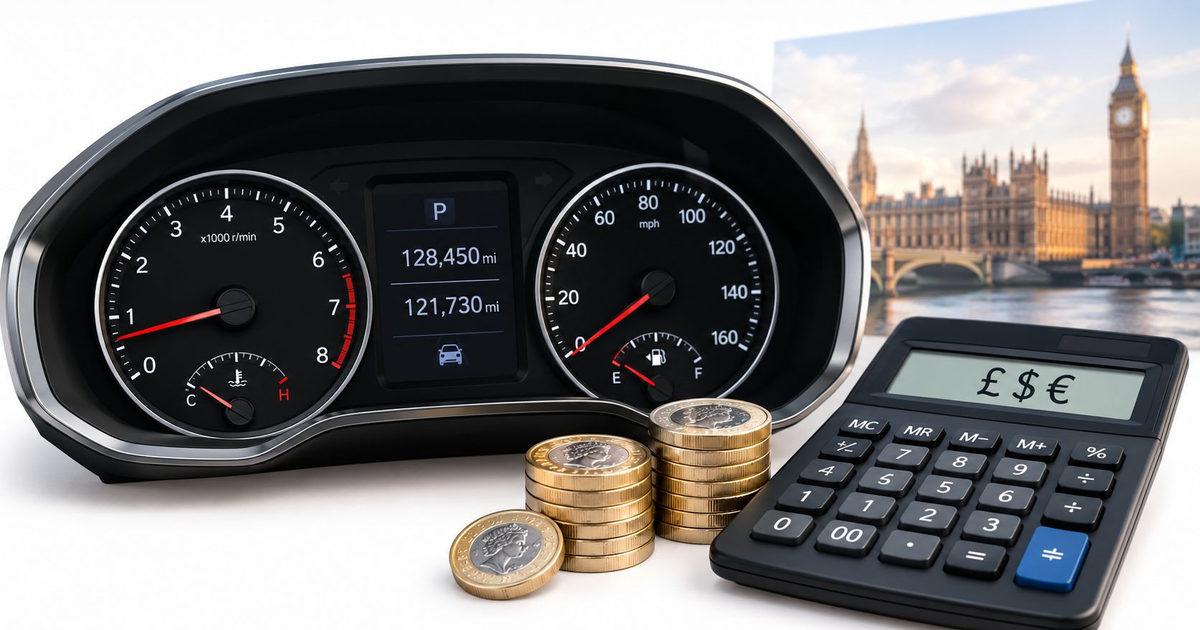
Professional mileage adjustment typically ranges from £100 to £300 in the UK, but the key issue for dealers is not the workshop bill, it's the evidence trail before any vehicle with altered history changes hands. If the mileage entry is wrong, DVSA guidance expects the record to be corrected with proof tied to the vehicle and documentary support, so the commercial cost is often bigger than the invoice.
For UK professionals, mileage correction usually costs £50–£150 for basic programming, £100–£300 for typical professional work, and £300–£800 when dashboard or instrument-cluster replacement and recoding are required. The bill rises sharply when the fault involves hardware, because the technician must repair or replace the cluster and synchronise the recorded mileage with the vehicle's stored data.
But is the key question what the correction costs, or what evidence you'll need to prove it was legitimate when the vehicle is valued, sold or challenged later?
Seasoned buyers know the displayed figure is only one part of mileage integrity. A dashboard reading can look plausible while the MOT timeline, service history, ownership pattern and vehicle condition tell a different story. The right approach is to treat mileage correction as a documented repair and provenance issue, not as a cheap software job.
Table of Contents
- How Much Does Mileage Correction Cost for UK Dealers
- What Mileage Correction Actually Means in the Motor Trade
- UK Legal Position on Changing Recorded Mileage
- How Mileage Correction Cost Breaks Down by Job Type
- Evidence Dealers Need to Protect Corrected Mileage Records
- Why Dealer Vehicle Checks Should Cover Mileage Risk
How Much Does Mileage Correction Cost for UK Dealers
How much should a dealer budget for mileage correction, and what proof should sit behind the job?
The short answer is that a legitimate mileage correction cost is usually a low-to-mid three-figure trade expense. Basic programming sits at the lower end, routine professional work sits higher, and cluster replacement plus recoding pushes the cost up. For a broader trade view of how those jobs are priced, see UK mileage correction cost guidance.
That price range is only part of the decision. The issue is whether the repair leaves a clean audit trail. A cheap quote can be a warning sign if the provider is only changing the display and not proving the true mileage.
Separate the repair from the risk
Dealers should ask three direct questions before approving the work.
- What caused the discrepancy? Was the dashboard faulty, replaced, damaged, or programmed incorrectly?
- What proves the correct reading? Can the technician reconcile service invoices, MOT records, and stored vehicle data?
- What paperwork will be supplied? Will the invoice identify the vehicle, the reason for correction, the mileage before and after the work, and the technician's details?
The price should reflect the work needed to answer those questions properly. Reprogramming a serviceable component is not the same job as sourcing a replacement cluster, transferring vehicle data, and documenting the result. If you want a fuller view of how vehicle checks feed into that decision, review the true cost of vehicle check services for UK dealers.
Practical rule: Do not approve mileage work on a verbal explanation alone. Ask for the fault diagnosis and the evidence trail before the vehicle goes into retail preparation.
Price the stock before authorising work
A correction makes sense when the vehicle has solid provenance and the repair restores an accurate reading. It is poor value when the car also has unexplained ownership changes, missing service records, or conflicting history.
Dealers should treat the correction fee as part of the wider cost of checks, inspection, preparation, valuation risk, and possible resale questions. That wider buying decision matters as much as the workshop invoice.
The bottom line is simple. Treat a low mileage correction cost as only one input, not the deciding factor. Approve the job only when the mileage, the paperwork, and the vehicle history all line up.
What Mileage Correction Actually Means in the Motor Trade
Mileage correction means setting the recorded mileage to the vehicle's true distance travelled. It isn't a licence to reduce the displayed figure, improve a valuation or make a high-use vehicle appear fresher. In a legitimate trade workflow, the correction follows a fault, component replacement or proven recording error.
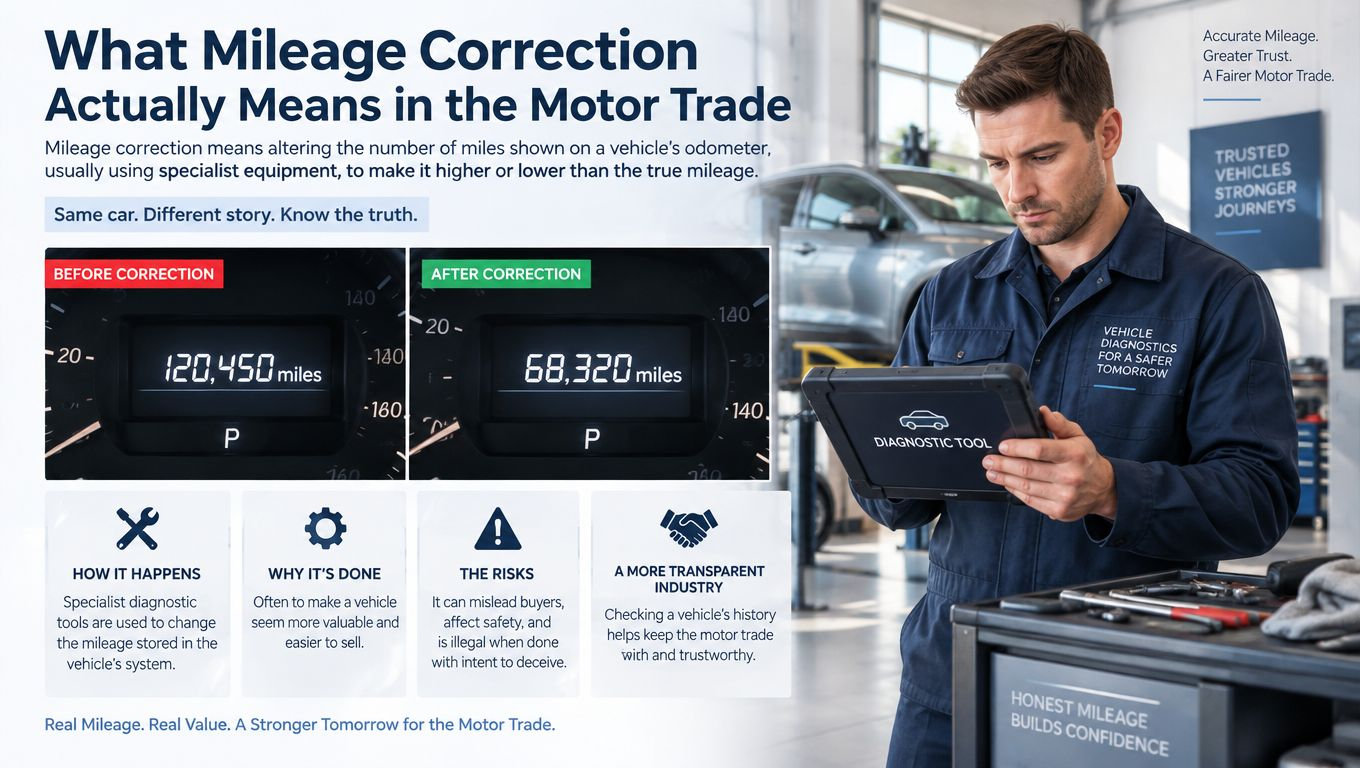
The phrase causes confusion because the same language is associated with clocking. That makes dealers understandably cautious, but caution should lead to better verification rather than an assumption that every corrected dashboard is fraudulent. A replaced cluster can create a genuine mismatch between the display and the vehicle's history, while a workshop entry error can place an incorrect reading into an otherwise sound record.
Establish the correct reading first
The technician shouldn't begin by asking what number the dealer wants displayed. The first question is what mileage the vehicle has covered and which records support it.
That assessment may involve:
- MOT history, particularly where the vehicle has an established test record.
- Service invoices, which can show dated readings and work carried out.
- Diagnostic data, where the vehicle stores mileage information in more than one control unit.
- Cluster documentation, including the reason an original dashboard was removed or replaced.
- Physical condition, such as wear on the steering wheel, pedals, seats and switches, used only as context rather than proof.
A correct reading is a conclusion supported by evidence. It isn't a figure selected to make the vehicle easier to sell.
Why the distinction matters at purchase
Suppose a wholesaler presents a car with a newly fitted instrument cluster and no paperwork. The displayed mileage may be accurate, but the dealer can't demonstrate that it is. That uncertainty affects valuation, retail disclosure and the ability to answer a buyer's questions later.
A proper mileage correction tool for UK trade workflows should therefore be considered part of a controlled repair process, not a shortcut around vehicle history. The tool can perform a technical adjustment, but it can't replace the dealer's duty to establish provenance and retain evidence.
A corrected display is only credible when the records behind it tell the same story.
Dealers should record the mileage before the work, the reason for the work, the evidence reviewed and the final reading. If those details don't exist, the correction may solve a dashboard problem while creating a future compliance problem.
UK Legal Position on Changing Recorded Mileage
The legal boundary is practical. Mileage should only be altered when it is being set to the correct reading. Changing it to conceal use, influence a price or mislead another trader or buyer is not a legitimate correction process.
That distinction matters even when a dealer hasn't carried out the original alteration. A business that buys, values or resells a vehicle with an unexplained mileage change still needs to understand the risk and decide whether the available evidence supports the displayed reading.
MOT entries need a defined process
DVSA says an incorrect mileage entry on an MOT record can be corrected by the MOT centre within 28 days. After that period, the issue must be reported to DVSA and supported by evidence such as an invoice, emissions printout, service receipt or job card, as set out in the DVSA process for correcting MOT certificate mistakes.
That means a dealer shouldn't treat an MOT discrepancy as a minor database nuisance. The timing, responsibility and evidence all matter. If the error is identified promptly, the testing centre may be able to correct it through the defined route. If it is discovered later, the dealer needs a documented explanation and supporting records.
A trade file should make it easy for another person to answer:
- What was wrong? Identify the incorrect entry or component issue.
- Who corrected it? Record the MOT centre, workshop or specialist involved.
- When did it happen? Keep the invoice and relevant dates together.
- Why is the new reading credible? Link the final figure to service, MOT or diagnostic evidence.
The commercial effect of weak records
DVSA notes that an incorrect mileage can reduce vehicle value by up to 8%, illustrated as about £800 on a £10,000 car, in its guidance on correcting MOT records. That is a valuation consequence of poor data, not a fee for correcting the vehicle.
The point for dealers is broader than the arithmetic. An unsupported reading can lead to a lower offer from a buying group, a retail negotiation, a complaint about disclosure or a dispute over what the dealer knew. It can also undermine confidence in other parts of the vehicle history.
Dealers should also understand their wider responsibilities when buying and selling used vehicles. A practical overview of the Consumer Rights Act 2015 and second-hand cars can sit alongside, but not replace, a vehicle-specific evidence process.
Compliance position: If you can't explain why the mileage changed and show how the final reading was verified, treat the vehicle as unresolved stock.
The safe approach is to pause the transaction, obtain the records and document the decision. Don't describe an unsupported change as a routine correction just because a dashboard now displays a plausible number.
How Mileage Correction Cost Breaks Down by Job Type
What are you paying for in a mileage correction job? The answer is the amount of diagnosis, coding and evidence work the vehicle needs. Basic programming sits at the low end because the hardware still works and the reading issue is straightforward. Typical professional work takes more time because the technician has to confirm the right figure and verify it against the vehicle's stored data. Cluster replacement costs more because parts, coding and synchronisation all come into play.
| Job Type | Typical Cost Range | Main Cost Driver |
|---|---|---|
| Basic programming | £50–£150 | Programming a serviceable component |
| Typical professional correction | £100–£300 | Diagnosis, adjustment and verification |
| Dashboard or instrument-cluster replacement and recoding | £300–£800 | Replacement hardware, coding and synchronisation |
These market ranges come from professional mileage adjustment cost guidance. Use them as a buying check, not as a substitute for inspecting the vehicle and the paperwork.
Basic programming
The lower band applies where the underlying component is serviceable and the correct mileage is already backed by records. Even then, the job should leave a clear invoice and a reason for the adjustment.
Dealers should expect more than a quick screen change. The work still needs proper diagnosis, correct data entry, system compatibility and a record that explains why the figure was altered.
Hardware and cluster work
The price rises once the instrument cluster has to be repaired or replaced. That means coding the replacement unit to the vehicle and making sure the odometer matches the information held elsewhere in the car.
A cluster job is not a simple software tweak. The technician has to decide which data can be trusted, configure the part correctly and keep a record that supports the final reading.
The cost of getting it wrong
The repair fee is minor compared with the exposure from careless or deliberate mileage tampering. HPI estimated that clocking cost motorists over £800 million each year and reported 836,214 vehicles with confirmed mileage discrepancies in 2019. NFDA and RMIF gave a higher estimate of around £1.5 billion annually and said one in every 16 used cars on UK roads showed discrepant mileage, as reported in HPI's overview of car scams and motor fraud.
Those figures describe the wider harm from mileage fraud, not the price of a legitimate repair. For dealers, the message is plain. A low invoice does not make a weak history acceptable, and a higher bill can be justified if it produces a properly evidenced result.
Evidence Dealers Need to Protect Corrected Mileage Records
A defensible mileage file should allow a new buyer, auditor or colleague to understand the vehicle without relying on the memory of the person who bought it. The file needs to show why the correction happened, how the correct mileage was established and who carried out the work.
UK guidance expects traders to record the reason for an alteration, verify service and MOT evidence and retain supporting documentation. It also states that vehicles over three years old should have their MOT history checked, while vehicles under three years old require service records or an independent mileage history report, as explained in the UK government mileage checklist.
Build the audit trail before the repair
Create the file when the anomaly appears, not after the vehicle is prepared for sale. At minimum, retain:
- The acquisition record: Save the auction description, trade invoice, part-exchange notes and any mileage stated at purchase.
- The reason for correction: State whether the issue involved a failed cluster, replacement dashboard, workshop input error or another documented cause.
- The history reviewed: Keep MOT results, service invoices and any independent mileage report used to establish the correct figure.
- The technical invoice: Require the provider to identify the vehicle, work completed, readings recorded and final result.
- The before-and-after record: Photograph or otherwise record the dashboard where appropriate, alongside the dated paperwork.
- The sales disclosure: Ensure the retail or trade description reflects any relevant correction and doesn't imply an unbroken original display.
This is documentary evidence in the practical trade sense, and a plain-language resource on documentary evidence explained can help teams standardise how they organise records.
Match the evidence to the vehicle
Don't apply the same checking depth to every vehicle. An older vehicle with a long MOT trail needs reconciliation across those entries. A newer vehicle may have little or no MOT history, so service records or an independent mileage history report become more important.
The person approving the stock should sign off the conclusion, not merely attach documents to a file. If the records point to several incompatible readings, escalate the vehicle for further inspection or revise the buying price to reflect the unresolved risk.
Record the decision, not just the documents. A file should say why the dealer accepted the mileage, rejected the vehicle or bought it at a risk-adjusted price.
A structured DVLA mileage check for UK dealers can support the review, but no single lookup proves the whole history. The audit trail must connect the data to the physical vehicle, the repair and the transaction.
Why Dealer Vehicle Checks Should Cover Mileage Risk
A vehicle history check UK is the starting point, not the buying decision. Free checks cover MOT history, tax status and basic vehicle details. Paid checks can add finance, stolen, write-off and mileage anomaly information, but they still do not show mechanical condition, bodywork repair quality or other physical faults, as outlined in this UK used car history report guide.
Mileage risk rarely sits on its own. It becomes more serious when it appears with short-term ownership, rapid resale activity, an unexplained cluster replacement, missing service evidence or a valuation that assumes a clean history.
Read the pattern, not just the flag
Dealer mileage review should ask what the records mean together:
- Timeline: Do MOT and service readings move in a credible direction?
- Ownership: Has the vehicle passed through several keepers or businesses unusually quickly?
- Resale activity: Has it been listed soon after a repair, import or ownership change?
- Condition: Does the physical wear broadly match the recorded use?
- Documentation: Can the seller explain each material change and produce the right paperwork?
No single signal proves wrongdoing. No single clean result removes the need for judgement. Trade buyers need records, context and inspection before they commit capital. A structured used car check for UK dealers gives the buyer a better read on that mix before stock money goes out.
Make intelligence part of the buying decision
Dealer checks should end in a decision, not a folder of PDFs. The outcome might be buying at the agreed price, negotiating because the evidence is incomplete, sending the vehicle for technical inspection or walking away from the stock.
Use trade vehicle intelligence at the stock-screen stage, before approval, valuation or write-up. That workflow step brings provenance, anomaly signals and commercial judgement into one decision point. AutoProv provides UK motor trade vehicle provenance reports that cross-reference vehicle history information, mileage patterns, ownership timelines and risk indicators to support buying, valuation and compliance decisions.
That system does not replace inspection or paperwork. It gives the buyer a clearer basis for deciding which vehicles deserve further investigation and which should stay out of stock.
A dealer who understands mileage correction cost but ignores provenance is still exposed. The fee shows what the repair may cost. The evidence and wider history show whether the vehicle should be bought at all.
Frequently Asked Questions
AI-Generated Content Notice
This article was created with the assistance of artificial intelligence technology. While we strive for accuracy, the information provided should be considered for general informational purposes only and should not be relied upon as professional automotive, legal, or financial advice. We recommend verifying any information with qualified professionals or official sources before making important decisions. AutoProv accepts no liability for any consequences resulting from the use of this information.
From our AI insights
- Understanding Mileage Correction Costs for UK Dealers
Explore the legal risks and cost implications of mileage correction for UK car dealers.
- Decoding Mileage: Impact of Seasonal Driving Patterns
Explore how seasonal driving impacts your car's mileage verification.
- Tackling Mileage Fraud in Electric Vehicles
Explore how motor traders can prevent mileage fraud in electric vehicles using advanced techniques.
Related Articles

Understanding Vehicle Mileage Importance
Discover the critical role of accurate mileage in vehicle provenance and how AutoProv can safeguard your purchase.
What Is the Average Annual Mileage in the UK?
Right now, the average annual mileage for a car in the UK hovers around 7,000 miles. For anyone in the motor trade, that number is more than just a statistic; it’s a vital benchmark that helps buyers, sellers, and insurers get a quick read on a car's usage and potential wear and tear.
Car Mileage Discrepancy Explained: A Guide for UK Motor Traders
When it comes to a car’s history, its mileage record should tell a simple, straightforward story: the number always goes up. A mileage discrepancy is what happens when that story suddenly does not make sense.
Published by AutoProv
Your trusted source for vehicle intelligence