
A valid MOT is often treated as a green light for a trade purchase. That's poor risk management. An MOT history check UK can confirm whether a vehicle passed or failed, but it can't tell you whether the stock will create repair costs, valuation pressure, or a post-sale dispute.
A valid MOT is often treated as a green light for a trade purchase. That's poor risk management. An MOT history check UK can confirm whether a vehicle passed or failed, but it can't tell you whether the stock will create repair costs, valuation pressure, or a post-sale dispute.
For a dealer, the useful question isn't just, “Does this car have an MOT?” It's, “What does the record say about how this vehicle has behaved over time?” Test frequency, mileage progression, repeated advisories, failure categories, and unexplained gaps can turn a basic used car history report into a much more useful commercial decision tool.
The distinction matters because roadworthiness at the date of testing isn't the same as low ownership risk. A vehicle can pass while carrying a history of recurring suspension issues, deteriorating tyres, inconsistent mileage entries, or a pattern that deserves a wholesale valuation adjustment. Public records are valuable, but they need to be interpreted as evidence rather than treated as a complete answer.
Table of Contents
- MOT Data in the Motor Trade: What the Record Reveals
- A pass is only a snapshot
- Accessing and Interpreting Official DVSA Records
- Build the testing baseline
- Read the record as a timeline
- Decoding Defect Density and Advisory Trends
- Read recurrence, not just severity
- Translate history into valuation
- Identifying Mileage Anomalies and Timeline Gaps
- Separate an error from an anomaly
- Interpret gaps without overreaching
- The Limitations of Basic Checks for Trade Buyers
- Raw data needs context
- Short ownership deserves proportionate scrutiny
- Building a Vehicle Risk Assessment Workflow That Holds Up
- Screen before you bid
- Set internal thresholds
- Keep the audit trail usable
MOT Data in the Motor Trade: What the Record Reveals
The official MOT record is one of the few public datasets that can expose how a vehicle has behaved over time. For cars, motorcycles, and vans, the record reaches back to 2005, while coverage for HGVs, trailers, buses, and coaches begins later in Great Britain, and Northern Ireland coverage begins in 2017, as set out by the official MOT history service.
That timeline matters. It shows pass and fail results, mileage logged at each test, failure reasons, advisory notices, the next MOT due date, and previous certificates. For a trader, the value is not the latest pass alone. The key question is whether the history points to recurring defects, mileage irregularities, or a pattern that should change the bid.
A pass is only a snapshot
An MOT test measures specified items at the time of inspection. It does not certify future reliability, and it does not replace a mechanical inspection. A fresh pass can still sit alongside a pattern of suspension faults, tyre issues, brake advisories, or repeated defects that will matter after sale.
The DVSA MOT testing data shows why the record deserves commercial attention. In financial year 2025 to 2026, cars, vans, and passenger vehicles up to 12 seats completed 7,808,594 tests in Quarter 1, with an initial fail rate of 21.72% and 1,696,269 failures. Across all vehicle classes, there were 8,490,863 tests and an overall initial fail rate of 21.24% in that quarter.
Those figures do not predict the condition of any one vehicle. They do show how much defect, advisory, and mileage history sits behind a registration number. A buyer who ignores that record is giving up useful evidence and taking on more post-sale risk than the asking price may justify.
Read the current certificate as a status check and the full history as a risk signal.
A useful MOT history guide for dealers should change a buying decision, not just confirm the car is road legal today. That decision may be to proceed, lower the offer, demand an inspection, or walk away. That is the difference between a basic check and a proper stock acquisition review.
Accessing and Interpreting Official DVSA Records
Start with the registration number and pull the official record before you commit money or approve a purchase. The public service gives you the vehicle's test timeline, results, recorded mileages, failure items, advisories, and next due date. Read the entries in date order rather than jumping straight to the latest pass. That is where the buying risk sits.
The first task is to establish the shape of the timeline.
Build the testing baseline
Look for the following:
- Test spacing: Regular entries help establish how the vehicle has been used and maintained. Long gaps need context, not an automatic rejection.
- Mileage progression: Compare each recorded mileage with the dates of the tests. The direction and pace of movement matter more than one isolated reading.
- Failure recurrence: Note whether the same component or defect category appears across different tests.
- Advisory persistence: An advisory that returns or remains relevant over successive tests deserves more attention than a one-off minor observation.
- Certificate status: Confirm the latest result and next MOT due date, but don't let those fields replace the wider review.
For cars, motorcycles, and vans in Great Britain, official coverage from 2005 onward gives many vehicles a long enough record to identify deterioration and recurring faults. The service is built around the registration number, and authorised third parties can access the same core data through the official API in JSON, according to the DVSA MOT testing service guidance.
The API matters to stock controllers and buying teams. The DVSA MOT history API documentation describes structured vehicle test records delivered through REST in JSON. Trade users can also use bulk and daily delta downloads, which lets a risk system update continuously instead of depending on one-off manual lookups.
Read the record as a timeline
A timeline gives you better buying questions. If the vehicle has repeated advisories for a particular area, ask whether the latest pass reflects a completed repair or just a temporary condition. If testing becomes irregular, establish whether the vehicle was off the road, exported, laid up, or absent from the available record.
A raw API response will not make that judgement for you. It provides structured evidence, while the buyer applies commercial context. The strongest workflow combines automated extraction with a human decision threshold, especially where a vehicle is being bought sight unseen or at speed.
A free MOT and tax checking workflow can help with the first screen, but trade acquisition needs more than a due-date lookup. Feed the result into valuation, inspection priority, and the buyer's acceptance record so the decision is traceable if the stock later becomes a dispute.
Decoding Defect Density and Advisory Trends
A single failure is an event. A pattern of failures and advisories is a condition signal.
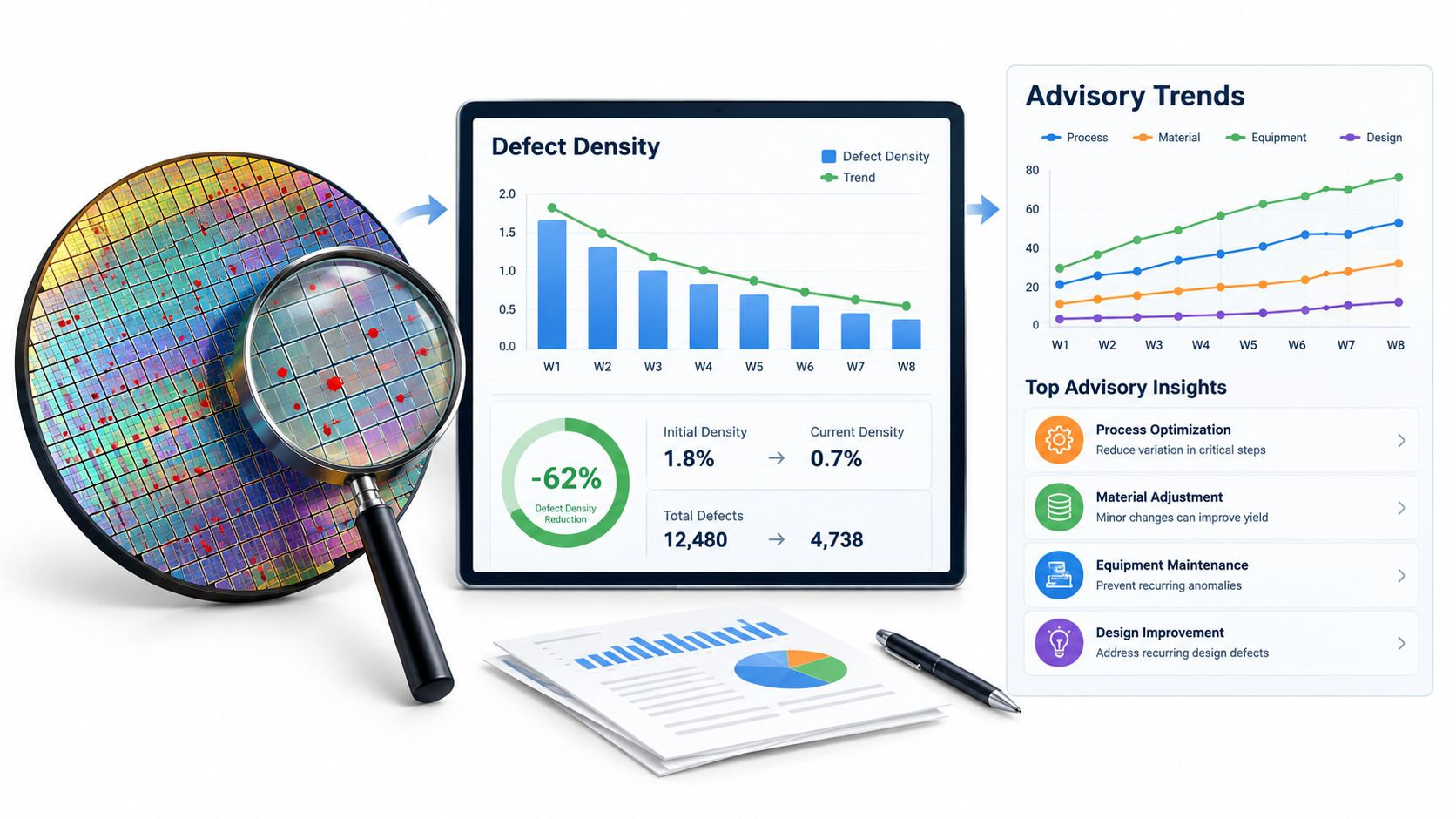
Dealers should record not only whether a vehicle passed, but how much friction appears across its test history. Defect density is a practical way to describe the concentration of failures and advisories over the available timeline. It isn't an official DVSA score. It's a buying concept that helps distinguish a clean history from one that repeatedly points towards wear, deferred maintenance, or poor repair quality.
Read recurrence, not just severity
The most useful question is whether the same area appears repeatedly. Recurring lamps, suspension, brakes, tyres, or visibility issues can indicate that the previous owner repaired the immediate failure without addressing the wider condition of the vehicle. They can also signal a vehicle that has entered a higher-maintenance stage of its life.
Recent UK reporting has highlighted these categories as common areas of failure. It also reported that two thirds of tyre defects and one third of brake defects were classified as dangerous defects, as described by Aviva's coverage of UK vehicle defect risks. Those figures don't mean every advisory in these categories is dangerous. They do show why a dealer shouldn't treat tyre and brake entries as routine paperwork.
A practical reading method is to separate the history into three layers:
Pattern in the record Commercial interpretation An isolated advisory with no later recurrence Check whether the item appears resolved, then assess the vehicle normally Repeated advisories in the same system Allow for inspection and possible near-term maintenance Failures followed by similar advisories Investigate repair quality, recurrence, and likely retail exposure
Translate history into valuation
A vehicle with repeated suspension advisories may still be worth buying. The correct response isn't always rejection. It might be a lower bid, a targeted inspection, or a decision to sell through a channel suited to the known condition.
The risk increases when the record combines several signals. For example, repeated brake or tyre concerns alongside a weak mileage timeline should receive more scrutiny than either issue alone. The same applies to an older vehicle showing repeated visibility and suspension issues, then arriving with a recent pass but no supporting repair evidence.
DVSA data provides useful market context. For class 3 and 4 vehicles in Great Britain, the overall initial failure rate was 26.75% in Quarter 1 of 2026 to 2027, according to the MOT history dataset published through Find Transport Data. A separate DVSA-linked dataset records an overall initial failure rate of 27.24% for class 3 and 4 vehicles in Quarter 1 of 2025 to 2026. These rates describe the wider testing population, not a particular stock unit, but they reinforce the point that an MOT pass shouldn't be used as a binary quality filter.
The practical red flags in dealer MOT history are therefore patterns that affect future exposure. A buyer should ask what the record implies about repair timing, expected preparation cost, customer expectations, and the chance of a dispute after retail delivery.
Identifying Mileage Anomalies and Timeline Gaps
Mileage is one of the fastest ways to change a vehicle's commercial risk profile. A recorded figure that moves backwards, stalls unexpectedly, or jumps sharply between tests does not prove fraud, but it does warrant investigation before the vehicle is priced.
The DVSA recognises that mileage entry errors occur. Its testing guidance says a warning appears when a tester enters a reading identical to the previous one or considerably different from it. The DVSA guidance on mileage recording errors also explains that a mistake noticed within 28 days can be corrected by the MOT centre, while an error identified after that period must be reported to DVSA.
Separate an error from an anomaly
A correction is not informal. If an MOT mileage entry is wrong, the evidence must show what the mileage should have been and include a date within one day of the MOT test. Acceptable evidence includes an MOT invoice, emissions printout, service receipt, or vehicle job card from the testing centre, according to GOV.UK guidance on correcting MOT certificate mistakes.
That matters at acquisition stage. If a seller explains an abrupt movement as a tester mistake, ask for the supporting evidence. Without it, the entry stays in the risk picture and should affect the buyer's confidence, inspection plan, and negotiation position.
Government experimental statistics provide useful context. Published data on Government experimental statistics shows that, after obvious anomalies were removed, about 3.42 million vehicles recorded a mileage reduction between tests, representing 5.45% of the vehicles analysed, and the average rollback among affected vehicles was 46,089 miles. The figures do not explain every reduction. They do show why a mileage check UK process has to investigate downward movements rather than dismiss them. A wider discussion of these patterns is set out in a guide to mileage anomalies in MOT records.
Interpret gaps without overreaching
A gap in MOT history is not automatic evidence of wrongdoing. A vehicle may have been off the road, declared SORN, exported, laid up, or absent from the relevant record. The official service does not explain ownership gaps, SORN periods, export status, or whether missing continuity reflects legitimate use.
Record the gap, identify what other evidence is available, and avoid filling the blank with an assumption. The commercial question is whether the missing period affects confidence in the mileage trail, the likely prep spend, or the chance of a retail dispute later. If the next entry after a gap creates a sudden movement, the buyer should treat that as a pricing and inspection issue, not a clerical footnote.
A clean-looking timeline can still hide a weak story. A car with smooth dates, but little supporting paperwork, can be harder to defend when a customer raises a complaint after sale. That is why mileage anomalies and timeline gaps should be read as valuation signals, not just record-keeping quirks.
The Limitations of Basic Checks for Trade Buyers
A basic MOT history check is useful, but it stops short of giving a full buying view. It shows test outcomes, test mileage, advisories, and due dates. It does not explain ownership changes, short holding periods, missing continuity, or whether the mileage trail looks commercially believable.
Trade buyers need a different lens from retail shoppers. A private buyer often wants reassurance that the current MOT is live. A dealer has to judge capital risk, prep cost, warranty exposure, and whether the car will still hold margin after any dispute or comeback.
Raw data needs context
Two cars can look similar on a screen and still carry very different risk. One may show a steady test history, isolated advisories, and ownership that fits the mileage. The other may show rapid resale activity, a mileage irregularity, and repeat advisories across related items. A basic check records those facts, but it does not join them into a buying decision.
Vehicle provenance is the commercial layer that does that work. It brings together ownership timelines, mileage patterns, DVLA records, insurance-related events, and other warning signs. It does not replace an inspection or supporting paperwork. It tells the buyer where to focus attention before money changes hands.
Public data tells you what was recorded. Trade judgement decides what that record means.
A used car history report should sit inside a wider acquisition process. It can raise a question, but it rarely settles it. The dealer still needs to verify the vehicle identity, review documents, inspect condition, and confirm that the sales description matches the evidence available at purchase. A free car data check for initial screening can help at that stage, but it is only a first filter.
Short ownership deserves proportionate scrutiny
Short-term ownership is not a problem on its own. Vehicles change hands quickly for ordinary reasons, including finance changes, business use, relocation, or a buyer's change in circumstances. The risk appears when rapid turnover sits next to other inconsistencies.
Use a cumulative test, not a single trigger. Check whether the ownership pattern fits the mileage, test history, service evidence, vehicle condition, and acquisition channel. If those points do not line up, a clean current MOT should not settle the matter.
That is the level of discipline trade buyers need. The outcome should be clear enough for another buyer, compliance colleague, or manager to see why a unit was accepted, repriced, inspected further, or rejected.
Building a Vehicle Risk Assessment Workflow That Holds Up
A buying workflow should not try to predict every future repair. It should force the same judgement process on part-exchanges, auction stock, direct purchases, and wholesale vehicles, then let the margin threshold vary by vehicle type and sales channel.
Screen before you bid
Start with the official MOT record, then pull the test dates, results, mileages, failure items, advisories, and next due date. The point is not to accept the record at face value. It is to spot where the history needs an explanation before money changes hands.
The first pass should answer four practical questions:
- Is the mileage progression coherent? Check direction, timing, and any sharp movement.
- Does the defect history repeat? Group entries by system, such as brakes, tyres, suspension, lamps, and visibility.
- Are there continuity gaps? Record them without guessing at the cause.
- Does the vehicle's presentation match the history? Compare visible wear with recorded mileage and use.
If a mileage pattern looks wrong, pause and ask for evidence. If advisories keep coming back on the same systems, treat that as a pricing issue and a post-sale exposure issue. A clean pass on the latest test does not remove the earlier pattern.
Set internal thresholds
Every dealership needs a clear response when a risk signal appears. That response might be a second inspection, senior approval, documentary support, a lower maximum bid, or exclusion from a retail channel.
The threshold should reflect the margin in the unit. A lower-priced vehicle with known wear can still work if preparation costs stay controlled and the description is accurate. A higher-value vehicle with unexplained mileage movement needs a tighter view, even if the current MOT result is positive.
Use the same discipline in valuation. Repeated defects can justify a negotiation adjustment. A corrected mileage entry with credible paperwork may reduce concern. An unexplained anomaly should stay visible in the buying record, not disappear into a verbal handover.
Keep the audit trail usable
Store the report, inspection notes, seller explanations, supporting documents, and final decision. That gives the next person a clear account of why the vehicle was accepted, repriced, inspected further, or rejected. It also limits the temptation to soften a warning after the unit is already on site.
Trade-focused vehicle intelligence platforms can help by bringing MOT history, provenance, ownership patterns, mileage analysis, and anomaly detection into one decision process. AutoProv provides vehicle history, provenance, and risk intelligence for UK dealers, motor traders, wholesalers, and automotive professionals, including MOT records, mileage progression, ownership timelines, and risk indicators. Used properly, that kind of view helps a buyer price the stock correctly, inspect before commitment, request evidence, or walk away when the record and the vehicle do not line up.
Use the vehicle risk assessment framework to formalise the process, then review rejected and purchased stock to see whether your thresholds are catching the defects and anomalies that affect margin. A strong MOT history check UK workflow ends with a clear action, not a vague impression.
Frequently Asked Questions
AI-Generated Content Notice
This article was created with the assistance of artificial intelligence technology. While we strive for accuracy, the information provided should be considered for general informational purposes only and should not be relied upon as professional automotive, legal, or financial advice. We recommend verifying any information with qualified professionals or official sources before making important decisions. AutoProv accepts no liability for any consequences resulting from the use of this information.
From our AI insights
- MOT History: Understanding Seasonal Trends
Explore how seasonal trends impact MOT history and what it means for vehicle checks in 2026.
- Mastering MOT Data for Smart Stock Acquisitions
Unlock the potential of MOT data to make smarter stock decisions and reduce risks.
- MOT History: Navigating Recent Regulatory Changes for Traders
Explore the impact of recent MOT regulatory changes on UK traders and learn how to adapt effectively.
Related Articles

Understanding the MOT History: A Comprehensive Guide
Explore everything you need to know about MOT history, including its significance, how to check it, and what to look out for.
Understanding MOT History: A Key to Smart Used Car Purchases
Discover how MOT history can guide your used car buying decisions and ensure you make an informed choice.

How to View MOT History and Make Smarter Buying Decisions
For anyone in the UK motor trade, a vehicle's Ministry of Transport (MOT) history is much more than a simple pass or fail certificate. It's the car's diary, a detailed logbook of its life on the road. Glancing only at the latest MOT is a rookie mistake, and a costly one at that. To really get under the bonnet of a vehicle's past, you need to view MOT history in its entirety—it’s the only way to see the true timeline of maintenance versus neglect.
Published by AutoProv
Your trusted source for vehicle intelligence