

A serious UK vehicle risk assessment starts with a uncomfortable fact: one in seven used cars may carry a mileage or identity fraud indicator, based on recent UK analysis of more than 550,000 checked vehicles.
The same analysis estimates that consumers overpay by roughly £750 million annually because of mileage fraud. Auto Express's coverage of hidden identities and mileage fraud shows why a clean-looking vehicle history isn't the same as a low-risk vehicle.
For dealers, the exposure goes beyond a bad buying decision. A provenance issue can affect valuation, reconditioning, funding, resale, compliance records, and customer disputes. A basic vehicle history check UK report can answer useful questions, but trade buying needs more than isolated yes-or-no results. It needs context, chronology, and a clear view of what the available data fails to prove.
Table of Contents
- The Hidden Risks in UK Used Vehicle Purchasing
- Fraud has moved beyond the odometer
- What Vehicle Risk Assessment Actually Means
- A practical assessment sequence
- Key Risk Indicators Every Dealer Should Monitor
- Ownership patterns reveal behaviour
- Mileage needs trajectory analysis
- Damage events require commercial judgement
- Data Sources and Their Limitations
- EVs introduce a different provenance problem
- Building a Practical Risk Assessment Workflow
- Screen before physical inspection
- Make every red flag produce an action
- Real-World Scenarios and Risk Patterns
- Damage can hide behind a satisfactory repair story
- Rapid resale is a behavioural signal
- Integrating Automated Risk Intelligence into Your Business
- Choose intelligence that fits the buying decision
The Hidden Risks in UK Used Vehicle Purchasing
Mileage fraud remains a major screening issue, but it's no longer sensible to treat the odometer as the whole problem. A UK HPI report states that one in 11 vehicles checked showed a mileage discrepancy, compared with one in 20 in 2014, and recorded 836,214 confirmed discrepancies in 2019, an 8.99% hit rate. HPI's account of mileage fraud and motor fraud places those figures in the context of a large, active used-car market.
The Finance & Leasing Association also cited cap hpi data showing that one in every 16 vehicles on its database had a mileage discrepancy, with the rate having increased by 25% over the previous three years. Separately, analysis of one million UK cars reported by AM-online suggested that 6.5% could have been clocked, including 60,501 vehicles showing a mileage reduction, with an estimated 2.4 million vehicles affected across the UK's roughly 38 million cars. The average reduction among discrepant vehicles was 70,000 miles. The Finance & Leasing Association's response on mileage fraud and AM-online's report on Rapid Car Check analysis illustrate why statistical screening matters to trade buyers.
Fraud has moved beyond the odometer
A dealer can find a consistent MOT sequence and still face identity risk. Plate changes, mixed records, VIN inconsistencies, imported vehicles, and incomplete provenance can all alter the commercial decision without producing a simple mileage rollback warning.
That's the important distinction between a used car history report and trade vehicle intelligence. A consumer report may identify a material event. A professional buyer must decide whether the event fits the vehicle's ownership, usage, condition, specification, and intended resale route.
Practical rule: Treat a clean result as permission to investigate further, not as proof that the vehicle carries no meaningful risk.
The financial consequences often appear after purchase. A dealer may need to absorb unexpected repairs, revise the retail price, explain an unclear history to a buyer, or manage a dispute that damages trust. The hidden costs of buying without provenance checks are often wider than the original purchase-price mistake.
Traditional reports still have a place. Finance, theft, write-off, and mileage checks are useful controls. They were not designed to replace a trade-level assessment of chronology and behavioural signals. Experienced buyers now ask not only, “What event is recorded?” but also, “Does the whole vehicle story make sense?”
What Vehicle Risk Assessment Actually Means
Vehicle risk assessment is the structured process of evaluating a vehicle's identity, history, ownership, usage, condition indicators, and market exposure before committing capital. It combines individual records with relationships between records. That makes it different from ordering a report and accepting a green or clear status.
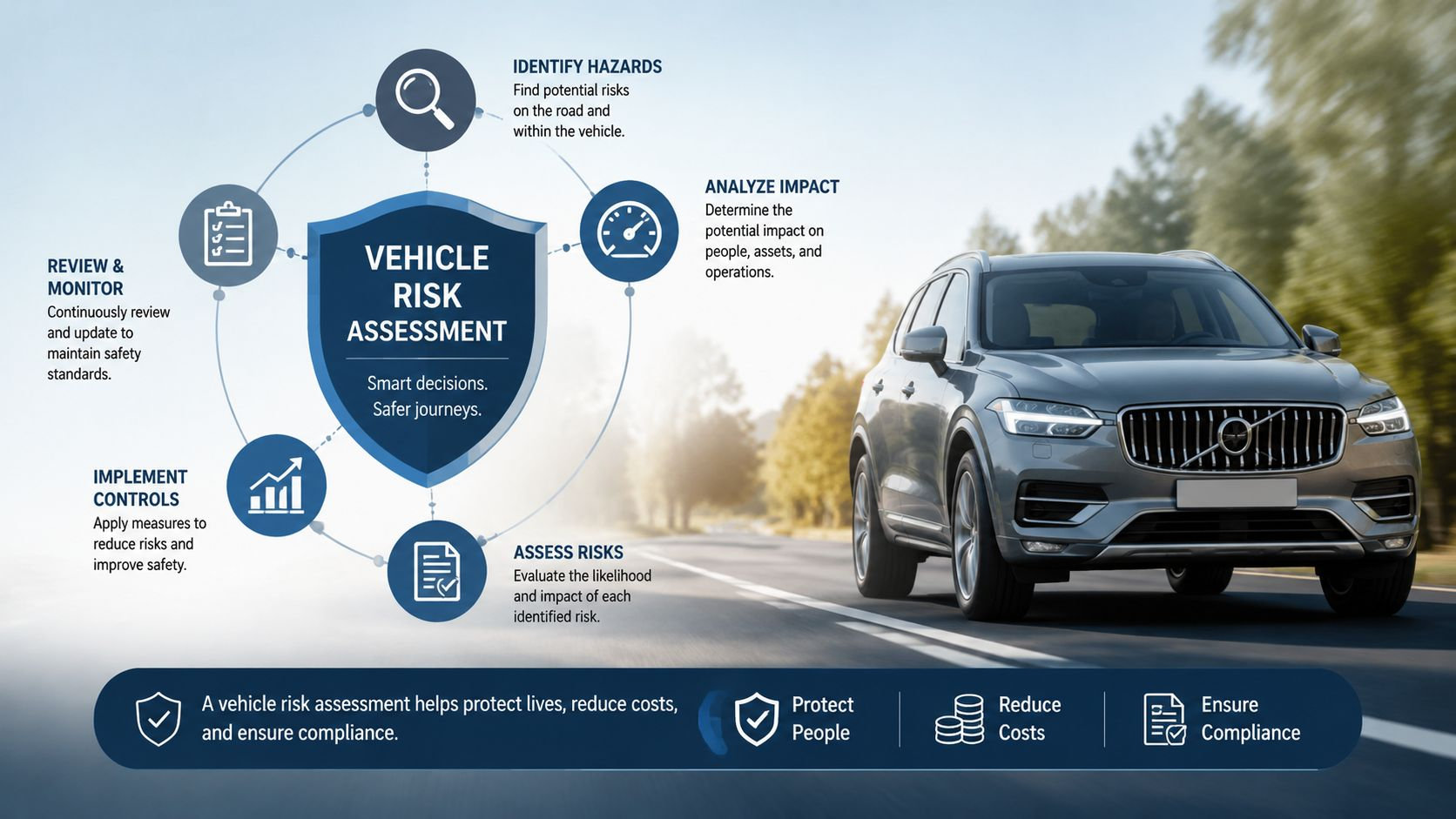
A basic check answers defined questions. Is finance recorded? Has the vehicle been reported stolen? Is there a write-off marker? Does the supplied registration match the vehicle? Those answers matter, but they don't explain how the vehicle moved through the market or whether its recorded history is commercially credible.
A practical assessment sequence
Start with identity. Confirm the registration, VIN, make, model, derivative, fuel type, transmission, and specification against the physical vehicle and the available records. A mismatch isn't automatically evidence of fraud, but it should stop the buying process until someone explains it.
Then establish chronology:
- Build the ownership timeline. Look for short holding periods, repeated changes, and rapid resale activity. UK trade guidance flags multiple keepers in less than 12 months as a meaningful provenance signal and warns that two keeper changes within three months may indicate a flipped car hiding recurring faults. AutoProv's guidance on vehicle details checks provides that specific trade context.
- Plot the mileage trajectory. Don't inspect readings as isolated entries. Compare the direction, timing, and plausibility of each reading against service invoices, repair records, auction information, and physical wear.
- Assess event severity. A write-off marker, repair event, import record, or specification anomaly needs interpretation. The same label can lead to different decisions depending on timing, category, evidence, and resale implications.
- Separate evidence from assumption. Record what the data proves, what remains unknown, and what must be inspected or documented before purchase.
- Translate risk into action. The output should be a buying decision, valuation adjustment, inspection requirement, or walk-away instruction.
Vehicle data is always a snapshot. A report reflects information available at the time of the search, while the vehicle continues to change hands and accumulate events. That's why proactive risk intelligence is more useful than reactive checking. It helps a stock controller prioritise attention before the vehicle reaches the forecourt.
Key Risk Indicators Every Dealer Should Monitor
The strongest dealer vehicle checks don't rely on one dramatic warning. They look for several smaller signals that point in the same direction. Each indicator should be judged against the vehicle's age, specification, market position, and intended use.
Ownership patterns reveal behaviour
A normal ownership history can include short periods, particularly around company vehicles, lease returns, relocations, or dealer-held stock. The concern rises when rapid changes form a pattern. Two keeper changes within three months, for example, may suggest a vehicle has been flipped because a recurring fault, poor specification, or difficult ownership experience made it hard to retain.
Short-term ownership becomes more informative when combined with other evidence:
- Repeated rapid resale: Several transfers in quick succession deserve an explanation, especially when the advertised mileage barely changes.
- Unclear keeper sequence: Gaps or inconsistencies between seller statements and recorded history weaken provenance.
- Mismatch with vehicle type: A premium performance car or technically complex vehicle moving rapidly between owners may need closer scrutiny than a straightforward fleet replacement.
- Condition conflict: Heavy wear alongside low recorded mileage changes the risk assessment, even when individual MOT readings appear orderly.
Mileage needs trajectory analysis
The official MOT record is valuable because it creates a historic mileage trail. The GOV.UK vehicle mileage and occupancy dataset describes the government's mileage statistics programme, while official guidance confirms that experimental MOT mileage statistics were published to support further mileage analysis.
A mileage check UK process should therefore examine direction and gaps, not just whether the latest figure is higher than the previous one. Long intervals between tests can conceal changes, and a vehicle can be altered between recorded readings. If an MOT mileage is wrong, GOV.UK guidance on correcting MOT certificate mistakes says correction requires evidence dated within one day of the test, such as an invoice, emissions printout, service receipt, or MOT job card.
Damage events require commercial judgement
Write-off status isn't a complete decision. 562,185 vehicles were written off in 2024, according to DVLA and industry reporting discussed by Business Car. Rising repair costs and parts inflation have pushed more damaged vehicles beyond economic repair, so the label must be considered alongside category, repair evidence, structural inspection, timing, and future resale risk.
A write-off flag tells you that an event happened. It doesn't tell you whether the vehicle is suitable stock.
For a fuller explanation of how systems identify unusual combinations and sequences, see anomaly detection in vehicle intelligence. The useful output isn't a mysterious score. It's a prioritised reason to investigate.
Data Sources and Their Limitations
No single UK data source provides a complete risk profile. DVLA information helps establish registration and keeper context, but a free DVLA or MOT-style check has no visibility of outstanding finance, insurance write-off status, keeper duration, or scrapped markers. It also can't detect mileage alteration between annual tests because it shows one recorded mileage reading per MOT, leaving gaps in coverage. AutoProv's explanation of free vehicle checks sets out those limitations clearly.
MOT history is authoritative for recorded tests and mileage entries, but it isn't a service history, inspection report, or continuous usage log. Insurance-related data can identify loss events and write-off categories, yet the commercial meaning depends on repair quality, documentation, structural condition, and the vehicle's intended market.
Data Source What It Reveals Key Limitations Trade Value DVLA records Registration and core vehicle identity information Limited visibility of finance, insurance events, and mileage changes between tests Useful for initial identity screening MOT history Test outcomes and recorded mileage readings Gaps exist between annual tests, and it doesn't describe every repair or usage event Strong chronology input Insurance-related records Write-off and loss-event indicators Doesn't replace physical inspection or repair-quality evidence Important for valuation and stock eligibility Seller and service records Claimed maintenance, repairs, and ownership context Documents may be incomplete, inconsistent, or difficult to authenticate Valuable corroborating evidence Trade intelligence Cross-source patterns, anomalies, and contextual signals Quality depends on coverage and interpretation Helps prioritise decisions
EVs introduce a different provenance problem
Electric vehicles add battery condition to the risk conversation. BVRLA guidance in 2025 warned that the used-EV market needs better battery-state transparency because battery health affects residual value, affordability, and buyer confidence, while standard history checks don't capture it. The UK commentary on mileage and vehicle fraud also highlights the need to look beyond conventional mileage concerns.
A low-risk ownership and MOT profile doesn't prove battery health, charging history, or specification suitability. Trade buyers should ask what evidence exists, what remains unknown, and whether the uncertainty should affect price, warranty exposure, or stock selection. Professional vehicle-check data sources are most useful when they show both the available evidence and its boundaries.
Building a Practical Risk Assessment Workflow
Speed matters in the motor trade, but rushed buying creates expensive rework. A workable process puts the cheapest checks first and reserves deeper investigation for vehicles that justify it.
Screen before physical inspection
Capture the registration and VIN, confirm the advertised specification, and run an initial history review before sending a buyer, transporter, or technician. Stop immediately if the identity doesn't align, a material finance or theft concern appears, or the seller can't explain a major discrepancy.
For vehicles that pass the first gate, review the ownership timeline and mileage trajectory. Then classify the stock into a practical route:
- Proceed to inspection: The identity and chronology align, with no unresolved material signals.
- Investigate before bidding: The vehicle has a short ownership pattern, mileage uncertainty, damage event, import complexity, or incomplete documentation.
- Reject or escalate: The seller's explanation conflicts with the records, identity evidence is unresolved, or the likely exposure can't be priced confidently.

Make every red flag produce an action
A warning without an owner or next step is just noise. Assign responsibility for obtaining documents, completing the inspection, checking the VIN, validating the repair story, or approving the valuation adjustment.
For a dealership, the same principle applies to wider supplier controls. Teams that buy from external vendors can use a structured resource on vendor risk assessment for SMBs to strengthen how they document external-party risks, escalation routes, and review decisions.
Keep an auditable record containing:
- The source checked: Record the report, date, vehicle identifier, and relevant result.
- The unresolved point: Write the discrepancy in plain language rather than hiding it inside a score.
- The decision owner: Identify who approved the purchase, rejection, or further inspection.
- The commercial response: Note the valuation change, repair allowance, warranty consideration, or resale restriction.
- The evidence retained: Store invoices, photographs, inspection findings, and seller explanations with the stock file.
The proper due diligence process for buying trade stock should support operational speed, not create paperwork for its own sake. A concise risk record helps the next buyer understand why a vehicle was accepted and prevents the team from repeating the same investigation.
Real-World Scenarios and Risk Patterns
Consider a vehicle advertised with a clean MOT trail and attractive mileage. The basic report shows no obvious problem, but the keeper timeline reveals several rapid changes. The seller describes each transfer as ordinary, yet the vehicle's condition suggests more use than the recorded mileage. The correct response isn't to accuse anyone. It's to pause, request supporting service evidence, inspect wear points, and value the vehicle only after the explanation is credible.
A second vehicle has steadily increasing MOT readings, so a simple mileage check passes. The problem appears in the gaps. A service invoice records a higher figure than a later MOT entry, or the timing of repairs doesn't fit the stated usage. The dealer should reconcile the documents and ask for evidence close to the relevant test, rather than relying on the general direction of the chart.
Damage can hide behind a satisfactory repair story
A repaired write-off may look presentable and pass a basic check. Yet category, repair method, alignment, water ingress, safety-system operation, and documentation can materially change its retail and warranty risk. A buyer who treats the write-off marker as either automatic rejection or automatic acceptance is using the same flawed shortcut in opposite directions.
A proper decision weighs the repair evidence against the intended route to market. If the structural inspection is inconclusive, the dealer can't verify parts or geometry, or the likely resale audience won't accept the history, the apparent margin may not justify the uncertainty.
Rapid resale is a behavioural signal
Another vehicle has changed hands twice within three months. The price is compelling, the presentation is polished, and the seller says the previous owners changed their plans. That may be true, but rapid resale can also indicate a recurring fault that each owner discovered and tried to pass on.
The buying team should test the explanation against diagnostic records, warning lights, tyre wear, service intervals, and independent inspection results. If the answers remain vague, the correct commercial decision may be to walk away rather than convert uncertainty into a forecourt problem.
These examples share one lesson. The risk sits in the relationship between records, not always in a single red flag. A vehicle provenance review should therefore produce a reasoned decision, not just a report attachment.
Integrating Automated Risk Intelligence into Your Business
Manual checks work well for individual vehicles, but they become inconsistent when buying volume rises, staff rotate, or stock arrives under time pressure. Automated risk intelligence helps teams apply the same screening logic across registrations, surface unusual patterns, and direct human attention towards the vehicles that need it most.
The business case is operational rather than theoretical. Better intelligence can help a dealer reduce avoidable exposure, support a defensible valuation, document buying decisions, and negotiate from evidence instead of assumption. It also creates a common language between buyers, stock controllers, compliance staff, and senior management.
Choose intelligence that fits the buying decision
Assess any platform against four practical questions:
- Coverage: Does it combine identity, MOT, mileage, ownership, finance, theft, write-off, and provenance information?
- Interpretation: Does it explain anomalies and relationships, or merely present raw records?
- Workflow fit: Can buyers use it at the point of purchase without duplicating existing work?
- Decision usefulness: Does the output support inspection, valuation, negotiation, escalation, or rejection?
AutoProv is one UK-focused option built for dealers, motor traders, wholesalers, and automotive professionals. Its vehicle provenance reports analyse multiple data sources, including DVLA records, MOT history, mileage patterns, ownership timelines, insurance-related events, and risk indicators, with the emphasis on contextual vehicle intelligence rather than a simple pass or fail.
Implementation should start with a defined stock category where hidden risk matters most, such as high-mileage vehicles, repaired write-offs, rapid-turnover stock, imports, or used EVs. Review the decisions produced by the process, refine escalation rules, and then extend the workflow across the wider buying operation.
Real-time vehicle intelligence is most valuable when it sits close to the buying decision. It shouldn't replace physical inspection or experienced judgement. It should make that judgement faster, more consistent, and better informed.
AutoProv provides UK-focused vehicle history, provenance, mileage, ownership, and risk intelligence for dealers and trade buyers who need more context than a basic report supplies. Visit AutoProv to assess vehicles at the point of purchase and bring clearer evidence into buying, valuation, and compliance decisions.
Frequently Asked Questions
AI-Generated Content Notice
This article was created with the assistance of artificial intelligence technology. While we strive for accuracy, the information provided should be considered for general informational purposes only and should not be relied upon as professional automotive, legal, or financial advice. We recommend verifying any information with qualified professionals or official sources before making important decisions. AutoProv accepts no liability for any consequences resulting from the use of this information.
From our AI insights
- Leveraging Auction Data for Strategic Car Purchases
Discover how to use auction data effectively to make profitable car buying decisions.
- Auction Pitfalls: Avoiding Costly Mistakes
Navigate UK car auctions with confidence by avoiding finance, write-off, and mileage risks.
- Mastering Paint Code Checks: Detecting Hidden Car Repairs
Discover how to use paint code verification to identify hidden car repairs and ensure a smarter purchase.
Related Articles

Your Ultimate Guide to Buying a Used Car in the UK
Navigate the UK used car market with confidence using our comprehensive buying guide. Tips, checks, and AutoProv Provenance insights included.

Difference Between MOT and Service: What You Need to Know
An MOT is a mandatory legal inspection that every car on UK roads needs to pass.Think of it as the government's way of ensuring your vehicle meets the absolute minimum safety and environmental standards to be considered roadworthy. A service, on the other hand, is a completely different beast. It's the proactive maintenance routine recommended by the people who built your car, designed to keep it running smoothly and catch problems before they start. In short, an MOT is a pass-or-fail exam required by law. A service is a comprehensive health plan for your car.

Your Ultimate Used Car Inspection Checklist
A solid used car inspection checklist is the single most powerful tool you have to avoid buying a lemon. It gives you a methodical way to look past the shiny paint and assess a car's real condition, helping you spot hidden problems and get a fair price before you shake hands on the deal.
Published by AutoProv
Your trusted source for vehicle intelligence
