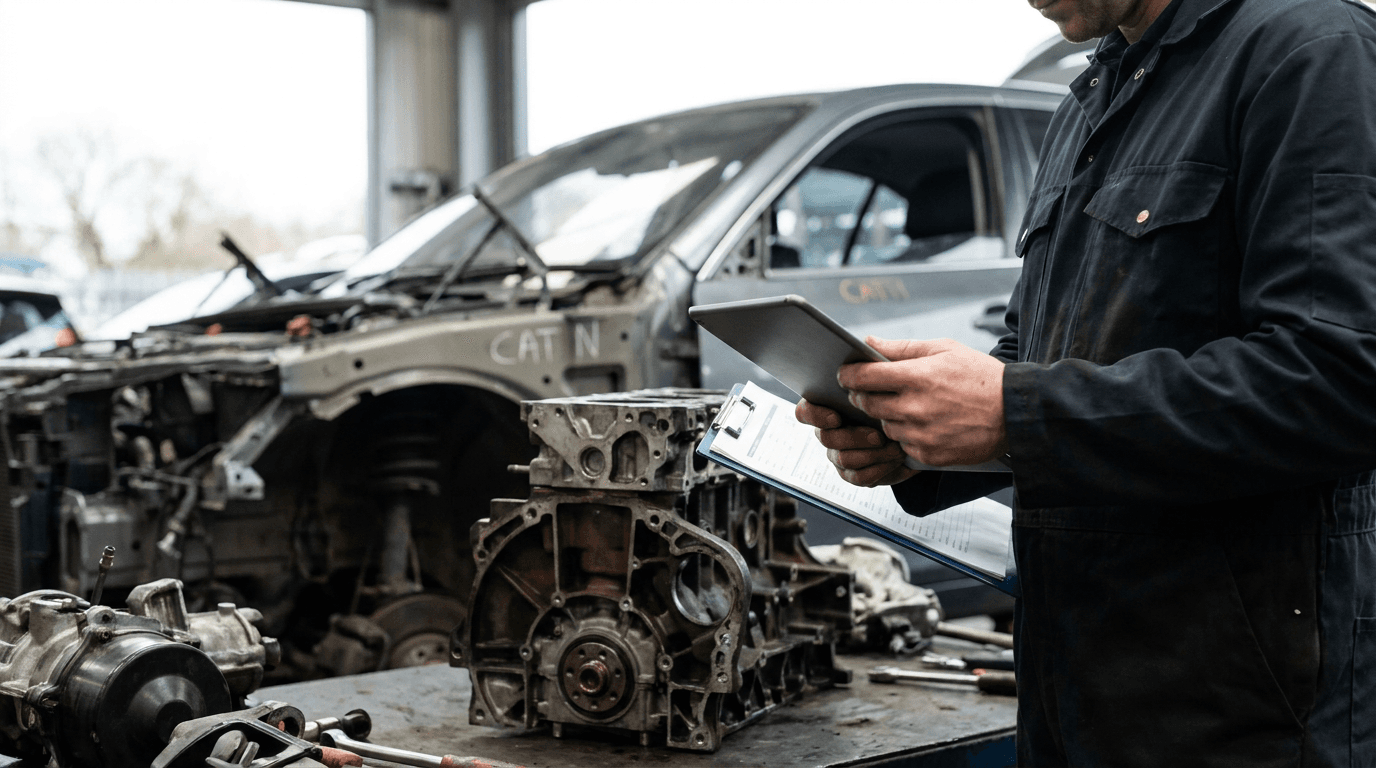
Comprehensive guide to insurance write-off categories for UK motor traders. Learn the differences between Cat A, B, S and N, legal requirements, and trade implications.
By CiteFlow
What Are Insurance Write-Off Categories?
Insurance write-off categories are classifications assigned by insurance companies when a vehicle's repair costs exceed a certain threshold of its pre-accident value or when the vehicle is deemed unsafe to repair. The current UK system uses four categories: A, B, S (formerly C), and N (formerly D). Categories A and B indicate vehicles that must never return to the road, whilst S and N denote vehicles that can be repaired and re-registered, though they carry permanent salvage markers on their history records.
The Association of British Insurers (ABI) standardised these categories to create consistency across the insurance industry. Every motor trader needs to understand these classifications because they directly affect vehicle values, legal obligations, and customer disclosure requirements under the Consumer Rights Act 2015.
The categories changed in October 2017, replacing the old C and D system with S and N to better reflect the nature of damage. The shift moved away from purely economic classifications towards descriptions that indicate structural versus non-structural damage, giving traders and buyers clearer information about the vehicle's condition and repair history.
Category A Write-Offs: Total Destruction
Category A represents the most severe classification. These vehicles have sustained such catastrophic damage that they must be crushed entirely, including all parts and components. No part of a Cat A vehicle, not even the number plate, can be salvaged or reused. This category typically applies to vehicles destroyed by fire, complete flood submersion, or severe collision damage where the structural integrity has been completely compromised.
Insurers send Cat A vehicles directly to Authorised Treatment Facilities (ATFs) where they are destroyed under controlled conditions. The DVLA is notified, and the vehicle is permanently removed from the register. You will never encounter a Cat A vehicle in the trade because it cannot legally exist as a vehicle once categorised.
For traders, Cat A classification is primarily relevant when checking provenance reports. If a VIN shows a Cat A marker, something has gone seriously wrong, either in data recording or potentially indicating a cloned vehicle using a destroyed vehicle's identity.
Category B Write-Offs: Parts Only, Never Roadworthy
Category B vehicles have sustained extensive damage that makes them unsafe to return to the road, but unlike Cat A, certain parts can be salvaged and sold. The body shell must be crushed, but mechanical components, panels, and interior parts that remain undamaged can be removed and sold as spare parts. Common Cat B scenarios include severe frontal impacts that destroy the chassis, extreme structural damage, or vehicles with compromised safety systems.
The salvage industry relies heavily on Cat B vehicles for parts supply. Breakers yards purchase these vehicles, strip usable components, then send the shell for crushing. Each salvaged part carries no legal restriction, provided it came from an undamaged area of the vehicle.
Traders must never attempt to repair and sell a Cat B vehicle. Understanding Cat B cars requires recognising that the certificate of destruction issued when the shell is crushed creates a permanent record. The DVLA removes the vehicle from the register, and any attempt to re-register it constitutes fraud. If you encounter a Cat B vehicle being offered as repairable, walk away and report it.
Category S Write-Offs: Structural Damage, Repairable
Category S (formerly Category C) indicates structural damage that can be economically repaired. The 'S' denotes structural, meaning damage to the vehicle's frame, chassis, or load-bearing components. Insurance companies categorise a vehicle as Cat S when repair costs, whilst substantial, are deemed worthwhile relative to the vehicle's value, but the damage affects structural integrity.
Structural damage includes crumple zone deformation, chassis rail damage, sill damage, A-pillar or B-pillar impact, subframe damage, and suspension mounting point distortion. A Cat S vehicle can be repaired and returned to the road, but it requires professional assessment and, in most cases, specialist repair facilities with jig equipment to ensure correct alignment.
The Category S classification carries significant trade implications. Values typically drop 20-40% compared to an equivalent non-salvage vehicle, even after professional repair. Many mainstream lenders refuse to finance Cat S vehicles, limiting your potential buyer pool. Insurance premiums increase, and some insurers decline cover entirely.
Before purchasing a Cat S vehicle, obtain detailed repair documentation, including photographs of the damage, parts invoices, and ideally a post-repair inspection report. The vehicle does not require a VIC (Vehicle Identity Check) anymore since the scheme ended, but you carry full responsibility for ensuring repairs meet roadworthy standards. Selling a poorly repaired Cat S vehicle exposes you to Consumer Rights Act claims and potential prosecution if safety is compromised.
Category N Write-Offs: Non-Structural Damage, Repairable
Category N (formerly Category D) represents the least severe write-off classification. The 'N' indicates non-structural damage, meaning the vehicle's frame and load-bearing components remain undamaged. Common Cat N scenarios include cosmetic damage from car park impacts, electrical system damage, interior fire damage not affecting structure, theft recovery with missing parts, or flood damage not affecting structural components.
Insurance companies assign Cat N when repair costs exceed their economic threshold, typically 50-60% of the vehicle's pre-accident value, but the damage does not compromise structural integrity. A vehicle might receive Cat N classification simply because replacement parts are expensive, even if the actual damage is minor.
Category N vehicles present opportunities for traders who understand the risks. Value depreciation is typically 10-25%, less severe than Cat S, and many buyers accept Cat N vehicles if the damage history is clearly disclosed and repairs are professional. Finance and insurance are generally easier to arrange than with Cat S vehicles.
The challenge with Cat N lies in verification. Without structural damage, determining repair quality requires careful inspection. Electrical gremlins from poor wiring repairs, water ingress from inadequate sealing, or misaligned panels from rushed bodywork can all plague Cat N vehicles. Always obtain repair documentation and conduct thorough pre-purchase inspections, paying particular attention to the specific damage area noted in the insurance records.
Legal Requirements When Trading Salvage Vehicles
Traders face strict legal obligations when selling Cat S or Cat N vehicles. The Consumer Rights Act 2015 requires full disclosure of salvage history before sale. This is not optional marketing information but a legal requirement. Failure to disclose salvage status constitutes misrepresentation and gives buyers automatic rejection rights, regardless of how well the vehicle was repaired.
Your disclosure must be clear, prominent, and unambiguous. Burying salvage status in small print or verbal-only disclosure is insufficient. Include the category clearly in advertisements, window displays, and sales documentation. Many traders add a specific salvage disclosure clause to their sales contracts, requiring buyer signature to acknowledge understanding.
The six-month presumption period under CRA 2015 applies equally to salvage vehicles. If a fault appears within six months, the law presumes it existed at sale unless you prove otherwise. With salvage vehicles, this creates elevated risk because buyers can argue that poor repairs caused subsequent failures, even if the failure occurs in an unrelated area.
Understanding your obligations under the Consumer Rights Act becomes critical when trading salvage stock. Document everything: pre-purchase condition reports, repair invoices, parts receipts, and post-repair inspection reports. This documentation provides your defence if a dispute arises.
How Insurance Categories Affect Vehicle Values
Salvage categorisation creates permanent value depression that persists regardless of repair quality. Market data shows consistent patterns: Cat S vehicles typically trade at 25-40% below equivalent clean vehicles, whilst Cat N vehicles see 15-25% reductions. These percentages vary by vehicle type, age, and market segment.
Prestige and performance vehicles suffer disproportionate value loss. A Cat S classification on a premium German saloon might create 50% value depression because buyers in that market segment have abundant clean alternatives and heightened sensitivity to history markers. Conversely, commercial vehicles and older trade vehicles show smaller percentage impacts because buyers prioritise functionality over history.
The impact of write-off categories on values extends beyond the immediate sale. When you purchase salvage stock, factor in the compressed margin. A vehicle bought at 60% of clean value might only sell at 65-70% of clean retail, leaving tight margins that evaporate quickly if the vehicle requires any additional work or sits in stock longer than anticipated.
Finance availability directly affects realisable values. Many lenders impose blanket bans on Cat S vehicles, whilst others restrict loan-to-value ratios or increase interest rates. This financing friction reduces your buyer pool and forces price concessions. Cat N vehicles face fewer financing obstacles, but restrictions still apply with certain lenders.
Checking Write-Off Status in Vehicle Provenance Reports
Every vehicle you purchase should undergo comprehensive provenance checking that includes salvage database searches. AutoProv's vehicle provenance reports aggregate data from multiple salvage registers, including insurance company submissions and historical records, providing complete write-off history from a single check.
Salvage markers appear in various data sources. The Motor Insurance Anti-Fraud and Theft Register (MIAFTR) holds insurance company submissions. Historical databases capture older categorisations that might predate current systems. Comprehensive checks cross-reference these sources to catch vehicles that might slip through single-database searches.
Timing matters when checking salvage status. Recently categorised vehicles might not appear immediately in all databases because insurance companies have reporting windows. If you are buying a fresh insurance settlement, allow time for data propagation or request documentation directly from the insurer.
Beware of vehicles with foreign history. A vehicle written off abroad, then imported and re-registered in the UK, might not carry salvage markers in UK databases. VIN decoding and import documentation checks become essential for identifying these vehicles. The salvage categorisation system varies internationally, so a vehicle deemed repairable in one jurisdiction might not meet UK standards.
Trading Strategy for Salvage Category Vehicles
Successful salvage trading requires specialisation, not opportunism. Traders who consistently profit from Cat S and Cat N vehicles develop specific expertise: understanding repair costs for common damage types, building relationships with quality repair facilities, and cultivating buyer segments that accept salvage history.
Your repair network determines profitability. Establish relationships with bodyshops that provide detailed documentation, use OEM parts where safety-critical, and stand behind their work with warranties. The cheapest repair rarely produces the most profitable outcome because poor repairs generate comebacks, disputes, and reputation damage.
Stock selection matters enormously. Avoid vehicles with damage that is difficult to verify or repair: flood damage with potential electrical issues, fire damage with hidden wiring problems, or structural damage requiring extensive jig work. Focus on straightforward scenarios: cosmetic Cat N damage, theft-recovery vehicles needing parts replacement, or Cat S damage with clear repair paths and documented completion.
Price discipline separates profitable salvage traders from those who struggle. Calculate your all-in cost including purchase price, repairs, inspection, and the time value of capital, then apply realistic market values accounting for salvage depreciation. If the numbers do not leave comfortable margin, walk away. The salvage market offers abundant opportunities, so selectivity costs nothing.
Common Misconceptions About Write-Off Categories
Many traders believe Cat N vehicles require no inspection or documentation because the damage is non-structural. This is false. Whilst Cat N vehicles avoid structural compromise, poor repairs still create liability. Electrical faults from damaged wiring, water ingress from inadequate sealing, or mechanical issues from impact damage all generate valid CRA 2015 claims.
Another misconception holds that professional repair eliminates salvage depreciation. Market data contradicts this. Even vehicles repaired to manufacturer specifications at authorised facilities carry permanent value depression because the salvage marker never disappears. Buyers discount for the unknown quality of repairs, regardless of documentation.
Some traders assume that older vehicles escape salvage categorisation because insurance companies write them off without formal classification. Modern database coverage extends back decades. Insurance companies report categorisations regardless of vehicle age, and historical salvage markers persist in databases indefinitely.
The belief that salvage status only matters for retail sales is dangerous. Trade buyers, auction houses, and wholesale purchasers all check provenance. Attempting to move salvage vehicles through trade channels without disclosure damages your reputation and can result in rejected stock or forced buybacks.
Documentation and Record-Keeping for Salvage Stock
Maintain comprehensive files for every salvage vehicle you trade. Start with the provenance report showing the original categorisation and damage details. Add photographs of the vehicle in damaged condition if available, though these are often difficult to obtain unless you are purchasing directly from the insurer or salvage auction.
Repair documentation should include detailed invoices showing parts used, labour hours, and specific work completed. Photographs of the repair process, particularly before and after shots of damaged areas, provide valuable evidence of repair quality. If structural repairs were performed, jig reports and alignment specifications demonstrate proper execution.
Post-repair inspection reports from independent engineers add credibility, particularly for Cat S vehicles. Whilst not legally required, these reports provide third-party validation of repair quality and can be shown to buyers to justify pricing and provide reassurance.
Retain all documentation for at least six years to cover the CRA 2015 presumption period plus any potential dispute resolution timeframes. Digital copies stored securely provide backup if physical files are lost. This documentation protects you in disputes and demonstrates professional standards to buyers and regulators.
Future Changes to Write-Off Categories
The current four-category system has remained stable since 2017, but industry discussions continue around potential refinements. Particular focus centres on electric vehicles, where battery damage creates unique categorisation challenges. A vehicle with minor structural damage but a compromised high-voltage battery presents risks not adequately captured by current categories.
Technology advances in vehicle construction, particularly increased use of aluminium and ultra-high-strength steel, complicate repair decisions. These materials often require replacement rather than repair, increasing costs and potentially pushing more vehicles into salvage categories despite relatively minor damage.
Regulatory attention on salvage vehicle safety has intensified following incidents involving poorly repaired vehicles. Whilst no immediate changes are scheduled, the industry anticipates potential requirements for mandatory post-repair inspections or certification schemes for repairers working on salvage vehicles.
For traders, the prudent approach involves maintaining high standards regardless of regulatory requirements. Professional repair documentation, thorough disclosure, and quality control on salvage stock protect your business against both current legal obligations and potential future requirements.
FAQ
Can I sell a Cat A or Cat B vehicle?
No, you cannot legally sell a Cat A or Cat B vehicle as a roadworthy vehicle. Cat A vehicles must be completely destroyed, including all parts. Cat B vehicles can have parts salvaged and sold separately, but the body shell must be crushed and the vehicle can never return to the road. Attempting to sell either category as a complete vehicle constitutes fraud and carries serious legal consequences.
Do I need to tell buyers about Cat S or Cat N history?
Yes, you must disclose salvage history under the Consumer Rights Act 2015. This is a legal requirement, not optional. The disclosure must be clear and prominent in advertisements, displays, and sales documentation. Failure to disclose salvage status constitutes misrepresentation and gives buyers automatic rejection rights regardless of repair quality or how long they have owned the vehicle.
How much value does a Cat S classification remove?
Cat S vehicles typically trade at 25-40% below equivalent non-salvage vehicles, though this varies by vehicle type, age, and market segment. Prestige vehicles often suffer larger percentage losses (up to 50%) whilst commercial and older vehicles may see smaller impacts. The depreciation is permanent and persists regardless of repair quality because the salvage marker never disappears from the vehicle's history.
Can Cat S and Cat N vehicles be financed?
Cat N vehicles can usually be financed, though some lenders restrict loan-to-value ratios or charge higher interest rates. Cat S vehicles face more significant obstacles, with many mainstream lenders imposing blanket bans. Specialist finance companies serve the salvage market but typically offer less favourable terms. This financing friction reduces your potential buyer pool and often forces price concessions.
What checks should I run before buying salvage stock?
Run comprehensive provenance checks covering all salvage databases, not just single sources. Verify the specific damage category and obtain details of the original damage if possible. Request complete repair documentation including parts invoices, labour records, and photographs. For Cat S vehicles, prioritise vehicles with professional repair documentation and consider independent post-repair inspections. Always factor salvage depreciation into your purchase price calculations to ensure adequate margin.
Conclusion
Understanding write-off categories is non-negotiable for professional motor traders. The distinctions between Cat A, B, S, and N directly affect your legal obligations, pricing decisions, and risk exposure. Categories A and B represent vehicles that must never return to the road, whilst S and N indicate repairable vehicles that carry permanent value depression and disclosure requirements.
Successful salvage trading demands specialisation, documentation, and price discipline. Know your repair costs, build quality repair networks, and maintain comprehensive records. Most importantly, never compromise on disclosure. The short-term gain from hiding salvage history creates long-term liability that can destroy your business reputation and trigger legal consequences.
Every vehicle you purchase deserves thorough provenance checking. Salvage markers hide in multiple databases, and comprehensive checks catch what single-source searches miss. The modest cost of proper vehicle intelligence protects you from expensive mistakes and provides the documentation foundation for professional salvage trading.
Frequently Asked Questions
AI-Generated Content Notice
This article was created with the assistance of artificial intelligence technology. While we strive for accuracy, the information provided should be considered for general informational purposes only and should not be relied upon as professional automotive, legal, or financial advice. We recommend verifying any information with qualified professionals or official sources before making important decisions. AutoProv accepts no liability for any consequences resulting from the use of this information.
From our AI insights
- Navigating UK Grey Imports: A Trader's Guide
Understand the complexities and opportunities of UK grey imports for savvy motor traders.
- Understanding Insurance Write-Offs: UK Trader Insights
Explore insurance write-off categories and their implications for UK motor traders.
- Avoid Write-Off Pitfalls: A UK Trader's Guide
Discover how to confidently verify vehicle provenance and avoid write-off pitfalls in the UK trade market.
Related Articles

Essential Vehicle Checks Before Buying a Used Car
Learn essential checks to ensure your used car purchase is safe and sound in the UK market.

Why a Provenance Check is Essential for Used Car Buyers
Ensure your used car is a smart investment by understanding the importance of a provenance check and how AutoProv can help.
A Guide to Vehicle Check with VIN Number
A vehicle check with vin number is easily the most important thing you can do before buying a used car. Think of it as your first line of defence—a quick, simple step that pulls back the curtain on a vehicle's past, protecting you from expensive mistakes, legal headaches, and downright dangerous cars.
Published by AutoProv
Your trusted source for vehicle intelligence