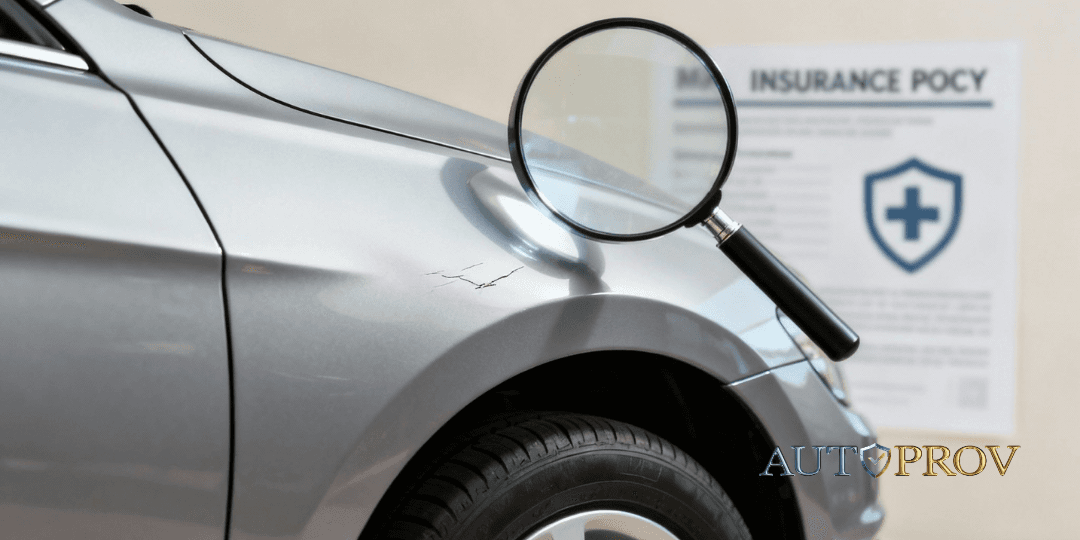
When you hear the term 'write-off', you might imagine a twisted heap of metal by the side of the motorway. Yet in vehicle insurance, particularly for a Category N (or Cat N) classification, the story is often far less dramatic—and far more recoverable with tools like AutoProv's instant Car History Reports. A Cat N write-off simply means an insurer decided a vehicle wasn't economical to repair after an incident, but—and this is the crucial part—the damage was entirely non-structural. The car's core frame and chassis are sound. The decision was purely financial, often because cosmetic fixes, pricey parts, or fiddly electronics pushed the repair bill past the car's market value. The good news? A Cat N car can be properly repaired and legally put back on the road, and our detailed report from AutoProv will flag this status before you commit.
When you hear the term 'write-off', you might imagine a twisted heap of metal by the side of the motorway. Yet in vehicle insurance, particularly for a Category N (or Cat N) classification, the story is often far less dramatic—and far more recoverable with tools like AutoProv's instant Car History Reports. A Cat N write-off simply means an insurer decided a vehicle wasn't economical to repair after an incident, but—and this is the crucial part—the damage was entirely non-structural. The car's core frame and chassis are sound. The decision was purely financial, often because cosmetic fixes, pricey parts, or fiddly electronics pushed the repair bill past the car's market value. The good news? A Cat N car can be properly repaired and legally put back on the road, and our detailed report from AutoProv will flag this status before you commit.
Decoding the Cat N Write Off Status

So, why would an insurer write off a car that hasn't suffered any structural damage? It all comes down to a simple calculation called the 'repair-to-value ratio'—a figure you can review at a glance using AutoProv’s platform. Insurers are businesses, and they're constantly weighing costs. If their estimated bill for parts, paint, and labour creeps above a certain threshold of the car’s pre-accident value—usually around 50% to 60%—they'll cut their losses and declare it an economic total loss. It's a spreadsheet decision, not a final verdict on the vehicle's future.
Common Causes for a Cat N Classification
You'd be surprised how easily a modern car can be branded Cat N. With today's complex vehicles, the costs can spiral quickly for seemingly minor issues, and AutoProv's log tracks these triggers so you're never in the dark.
Common triggers include:
- Cosmetic Damage: Think deep, long scratches down multiple panels, a nasty case of hail damage, or scrapes that require extensive blending and respraying.
- Theft of Parts: A stolen set of alloy wheels, a catalytic converter, or a high-tech infotainment system can easily cost thousands to replace.
- Electrical Faults: Modern cars are computers on wheels. Damage to a wiring loom, multiple sensors, or a critical ECU can involve hours of specialist diagnostic time and eye-watering replacement costs.
- Issues with Steering or Brakes: Sometimes, non-structural components like suspension or braking systems get damaged. While they don't affect the chassis, replacing them can be expensive enough to tip the scales.
A Cat N label tells you one thing: an insurer once decided it was too expensive to fix. It tells you nothing about the quality of the repairs that happened next. That’s why a professional provenance check is non-negotiable.
It's vital to get your head around the different write-off categories to trade confidently. For a full breakdown of what each classification means, have a look at our UK guide to insurance write-offs. Here at AutoProv, we give you the data to see the real story behind the label, not just the insurer's balance sheet.
The Shift from Cat D to Cat N Explained
Before October 2017, if a vehicle had cosmetic or other minor damage that made it uneconomical for an insurer to repair, it was often labelled a Cat D. But this was a pretty blunt instrument. The term was so broad that buyers and traders were often left guessing about the real extent of the problem.
Was it just a few scrapes on the bodywork, or was there a tricky electrical fault lurking underneath? The ambiguity made it tough to value these vehicles properly. AutoProv's historical data supports the need for clearer definitions.
To clear things up, the industry introduced the Cat N category. The 'N' stands for 'non-structural', and it was a game-changer. This new classification specifically flags damage that hasn't compromised the vehicle's core frame or chassis. Suddenly, a clear line was drawn between simple cosmetic issues and much more serious, structural harm.
Since its introduction, the use of Cat N has grown significantly. It’s become a much more common sight in the market, rising from 30% of write-offs in its first year to 38% by 2022. In that year alone, over 150,000 vehicles were given the Cat N classification. You can read the full research about Cat N classification trends on RAC’s website.
This change brought some major shifts for the industry:
- Clarity: It gave everyone—from consumers to seasoned traders—a much better handle on the severity of the damage.
- Market: The supply of clearly-defined, non-structural write-offs surged, creating new opportunities for specialist repairers and dealers.
- Checks: It highlighted just how crucial it is to get a comprehensive history report, like the ones from AutoProv, to see the full picture.
Think of it like an update to the rulebook. Instead of lumping different types of repairable damage together, the new system gives each issue its own specific label. This ensures that when a buyer comes to inspect a vehicle, they know exactly what they should be looking for.
Why Detailed History Checks Are More Important Than Ever
With the rise of Cat N, dealers can't afford to rely on surface-level checks. A quick look at the V5C logbook just won't cut it anymore, as it won't always show a Cat N flag. You need to dig much deeper into a vehicle's past to protect your investment.
This is where a consolidated report becomes essential. AutoProv pulls together data from the DVLA, the MIAFTR (Motor Insurance Anti-Fraud and Theft Register), and specialist salvage records into a single, easy-to-read report, leaving no stone unturned.
“A Cat N designation does not guarantee safety or reliability. Independent inspections are vital.”
These clear, transparent definitions have helped the market adapt. Pricing for Cat N vehicles has stabilised because buyers can more accurately weigh up the potential repair costs against the potential profit.
If you're looking to get a better grip on the rules of the road, check out our guide to understanding UK automotive regulations.
Why a Car Becomes a Cat N Write Off
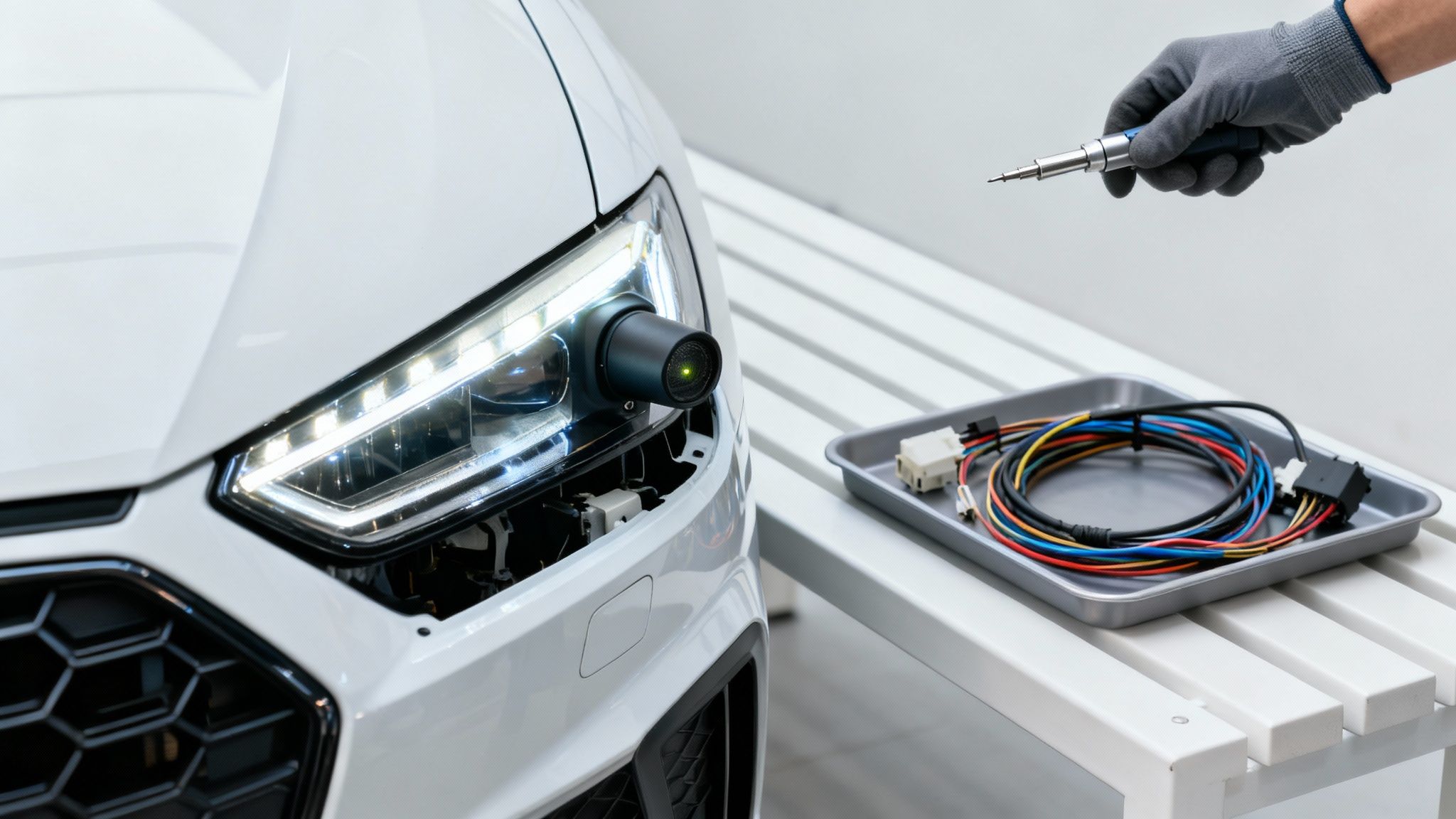
To really get your head around a Cat N write-off, you need to look past the obvious stuff like scraped bumpers or dented doors. While cosmetic damage plays its part, the real story behind most Cat N decisions today is the eye-watering cost of technology packed into modern cars. At the end of the day, it's just a numbers game for the insurer—and AutoProv’s reports itemise those numbers for you.
Think of a modern car less like a machine and more like a rolling computer. A minor bump to the front end might leave the chassis completely fine, but it could easily wipe out a matrix LED headlight, a handful of parking sensors, and the forward-facing radar for the cruise control. Taken together, those parts alone can run into the thousands.
When an insurer sends an assessor out, they aren't just getting a quote for panel beating. They're adding up the total cost of parts, specialist labour, complex calibration, and painting. If that final bill creeps over 50-60% of the car's market value before the accident, it's declared an economic write-off. This happens even if the car looks almost perfect to the naked eye.
The Hidden Costs in Modern Repairs
The very same high-tech systems that make today’s cars safer and more comfortable are also their financial Achilles' heel when something goes wrong. A repair that seems simple on the surface can quickly become too expensive to justify.
Here are a few classic real-world scenarios that often tip a car into the Cat N category:
- Advanced Driver-Assistance Systems (ADAS): A cracked windscreen used to be a straightforward fix. Now, if it has cameras for lane-assist or emergency braking systems embedded in it, the replacement and crucial recalibration process can be incredibly pricey. With AutoProv, you can review repair histories and recalibration costs for these advanced systems.
- Complex Wiring Looms: Something as simple as water getting in from a flood or even rodent damage can compromise the car's entire electrical nervous system. Trying to diagnose and replace a modern wiring loom is a labour-intensive nightmare that insurers will often just walk away from.
- Infotainment and Digital Displays: A smashed central touchscreen or a cracked digital instrument cluster can make a car almost unusable. Replacing these integrated units can easily cost a huge chunk of the vehicle's total value.
A Cat N label is an insurer's financial verdict, not a technical one. It simply means the repair bill was too high for them to stomach—it doesn't mean the vehicle was beyond saving.
This is a critical distinction for anyone in the motor trade. A vehicle written off because it needed a costly but replaceable electronic module is an entirely different beast from one with hidden chassis damage. To make a smart call, you have to find out the original reason for the write-off, which is exactly what a detailed provenance report is for. For more pointers on spotting previous damage, take a look at our essential UK vehicle check guide to learn what to look for.
How a Cat N Status Impacts Vehicle Value

A Cat N notation on a vehicle’s history can feel like a punch to the gut for any dealer. One moment you’re eyeing a solid find, the next it’s stigmatised and harder to shift. No matter how spot-on the repairs may be, the market’s perception has already taken a hit—one you can quantify with AutoProv's live trade value feed.
On average, a Cat N write-off shaves off 20% and 40% of the car’s value compared to an identical model with a clean record. And the hit doesn’t end there. These vehicles tend to depreciate faster over time, face lower resale offers and can even carry higher insurance costs for the next buyer.
The Rise Of Cat N And Market Implications
Cat N vehicles have surged in the UK, driven by the rising cost of fixing modern electronics. In 2023 alone, insurers wrote off over 400,000 cars, with nearly 40% landing in the Cat N category. When a single damaged sensor or module can cost more than the car’s scrap value, it’s no surprise repairers press “total loss.”
For traders, this growing stockpile is a double-edged sword. You can snag bargains at auction, but misjudge the discount and watch your margins evaporate. Accurately pricing Cat N requires both a clear view of repair quality and a solid read on buyer wariness.
For a professional dealer, a Cat N car isn't just a damaged vehicle—it's a complex asset with a unique depreciation curve. Getting the valuation wrong at the point of purchase is a fast track to losing money.
Turning Risk Into Opportunity With Data
The secret weapon? Comprehensive provenance data. A full report from AutoProv goes beyond a simple Cat N alert. It pulls in live trade and retail values, plus future depreciation forecasts, so you know exactly where that car stands.
With this insight you can:
- Negotiate With Confidence: Ground your offers in solid numbers, not guesses.
- Price For Profit: Set a competitive UK forecourt price that still protects your margin.
- Build Trust: Present a transparent history report and show buyers you’ve done your homework.
Effectively managing Cat N stock turns uncertainty into strategy. To nail down the figures, check out our guide on how to calculate vehicle depreciation made simple.
Verifying a Vehicle's Cat N History
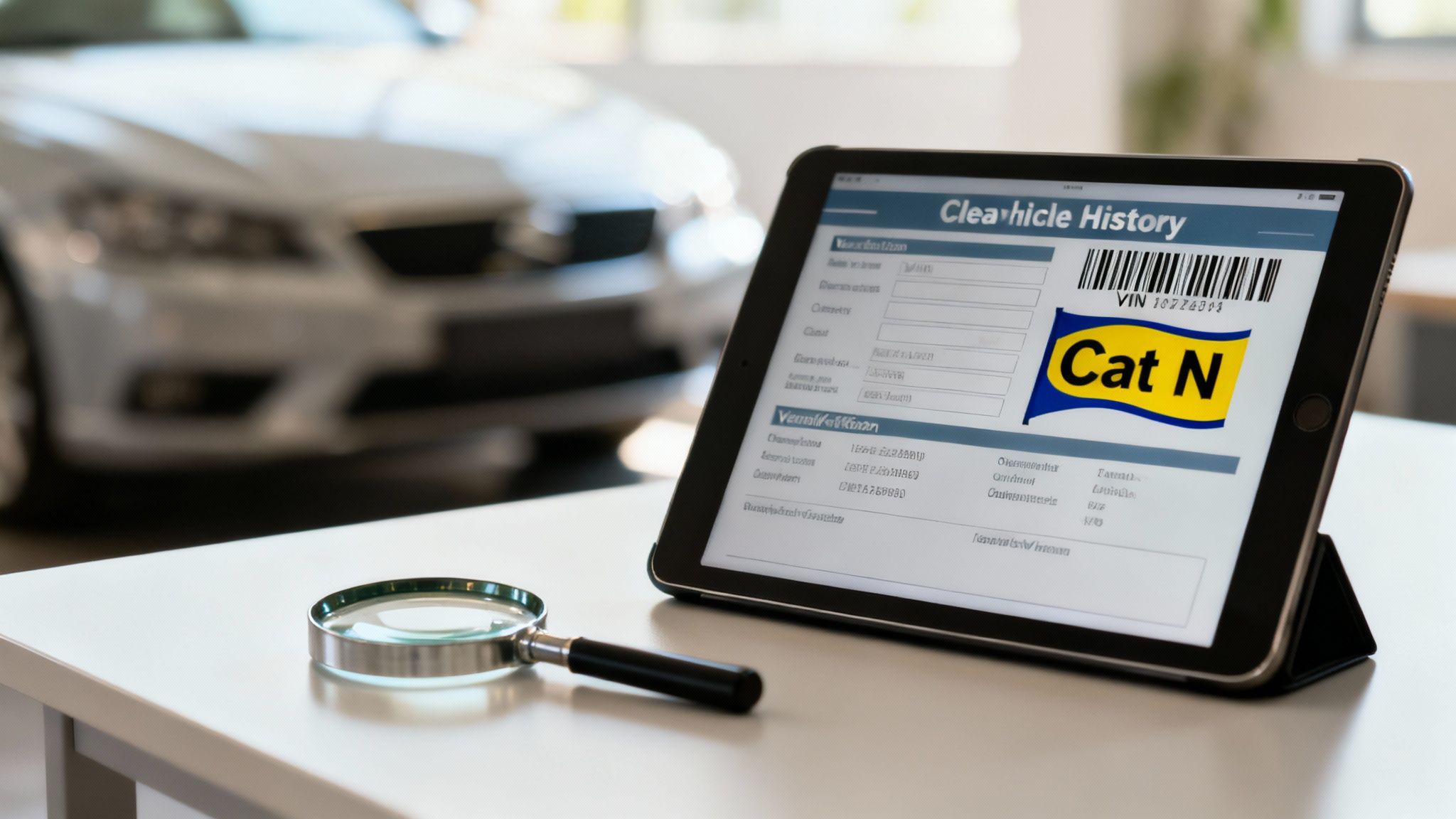
Trusting a seller's word or a bog-standard check on a potential Cat N vehicle is a massive gamble. In this game, proper due diligence isn't just a good idea—it's absolutely essential for protecting your margins and your reputation. To really know what you're buying, you need to dig deep and pull data from several official sources. No single check will ever give you the full story.
The verification process has a few critical layers. Most people start with the DVLA to see if a vehicle has been written off. But here's the catch: the V5C logbook won't always be stamped with a Cat N marker. This creates a dangerous blind spot for any dealer who isn't looking closer, and it's a perfect example of why relying on one data point is a recipe for disaster.
Beyond the Logbook: Essential Data Sources
To build a complete picture, you have to go deeper. The Motor Insurance Anti-Fraud and Theft Register (MIAFTR) is a crucial stop. This is the database where insurers are required to log every vehicle they've processed as a total loss. More often than not, it's the first place a Cat N status is officially recorded, making it a non-negotiable part of any professional check.
On top of that, it pays to investigate specialist salvage auction records. These can provide invaluable context, offering clues about the original damage that led to the write-off in the first place. This insight helps you properly assess the quality of any repairs. Relying on just one source is like trying to solve a puzzle with half the pieces missing.
A Cat N classification is a permanent part of a vehicle's history. Failing to identify it before acquisition means inheriting all the associated risks, from valuation errors to future liabilities.
The Problem of Disconnected Data
The challenge for busy motor trade professionals is that this vital information is scattered across different, disconnected platforms. Juggling checks with the DVLA, MIAFTR, and various salvage databases is slow, clunky, and frankly, inefficient. Miss one small detail in one report, and you could make a costly mistake that turns a profitable unit into a serious liability.
This is exactly where a consolidated report changes the game. At AutoProv, our platform was built to solve this problem. We pull data from all these critical sources—and more—into a single, easy-to-read report. Our system instantly flags the write-off history, giving you the complete provenance you need in under 30 seconds. It's the simplest way to sidestep the risks and acquire stock with total confidence.
For a deeper dive into the verification process, explore our complete guide on how to check if a car is a write-off.
Navigating the Risks of Buying Cat N Cars
Buying a Cat N car isn't your average forecourt transaction; it demands a whole different level of due diligence. To get it right, you need to go in with a clear strategy, knowing exactly what to ask and what red flags to look for. This is about more than just protecting your investment—it's about upholding your legal duties and earning your customer's trust.
Your first port of call should always be a direct conversation with the seller. If you get vague answers, that’s a major warning sign. You need the full story: what happened to cause the write-off, and, critically, who carried out the repairs. An invoice from a reputable, VAT-registered garage is worth its weight in gold. A cash-in-hand job with no paper trail? That should set alarm bells ringing immediately.
Your Inspection Checklist
A thorough physical inspection is completely non-negotiable. Remember, even with non-structural damage, the quality of repair work can be all over the map. While a professional, independent inspection is always the safest route, your own initial checks are crucial. Here’s what to focus on:
- Paint and Panel Gaps: Keep a sharp eye out for mismatched paint colour, overspray on the trim, and uneven panel gaps. These are the classic tells of a rushed or low-quality cosmetic fix.
- Warning Lights: Scan the dashboard for any warning lights that won't go away, especially for airbags or other electronics. Just because a fault code has been cleared doesn't mean the underlying problem has actually been solved.
- Electrical Systems: Methodically test every single electronic component. We’re talking windows, central locking, the infotainment system, parking sensors—the lot. Dodgy wiring is a common and often expensive headache in repaired Cat N cars.
As a motor trade professional, you are legally obligated under the Consumer Rights Act 2015 to disclose a vehicle's full history, including its Cat N status. Transparency isn't just good practice; it's the law.
The Importance of Disclosure and Data
Failing to disclose that a car is a Cat N write-off can land your business in serious legal and financial hot water. Full transparency protects you and gives the customer confidence they're making an informed decision. This is where having solid, verifiable evidence of the vehicle’s history becomes absolutely essential.
A comprehensive provenance check is your ultimate safety net. While you're busy with the physical checks, a detailed report from a service like AutoProv can verify the official record. It will confirm the Cat N status, flag any outstanding finance, and give you the market context you need to price the vehicle fairly and accurately.
By combining hands-on inspection with data-driven verification, you can manage the inherent risks, stay compliant, and turn a potential liability into a profitable, transparent sale.
Got Questions About Cat N Cars? We’ve Got Answers
Stepping into the world of Cat N cars can feel a bit like navigating a minefield of industry jargon and unknowns. It’s completely normal to have questions.
To cut through the confusion, we've tackled some of the most common queries that crop up for both private buyers and professional traders. Think of this as your straightforward, no-nonsense guide to making confident decisions.
Will My Insurance Be Higher for a Cat N Car?
This is the big one, and the honest answer is: it might be, but not always.
Many household-name insurers are perfectly fine with covering a Cat N car. A few, however, might add a small premium to your policy. From their perspective, a car with a damage history could represent a slightly higher risk for future claims, even if it's been perfectly repaired.
The golden rule here is transparency. You must declare the car’s Cat N status when you’re getting a quote. It pays to shop around, as some specialist insurers are known for offering very competitive rates on repaired write-offs. Often, the money you save on the initial purchase price can easily absorb any small bump in your insurance premium.
Can I Get Financing for a Cat N Vehicle?
Getting finance for a Cat N car can be a little trickier than for a vehicle with a squeaky-clean past, but it's definitely not a closed door.
Some lenders might be a bit cautious, mainly because of the car’s lower market value and what they see as a potential risk. This could mean they offer a slightly smaller loan-to-value ratio or less attractive terms.
However, many finance companies are happy to approve a loan for a Cat N car, especially if it’s been repaired to a high standard. Your application gets a major boost if you can show them a comprehensive vehicle history report and proof of a thorough, independent inspection. This tells them the vehicle is a solid asset, not a liability.
Transparency is your greatest asset when dealing with Cat N vehicles. A full disclosure, backed by a detailed provenance report, builds trust with insurers, lenders, and future buyers alike.
What Documents Do I Need When Buying a Cat N Write-Off?
When you’re buying a Cat N write-off, good paperwork is your best line of defence. It’s about more than just getting the V5C logbook; you need a complete paper trail that tells the story of the car’s history and its road back to health.
Here's a checklist of what you should always ask to see:
- The V5C Logbook: First things first, check the seller is the registered keeper. While the V5C won't always be branded with the car's history, it's the foundational document.
- Invoices for Repairs: Ask for detailed, itemised receipts for all the parts and labour involved in the repair. This shows you who did the work and exactly what was replaced.
- A Fresh MOT Certificate: A new, valid MOT issued after the repairs were completed is the bare minimum you should accept as proof of roadworthiness.
- A Comprehensive Vehicle History Check: This is absolutely non-negotiable. A detailed report from a provider like AutoProv pulls together data from the DVLA, MIAFTR, and salvage records to give you the full, unvarnished truth. It’s the single best way to confirm the car's status and trade with genuine confidence.
Remember, with AutoProv's consolidated report you obtain all these documents in one place, saving time and ensuring complete confidence in your Cat N purchase.
Frequently Asked Questions
AI-Generated Content Notice
This article was created with the assistance of artificial intelligence technology. While we strive for accuracy, the information provided should be considered for general informational purposes only and should not be relied upon as professional automotive, legal, or financial advice. We recommend verifying any information with qualified professionals or official sources before making important decisions. AutoProv accepts no liability for any consequences resulting from the use of this information.
From our AI insights
- Mastering Paint Code Checks: Detecting Hidden Car Repairs
Discover how to use paint code verification to identify hidden car repairs and ensure a smarter purchase.
- UK Part-Exchange Checks: Protecting Dealer Margins
Explore essential part-exchange checks for UK dealers to safeguard profit margins, including provenance and finance verification.
- Why Every Keeper Matters: Insights for UK Car Traders
Understand the importance of checking previous keepers for UK motor trade compliance and risk management.
Related Articles

Your Ultimate Guide to Buying a Used Car in the UK
Navigate the UK used car market with confidence using our comprehensive buying guide. Tips, checks, and AutoProv Provenance insights included.

Difference Between MOT and Service: What You Need to Know
An MOT is a mandatory legal inspection that every car on UK roads needs to pass.Think of it as the government's way of ensuring your vehicle meets the absolute minimum safety and environmental standards to be considered roadworthy. A service, on the other hand, is a completely different beast. It's the proactive maintenance routine recommended by the people who built your car, designed to keep it running smoothly and catch problems before they start. In short, an MOT is a pass-or-fail exam required by law. A service is a comprehensive health plan for your car.
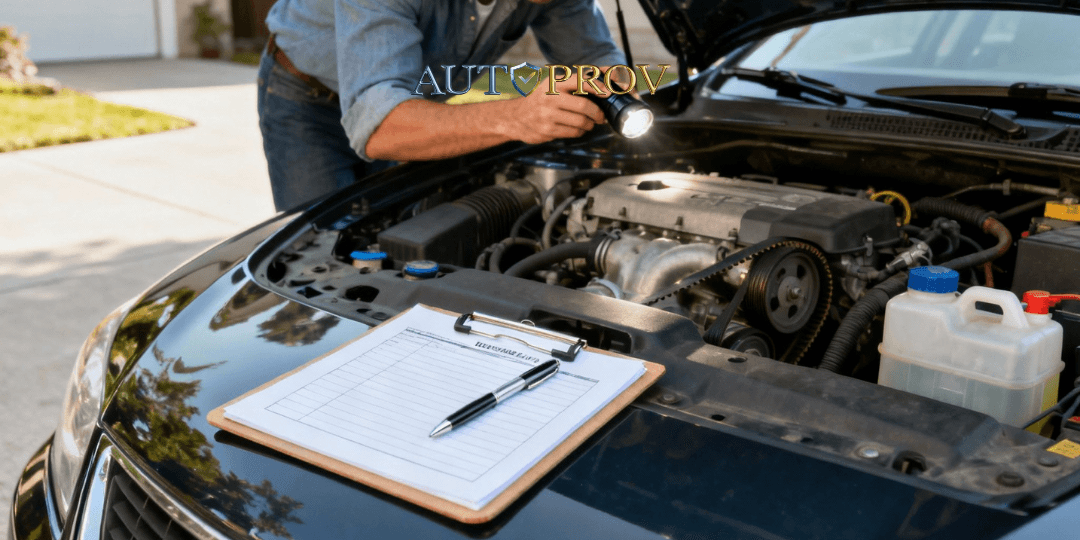
Your Ultimate Used Car Inspection Checklist
A solid used car inspection checklist is the single most powerful tool you have to avoid buying a lemon. It gives you a methodical way to look past the shiny paint and assess a car's real condition, helping you spot hidden problems and get a fair price before you shake hands on the deal.
Published by AutoProv
Your trusted source for vehicle intelligence