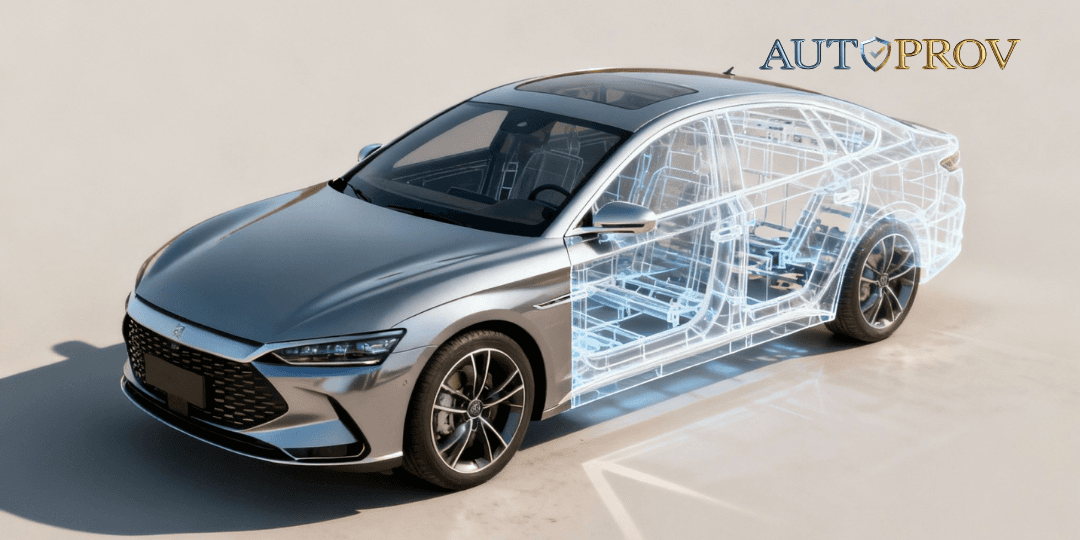
When you come across the term 'Cat S' in the used vehicle market, it's a bit of a red flag. It’s a label that naturally brings up questions about the car's past, its safety, and of course, its value. For any dealer or fleet manager, understanding exactly what this means is the first, most crucial step before even thinking about a purchase.
When you come across the term 'Cat S' in the used vehicle market, it's a bit of a red flag. It’s a label that naturally brings up questions about the car's past, its safety, and of course, its value. For any dealer or fleet manager, understanding exactly what this means is the first, most crucial step before even thinking about a purchase.
Decoding the Cat S Write Off Category
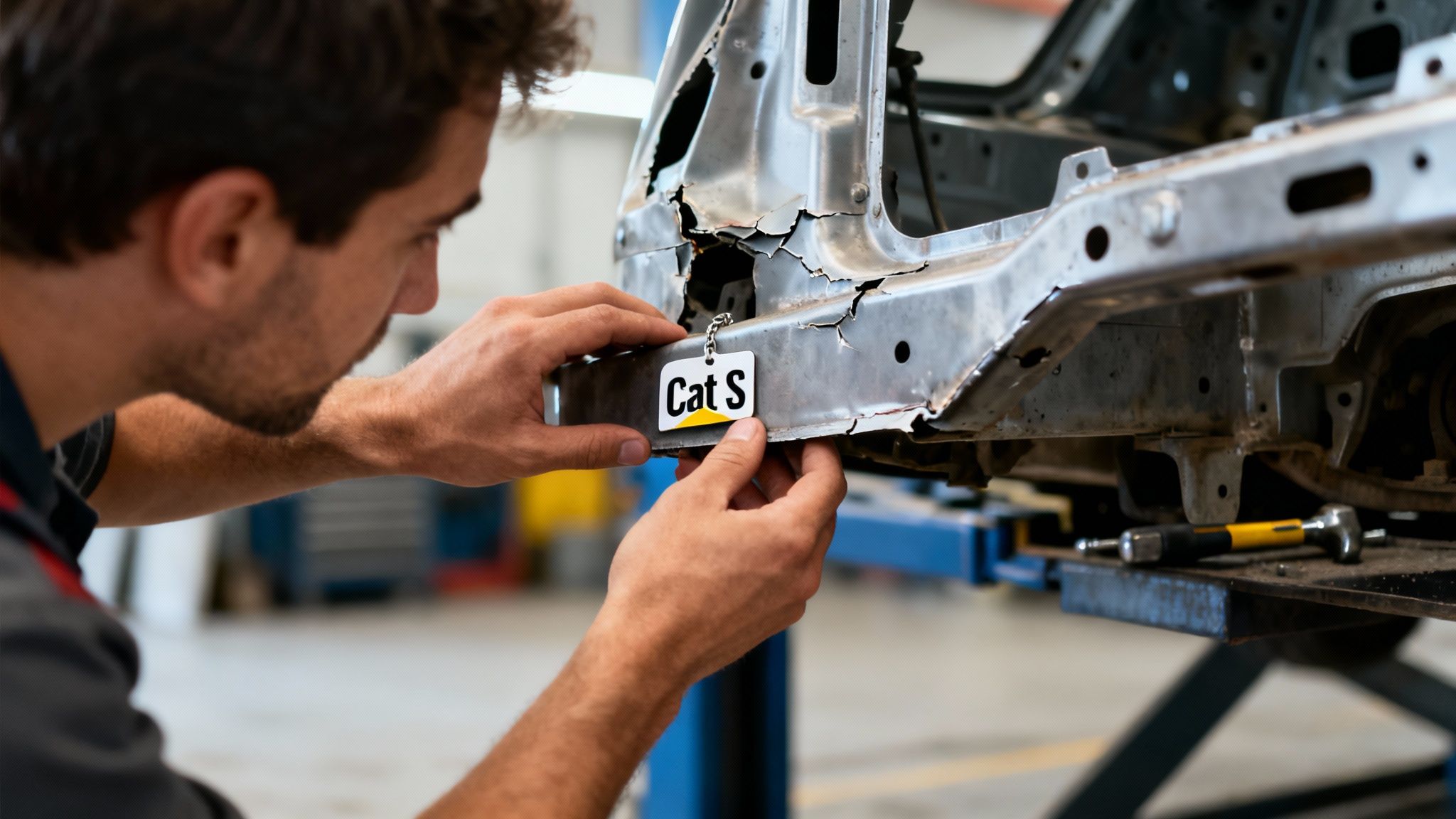
So, what are we actually talking about? At its heart, a Category S write-off is a vehicle that has suffered damage to its structural frame or chassis. An insurer has looked at the repair bill and decided it's just not economical to fix, specifically because the damage hits the car's very skeleton.
This isn't just a scraped bumper or a dented wing. We're talking about the core foundation of the vehicle. However, unlike a total loss, a Cat S car can be professionally repaired and legally put back on the road. The 'S' simply stands for 'Structural', and it's a permanent part of the car's history.
The Anatomy of Structural Damage
Think of a car’s chassis as its skeleton. It’s the framework that holds everything together, ensures the vehicle’s rigidity, and most importantly, protects everyone inside during a crash. When this is compromised, it's a serious matter.
Structural damage can affect critical areas such as:
- The main chassis or frame itself
- Engineered crumple zones designed to absorb impact
- Front or rear subframes holding the engine and suspension
- Key suspension mounting points
- The main roof structure and pillars (A, B, and C pillars)
Fixing this kind of damage is a world away from simple bodywork. It demands specialist equipment, like chassis jigs, and highly skilled technicians to ensure the car's integrity is properly restored. That 'S' marker is a clear signal of this deeper, more complex damage.
A Cat S classification is a permanent part of the car's history, a red flag that demands closer inspection and complete transparency. It’s a signal that due diligence is not just recommended; it's essential.
The Evolution from Cat C to Cat S
You might remember the old 'Cat C' classification. The insurance write-off categories were updated back in 2017 by the Association of British Insurers (ABI) to make things clearer for buyers. The move from Cat C to Cat S was designed to be more explicit, leaving no doubt that the damage is structural.
This change wasn't just for show. Insurance claim data from 2023 showed that around 10-12% of all write-offs reported to the Motor Insurers' Bureau were Category S. The new system makes it clear that while these vehicles are salvageable, the quality of the repair is everything.
A Cat S write-off isn't an automatic "no". But it absolutely requires a much deeper level of scrutiny. Uncovering its full history is non-negotiable if you want to make an informed decision. For a deeper dive into the terminology, check out our guide on what a salvage title means in the UK.
This is precisely where a professional-grade vehicle provenance report becomes indispensable. Tools like AutoProv are built to give you the complete picture, laying out the car's past so you can properly assess its present condition before making a commitment.
Understanding All Four UK Write Off Categories
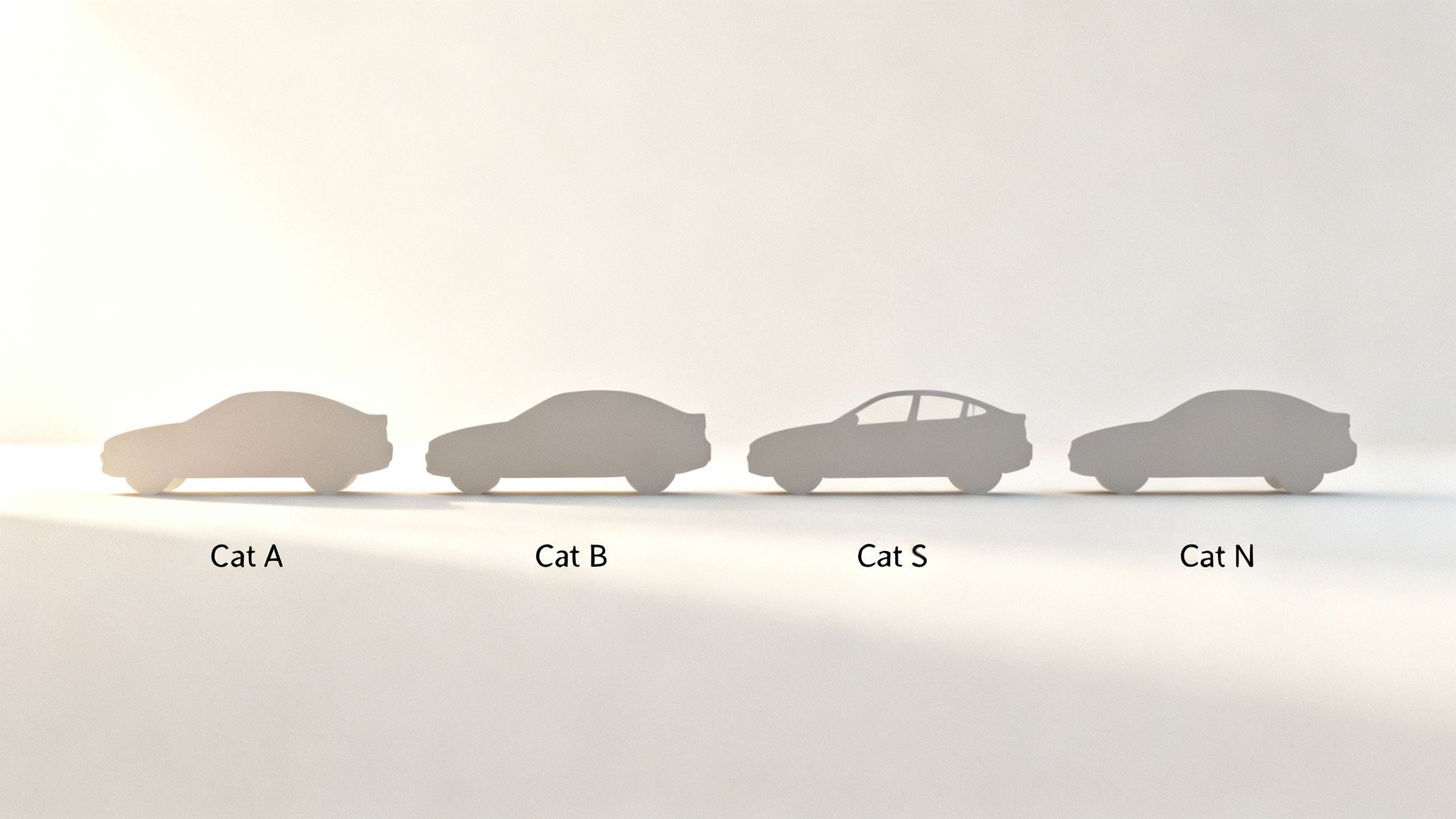
To really get to grips with what a Cat S classification means, you have to see where it fits into the bigger picture of UK insurance write-offs. When an insurer writes off a vehicle, they’re not just saying it’s a bit bashed up; they’re assigning it to one of four very specific categories. Each one tells a distinct, legally binding story about the car’s condition and its future on the road—or lack thereof.
Think of these categories as a ladder of damage, starting from total write-offs that are only good for scrap, all the way to vehicles that can be professionally repaired and put back on the road. For anyone in the motor trade, knowing the difference between Cat S, N, B, and A is non-negotiable. This knowledge directly impacts a vehicle's value, its legality, and the level of due diligence you need to apply.
Category A: The Point of No Return
Right at the bottom of the ladder is Category A. These are vehicles that have suffered the worst possible damage you can imagine—we're talking major crashes, severe fire damage, or deep floodwater immersion. A Cat A write-off is so utterly compromised that the law says it must be crushed in its entirety.
No parts can be salvaged from it. Not a single nut or bolt. The whole vehicle, from the chassis to the trim, is considered waste and has to be completely destroyed. You'll never see a Cat A car for sale because it's illegal for any part of it to ever see the light of day again. It's the absolute end of the line.
Category B: Break for Parts
One rung up, you'll find Category B. The 'B' stands for 'Break,' and that's exactly what happens to it. A Cat B car has sustained major structural damage, meaning its bodyshell is toast. It must be crushed and can never legally be put back on the road.
The key difference from Cat A, however, is that a licensed professional can salvage undamaged parts. This could be anything from the engine and gearbox to seats or the infotainment system, so long as they weren't affected by the crash. This category allows usable components to be recycled while making sure the dangerously compromised chassis is taken out of circulation for good.
You could think of the categories like a medical diagnosis. Cat A and B are terminal—there's no chance of recovery. Cat S and N, on the other hand, are serious but potentially treatable conditions, where the prognosis depends entirely on the quality of the care received.
Category N: Non-Structural Damage
Here’s where things get a bit more interesting for buyers and sellers. A Category N write-off has damage that is non-structural. The 'N' simply tells you that the car's main frame or chassis is intact and hasn't been compromised in the accident.
The damage could be purely cosmetic, like scraped panels and dented doors, or it could involve the electrics, engine, or interior. The insurer decided it wasn't worth their money to fix, but a Cat N car can be professionally repaired and safely returned to the road without requiring complex structural work.
Category S: Structural But Repairable
And finally, we arrive back at Category S. As we've covered, the 'S' stands for 'Structural'. This vehicle has taken a hit to its core frame, but an expert has assessed it and confirmed it can be repaired. This is the crucial difference that sets it apart. It sits in that unique space between the non-structural damage of a Cat N and the terminal diagnosis of a Cat B.
A Cat S marker demands the highest level of scrutiny because the vehicle's future safety rests entirely on the quality of those structural repairs. For a full rundown of the legal side of these classifications, it’s worth reading our guide on understanding UK automotive regulations. A comprehensive vehicle history check from a provider like AutoProv is non-negotiable here; it confirms the category and gives you the solid foundation you need before starting any physical inspection.
Navigating the Insurance and Legal Maze of a Cat S Car

So, you’re looking at a Category S vehicle. It’s more than just a car; it's a vehicle with a past, and that past comes with a paper trail of legal duties and insurance headaches. For any dealer or fleet manager, getting your head around the admin side is non-negotiable before adding a Cat S car to your stock. This is one area where being transparent isn't just good business—it’s the law.
Once a Cat S car has been professionally repaired and is fit for the road again, its official journey starts with the Driver and Vehicle Licensing Agency (DVLA). The V5C logbook will be permanently marked to show its history, meaning that ‘S’ classification is there for life. It’s not a footnote you can afford to miss.
The Legal Duty of Disclosure
Here’s the single most important thing to remember: you absolutely must be transparent about a Cat S car's history. When you sell it, you are legally bound to tell any potential buyer the full story. Trying to gloss over the fact it was once structurally damaged isn't just poor form; it could land you in serious legal trouble.
This duty of disclosure is there to protect the next owner, ensuring they know exactly what they’re getting into. It lets them make a properly informed decision. For dealerships, building trust through total honesty is the only way forward.
Navigating the world of a Cat S car is a test of diligence. The legal and insurance frameworks are designed to ensure safety and transparency, placing the onus on the seller to be upfront and on the buyer to be thorough.
The Challenge of Securing Insurance
With the legal side sorted, the next big hurdle is getting the car insured. This is often where the dream of a bargain can start to unravel. Many mainstream insurers see a Cat S car and immediately get nervous, and you can’t really blame them. A history of structural damage, even after a top-notch repair, creates uncertainty about the car’s long-term safety and integrity.
Because of this higher perceived risk, you're likely to run into a few common problems:
- Outright Refusal: Some of the big insurers just won't touch previously written-off vehicles, especially those with a history of structural damage. It's a blanket "no".
- Inflated Premiums: If you do find an insurer willing to offer cover, expect to pay more. The premium will almost certainly be higher than for an identical, accident-free model to reflect the extra risk they feel they’re taking on.
- Specialist Insurers: Your best bet is usually to look for specialist insurance providers. These companies understand categorised vehicles, know how to properly assess the risk, and are more likely to offer reasonable terms.
Finding the right cover is key. For a deeper dive, check out our guide on insuring a category car in the UK. It takes a bit of preparation and persistence, but it’s entirely possible. As a dealer, knowing who to recommend and what questions to ask can make the sales process much smoother for your customers. An AutoProv provenance report gives you—and the specialist insurers—the clear, documented history needed to move forward with confidence.
How a Cat S Status Impacts Vehicle Value
A Category S marker isn't just a footnote in a car's history; it's a permanent brand that completely changes its financial story. For anyone in the motor trade, getting your head around this impact is absolutely critical. The moment a car is classified as Cat S, its market value drops—permanently.
Even if the vehicle has been repaired to a flawless, factory-fresh standard, it's still going to take a significant financial hit. We see it time and time again in the market data: a Cat S car is typically valued anywhere from 20% to 40% lower than an identical, accident-free model. This isn't just an arbitrary number; it's a direct reflection of real-world market sentiment.
The Reasons Behind the Devaluation
So, why such a steep drop in price? It all boils down to a few key factors that shape a potential buyer's perception and the real-world costs they might face down the line.
There are three main drivers behind this devaluation:
- Buyer Anxiety: The phrase 'structural damage' is enough to make most buyers wince. There’s a persistent stigma that clings to written-off vehicles, which immediately shrinks the pool of interested customers.
- The Repair Question Mark: No matter how many receipts or glossy photos of the repair process you have, a seed of doubt often remains. Was the structural work done properly? Buyers naturally worry about long-term reliability and safety, and that worry translates directly into how much they're willing to pay.
- Insurance and Resale Hurdles: As we've already touched on, getting a Cat S vehicle insured can be trickier and more expensive. On top of that, savvy buyers know that when it’s their turn to sell, they’ll be facing the exact same scepticism and lower valuation from the next person.
For a seller, this means you have to be transparent and realistic with your pricing from the get-go. For a buyer, it poses a crucial question: is this a genuine bargain, or is it a future financial headache wearing a disguise?
Weighing the Financial Pros and Cons
Ultimately, the decision to buy or sell a Cat S car is a financial calculation. On one side of the ledger, you've got that tempting, immediate saving. The lower price tag can suddenly put a newer, higher-spec model within reach, which is a powerful pull for anyone looking to get more car for their money.
But the other side of the ledger needs careful thought. That initial saving has to be balanced against much faster depreciation and a significantly lower resale value in the future. A Cat S car will always be worth less than its non-categorised twin, and that value gap isn't going anywhere. To really understand the long-term picture, it helps to know how to calculate vehicle depreciation, because a Cat S car starts that journey from a much lower point.
A Cat S vehicle can represent good value, but only if the price accurately reflects its past and its future market position. This is where a trusted provenance report becomes indispensable. An AutoProv check doesn't just confirm the Cat S status; it gives you the market valuation data you need to judge if the asking price is fair. It allows you to make a decision based on solid financial insight, not just a gut feeling.
Your Essential Guide to Verifying a Car's History
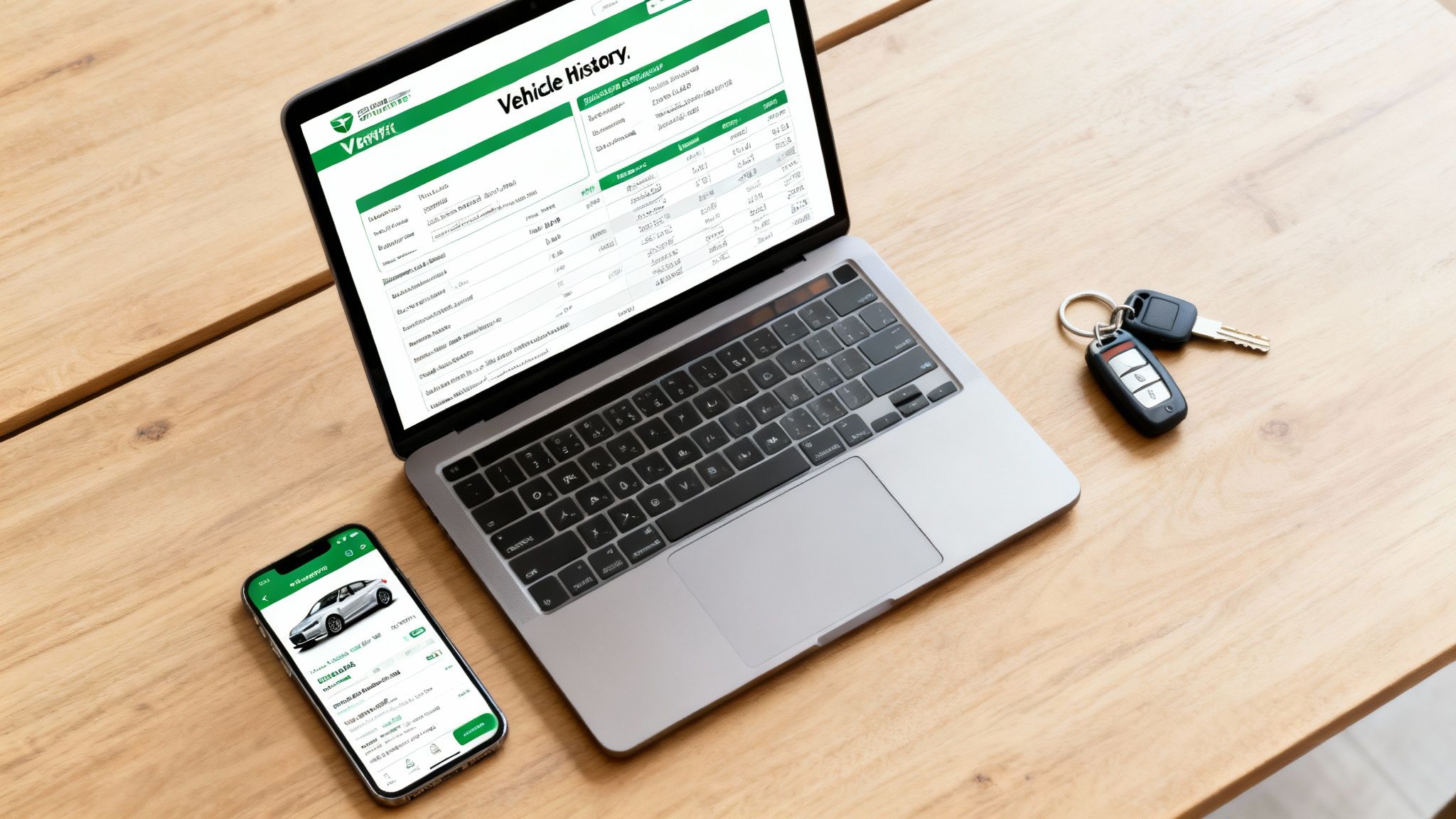
In the used car trade, the old saying ‘trust but verify’ has never been more relevant, especially when a potential Cat S vehicle comes onto your radar. Just taking the seller's word for it is a high-stakes gamble you can't afford to make, whether you're a seasoned dealer or a meticulous fleet manager. Think of it like buying a house: you wouldn’t just accept the owner’s assurance that the foundations are solid—you’d get a surveyor to check.
This is even more critical when you know a car has sustained structural damage. The seller might have the best of intentions, but there’s a good chance they don't have the full story themselves. The only real way to protect your business and your reputation is to carry out your own independent, professional due diligence.
The Non-Negotiable Vehicle History Check
An independent vehicle history check isn't an optional extra; it's a core part of the buying process for any used car. When you see a Cat S marker, it becomes absolutely essential. This is where a service like AutoProv becomes one of the most important tools in your arsenal.
A professional-grade report simply cuts through the noise and gives you the cold, hard facts. It’s your best defence against misinformation, undisclosed issues, and expensive mistakes. Without it, you’re flying blind and exposing your business to serious financial and legal risk.
A professional provenance report transforms you from a hopeful buyer into an informed one. It provides the concrete data you need to challenge what you're being told and make a decision based on facts, not faith.
This data-first approach takes the guesswork out of the equation. It means you can negotiate from a position of strength, armed with the complete history of the vehicle you’re looking at.
Going Beyond Basic Checks with AutoProv
A standard check might cover the basics, but the motor trade runs on the finer details. An AutoProv report is built for professionals, delivering a level of insight that goes far beyond a simple MOT history search. It's your single source of truth, pulling together information from over 10 trusted data sources.
Here’s a snapshot of what a comprehensive report uncovers to give you the full picture:
- Write-Off Confirmation: It verifies the exact date and category of the write-off, confirming its Cat S status and removing any shred of doubt.
- Outstanding Finance: Crucially, it flags any existing finance agreements tied to the vehicle through Experian checks, stopping you from accidentally taking on someone else's debt.
- Mileage Discrepancies: By digging into historical data, it can spotlight potential clocking issues that could massively alter the car’s true value.
- Full MOT History: It lays out every pass, fail, and advisory notice, giving you a clear timeline of the car's maintenance and any recurring problems.
- Stolen Vehicle Status: An instant check against the Police National Computer (PNC) makes sure the vehicle isn't stolen property.
This level of detail is indispensable. If you want more guidance on the process, our full article on how to check a car's history in the UK is a great place to start.
At the end of the day, investing a few pounds in an instant, professional report is the smartest move you can make. It gives you the certainty to either walk away from a bad deal with confidence or go ahead with a purchase, fully aware of the vehicle’s past and its genuine market value.
So, Should You Actually Buy a Cat S Car?
We’ve picked apart the legal, insurance, and valuation minefield of a Cat S write-off. Now we’re left with the big one: should you actually buy one? The truth is, there’s no simple yes or no. This is a calculated business decision that pits a massive opportunity against some very real, and potentially very costly, risks.
On the one hand, the appeal is obvious. You could land a newer, higher-spec vehicle for a fraction of its market value. For a dealership, that smells like a healthy profit margin. For a fleet manager, it’s a chance to upgrade the fleet without blowing the budget. The financial upside is undeniable—it's the whole reason these cars are put back on the road.
But, and it’s a big but, the other side of that coin needs your full attention. The risks are substantial, and they all boil down to one thing: the quality of the repair. A shoddy structural repair isn't just a cosmetic issue; it fundamentally compromises the car's safety. Your potential bargain could easily become a dangerous liability.
Your Final Pre-Purchase Checklist
Before you even dream of making an offer, you need to go in armed with information. This is way beyond kicking the tyres; it's a full-blown investigation. A Cat S car can be a shrewd purchase, but only for a buyer who has done their homework and left no stone unturned.
Here’s a final checklist of the questions you absolutely must have answers to—from the seller and for yourself:
- Who did the repairs? Get the name and details of the repair centre. A reputable, accredited bodyshop is a great sign. A vague answer is a massive red flag.
- Is there photo evidence? A proper repairer will often document the entire process, with photos showing the initial damage, the structural work in progress, and the finished job. That kind of transparency is worth its weight in gold.
- What paperwork is there? Ask to see every single invoice and receipt for parts and labour. This isn't just a pile of paper; it's the proof of what was actually done to the car.
- Has it passed an independent inspection? A post-repair inspection from a qualified engineer or a mechanic you trust is vital. It’s the only way to get an unbiased verdict on the quality and safety of the structural work.
- Have I run a full history check? This is completely non-negotiable. It should be the very first thing you do. You must verify every detail with a professional-grade vehicle history check.
Here’s the bottom line: a Cat S car can be a sound strategic move, but only if you have verified every single detail. Assumptions are your worst enemy; documented facts are your best friend.
Ultimately, the decision comes down to your ability to confirm the car's integrity beyond a shadow of a doubt. This is where a comprehensive vehicle provenance report, like one from AutoProv, becomes essential. It’s your first line of defence, giving you the foundational data—confirming the write-off status, checking for outstanding finance, and flagging other hidden history—that lets you move forward with your physical checks and questions. Without that verified history, you’re not taking a calculated risk; you’re just gambling.
Your Cat S Questions, Answered
Let's clear up some of the most common questions we hear about Category S cars. Think of this as a quick reference guide to tackle any lingering uncertainties.
Does a Cat S Marker Ever Get Removed?
In a word, no. Once a car is classified as Category S, that marker is a permanent part of its history. It’s logged with the DVLA and will show up on every comprehensive vehicle history check, like the ones from AutoProv.
This is precisely why getting to grips with what a Cat S write-off really means is so crucial before you even think about buying. It's a permanent stain on the car's record that simply can't be wiped clean.
Is It Safe to Drive a Repaired Cat S Car?
It absolutely can be, but there's a huge "if" attached. A Cat S car is only safe to drive if the structural repairs were carried out to a high professional standard by a qualified specialist. The safety of the vehicle hangs entirely on the quality of that workmanship.
This is exactly why we always push for an independent mechanical inspection before any money changes hands. You need an expert eye to verify the integrity of the chassis and all the crucial structural bits.
A safe Cat S car is a testament to expert craftsmanship. An unsafe one is a product of cut corners. The real difference is in the quality of the repair, which makes proper verification non-negotiable.
How Is Cat S Different from the Old Cat C?
Good question. Cat S officially took the place of the old Cat C classification back in October 2017. While both categories point to a vehicle with structural damage, the new system was introduced to give buyers more clarity.
The current system, which uses ‘S’ for Structural and ‘N’ for Non-structural, is far more transparent. It tells you immediately what type of damage the vehicle sustained, which is a big improvement.
Will I Have Trouble Selling a Cat S Car?
You should definitely be prepared for a tougher sell. Many buyers are understandably nervous about written-off vehicles, so you'll almost certainly have to price it lower than an equivalent car without a history.
Your best assets when selling are complete honesty and a thick folder of paperwork. Full transparency, coupled with detailed receipts and photos of the repair work, is your only real path to a successful sale.
Frequently Asked Questions
AI-Generated Content Notice
This article was created with the assistance of artificial intelligence technology. While we strive for accuracy, the information provided should be considered for general informational purposes only and should not be relied upon as professional automotive, legal, or financial advice. We recommend verifying any information with qualified professionals or official sources before making important decisions. AutoProv accepts no liability for any consequences resulting from the use of this information.
From our AI insights
- Spotting Insurance Frauds: Key Indicators UK Dealers Need
Learn to identify insurance frauds with key risk indicators using AutoProv.
- Navigating Insurance Write-Offs in 2024: What UK Traders Need to Know
Explore how UK traders can navigate insurance write-offs using provenance intelligence in 2024.
- Impact of Write-Off Categories on Car Values in 2024
Explore how Cat S, Cat N, Cat A, and Cat B write-offs affect UK vehicle pricing and trader responsibilities.
Related Articles

Understanding UK Car Insurance: Types and Legalities
Explore the UK car insurance sector, types of coverage, and the legal implications of incorrect coverage.
How to Check If a Car Is Insured in the UK | Easy Guide
The quickest and most reliable way to check if a car is insured is by using the Motor Insurance Database (MID) online. All it takes is the vehicle's registration number to see if a valid insurance policy is on record. Remember, driving without at least third-party insurance is a serious offence here in the UK.
Hit by an uninsured driver: UK accident rights & claim guide
Being hit by an uninsured driver is a deeply frustrating experience. The shock of the accident is bad enough, but finding out the other party has no insurance just adds a whole new layer of stress and confusion. Suddenly, the straightforward path to getting your car fixed seems to vanish. This guide is here to cut through that noise and show you that you're not out of options.
Published by AutoProv
Your trusted source for vehicle intelligence