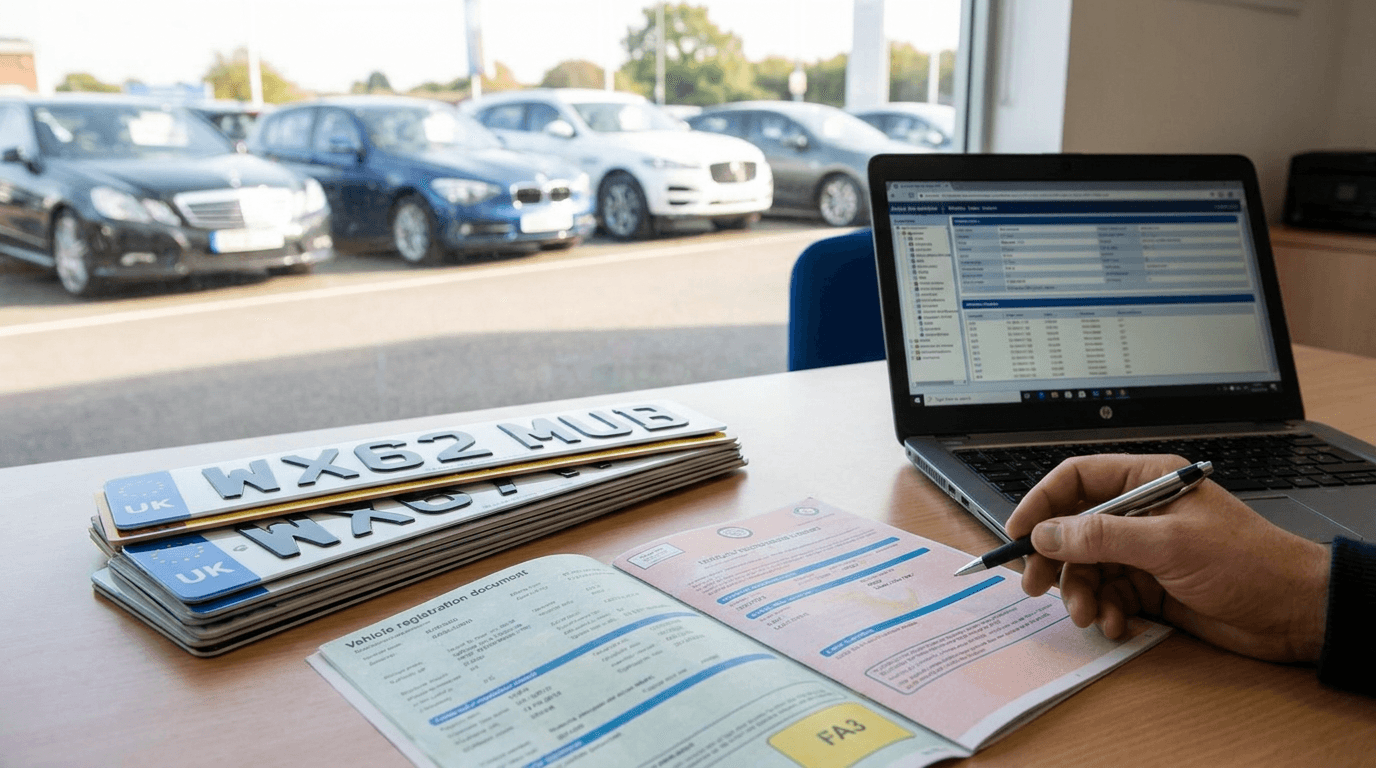
Learn how UK number plate changes work, why they matter for stock valuation, and how registration dates affect vehicle provenance checks for motor traders.
By CiteFlow
What Are UK Plate Changes and When Do They Happen
UK number plate changes occur twice annually on 1 March and 1 September, introducing new age identifiers that reflect the vehicle's registration period. The March plate uses a two-digit year number (24 for March 2024), whilst the September plate adds 50 to that number (74 for September 2024). These bi-annual changes create distinct registration periods that affect vehicle desirability, stock turnover rates, and valuation dynamics across the motor trade.
The current format, introduced in September 2001, consists of a two-letter local memory tag indicating the DVLA office, a two-digit age identifier, and three random letters. This system replaced the previous suffix and prefix systems and is designed to run until at least February 2051, when the 01 and 51 plates will be issued.
For motor traders, plate change dates represent critical inflection points in the market calendar. Stock registered just before a plate change can lose perceived value overnight, whilst vehicles registered on the new plate command premiums during the initial weeks. Understanding these dynamics helps you time stock acquisition and pricing strategies more effectively.
How Plate Changes Affect Vehicle Desirability and Market Value
Vehicles registered immediately before a plate change typically experience accelerated depreciation compared to those registered days later on the new plate. A car registered on 31 August appears six months older than an identical model registered on 1 September, despite potentially being manufactured in the same week. This perception gap directly impacts retail pricing and days-to-sell metrics.
The premium for newer plates varies by segment. Prestige and executive vehicles show the most pronounced plate sensitivity, with buyers often willing to pay £500-£1,500 more for a current-plate example versus the previous registration period. Volume brands and commercial vehicles demonstrate less plate sensitivity, though the effect remains measurable across all categories.
Stock acquisition timing around plate changes requires careful consideration. Purchasing pre-plate-change inventory at auction can secure lower hammer prices, but you must factor in the immediate perceived age increase. Conversely, waiting for new-plate stock means higher acquisition costs but potentially faster turnover and stronger margins. Understanding vehicle valuation data helps quantify these trade-offs with market-specific pricing intelligence.
Registration Date Verification and Provenance Implications
The registration date on the V5C logbook represents when DVLA first registered the vehicle in the UK, not necessarily when it was manufactured or imported. Discrepancies between build date, first registration, and plate age can indicate several scenarios motor traders must verify during due diligence.
Pre-registered vehicles, common in manufacturer push periods before plate changes, show registration dates potentially months before retail delivery. Whilst legitimate, these vehicles require clear disclosure to retail customers under CRA 2015, as the registration date affects warranty start dates and perceived age. Factory build sheets confirm actual production dates, helping you identify and accurately describe pre-registered stock.
Imported vehicles present more complex registration date scenarios. A vehicle manufactured in 2020 might carry a 2023 UK registration plate if imported and registered that year. The V5C will show the first UK registration date, not the original overseas registration. Comprehensive provenance checks verify import history, previous overseas registration, and any gaps between manufacture and UK registration that might indicate storage, damage, or market-specific issues.
Plate transfers and cherished registrations further complicate age verification. A vehicle displaying a private plate might be significantly older than the registration suggests. The V5C shows the current registration mark and date of current keeper, but not the original age-related plate. Only a full DVLA vehicle enquiry reveals the original registration date, which determines the vehicle's true age for MOT, tax band, and regulatory purposes.
Common Plate Change Scenarios That Require Additional Due Diligence
Vehicles registered in the final days of a plate period warrant closer inspection. Manufacturers and dealers often register unsold stock to meet quarterly targets, creating pre-registered inventory that enters the used market with minimal mileage but older registration dates. Whilst not inherently problematic, these vehicles require verification that the registration wasn't a salvage re-registration or a delayed import registration masking history.
Mileage anomalies around plate changes can indicate clocking or registration irregularities. A vehicle showing 50,000 miles at its first MOT (three years after registration) but registered on the final day of a plate period might have accumulated significant mileage before official registration. Cross-referencing manufacturer service history databases reveals actual in-service dates and mileage accumulation patterns that the registration date alone cannot show.
Commercial vehicles converted to private use often show registration date changes when reclassified. A van registered in 2020 but converted and re-registered as a car derivative in 2023 will show the 2023 date on the V5C, potentially masking its actual age and previous commercial use. Build sheet verification confirms original specification and identifies conversions that affect valuation and buyer appeal.
The Role of Registration Dates in Regulatory Compliance
Registration dates determine which regulatory standards and emissions requirements apply to a vehicle. The September 2015 plate change marked the transition from Euro 5 to Euro 6 emissions standards for new diesel cars, creating a clear dividing line for Clean Air Zone eligibility and future taxation. Similarly, April 2017 registration changes introduced new VED bands based on CO2 emissions, fundamentally altering the tax liability of otherwise identical vehicles registered either side of that date.
MOT requirements key off the registration date, with the first test due on the third anniversary of first registration. A vehicle registered on 28 February 2021 requires its first MOT by 28 February 2024, whilst one registered two days later on 2 March 2021 gains those extra days. For stock purchased close to MOT due dates, these registration date nuances affect preparation costs and sale timing.
Understanding UK automotive regulations becomes critical when registration dates place vehicles at regulatory transition points. The 2021 introduction of E10 fuel compatibility requirements, changes to MOT testing procedures, and evolving emissions zone restrictions all key off registration dates rather than model years. Accurate date verification protects you from mis-selling vehicles that don't meet buyer requirements or local authority restrictions.
How AutoProv Verifies Registration Dates and Plate History
AutoProv's vehicle provenance reports pull registration data directly from DVLA records, confirming the official first registration date, current keeper date, and registration mark history. This verification identifies plate transfers, cherished registrations, and any discrepancies between the displayed plate and the vehicle's actual age.
The integration with manufacturer build databases cross-references production dates against registration dates, highlighting pre-registered vehicles, delayed registrations, and import scenarios. When a 2022 model year vehicle shows a 2023 registration, the build sheet data confirms whether this represents normal pre-registration or a more complex history requiring investigation.
Factory specification verification through OEM option codes confirms the vehicle's original market and build specification, identifying grey imports and cross-market vehicles that might carry UK registrations but weren't originally UK-spec. This distinction affects parts availability, warranty coverage, and resale values in ways the registration date alone doesn't reveal.
Strategic Considerations for Stock Acquisition Around Plate Changes
Purchasing stock in the weeks before a plate change can secure favourable auction prices, as wholesale buyers discount imminent perceived age increases. However, this strategy requires confident retail turnover to avoid holding pre-change stock into the new registration period, when buyer preference shifts decisively toward current-plate vehicles.
The strongest retail demand for new-plate stock occurs in the first four to six weeks after each plate change. Stocking current-plate inventory during this window supports premium pricing and faster turnover, offsetting higher acquisition costs. Volume dealers often adjust their stock profile seasonally, carrying more current-plate prestige stock in peak demand periods whilst maintaining value-focused, plate-insensitive inventory year-round.
Pre-registered stock from manufacturer programmes offers acquisition opportunities if properly verified and disclosed. These vehicles typically show delivery mileage only, full manufacturer warranty from registration date, and clear provenance. The key risk lies in vehicles registered to meet targets but subsequently stored, potentially accumulating storage-related issues or warranty gaps. Service history verification confirms actual delivery dates and identifies genuine pre-registered stock versus problematic delayed registrations.
Plate Transfer Implications and Verification Requirements
Cherished number plates and private registrations mask a vehicle's true age, creating disclosure requirements under consumer protection regulations. When a vehicle displays a non-age-related plate, you must verify and communicate its actual registration date to retail buyers, as this affects insurance grouping, parts pricing, and regulatory compliance.
Plate transfers require DVLA processing and V5C updates, creating a paper trail that provenance checks reveal. Recent transfers, particularly those occurring just before sale, sometimes indicate attempts to obscure age or registration history. Whilst most transfers are legitimate personalisation, those coinciding with ownership changes or occurring shortly before auction warrant additional scrutiny.
The retention of cherished plates when vehicles enter the trade can complicate age verification at first glance. A vehicle arriving at auction on a private plate requires DVLA enquiry to confirm its age-related registration and actual first registration date. This verification step prevents acquisition errors based on assumed age and ensures accurate stock descriptions that meet CRA 2015 compliance requirements.
Registration Date Anomalies That Signal Potential Issues
Significant gaps between manufacture date and first UK registration often indicate import history, previous overseas registration, or storage periods that require explanation. A vehicle built in 2020 but first registered in the UK in 2023 might be a legitimate import, a demonstrator held in storage, or a vehicle with more complex history including previous damage or regulatory issues in another market.
Multiple keeper changes within the first registration year can signal early problems, dealer swaps, or fleet reassignments. Whilst not definitive indicators of defects, these patterns warrant investigation through service history verification and mileage anomaly analysis to understand why a vehicle changed hands rapidly after registration.
Registration dates that don't align with plate age identifiers indicate plate transfers or DVLA data corrections. When the V5C shows a 2022 first registration but the vehicle displays a 72-plate (September 2022 onwards), either a plate transfer occurred or data requires verification. These mismatches don't necessarily indicate problems but require explanation in stock descriptions to avoid buyer confusion and potential disputes.
Using Registration Intelligence for Competitive Advantage
Understanding plate change dynamics helps you identify undervalued stock at auction. Vehicles registered in the final week of a plate period often sell below market value due to perceived age concerns, yet they may be identical in condition and specification to current-plate examples. Confident verification of actual condition, mileage, and provenance lets you acquire these vehicles profitably whilst accurately representing their value to retail buyers.
Seasonal stock planning around plate changes optimises inventory turnover and margin potential. Building current-plate inventory ahead of peak demand periods (typically March-May and September-November) positions you for stronger retail activity, whilst maintaining value-focused stock during quieter periods balances turnover with margin preservation.
Market intelligence showing days-to-sell variations by registration period helps refine pricing strategies. Current-plate premium and executive stock typically turns 20-30% faster than previous-period equivalents in the first eight weeks after plate changes, supporting slightly higher margins that offset acquisition premiums. Volume stock shows less pronounced patterns but still benefits from registration-aware pricing that reflects buyer preferences.
Regulatory Changes Affecting Registration Date Interpretation
Future regulatory changes will increasingly tie to registration dates rather than model years. The 2030 petrol and diesel new car ban, Clean Air Zone expansions, and evolving emissions standards all reference registration dates as qualification criteria. Understanding how these dates determine vehicle eligibility for various markets and use cases becomes critical for stock acquisition decisions.
Historic vehicle taxation, currently applied to vehicles over 40 years old, keys off the registration date to determine VED exemption. As this rolling 40-year window advances, vehicles registered in the early 1980s transition into the historic category, affecting their market positioning and buyer demographics. Tracking these transitions helps identify emerging classic and enthusiast segments.
Electric vehicle incentive programmes and grant eligibility historically referenced registration dates to determine qualification. Whilst many programmes have ended, future incentives for zero-emission vehicles will likely use registration dates to define eligible periods, affecting residual values and buyer demand for EVs registered during qualifying windows.
FAQ
How do I verify a vehicle's actual registration date if it has a private plate?
The V5C logbook shows the date of first registration in Section 2, regardless of the current registration mark displayed. For complete verification, AutoProv's provenance reports pull DVLA data showing both the original age-related registration and any subsequent plate transfers, confirming the vehicle's true age independently of the displayed number plate.
Does a vehicle registered on the last day of a plate period have any legal or compliance issues?
No legal issues exist with end-of-period registrations, but you must verify the vehicle wasn't pre-registered to mask previous history or delayed registration. Check that the registration date aligns with delivery mileage and service history records. Pre-registered vehicles are legitimate when properly disclosed, but registration timing alone doesn't indicate problems.
How much value does a vehicle lose when a new plate is introduced?
Value impact varies by segment and timing. Prestige vehicles can lose £500-£1,500 in perceived value overnight when the new plate launches, whilst volume cars show smaller effects of £200-£500. The impact diminishes over subsequent months as both registration periods age together. Market data showing days-to-sell and pricing by registration period quantifies these effects for specific stock categories.
Can registration date discrepancies affect my Experian indemnity coverage?
Experian indemnity covers finance and provenance data accuracy, not registration date interpretation. However, if registration anomalies indicate hidden history that wasn't disclosed in the provenance check, you may have grounds for a claim. Understanding what Experian indemnity actually covers helps clarify which registration-related scenarios qualify for protection.
What registration date information must I disclose to retail buyers under CRA 2015?
You must accurately represent the vehicle's age, which means disclosing the actual first registration date regardless of displayed plates. If the vehicle was pre-registered, imported with a later UK registration, or carries a cherished plate masking its age, clear disclosure prevents misrepresentation claims. The registration date affects warranty periods, insurance, and regulatory compliance, making accurate communication a legal requirement.
Frequently Asked Questions
AI-Generated Content Notice
This article was created with the assistance of artificial intelligence technology. While we strive for accuracy, the information provided should be considered for general informational purposes only and should not be relied upon as professional automotive, legal, or financial advice. We recommend verifying any information with qualified professionals or official sources before making important decisions. AutoProv accepts no liability for any consequences resulting from the use of this information.
From our AI insights
- Navigating UK Grey Imports: A Trader's Guide
Understand the complexities and opportunities of UK grey imports for savvy motor traders.
- Navigating VIN Checks Post-Brexit: What UK Traders Need to Know
Discover how Brexit impacts VIN checks for UK traders and the crucial data to review.
- Navigating Low-Cost Vehicle Checks in the UK
Learn how to safely conduct low-cost vehicle checks and avoid pitfalls.
Related Articles

Essential Vehicle Checks Before Buying a Used Car
Learn essential checks to ensure your used car purchase is safe and sound in the UK market.

Why a Provenance Check is Essential for Used Car Buyers
Ensure your used car is a smart investment by understanding the importance of a provenance check and how AutoProv can help.

A Guide to Vehicle Check with VIN Number
A vehicle check with vin number is easily the most important thing you can do before buying a used car. Think of it as your first line of defence—a quick, simple step that pulls back the curtain on a vehicle's past, protecting you from expensive mistakes, legal headaches, and downright dangerous cars.
Published by AutoProv
Your trusted source for vehicle intelligence