
Understand Cat A, B, S, and N write-off categories and their impact on resale value, legal requirements, and stock decisions for UK motor traders.
By CiteFlow
Understanding the Four UK Insurance Write-Off Categories
The UK operates four insurance write-off categories (A, B, S, and N) that determine whether a damaged vehicle can legally return to the road and how it affects resale value. Categories A and B are structural write-offs that must be scrapped and cannot be repaired or resold as roadworthy vehicles. Categories S (structural damage) and N (non-structural damage) can be professionally repaired and returned to the road, but they carry permanent markers that significantly affect market value, buyer perception, and your legal obligations as a trader.
These categories replaced the old Cat C and Cat D system in October 2017, shifting focus from repair cost economics to the type and severity of damage. The change matters because a Cat S vehicle tells you the damage was structural, regardless of repair cost, whilst a Cat N vehicle had non-structural damage that might still be expensive to fix. Understanding this distinction is fundamental to making informed stock decisions and pricing vehicles accurately.
The category assigned by an insurer becomes a permanent part of the vehicle's history. Once categorised, that marker follows the vehicle through DVLA records, provenance databases, and every subsequent ownership transfer. For motor traders, this permanence creates both risk and opportunity, depending on how thoroughly you verify history and how transparently you handle categorised stock.
Category A: Total Loss, Scrap Only
Category A represents the most severe classification where a vehicle has sustained such catastrophic damage that it poses a safety risk even as scrap. These vehicles must be crushed entirely, including all parts and components. No element of a Cat A vehicle can be salvaged or resold, not even non-damaged parts like wheels or interior trim.
You will rarely encounter Cat A vehicles in trade contexts because they never re-enter the market. Insurers send them directly to authorised treatment facilities where they are destroyed under controlled conditions. The DVLA issues a Certificate of Destruction, and the vehicle registration is permanently cancelled.
If a vehicle appears in your supply chain with a Cat A marker, something has gone seriously wrong. This typically indicates either fraudulent documentation or administrative error. Either scenario requires immediate investigation and withdrawal from sale.
Category B: Break for Parts, Shell Must Be Crushed
Category B vehicles have sustained severe damage but, unlike Cat A, salvageable parts can be removed and sold before the shell is crushed. The bodyshell itself must be destroyed and can never return to the road, but mechanical components, electrical parts, interior trim, and other undamaged elements can legally be reclaimed and resold as spare parts.
Professional salvage operators buy Cat B vehicles specifically to recover valuable components. These parts enter the legitimate aftermarket supply chain and are commonly used in repairs across the trade. There is nothing inherently wrong with using parts sourced from Cat B vehicles, provided they are undamaged and fit for purpose.
The critical point for traders is that a Cat B vehicle can never be made roadworthy again, regardless of the quality of repairs. If you encounter a vehicle being sold as roadworthy that shows a Cat B marker in its history, you are looking at either a cloned vehicle using a stolen identity or a serious data error. Both scenarios require immediate action, including reporting to relevant authorities and refusing the transaction.
Category S: Structural Damage, Repairable
Category S (formerly Cat C) indicates the vehicle sustained structural damage but can be professionally repaired and returned to the road. Structural damage means the vehicle's frame, chassis, or core safety-related components were affected. This might include crumple zones, suspension mounting points, sills, pillars, or other load-bearing elements that contribute to crash protection.
The economic cost of repair is irrelevant to the S classification. A vehicle might have relatively minor structural damage that is inexpensive to fix, or it might require extensive structural work costing thousands. The category tells you the type of damage, not the repair bill. This matters because a cheap repair on structural components can still affect long-term safety and performance if not executed to manufacturer specifications.
Cat S vehicles can legally be sold and driven once repaired, but they require a Vehicle Identity Check (VIC) inspection before the DVLA will reissue standard registration documents. This inspection verifies the vehicle's identity and confirms it has not been illegally rebuilt using parts from stolen vehicles. The VIC requirement was removed in 2015 for most vehicles, but some high-risk categories still require inspection.
From a resale perspective, Cat S vehicles typically lose 20-40% of their market value compared to identical non-categorised examples. The exact depreciation depends on the vehicle's age, desirability, quality of repair documentation, and buyer perception in your local market. Transparency is not optional here. The Consumer Rights Act 2015 requires you to disclose write-off history as a material fact that affects the buyer's decision.
Category N: Non-Structural Damage, Repairable
Category N (formerly Cat D) covers vehicles with non-structural damage that can be repaired and returned to the road. The damage might affect cosmetic panels, electrical systems, interior components, or mechanical parts, but it does not compromise the structural integrity or core safety architecture.
Cat N is the most common write-off category you will encounter in trade stock. These vehicles often result from relatively minor accidents, theft recovery with interior damage, flood damage affecting electronics, or vandalism. The insurance company deemed repair costs uneconomical relative to pre-accident value, but the damage itself does not involve structural components.
The market treats Cat N vehicles more favourably than Cat S, but they still carry a value penalty. Depending on the vehicle and damage type, you might see 10-25% depreciation compared to clean examples. Buyers are generally more comfortable with cosmetic or electrical repairs than structural work, particularly if you can provide detailed repair invoices and photographs.
One common misconception is that Cat N vehicles are always minor damage. A vehicle can sustain extensive and expensive damage to non-structural components. A modern vehicle with severe electrical system damage or a flooded interior might be categorised as N despite requiring thousands in repairs and potentially suffering long-term reliability issues.
How Write-Off Categories Affect Stock Valuation
Write-off categories create immediate and permanent value reduction that you must factor into purchase decisions and retail pricing. The market penalty varies by category, vehicle type, age, and local buyer sentiment, but the depreciation is always present and non-negotiable.
For Cat S vehicles, expect to reduce your purchase price by at least 25-35% below comparable clean examples, then price retail stock 20-30% below market to account for reduced buyer demand and financing restrictions. Many lenders refuse to finance Cat S vehicles, or they impose higher interest rates and lower loan-to-value ratios, which directly limits your buyer pool.
Cat N vehicles offer more flexibility. If the damage was genuinely minor and repairs are well-documented, you might work with a 15-20% purchase discount and a 10-15% retail reduction. However, this assumes you can demonstrate repair quality and provide transparency about the original damage. Without documentation, buyers assume the worst, and your pricing must reflect that uncertainty.
Understanding how write-off categories impact vehicle values requires market-specific knowledge. Prestige and performance vehicles suffer disproportionate depreciation because buyers in those segments have higher expectations and more alternatives. A categorised BMW or Mercedes might lose 40-50% of its value, whilst a categorised commercial van might only drop 15-20% because the buyer base is more pragmatic and price-sensitive.
Days-to-sell data consistently shows categorised vehicles take longer to move. Even at competitive prices, you should expect 30-50% longer inventory holding periods, which affects your working capital and lot efficiency. This extended timeline must factor into your margin calculations.
Legal Obligations When Selling Categorised Vehicles
The Consumer Rights Act 2015 creates absolute obligations to disclose write-off history. This is not a grey area or a matter of interpretation. Write-off category is a material fact that affects the buyer's decision, and failure to disclose it constitutes misrepresentation.
Your disclosure must be clear, prominent, and unambiguous. Burying a category marker in small print or technical jargon does not satisfy your legal duty. The buyer must understand, before committing to purchase, that the vehicle has been insurance-written-off and what that category means.
For distance sales, this disclosure must appear in your online listing, not just in paperwork at handover. If a buyer can reserve or purchase the vehicle online without seeing the category disclosure, you have failed to meet your obligations. Many traders include the category in the listing title and repeat it in the description with a plain-English explanation.
Documentation requirements extend beyond simple disclosure. You should retain evidence of the original damage (photographs if available), repair invoices, parts receipts, and any inspection reports. This documentation protects you if a buyer later claims the repairs were inadequate or the damage was more severe than disclosed. It also helps justify your pricing and builds buyer confidence.
Understanding your obligations under CRA 2015 includes knowing the buyer's rejection rights. If a categorised vehicle develops faults related to the original damage or repair quality within six months, the buyer has stronger grounds for rejection than with a non-categorised vehicle. Your warranty obligations do not disappear because the vehicle was previously written off.
Identifying Undisclosed Write-Offs in Stock Acquisition
Not every seller discloses write-off history honestly. Private sellers might be unaware of a vehicle's category if they bought it from someone who concealed the history. Trade sellers occasionally take shortcuts, particularly with older Cat N vehicles where they believe the history is less relevant.
Comprehensive provenance checking catches these omissions. A proper insurance write-off check queries multiple databases including insurer records, salvage registers, and DVLA markers. Single-source checks miss vehicles that were written off but not recorded in every database, particularly older categorisations or vehicles repaired and resold quickly.
Physical inspection reveals clues even when history checks come back clean. Look for paint overspray on rubber seals, mismatched panel gaps, welding marks on structural components, and replaced VIN plates or chassis number stampings. These signs do not prove write-off history, but they indicate accident damage that should appear in provenance data if properly recorded.
Service history gaps often correlate with write-off periods. A vehicle with consistent dealer servicing that suddenly switches to independent garages or shows a 12-18 month service gap might have been off the road for repairs. Cross-reference service records with MOT history and mileage progression to identify suspicious patterns.
Category S and N Vehicles: Repair Quality Assessment
The category tells you damage occurred, but it reveals nothing about repair quality. A Cat S vehicle might be repaired to manufacturer specifications using OEM parts and professional frame alignment, or it might be bodged together with filler and pattern parts. Your ability to assess repair quality directly affects the vehicle's safety, reliability, and your liability exposure.
Professional repair documentation is the gold standard. Look for invoices from recognised bodyshops showing detailed work descriptions, parts lists with OEM part numbers, and evidence of proper procedures like four-wheel alignment after suspension work or calibration after replacing safety systems. Photographs of the damage and repair process add credibility.
Without documentation, you must rely on physical inspection. Check for paint thickness variation using a depth gauge, which reveals filler and resprayed panels. Examine structural repair areas for proper welding technique, correct seam sealer application, and absence of heat distortion. Poor structural repairs often show rippling in adjacent panels or stress cracks in paint around weld points.
Test drive behaviour reveals mechanical repair quality. Pulling to one side suggests alignment issues from unresolved suspension damage. Unusual noises from suspension components might indicate incorrect parts or poor installation. Electronic faults, particularly in safety systems like ABS or airbags, often result from inadequate electrical repairs after front-end damage.
Market Positioning and Buyer Communication
How you position categorised stock affects both sale success and legal compliance. Transparency builds trust and reduces rejection risk, whilst evasiveness triggers buyer suspicion and potential legal action.
Price categorised vehicles competitively from the start. Trying to achieve clean-vehicle pricing creates extended inventory time and eventual price reductions that cost more than initial realistic pricing. Buyers research write-off values online, and they know what categorised vehicles should cost. Overpricing signals either dishonesty or ignorance, neither of which encourages purchase.
Your advertising should lead with the category, not hide it. Phrases like "Cat N, professionally repaired with full documentation" or "Cat S, structural repairs completed to manufacturer specification" demonstrate transparency whilst emphasising quality. This approach filters out buyers who will not consider categorised vehicles whilst attracting those who understand the value proposition.
Be prepared to explain the original damage and repair process in detail. Buyers want to know what happened, what was fixed, and why they should trust the repair quality. Generic statements like "minor damage" or "fully repaired" do not satisfy informed buyers. Specific details with supporting documentation close sales.
Insurance and Finance Implications for Buyers
Categorised vehicles face restrictions in insurance and finance markets that directly affect your ability to sell them. Understanding these limitations helps you qualify buyers and set realistic expectations.
Many mainstream insurers either refuse to cover Cat S vehicles or impose significant premium increases. Specialist insurers serve this market, but buyers might pay 20-40% more for equivalent coverage. This ongoing cost affects the total ownership proposition and might make your vehicle uncompetitive even at a reduced purchase price.
Finance availability is more restrictive. Major lenders typically refuse Cat S applications entirely, whilst others impose lower loan-to-value ratios (often 50-70% instead of 90-100%) and higher interest rates. This means your buyer needs a larger deposit and faces higher monthly costs, which eliminates many potential purchasers.
Cat N vehicles have better finance and insurance availability, but they still face some restrictions. Buyers should expect slightly higher insurance premiums and potentially reduced loan-to-value ratios from more conservative lenders. These limitations are less severe than Cat S but still material to the purchase decision.
You should proactively inform buyers about these restrictions rather than waiting for them to discover the limitations after agreeing to purchase. This transparency prevents deal collapse and potential complaints about non-disclosure of material facts.
Write-Off Checks as Part of Due Diligence
Every vehicle you acquire should undergo comprehensive write-off checking before purchase, regardless of source or apparent condition. The cost of a proper check is negligible compared to the financial and legal risk of buying undisclosed categorised stock.
Effective write-off verification requires querying multiple data sources because no single database captures every categorisation. Insurance company records, salvage auction databases, DVLA markers, and industry registers all contain different subsets of write-off data. A vehicle might appear in one source but not others, particularly if it was categorised years ago or repaired quickly.
Timing matters for auction purchases. Run your checks during the viewing window, not after winning the bid. Once you have committed to purchase, discovering write-off history gives you limited recourse unless the auction house specifically guaranteed clean history. Most auction terms place due diligence responsibility on the buyer.
For part-exchange and private purchases, make your offer conditional on satisfactory history checks. This protects you if checks reveal undisclosed categorisation and gives you negotiating leverage if the seller was unaware of the history but you still want to proceed at an adjusted price.
Regional Variations in Write-Off Perception
Buyer attitudes toward categorised vehicles vary significantly by region, vehicle type, and local market conditions. Understanding these variations helps you make smarter stock decisions and pricing adjustments.
Urban markets with higher vehicle prices and more affluent buyers typically show stronger resistance to categorised stock. Buyers in these areas have more alternatives and less price sensitivity, making the write-off discount less compelling. Rural and industrial areas often show more pragmatic attitudes, particularly for commercial vehicles and working trucks where functionality matters more than history.
Local insurance market conditions affect demand. Areas with high insurance premiums already see buyers more willing to consider categorised vehicles because the incremental insurance cost is proportionally smaller. Conversely, in low-premium areas, the percentage increase from insuring a Cat S vehicle is more noticeable and affects buyer willingness.
Vehicle type creates distinct buyer segments. Commercial van buyers often accept Cat N vehicles readily, viewing them as tools rather than assets. Performance car enthusiasts might reject any categorised vehicle regardless of repair quality because they fear affecting future resale or track day insurance. Family car buyers fall somewhere in between, with acceptance depending on price discount and damage transparency.
FAQs
Can I sell a Cat A or Cat B vehicle?
No, you cannot legally sell a Cat A or Cat B vehicle as a roadworthy car. Cat A vehicles must be completely destroyed with no parts salvaged. Cat B vehicles can have parts removed and sold, but the bodyshell must be crushed and can never return to the road. If you encounter a Cat A or B vehicle being offered as roadworthy, it is either fraudulent or a data error requiring immediate investigation.
Do I have to tell buyers about Cat N history?
Yes, absolutely. Write-off category is a material fact under the Consumer Rights Act 2015, and you must disclose it clearly before the buyer commits to purchase. This applies to all categories including Cat N. Failure to disclose constitutes misrepresentation and gives the buyer grounds for rejection and potential legal action. The disclosure must be prominent and unambiguous, not buried in small print.
How much value does a Cat S marker remove?
Cat S vehicles typically lose 20-40% of their market value compared to identical non-categorised examples. The exact depreciation depends on vehicle type, age, repair quality, documentation, and local market conditions. Prestige vehicles suffer higher percentage losses (often 40-50%) whilst commercial vehicles might only drop 20-25%. You must also account for longer selling times and reduced finance availability when calculating total cost.
Can Cat S vehicles be insured normally?
Cat S vehicles face insurance restrictions with many mainstream insurers refusing cover or imposing significant premium increases of 20-40%. Specialist insurers serve this market, but coverage costs more than equivalent non-categorised vehicles. Buyers should obtain insurance quotes before committing to purchase. As a trader, you should inform buyers about these restrictions proactively to prevent deal collapse and complaints.
What happens if I accidentally buy a vehicle with undisclosed write-off history?
If you discover undisclosed write-off history after purchase, your options depend on the source and contract terms. Auction purchases typically place due diligence responsibility on the buyer, giving limited recourse unless the auction specifically guaranteed clean history. Private purchases might allow rejection for misrepresentation if the seller knew about the category. Trade purchases from other dealers should allow rejection under your trade terms. Comprehensive provenance checking before purchase prevents this situation entirely.
Frequently Asked Questions
AI-Generated Content Notice
This article was created with the assistance of artificial intelligence technology. While we strive for accuracy, the information provided should be considered for general informational purposes only and should not be relied upon as professional automotive, legal, or financial advice. We recommend verifying any information with qualified professionals or official sources before making important decisions. AutoProv accepts no liability for any consequences resulting from the use of this information.
From our AI insights
- Spotting Insurance Frauds: Key Indicators UK Dealers Need
Learn to identify insurance frauds with key risk indicators using AutoProv.
- Navigating Insurance Write-Offs in 2024: What UK Traders Need to Know
Explore how UK traders can navigate insurance write-offs using provenance intelligence in 2024.
- Impact of Write-Off Categories on Car Values in 2024
Explore how Cat S, Cat N, Cat A, and Cat B write-offs affect UK vehicle pricing and trader responsibilities.
Related Articles

Understanding UK Car Insurance: Types and Legalities
Explore the UK car insurance sector, types of coverage, and the legal implications of incorrect coverage.

How to Check If a Car Is Insured in the UK | Easy Guide
The quickest and most reliable way to check if a car is insured is by using the Motor Insurance Database (MID) online. All it takes is the vehicle's registration number to see if a valid insurance policy is on record. Remember, driving without at least third-party insurance is a serious offence here in the UK.
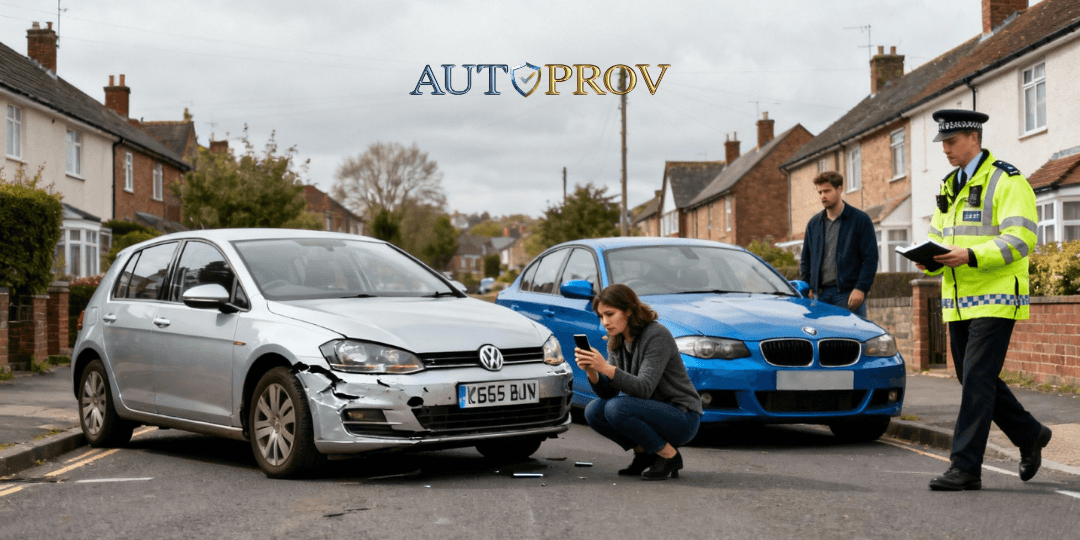
Hit by an uninsured driver: UK accident rights & claim guide
Being hit by an uninsured driver is a deeply frustrating experience. The shock of the accident is bad enough, but finding out the other party has no insurance just adds a whole new layer of stress and confusion. Suddenly, the straightforward path to getting your car fixed seems to vanish. This guide is here to cut through that noise and show you that you're not out of options.
Published by AutoProv
Your trusted source for vehicle intelligence