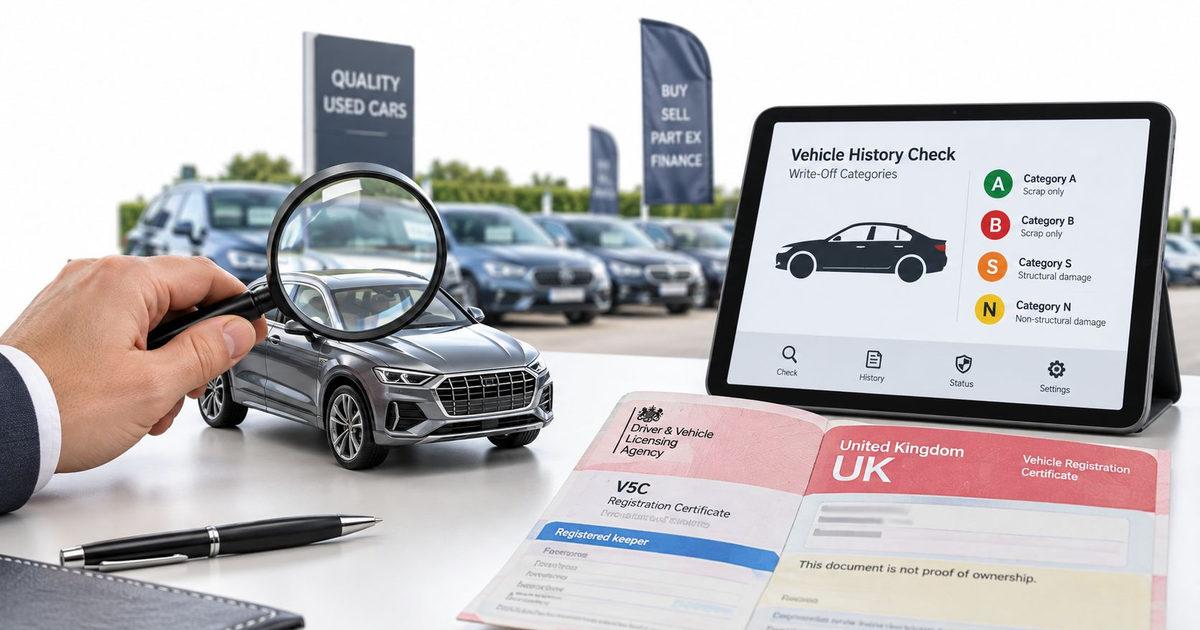
You've got a shiny part-exchange or auction unit sitting there, the photos look clean, the service book lines up, and three checks have come back green. That's exactly when dealers get complacent. A proper write off check is where you stop trusting appearances and start protecting margin, because one hidden marker can change the whole deal, from residual value to warranty exposure and the resale route.
Table of Contents
- The Stock That Looked Too Clean
- Why the near-miss matters in the trade
- What Write Off Categories Actually Mean
- The split dealers need to remember
- Where the Write Off Marker Lives in UK Records
- Why the V5C isn't the whole story
- What to ask for at point of purchase
- Reading Write Off Data Alongside Ownership and Mileage Patterns
- What the pattern looks like in practice
- Hidden Indicators Behind a Clean Write Off Check
- The traps dealers miss
- A Dealer's Verification Routine Before Buying
- The buying routine I'd use on the forecourt
- Making Write Off Intelligence Part of Trade Risk Management
- Turn the marker into a stock policy
The Stock That Looked Too Clean
A sharp 2018 plate rolls into the compound and it looks like easy money. The paint glows, the interior's tidy, the stamps are in order, and the first few online checks don't raise a flag. The buyer is already thinking about prep spend and forecourt pricing, then the V5C turns up and an earlier Category S marker sits in the record.
That's the moment the deal changes. A write-off marker isn't a cosmetic footnote, it's a stocking decision, because it affects what the car is worth, how confidently you can retail it, and how hard the customer is likely to push later if they find out after collection. GOV.UK is clear that when a vehicle is written off and scrapped by an insurer, the keeper must tell DVLA, and the write-off category is recorded in the log book, which is why the marker belongs in the core provenance file, not in the “nice to know” pile (GOV.UK written-off vehicle guidance).
Why the near-miss matters in the trade
If that car had gone through on a blind buy, the exposure wouldn't stop at a haircut on valuation. You'd be carrying a unit with a weaker resale story, a higher chance of complaint, and a warranty conversation that starts from a defensive position. In trade terms, that means slower turn, tighter margin, and more time spent justifying the car than selling it.
Practical rule: if the record changes the way you'd price, warranty or retail the car, it's not just history, it's risk.
A basic vehicle history check UK product can be useful, but it's not enough on its own when the stock picture looks too clean. Treat the write-off marker as its own buying checkpoint, then decide whether the car belongs in your stock profile at all.
What Write Off Categories Actually Mean
The UK used market talks casually about “write-offs”, but the ABI system is precise. There are four current categories, A, B, S and N, and the category tells you whether the car is scrap-only or repairable, and how much caution you should build into the purchase price and resale plan (GOV.UK insurance write-offs guidance).
The split dealers need to remember
Category A means the vehicle must be crushed and can't return to the road. Category B also can't return to road use, although selected parts may be salvaged. Those two categories should never become retail stock.
Category S means the vehicle has structural damage but can be repaired and legally returned to the road if it's made roadworthy again. Category N means non-structural damage and it can also return once repaired properly. That's the bit some buyers get wrong, because Category N is not a soft option. It still leaves a permanent history trail that can affect buyer confidence, trade-in value and the way a warranty team looks at the file.
Category Insurer outcome Return to road Trade implication A Total loss, crush only No Never buy for retail stock B Total loss, parts salvage only No Parts donor only, not road stock S Structural damage, repairable Yes, if roadworthy Price hard, inspect hard, disclose properly N Non-structural damage, repairable Yes, if roadworthy Don't assume low risk, check the wider provenance The commercial point is simple. Category A and B are dead ends for road use. Category S and N are only usable if the rest of the file supports the story, the repairs make sense, and the residual value still works for your margin.
If you want a deeper category breakdown, keep our internal guide handy as a reference point, write-off categories explained UK.
Where the Write Off Marker Lives in UK Records
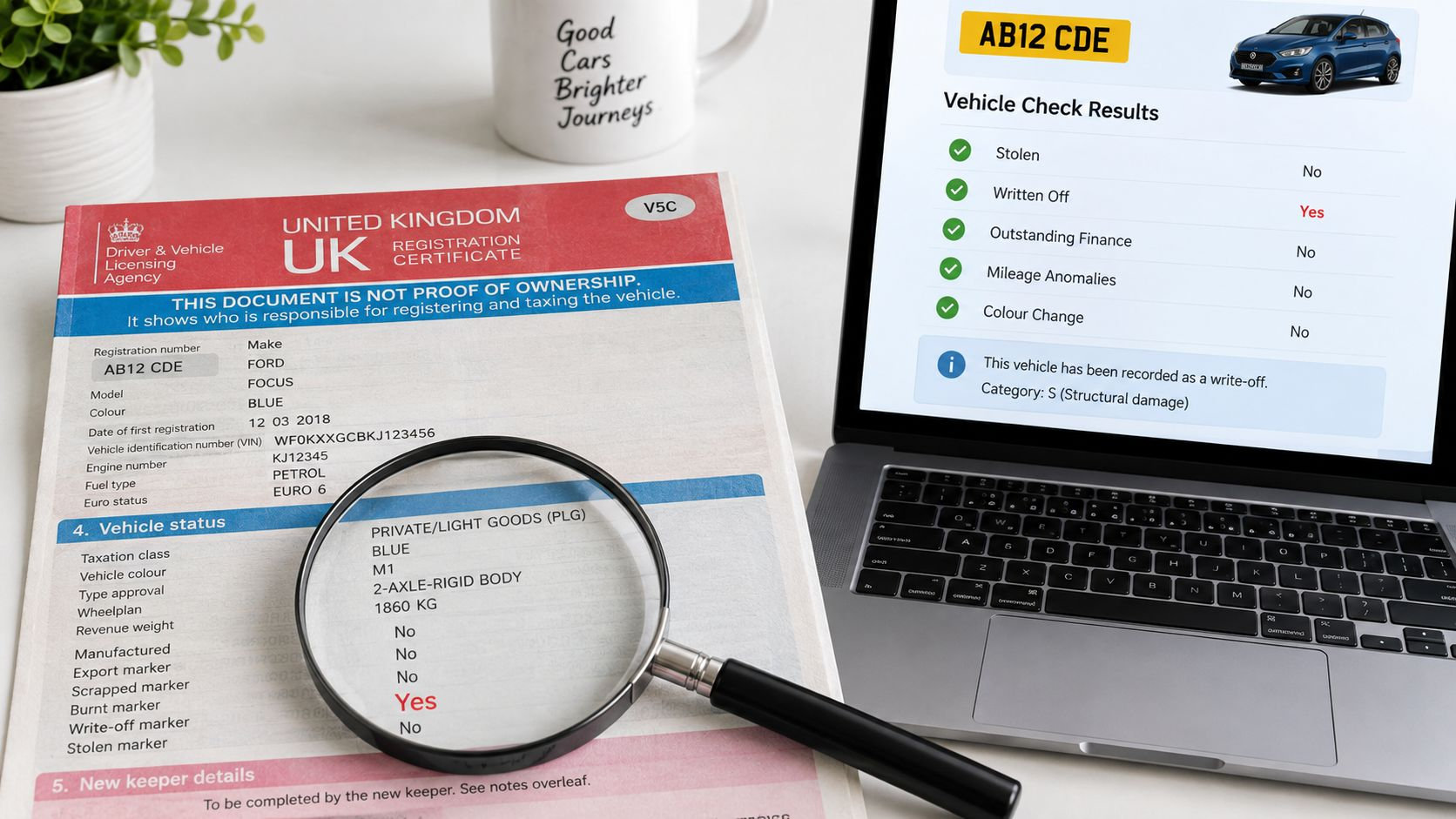
A write-off marker isn't parked in one neat place and every data source agrees instantly. In UK records, the key reference is the DVLA log book, the V5C, and the underlying vehicle record linked to the registration mark. GOV.UK guidance makes that framework clear, and that's why a log book check is foundational, not optional (DVLA vehicle check API overview).
Why the V5C isn't the whole story
The problem is timing. The insurer records the loss, DVLA updates the vehicle record, and different data providers may surface the marker at different points in that chain. So a missing marker on one screen doesn't prove the car is clean, it only tells you that particular feed hasn't shown it yet.
That's why I'd never sign off a trade buy on a single printout. You want the V5C, the VIN on the vehicle, and supporting history evidence all sitting together before you commit capital. If the seller can't produce that cleanly, you treat it as a gap, not a paperwork quirk.
What to ask for at point of purchase
A clean-looking car with sloppy paperwork is still a risk car.
Ask for the V5C, confirm the VIN plate matches the paperwork, and keep copies of the provenance check, MOT history and any service or repair paperwork that explains the vehicle's path into stock. A write-off marker can move through the system at different speeds, so your job is to prove the car's status from several angles, not just one database response.
Reading Write Off Data Alongside Ownership and Mileage Patterns
A write-off marker gives you a starting point, not a verdict. Read it beside short keeper changes, mileage movement, and the repair timeline, or you'll miss the underlying trade risk.
What the pattern looks like in practice
A Category S or N car that changes hands fast after the insurer event deserves a harder look. If the mileage curve goes flat around the loss date, or the MOT history does not sit neatly with the dashboard reading, treat the car as a weaker buy and a tighter retail story. GOV.UK's MOT correction guidance makes one point clear, mileage records only move under narrow conditions, so any mismatch needs checking, not guessing (GOV.UK MOT corrections guidance).
The Motor Ombudsman's used-car advice points dealers and buyers to MOT history, servicing records, invoices, vehicle health checks, recalls status, finance status and accident involvement. That is the right file to build. A used car history report helps, but it does not clear the car on its own (The Motor Ombudsman used-car advice).
Data Field What To Look For Risk Implication Write-off category Category S or N on a car being pitched as clean Residual value likely overstated Keeper pattern Short ownership gaps after the loss event Quick flip after repair, ask harder questions MOT mileage Inconsistencies or flat spots around repair period Possible clocking, dashboard swap, or poor record trail VIN and plate history Changes that do not fit the vehicle story Provenance gap, possible identity risk A clean marker with messy ownership and mileage still leaves exposure on residual value, warranty and resale route. If the file does not tell one consistent story, price it as a provenance problem, not a straightforward retail unit.
If you already use mileage analysis in trade checks, keep it tied to car history check mileage.
Hidden Indicators Behind a Clean Write Off Check
A clean write-off result can still leave you exposed if you stop at the headline answer. The obvious marker is only one layer, and traders get caught when they ignore the bits around it, especially when the car has been exported, re-registered, or rebuilt through a messy chain of ownership.
The traps dealers miss
Export-and-return cars can come back into the UK with a history that's harder to read than a normal domestic car. Some losses never surface cleanly in every data source, and older write-off references can disappear from newer screens if the vehicle's history has been fragmented. That's exactly why you should never treat a single pass or fail result as a full provenance verdict.
Cloned VIN plates and mismatched engine numbers raise a different kind of concern. Those issues aren't about the write-off category itself, they're about identity and continuity, which is why finance markers and physical identity checks matter just as much as the insurer record. If the identity story is weak, the rest of the file becomes less reliable.

A clear result can also hide undocumented repairs. If the vehicle looks right but the panel gaps, welds, overspray or trim fit don't match the story on paper, you still have a risk unit, even if the database response looks tidy. The market doesn't pay extra for your confidence if the evidence is thin.
Trade rule: clean data is only useful when the physical car agrees with it.
That's the problem with shallow checks. They tell you the marker you can see, but not the ones buried in the journey, and that's where warranty claims and customer disputes start.
A Dealer's Verification Routine Before Buying
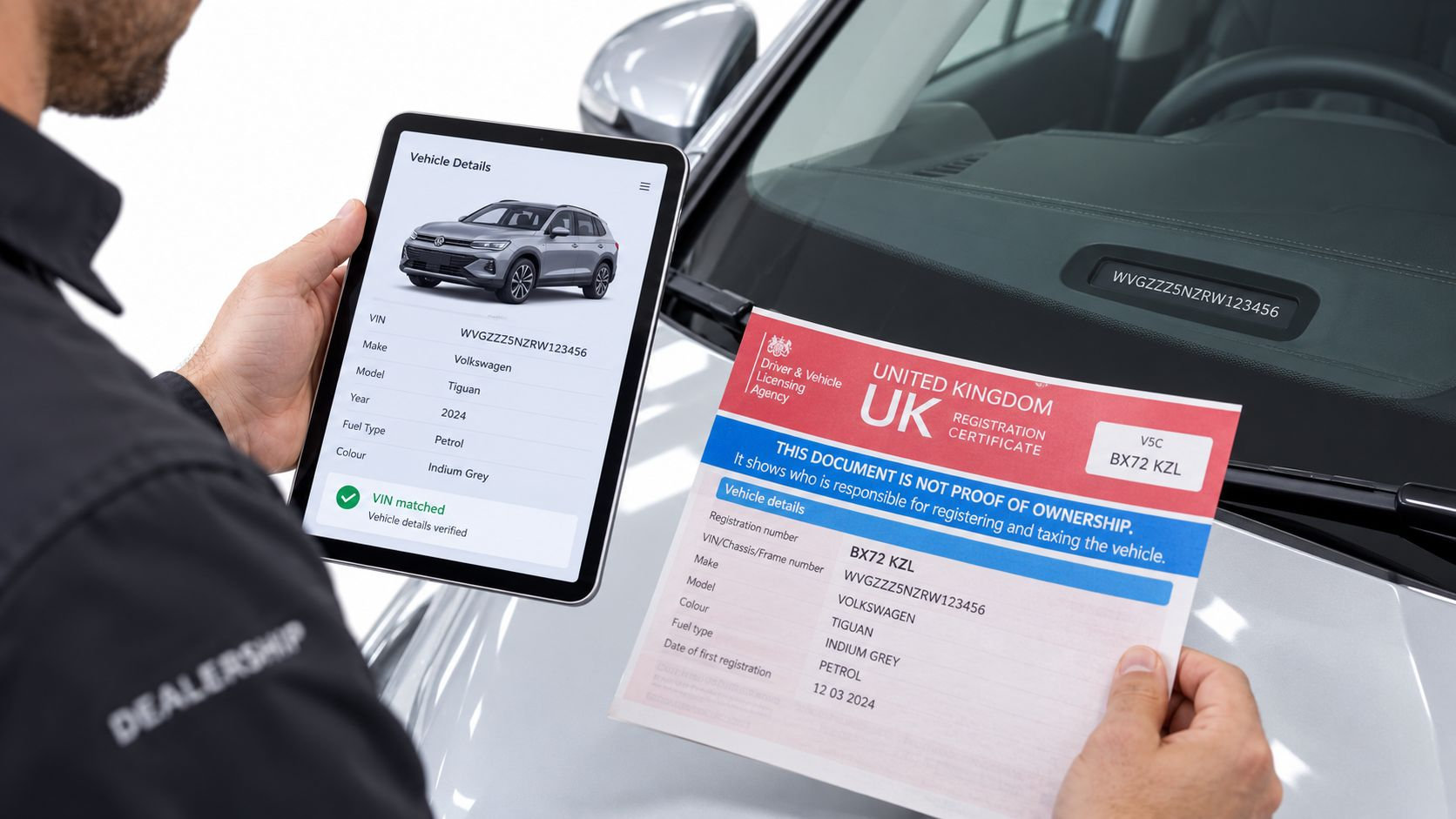
Start with the identity, not the database. The VIN on the car should match the V5C, the registration plate, and the supporting paperwork, because if those don't line up, nothing else in the file deserves blind trust. After that, order a full provenance check that covers DVLA, insurer write-off status, finance, and the wider mileage trail.
The buying routine I'd use on the forecourt
- Confirm the identity first. Match the VIN plate, windscreen details and V5C before anyone talks price.
- Run the full write-off and provenance check. Don't rely on a single used car history report if the car is being pitched as clean stock.
- Cross-check MOT history. Look for mileage continuity and any unexplained drops or plate changes.
- Inspect the metal. Check for weld marks, overspray, uneven gaps and repair quality that doesn't fit the asking price.
- Document the decision. Record the risk grade, the reasoning and any pricing adjustment before the unit hits stock.
A practical walkaround discipline helps here too. The pre-shift walkaround checklist is a good reminder that visual checks and paperwork checks should work together, not separately, even if you're dealing with cars rather than trucks.
If you want to formalise the buying side, keep our due diligence guide in the buying pack, how to conduct proper due diligence when buying trade stock. That's how you stop the decision living in one buyer's head and make it auditable later.
A few dealers still use AutoProv for this kind of risk review, because it pulls provenance, mileage and ownership context into one trade-facing report instead of leaving the buyer to stitch everything together by hand. That doesn't replace inspection, it supports it.
Making Write Off Intelligence Part of Trade Risk Management
A write-off check belongs inside stock policy, because the marker changes the whole buying decision. Once it appears, you should know the impact on residual value, warranty exposure, and the resale route before the car gets near retail.
Turn the marker into a stock policy
Category A and B units stay out of normal retail buying. Category S and N units need their own pricing lane, a stricter prep standard, and a clean disclosure trail. If the car came from a repeat supplier, an auction, or a part-ex channel, judge the category history and supporting evidence first, then the paintwork.
Use the same approach across the rest of the buy. Trade vehicle intelligence should sit alongside your valuation model and forecourt decision-making, so the team knows whether a car is fit for mainstream retail, specialist retail, or no retail at all. Our note on vehicle risk assessment fits that control mindset.
The complaint picture in the used-car market makes sloppy provenance work expensive. The Motor Ombudsman's used-car advice and complaint reporting point to persistent pressure on the trade, and the figures around used-car cases and transaction volume show why guesswork has no place here. If the paperwork and the story do not line up, walk away or reprice hard. As covered in The Motor Ombudsman complaint and market context, the volume is too big for casual checks.
If your buying process cannot explain why a write-off car is worth what you are paying, the process is not finished.
Treat provenance intelligence as part of the stock decision, not a box-tick. It strengthens pricing, disclosure, and customer confidence across the turn. It also gives the buyer a defensible answer when the unit is challenged later.
For operators running mixed stock, 10 fleet management tips is a useful reminder that inspection, records, and disposal planning should work as one process. That is the standard to hold on every write-off check.
Frequently Asked Questions
AI-Generated Content Notice
This article was created with the assistance of artificial intelligence technology. While we strive for accuracy, the information provided should be considered for general informational purposes only and should not be relied upon as professional automotive, legal, or financial advice. We recommend verifying any information with qualified professionals or official sources before making important decisions. AutoProv accepts no liability for any consequences resulting from the use of this information.
From our AI insights
- Navigating UK Grey Imports: A Trader's Guide
Understand the complexities and opportunities of UK grey imports for savvy motor traders.
- Understanding Insurance Write-Offs: UK Trader Insights
Explore insurance write-off categories and their implications for UK motor traders.
- Avoid Write-Off Pitfalls: A UK Trader's Guide
Discover how to confidently verify vehicle provenance and avoid write-off pitfalls in the UK trade market.
Related Articles

Essential Vehicle Checks Before Buying a Used Car
Learn essential checks to ensure your used car purchase is safe and sound in the UK market.

Why a Provenance Check is Essential for Used Car Buyers
Ensure your used car is a smart investment by understanding the importance of a provenance check and how AutoProv can help.

A Guide to Vehicle Check with VIN Number
A vehicle check with vin number is easily the most important thing you can do before buying a used car. Think of it as your first line of defence—a quick, simple step that pulls back the curtain on a vehicle's past, protecting you from expensive mistakes, legal headaches, and downright dangerous cars.
Published by AutoProv
Your trusted source for vehicle intelligence