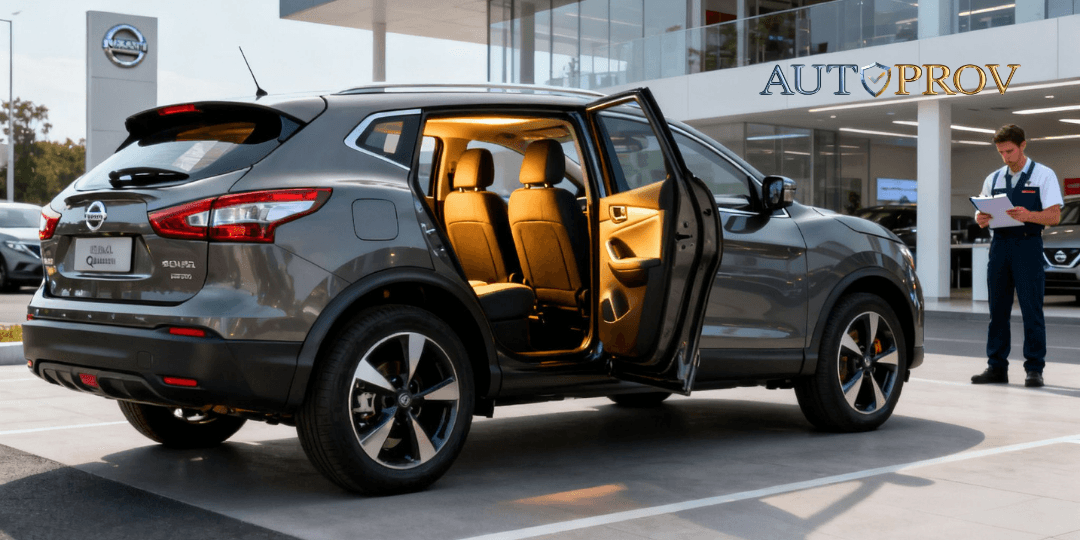
For any motor trader needing a clear, immediate answer, here it is: a factory-built 7-seat Qashqai does not exist in the current or recent Nissan line-up. The vehicle in question is the Nissan Qashqai+2, a specific model produced only between 2008 and 2013.
The 7-Seat Qashqai: Debunking a Common Misconception
In the motor trade, correct vehicle identification is the foundation of accurate valuation and profitable stock turn. The persistent myth of a modern "7-seat Qashqai" can create confusion during part-exchange appraisals or when sourcing specific stock. Clarifying this distinction is the first step in managing risk.
The vehicle sought is always the Qashqai+2. Produced within a limited five-year window, every example is now over a decade old. This age profile introduces a specific set of provenance risks that extend beyond simple model identification. As high-use family vehicles, these cars have often been subjected to significant wear and tear that is not always immediately apparent.
Navigating the Qashqai+2 Market
Understanding this model is critical. It is not a simple trim level variation but a distinct, discontinued model with its own market position and a unique profile of potential age-related issues.
This decision tree provides a logical path to follow when a "7-seat Qashqai" is presented.
As the flowchart illustrates, any search for a seven-seater Qashqai within the used market leads directly to the older Qashqai+2.
The primary challenge for dealers lies in the vehicle's provenance. A decade of use, often across multiple owners, can obscure a history of intensive wear, inconsistent servicing, or undisclosed damage. A basic vehicle history check UK traders might use often fails to capture the full operational context, which is where deeper analysis becomes essential to mitigate risk. A comprehensive report, as detailed in a motor trader's guide to the professional car report, can uncover these critical details.
For any vehicle over ten years old, particularly a family workhorse like the Qashqai+2, its history is more than a list of MOTs and keepers. It is a narrative of use and maintenance that directly impacts current value and future reliability.
Ultimately, standard vehicle checks are often insufficient to identify the subtle risk signals associated with these older, high-utilisation models.
Understanding the Qashqai+2: The Original 7 Seater
The vehicle at the centre of the "7 seat Qashqai" query is the Nissan Qashqai+2, specifically the NJ10 model produced exclusively between 2008 and 2013. For any trader, correct identification during appraisal is fundamental. This was not a trim level; it was a distinct model with significant structural differences from the more common 5-seat variant.
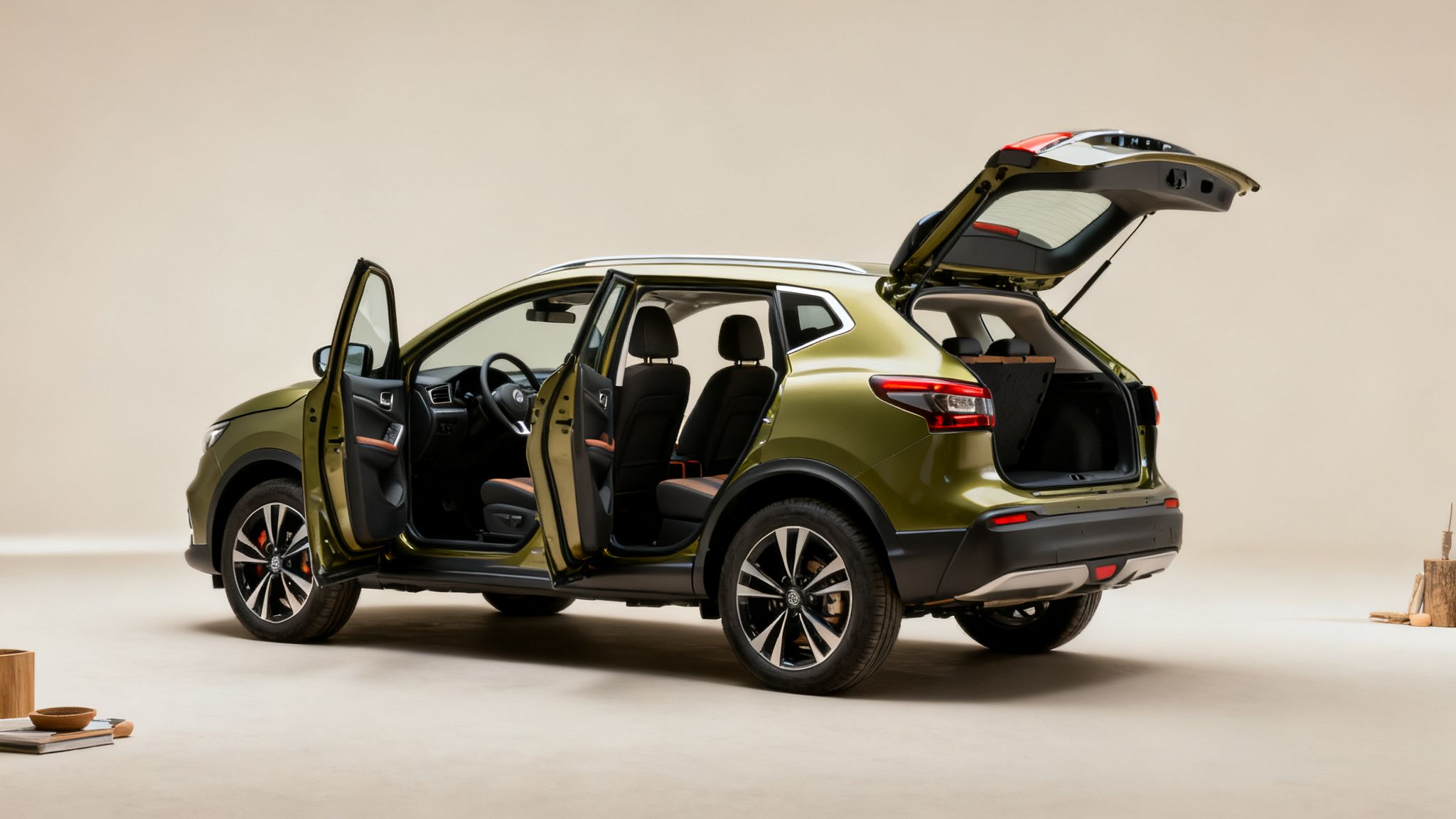
The Qashqai+2 was physically extended. Nissan lengthened its wheelbase by 135mm and increased the overall length by 211mm. This extended chassis was necessary to accommodate the third row of seats and resulted in a visibly different rear profile, with larger rear doors and a redesigned, more vertical tailgate. These are the key visual indicators for accurate on-the-spot assessment.
Key Trim Levels and Features
When sourcing these vehicles or appraising a part-exchange, three core trim levels are most prevalent. Differentiating them is key to accurate valuation and effective marketing.
- Acenta: The entry-level specification. Typically equipped with 17-inch alloy wheels, dual-zone climate control, and a CD player with Bluetooth.
- N-Tec: A popular mid-range option that added desirable features such as a panoramic glass roof, satellite navigation, and a reversing camera. These features retain their appeal in the used market.
- Tekna: The top-tier trim, including leather upholstery, heated front seats, and xenon headlights. These models command higher values, but their premium features require close inspection for wear and functionality.
Engine options included 1.6-litre and 2.0-litre petrol units, but the far more common powertrains in the UK market are the 1.5-litre and 2.0-litre dCi diesel engines. The 2.0 dCi diesel was often paired with four-wheel drive, adding another layer of complexity to the vehicle's history and potential maintenance requirements. If there is any doubt about a vehicle's factory specification during an appraisal, you can get my car specs to confirm its original build data.
The Qashqai+2 established a niche as a pioneer in the compact 7-seat crossover market. Its residual value is driven by its practicality as an affordable family vehicle, but its age and likely usage profile make a thorough provenance check a necessity for any motor trade professional.
Mistaking a Qashqai+2 for a standard 5-seater can lead to significant valuation errors. It has unique components, such as specific rear suspension parts and body panels, which can affect repair costs and parts availability. A firm grasp of these details ensures the vehicle is priced correctly, reflecting both its utility and its specific age-related risks. A robust dealer vehicle check must always begin with correct model identification.
Unique Provenance Risks of the Qashqai+2
A decade-old family vehicle like the Qashqai+2 carries a unique set of provenance risks that a standard used car history report can easily miss. These vehicles were designed for intensive use: school runs, holidays, and transporting children and equipment. This usage pattern accelerates wear and tear, creating latent issues that can directly impact profit margins.
The value gap between a well-maintained example and one that has been neglected is substantial, but the warning signs can be subtle. An appraisal must extend beyond a visual inspection and a basic data check.
Mechanical Stress and Accelerated Wear
The additional length and weight of the Qashqai+2 places greater strain on the chassis and suspension compared to the standard five-seat model. When consistently operated with a full load of passengers and luggage, this stress is amplified.
Key inspection areas include:
- Suspension System: Pay close attention to rear suspension bushes, springs, and shock absorbers. These components are typically the first to show fatigue from heavy use.
- Clutch and Gearbox: On manual transmission models, the clutch has endured significantly higher loads. Any slip or judder during a test drive is a major risk signal for a costly future repair.
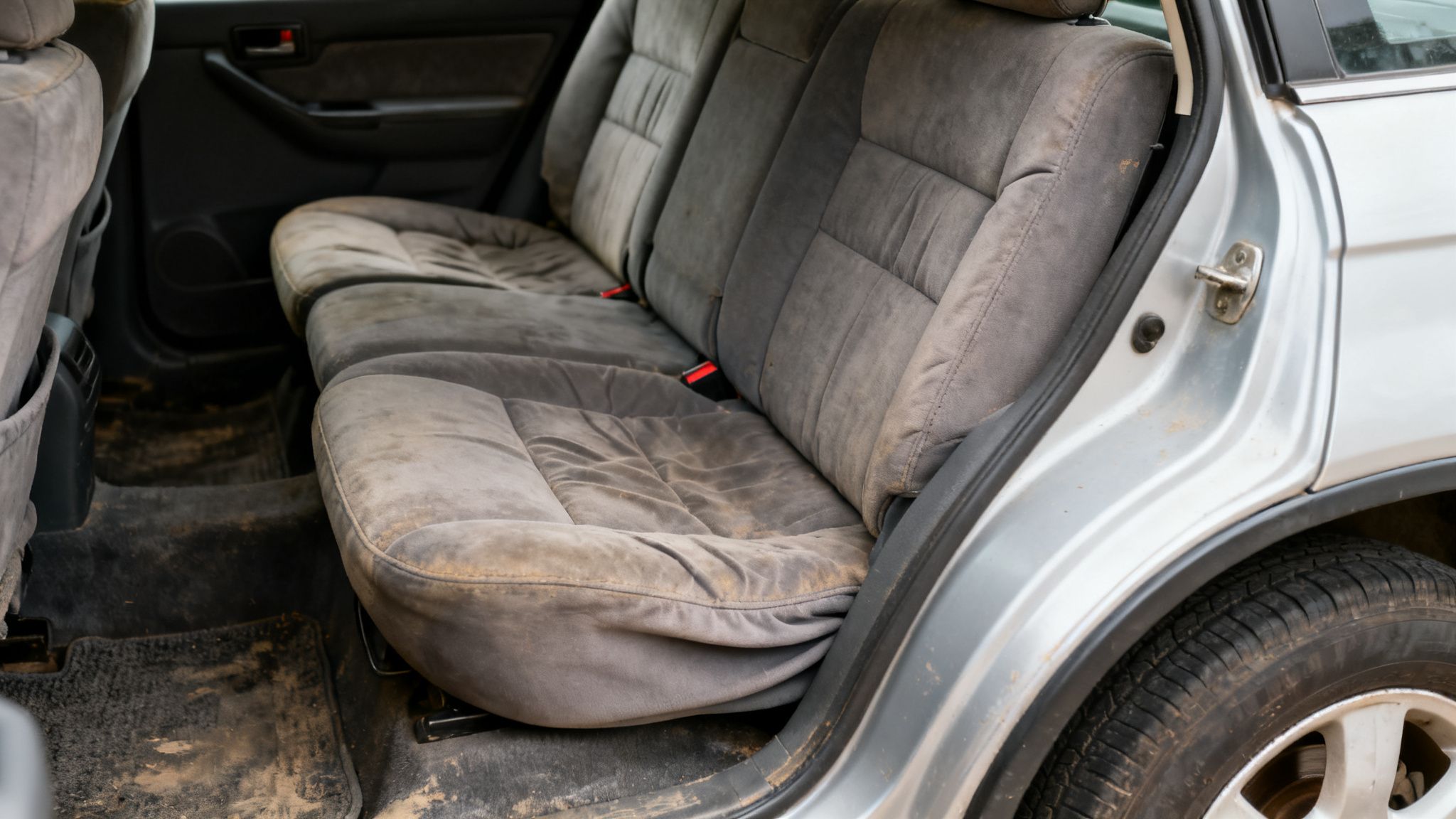
- Interior Condition: The cabin provides a clear narrative of the vehicle's life. Look beyond a surface valet for deep-set stains, damage to plastics in the third row, and heavy wear on seats and controls. These are classic indicators of intensive family use.
These are precisely the types of issues that a standard history report fails to identify. It will not detail how the vehicle was driven, only that it passed its last MOT.
Ownership Patterns and Red Flags
Given their age and price point, many Qashqai+2 models have had multiple keepers. A high turnover of owners is a significant risk signal in itself, as it can indicate that previous keepers have disposed of the vehicle to avoid an imminent, expensive repair.
For a vehicle of this type, a pattern of short-term ownership is one of the most significant red flags. A deeper provenance check can expose this history, helping you avoid acquiring a vehicle with pre-existing liabilities before it reaches your forecourt.
Analysing the vehicle's timeline is essential. Frequent plate changes can sometimes be used to obscure a vehicle's past, making a thorough vehicle provenance analysis non-negotiable. AutoProv’s trade vehicle intelligence platform is designed to highlight these exact patterns, providing the context required to assess motor trade risk. To better understand the data that uncovers a vehicle's true story, you can explore the ultimate guide to a car provenance report in the UK.
To protect against other potential issues, traders might also look into advanced car security solutions that offer features to prevent theft and aid recovery. For any dealer considering a 7 seat Qashqai, the conclusion is clear: a basic check is insufficient. Deeper intelligence is required to understand the vehicle's true history and protect your investment.
Valuing and Positioning the Qashqai+2 Today
Accurately pricing a Nissan Qashqai+2 in the current market requires careful consideration. Its age places it in the budget category, yet its practicality as an affordable seven-seater ensures consistent demand from families priced out of newer, more expensive alternatives.
This unique market position means it can often command a higher value than a standard five-seat Qashqai of the same age and condition. For traders, the key is to balance its enduring utility against the fact that it is an older vehicle. The valuation must reflect not just its practicality, but also its specific condition and, crucially, the transparency of its history. A well-maintained example is a valuable stock item; one with an opaque past is a significant liability.
Market Context and Pricing Strategy
The Qashqai nameplate carries considerable weight in the UK used car market. It has been a top-selling vehicle for years, a testament to its broad appeal. In 2022, it became the UK's best-selling new car with 42,704 registrations—the first time a British-built vehicle had topped the annual charts since 1998.
However, traders must avoid overvaluing older stock based on reputation alone. The market is now populated with newer, more advanced competitors. The Qashqai+2 competes not only with its five-seat counterpart but also with a wide range of other used seven-seat vehicles.
Your pricing strategy for the Qashqai+2 must be precise. It is not merely an old Qashqai; it is an entry-point seven-seat SUV. This distinction is vital for attracting the correct buyer profile and justifying the retail price.
A comprehensive vehicle provenance check is an essential tool here. An AutoProv report confirming a consistent service history, a clean MOT record, and a logical ownership timeline allows you to price the vehicle with confidence, justifying a premium over examples with a less transparent past.
The Role of Vehicle Intelligence in Valuation
For a vehicle of this age, traditional valuation guides can be unreliable. They often struggle to account for the significant variations in condition and history that define the real-world value of a Qashqai+2. Two models that appear identical on paper can represent vastly different levels of motor trade risk.
This is where modern dealer vehicle checks become indispensable:
- Mileage Verification: A comprehensive mileage check UK dealers can trust is non-negotiable. Discrepancies flagged by cross-referencing MOT and service records can fundamentally alter the vehicle's value and your negotiating position.
- Ownership Cycles: Identifying a pattern of short-term ownership can be a warning sign of underlying issues that previous keepers sought to avoid, helping you sidestep a problematic vehicle.
- MOT History Analysis: Looking beyond a simple pass or fail to identify recurring advisories on key components like suspension and brakes provides a clear indication of future reconditioning costs.
By utilising detailed vehicle intelligence, valuation moves from an estimate to a calculation based on verifiable data. This data-led approach is fundamental to mastering car valuation and achieving accurate vehicle pricing. It ensures you buy correctly, price competitively, and protect your margins on every Qashqai+2 you handle.
Sourcing and Selling Profitable 7-Seat Alternatives
With the Qashqai+2 now firmly in the older vehicle category, astute traders must adapt their sourcing strategies. While demand for affordable seven-seaters remains strong, focusing solely on the Qashqai+2 means competing for a diminishing pool of high-mileage examples. Greater profitability lies in pivoting to newer alternatives that are more readily available and easier to retail.
The key is to identify the models that succeeded the Qashqai+2. These vehicles appeal to the same budget-conscious family demographic but offer more modern technology, improved reliability, and a better ownership proposition.
Top Qashqai+2 Alternatives for Your Forecourt
Stocking these models positions you to capture demand from buyers seeking a modern equivalent of the "7-seat Qashqai". Each offers a different blend of practicality, running costs, and retail appeal.
- Nissan X-Trail (Third Generation, 2014-2021): The official successor. It was aimed at the same buyer, offering a more refined driving experience and updated technology. It is important to note that the third row is best suited for children.
- Kia Sorento (Third Generation, 2015-2020): A notable step up in size and quality. The Sorento features a more capacious third row and a strong reputation for reliability. Its original seven-year warranty is a significant selling point on used examples.
- Skoda Kodiaq (2016-Present): A highly popular and sought-after model, known for its practicality, intelligent design features, and robust build quality. It commands higher acquisition costs, but strong residual values and high demand make it a sound investment.
- Peugeot 5008 (Second Generation, 2017-Present): Offers distinctive styling, a modern interior, and a flexible seating arrangement with three individual seats in the middle row, appealing to families who value both style and space.
Sourcing these alternatives requires the same diligent approach as any other used vehicle. A comprehensive vehicle provenance check is non-negotiable. It is the critical process that separates a prime retail vehicle from a potential workshop liability by revealing its true ownership and service history.
Adapting to a Shifting Market
The UK family SUV market is dynamic. While the Qashqai was once the dominant model, the competitive landscape has evolved. By 2025, it had slipped to third place in annual sales, surpassed by rivals like the Kia Sportage. This trend signals a clear imperative: traders who fail to diversify their stock will be left behind.
Acquiring the right stock is only part of the equation. To succeed in this competitive segment, it is also necessary to master proven strategies for success in selling cars. This involves not just buying well, but positioning that stock effectively to the right buyers.
To broaden your stock profile further, consider smaller niche options. For additional ideas, check out our guide on 6-seater cars in the UK. Success in this market depends on meeting current demand with quality, reliable, and profitable stock that reflects the market as it is today.
Questions from the Trade
Common questions from dealers regarding the sourcing, pricing, and sale of the Nissan Qashqai+2 and other seven-seaters.
What are the Common MOT Failure Points on a Used Qashqai+2?
As high-utilisation family vehicles, wear is concentrated in predictable areas. Due to the extra length and weight of the Qashqai+2, suspension components are under increased strain. Review the MOT history for recurring advisories on bushes and anti-roll bar links, as these are common failure points.
Brake pipes are also a known issue, being prone to corrosion after more than a decade of UK road conditions. A comprehensive provenance report will detail the entire MOT history, highlighting repeat advisories. This data provides leverage for negotiation or a clear signal to reject a vehicle that will require significant workshop attention before it is retail-ready.
Is There a Big Price Difference Between a Qashqai and a Qashqai+2?
Yes, a significant price difference typically exists. A clean Qashqai+2 will command a premium over a standard 5-seat model of the same age and specification due to the consistent demand for affordable 7-seaters. As vehicles age and accrue higher mileage, this price gap narrows, with condition becoming the primary value driver.
Traders must balance the higher potential retail price against the increased risk of wear and tear. This is where a professional vehicle history check UK dealers can trust becomes essential. It helps justify the valuation by verifying a clean background and solid service record, allowing for confident pricing.
When appraising a Qashqai+2, remember that value is not just in the extra seats. It resides in the vehicle's documented history. A clean, transparent provenance is what truly commands a premium in today's market, protecting both your investment and your reputation.
This level of detail is what distinguishes a profitable retail unit from a problematic trade-in.
Why Did Nissan Stop Making the 7-Seat Qashqai+2?
Nissan discontinued the Qashqai+2 after 2013 as part of a strategic model consolidation. The launch of the third-generation X-Trail, which included a 7-seat option, made the Qashqai+2 redundant. Continuing both models would have resulted in internal market competition.
This move streamlined their product line-up, allowing the standard Qashqai to focus on the 5-seat crossover market it had pioneered. For a trader, this is key product knowledge: if a customer requests a 'new 7-seat Qashqai', the official successor model is the X-Trail.
How Can I Be Sure the Mileage on an Old Qashqai+2 is Genuine?
Verifying the mileage on a vehicle over a decade old is critical to mitigating motor trade risk. A full provenance report performs this function by cross-referencing MOT records, service data, and other official sources to build a complete mileage chronology.
The system is designed to flag discrepancies that suggest mileage tampering, such as illogical decreases in annual mileage or inconsistencies between different data sources. This is the level of mileage check UK dealers require to protect their business from fraud, price vehicles accurately, and ensure compliance. Operating without it exposes a business to significant financial and reputational risk.
Uncovering the full story of a vehicle's past is essential for smart, profitable trading. AutoProv delivers advanced vehicle history and provenance intelligence, giving you the clarity needed to identify high-risk vehicles like a problematic Qashqai+2 before you buy. Protect your margins and make safer buying decisions with the UK's trade-focused risk intelligence platform at https://autoprov.ai.
Frequently Asked Questions
AI-Generated Content Notice
This article was created with the assistance of artificial intelligence technology. While we strive for accuracy, the information provided should be considered for general informational purposes only and should not be relied upon as professional automotive, legal, or financial advice. We recommend verifying any information with qualified professionals or official sources before making important decisions. AutoProv accepts no liability for any consequences resulting from the use of this information.
From our AI insights
- Auction Pitfalls: Avoiding Costly Mistakes
Navigate UK car auctions with confidence by avoiding finance, write-off, and mileage risks.
- Mastering Paint Code Checks: Detecting Hidden Car Repairs
Discover how to use paint code verification to identify hidden car repairs and ensure a smarter purchase.
- UK Part-Exchange Checks: Protecting Dealer Margins
Explore essential part-exchange checks for UK dealers to safeguard profit margins, including provenance and finance verification.
Related Articles
Your Ultimate Guide to Buying a Used Car in the UK
Navigate the UK used car market with confidence using our comprehensive buying guide. Tips, checks, and AutoProv Provenance insights included.
Difference Between MOT and Service: What You Need to Know
An MOT is a mandatory legal inspection that every car on UK roads needs to pass.Think of it as the government's way of ensuring your vehicle meets the absolute minimum safety and environmental standards to be considered roadworthy. A service, on the other hand, is a completely different beast. It's the proactive maintenance routine recommended by the people who built your car, designed to keep it running smoothly and catch problems before they start. In short, an MOT is a pass-or-fail exam required by law. A service is a comprehensive health plan for your car.
Your Ultimate Used Car Inspection Checklist
A solid used car inspection checklist is the single most powerful tool you have to avoid buying a lemon. It gives you a methodical way to look past the shiny paint and assess a car's real condition, helping you spot hidden problems and get a fair price before you shake hands on the deal.
Published by AutoProv
Your trusted source for vehicle intelligence