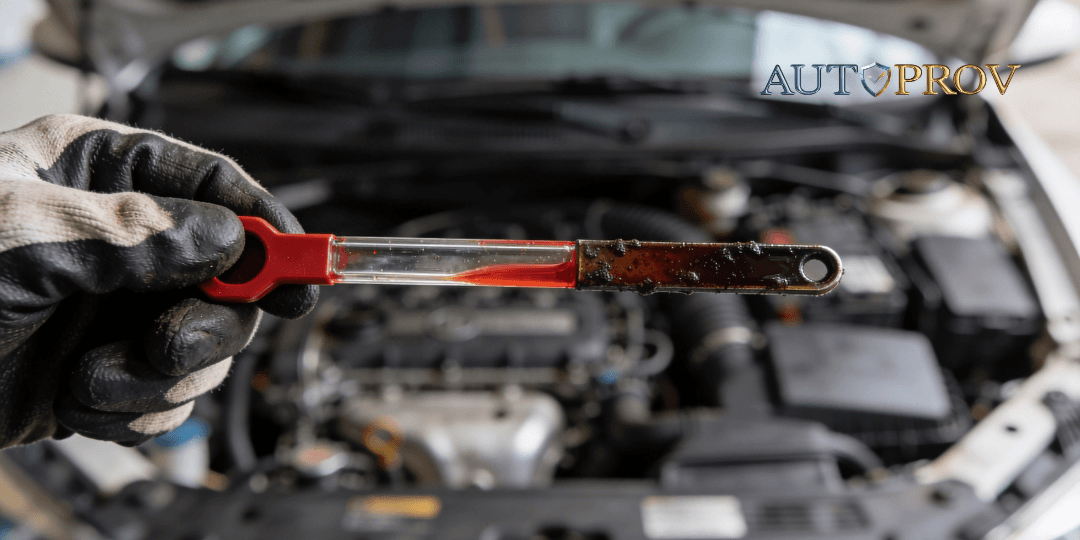
For UK traders, automatic transmission fluid is one of those details that hides in plain sight. Most buyers still treat it as a workshop matter. In practice, it’s also a vehicle provenance clue, a valuation clue, and a risk clue. If the fluid condition doesn’t fit the age, use pattern, mileage, or service story, the car deserves more scrutiny before you commit capital.
You buy an automatic that looks right on paper. Clean bodywork. Sensible mileage. Decent spec. It drives well on a short route, shifts acceptably when cold, and the seller says it’s just had a service.
Then it comes back.
A few weeks later the gearbox starts flaring between gears, the customer complains of shudder, and the workshop finds fluid that’s dark, overheated, or plainly wrong for the unit. At that point, the problem isn’t just mechanical. It’s margin gone, time lost, and your reputation tied to a fault that was already there.
For UK traders, automatic transmission fluid is one of those details that hides in plain sight. Most buyers still treat it as a workshop matter. In practice, it’s also a vehicle provenance clue, a valuation clue, and a risk clue. If the fluid condition doesn’t fit the age, use pattern, mileage, or service story, the car deserves more scrutiny before you commit capital.
The Hidden Risk in Every Automatic You Source
The dangerous stock isn’t always the obvious stock.
It’s often the automatic that feels fine for ten minutes. No warning lights. No hard fault codes on a quick scan. No dramatic noises. Enough normality to get bought, prepped, and retailed before the gearbox starts showing its true condition.
That’s why ATF matters so much in trade buying. It gives you evidence that a basic road test won’t. In the UK used car market, transmission-related failures accounted for approximately 12% of all MOT failures in automatic vehicles in 2022 (reference). That’s not a niche issue. It sits squarely in the path of stock acquisition risk.
Why short test drives miss it
Automatic gearboxes can mask problems when they’re cold.
A unit with worn friction material, contaminated fluid, or marginal hydraulic pressure may still behave well on a gentle route. Once heat builds, clutch packs load up, or the vehicle starts working harder in traffic, the symptoms appear. By then, you own it.
A lot of traders recognise the broad signs of transmission issues, but the trade problem is wider than diagnosis alone. A key question is whether the car’s history and condition tell the same story.
ATF is a provenance clue
Fluid condition can expose how a vehicle has been used.
A supposedly cherished, low-stress automatic with neglected or burnt fluid raises immediate questions. Was servicing skipped? Was it used for heavy urban work? Did ownership change hands quickly because someone was moving on a gearbox problem rather than maintaining it?
A proper trade process outperforms a basic pass/fail check. A standard history report might not give enough context around ownership timing, pattern shifts, or risk signals. A more useful starting point is a trade-focused provenance check approach for dealers that looks beyond headline markers.
Trade reality: If the fluid, the paperwork, and the ownership story don’t align, trust the inconsistency before you trust the seller’s description.
Understanding Automatic Transmission Fluid's True Role
Most traders know automatic transmission fluid lubricates. That’s true, but it’s not the main reason it matters.
In an automatic gearbox, the fluid does several jobs at once. If it degrades, the whole system starts making bad decisions. Shifts lose precision, heat rises, and internal wear accelerates.

It carries hydraulic force
An automatic gearbox relies on fluid pressure to apply clutches and bands correctly.
That means ATF isn’t sitting there reducing friction. It acts as the working medium that allows the transmission to shift. When the fluid is degraded, aerated, contaminated, or at the wrong level, hydraulic control suffers. The driver feels that as hesitation, flare, harsh engagement, or slip.
It removes heat
Heat kills transmissions faster than most traders realise.
Torque converters, clutch packs, and valve bodies generate a lot of thermal load, especially in stop-start use, towing, urban delivery work, or poor servicing conditions. ATF carries that heat away. Once the fluid oxidises or loses stability, it can’t manage temperature in the same way, and the cycle gets worse.
It controls friction
Many trade buyers get caught out.
Automatic transmission fluid is engineered to provide the right friction characteristics for a specific design. Too slippery, and clutches can slip. Too aggressive, and the shift quality changes in ways that damage components over time. That’s why “it’s red and it fits automatics” is not a standard. It’s a mistake.
The technical side matters here. Dexron VI and Mercon LV style fluids are specified with kinematic viscosity of 7.0 cSt at 100°C and a viscosity index of 171 in the Co-op Fuel technical data sheet (reference). Those figures matter because modern units need stable performance across temperature swings, not just basic lubrication.
Why this matters in the stock appraisal lane
A gearbox can’t be judged if you think of ATF as equivalent to engine oil. It isn’t.
Use this rule in appraisal:
- If the fluid is wrong, the gearbox may behave badly even if the hardware is still sound.
- If the fluid is old, the gearbox may be hiding wear under degraded shift quality.
- If the fluid is contaminated, the gearbox may already be in decline.
For a trader, that turns maintenance into motor trade risk. A proper car maintenance and provenance check mindset treats fluid condition as evidence, not housekeeping.
Good automatics depend on precise fluid behaviour. Once the fluid’s out of spec, the box stops operating as designed.
Navigating ATF Types and Compatibility Minefields
One of the most expensive assumptions in used stock is that automatic transmission fluids are broadly interchangeable.
They aren’t.
A gearbox might still move with the wrong fluid in it, which is what makes the risk easy to miss at purchase. The damage often shows later, after heat cycles, after extended driving, or after the customer starts using the car in normal conditions rather than on a gentle handover route.

The main categories traders need to separate
The easiest way to avoid trouble is to stop thinking in terms of “gearbox oil” and start thinking in terms of application.
Fluid category Typical use Core trade risk Traditional Dexron and Mercon families Older conventional automatics Wrong friction behaviour or poor shift quality if substituted carelessly Low-viscosity modern ATF Later multi-speed units such as 8, 9, and 10-speed applications Shudder, poor lubrication performance, or control issues if an older fluid is used CVT fluid Continuously variable transmissions Rapid damage if treated like normal ATF DCT fluid Dual-clutch transmissions Incorrect clutch operation and thermal problems if misfilled Where traders get misled
The paperwork often looks better than the work itself.
A service invoice might say “transmission service” or “gearbox oil changed” with no fluid specification listed. That isn’t enough. If you don’t know whether the correct OEM-spec or approved equivalent went in, you don’t know whether the service reduced risk or introduced it.
This is especially relevant with mixed-origin stock, imports, and vehicles that have passed through several owners or workshops. A garage may have used a universal product in good faith. That still doesn’t make it right for the transmission.
Workshop warning: Generic wording on an invoice is not proof of compatibility.
Hybrid and newer transmission applications raise the stakes
The compatibility issue is becoming sharper, not simpler.
An emerging risk in post-2025 stock is ATF specification mismatches in newer hybrid applications, with 25% of 2026-model hybrids using newer CVT or DCT fluid requirements and hybrid used sales rising by 28% in the last 12 months, according to the cited market summary (reference). Treated properly, that’s a technical servicing issue. Treated casually, it becomes a stock-loss issue.
That matters because hybrid and late-model transmission systems often tolerate less guesswork. A fluid that’s close but not correct can create symptoms that look electrical, mechatronic, or software-related, when the root cause is wrong chemistry in the gearbox.
What works and what doesn’t
What works:
- Ask for the fluid specification, not just the service date
- Check whether the invoice lists a brand and product line
- Match the transmission type before authorising prep work
- Flag imports and hybrid stock for added scrutiny
What doesn’t:
- Assuming “multi-vehicle ATF” automatically means suitable
- Treating CVT and DCT units like conventional automatics
- Accepting vague service records at face value
- Relying on a smooth cold test drive as proof of compatibility
If you’re pricing stock or deciding whether to recondition it, the practical side of this sits alongside service-cost planning. A gearbox oil change cost guide for the UK motor trade helps frame the economics, but the key point is simpler. The cheapest fluid mistake is the one you spot before buying the car.
A Trader's Guide to On-the-Forecourt ATF Inspection
You don’t need a strip-down to learn something useful from an automatic on the forecourt.
You need a method. Fast, repeatable, and realistic for how trade buyers work. The aim isn’t to produce a workshop diagnosis in five minutes. The aim is to decide whether the car deserves deeper investigation, harder negotiation, or a polite refusal.

Start with the basics properly
On vehicles with a dipstick, check the level as the manufacturer intends.
That usually means the engine is at operating temperature, idling, and the selector has been moved through the gears before reading in Park or Neutral. If you check it cold, rushed, or on the wrong procedure, the result can mislead you.
Some later vehicles have sealed transmissions. In those cases, the absence of a dipstick is itself part of the appraisal. It means you’re more dependent on service records, behaviour on the drive, and evidence from the vehicle’s background.
Use the look, smell, feel test
This part still works because fluid tells on the vehicle.
- Look at the colour. Healthy fluid is typically red or red-brown. Dark fluid suggests age, heat, or neglect. Blackened fluid points to serious overheating or friction material breakdown.
- Smell it. Burnt ATF has a sharp, acrid smell. If you catch that immediately, don’t rationalise it away.
- Feel a small sample. It should feel fluid and clean, not gritty or heavy with suspended debris.
Know what specific signs usually mean
A quick table helps when you’re moving through multiple vehicles in a day.
What you find Likely implication Trade response Slightly dark fluid, no burnt smell Ageing fluid, overdue service possible Price in a service and verify history Burnt smell with dark fluid Heat stress, clutch wear, internal distress possible Escalate to specialist checks Frothy fluid Overfill, aeration, or pressure control issue Treat as a warning, not a minor quirk Milky fluid Contamination risk High caution, investigate before proceeding Metallic debris on dipstick or sample Internal wear Usually a walk-away signal Don’t isolate the fluid from the drive
A forecourt check is strongest when paired with a deliberate road test.
Watch for delayed engagement into Drive or Reverse. Feel for flare under moderate load. Try low-speed manoeuvring, part-throttle upshifts, and a hot restart if time allows. A gearbox that behaves differently once warm is telling you more than one that only gets a quick loop around the block.
If the ATF raises suspicion, lengthen the test drive. Don’t shorten the appraisal.
Use records to challenge what you see
If the fluid looks tired but the seller claims recent transmission work, ask for documentation that identifies what was done and what fluid was used. If the car has a service book but no evidence of transmission attention on a model known to need it, note the gap.
A proper car service history check helps put those observations in context. On the forecourt, you’re not chasing perfection. You’re looking for contradictions.
Connecting Fluid Condition to Vehicle Provenance and Risk
The strongest buying decisions come from combining what the car shows physically with what its history suggests digitally.
ATF condition on its own is useful. A vehicle history check UK traders rely on for speed may still miss context if it only reports isolated data points. The advantage comes from asking whether the fluid, the service pattern, the mileage story, and the ownership timeline agree with each other.

When the physical check and the digital record align
A well-kept automatic usually leaves a coherent trail.
You’ll often see sensible service intervals, ownership durations that make sense, mileage progression that feels natural, and fluid condition that matches the story. The car may still need prep, but the risk profile is understandable.
The opposite is where profit leaks out.
A car with stressed or burnt ATF and a sketchy service trail deserves a very different valuation from a car with the same registration year and mileage but cleaner evidence. Vehicle provenance stops being an abstract admin term and becomes a live buying tool.
Service gaps matter more than they look
In used automatics sold in 2022, 8.7% had undisclosed ATF-related service gaps, and those vehicles correlated with 22% higher repair claims averaging £2,800 per incident for fluid-induced torque converter failures (reference). For traders, that’s the practical cost of taking transmission history on trust.
A missing note about fluid servicing isn’t always fatal. But when that gap sits alongside poor fluid condition, the risk picture sharpens quickly.
The patterns worth checking
A strong used car history report should help you test the story, not just confirm identity details.
Look closely at:
- Ownership timing. Several short holds can suggest a persistent drivability issue being moved on.
- Mileage progression. If the use pattern looks uneven, ask whether the transmission wear matches that pattern.
- Service continuity. Routine engine servicing with no meaningful transmission evidence can be a red flag on the right vehicle.
- Class and use clues. Urban-use vehicles, towing vehicles, and high-load cars often stress automatics differently.
Build a joined-up risk view
A practical way to assess an automatic is to score it mentally across three layers.
Layer one is the fluid itself
What does it look like, smell like, and feel like?
If the sample is clean and the gearbox behaves well hot and cold, that supports the case. If not, treat the car as potentially misdescribed by omission, even if nobody has said anything untrue outright.
Layer two is the paper and digital trail
Dealer vehicle checks need more than a registration lookup here.
Ask whether the service record mentions transmission work at all. Check whether invoices identify the correct fluid. Look for changes in ownership cadence, unexplained gaps, or mileage movement that doesn’t fit the apparent mechanical condition.
Layer three is commercial exposure
Even when a gearbox fault hasn’t fully surfaced, the risk still lands on your side once you buy the car.
That exposure shows up in:
- Prep cost uncertainty
- Valuation pressure
- Saleability
- Complaint handling
- Comeback risk
A dark fluid sample is one clue. The same sample plus service gaps and odd ownership turns into a buying decision.
Why basic checks aren’t enough
A standard report can tell you whether a vehicle has obvious finance, theft, or write-off markers. That’s useful, but it won’t necessarily explain why an automatic feels tired despite a clean headline record.
That’s why trade vehicle intelligence matters. The trader who links forecourt evidence to ownership behaviour, service gaps, and mileage consistency is buying on context. The trader who ignores those links is buying on hope.
A proper mileage check UK buyers use in trade should never be treated as separate from condition appraisal. If the odometer story, service story, and transmission story don’t line up, the gearbox becomes a provenance problem as much as a mechanical one.
ATF Red Flags What to Do Next
Once ATF raises concern, the next step shouldn’t be guesswork.
You need a decision framework that protects margin and keeps emotion out of the purchase. Some automatics are still worth buying with the right allowance. Others only make sense after specialist confirmation. A few should be left exactly where they are.
When the signs are manageable
A car can still be viable if the fluid is mildly aged and the rest of the evidence is strong.
That usually means the gearbox engages cleanly, shifts consistently, the service history is credible, and there are no wider provenance concerns. In that case, treat the issue as a maintenance liability, not a hidden catastrophe. Price the vehicle on the basis that it needs proper fluid and filter servicing by the correct specification.
When the signs justify escalation
Burnt smell, poor hot-shift quality, uncertain service evidence, or vague invoices move the car into a different category.
At that point, don’t rely on instinct. Get a transmission specialist involved, or at minimum add deeper diagnostics before committing. If the stock source won’t allow enough time or transparency for that, the discount has to reflect the uncertainty.
A useful next step is live data and fault interrogation with an OBD-II reader in a trade workflow, but diagnostics should support your judgement, not replace it.
When walking away is the right decision
Some combinations aren’t worth rescuing.
Walk-away territory usually includes contamination signs, clear internal debris, obvious mismatch between vehicle story and condition, or evidence that the transmission may have been serviced incorrectly more than once. Consumer talk about sealed-for-life gearboxes doesn’t help here. It often encourages neglect.
That matters because 40% of warranty claims stem from mismatched fluids in Euro-spec versus UK-market cars, according to the cited IMI forensic analysis summary (reference). If the car’s specification background is already uncertain, fluid compatibility becomes a much bigger risk than many traders allow for.
A practical buy, check, walk framework
- Buy with allowance when the fluid is slightly off but the car’s wider history supports confidence.
- Check further when physical signs and paperwork don’t quite agree.
- Walk away when the gearbox story looks concealed, inconsistent, or commercially toxic.
The right question isn’t “Can this gearbox be fixed?” It’s “Should this problem belong to your business?”
The trader’s advantage is speed with discipline. The cars that cause grief usually offer clues before purchase. Automatic transmission fluid is one of the clearest of them, if you treat it as part of a full risk assessment rather than a workshop afterthought.
AutoProv helps UK motor traders make better point-of-decision calls by combining vehicle history check UK data, vehicle provenance analysis, mileage check UK signals, ownership patterns, and broader trade vehicle intelligence into a clearer risk picture. If you want a smarter way to assess used automatics before you buy, see how AutoProv supports safer stock decisions.
Frequently Asked Questions
AI-Generated Content Notice
This article was created with the assistance of artificial intelligence technology. While we strive for accuracy, the information provided should be considered for general informational purposes only and should not be relied upon as professional automotive, legal, or financial advice. We recommend verifying any information with qualified professionals or official sources before making important decisions. AutoProv accepts no liability for any consequences resulting from the use of this information.
From our AI insights
- Digital Service Records: The Future of Vehicle Maintenance
Discover why UK motor traders trust digital service records for accurate vehicle history verification.
- The Impact of EV Service Records on Resale Value
Discover how electric vehicle service records affect resale value and buyer confidence in the UK market.
- The Importance of Tyre Verification for UK Motor Traders
Discover why verifying tyre specs is crucial for UK traders to ensure safety and compliance.
Related Articles

The Importance of Car Maintenance and Provenance Checks
Discover why regular car maintenance and proper provenance checks are essential for vehicle quality and longevity.

Essential Car Maintenance Tips for UK Drivers
Discover vital car maintenance tips to keep your vehicle roadworthy and compliant in the UK.

How Much Is a Car Service? Complete UK Price Guide
Trying to pin down exactly "how much is a car service?" can feel a bit like asking "how long is a piece of string?". Prices vary quite a bit, but to give you a ballpark figure, an interim service will usually set you back around £100 to get started. A more thorough full service often begins at £180, while a major service for many cars can easily top £300.
Published by AutoProv
Your trusted source for vehicle intelligence