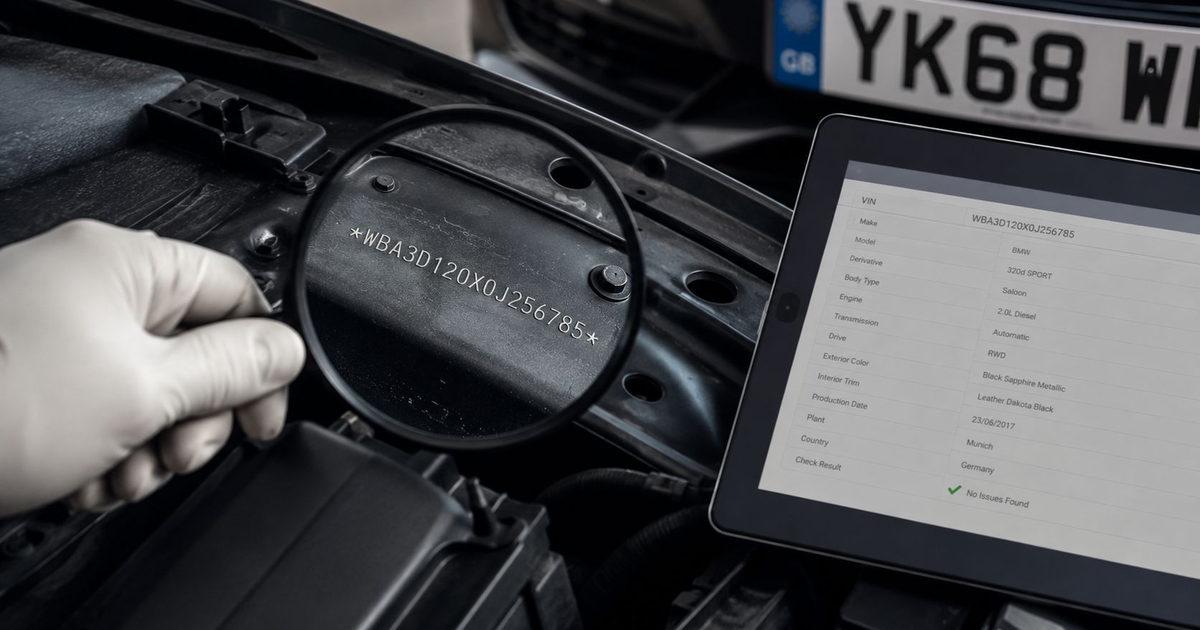
You've probably seen it happen on a busy afternoon. The car looks right, the numbers on the screen look tidy, the seller is pushing to get paid, and the unit is nearly at handover. Then a closer look at the chassis number throws the whole deal into doubt, and what looked like easy stock turns into a time-consuming provenance headache.
That's why a chassis check UK process matters on the trade floor. A used car can wear a clean advert, fresh valet, and a neat history summary, but the identity question still comes back to one thing, the VIN or chassis number matching the physical vehicle and the records held against it. GOV.UK says the VIN is usually stamped into the chassis, while DVLA guidance shows that buyers use official vehicle data, including the VIN, make, model, and registration number, to check whether a vehicle is genuine through the public vehicle-information service and bulk data set. GOV.UK vehicle identification guidance
A trader who skips that cross-check is taking a bigger risk than most consumer check pages admit. If the car has been cloned, re-plated, badly repaired, or altered after a major incident, the paperwork can still look calm right up until a buyer, a lender, or another dealer asks the wrong question. I've seen good units lose momentum because nobody could reconcile the physical identity with the file, and that delay alone can hurt margin, confidence, and the next wholesale conversation. For broader background on why history checks matter, see AutoProv's vehicle history check guide.
Table of Contents
- Why a Chassis Check Matters on the Trade Floor
- The risk sits in the gap between appearance and identity
- Why the VIN sits above the rest
- Where to Find the VIN on a UK Vehicle
- Start with the visible and stamped locations
- Match the car to its documents
- Running the Cross Check Between VIN, V5C, MOT and DVLA
- The sequence that actually works
- Use the record trail, not just the headline result
- What counts as a real mismatch
- Interpreting Flags, Codes and Red Flags
- The flags that change the decision
- What the report label really means in practice
- Why a Clean History Check Is Not the Full Picture
- Ownership pattern tells you what the database can't
- Mileage needs context, not just a figure
- Physical checks still matter when the report looks fine
- Fitting Chassis Checks Into Your Buying Workflow
- Before you travel or bid
- At the vehicle
- During the appraisal
- Before and after purchase
- Bringing Provenance Checks Together with AutoProv
- One workflow, fewer blind spots
- What tighter provenance handling changes
Why a Chassis Check Matters on the Trade Floor
A clean-looking car can still fail the simplest identity test. That's the problem with relying on first impressions in the yard, because a cloned or ringer vehicle can pass a casual walk-round, a brief drive, and even a hurried conversation with the seller before anyone compares the right numbers. The chassis number is the anchor point, everything else should hang off it.
The risk sits in the gap between appearance and identity
On the trade floor, the exposure isn't just theoretical. If a unit is later rejected by a retail buyer, flagged by a lender, or challenged after sale, you've got time lost, money tied up, and a stock record that now needs defending. The official UK approach makes this clear, because identity verification isn't just paperwork-based, the VIN should be visible on the car and also appear on documents such as the V5C, which creates a basic cross-check between the physical vehicle and official records.
Practical rule: if the chassis number and the record don't line up, stop treating the car as stock until you've resolved it.
That matters even more in used stock, where the VIN can be lost or altered during repair, restoration, or modification. In practice, a chassis check is not a box-tick, it's a provenance control that protects buying decisions before the money leaves your account. For trade buyers, that means the cost of getting it wrong isn't just the unit, it's the knock-on damage to trust and allocation.
Why the VIN sits above the rest
Every other data point ties back to the car's identity, and the VIN is the fixed point. Once you lose confidence in that, mileage, keeper history, MOT continuity, and even factory specification become harder to trust in the same way. That's why a proper dealer vehicle checks routine starts with identity, not valuation.
A good junior buyer should learn this early, a glossy report doesn't rescue a mismatched car. The check has to start with the physical vehicle in front of you, then move outward to the database record that claims to describe it.
Where to Find the VIN on a UK Vehicle
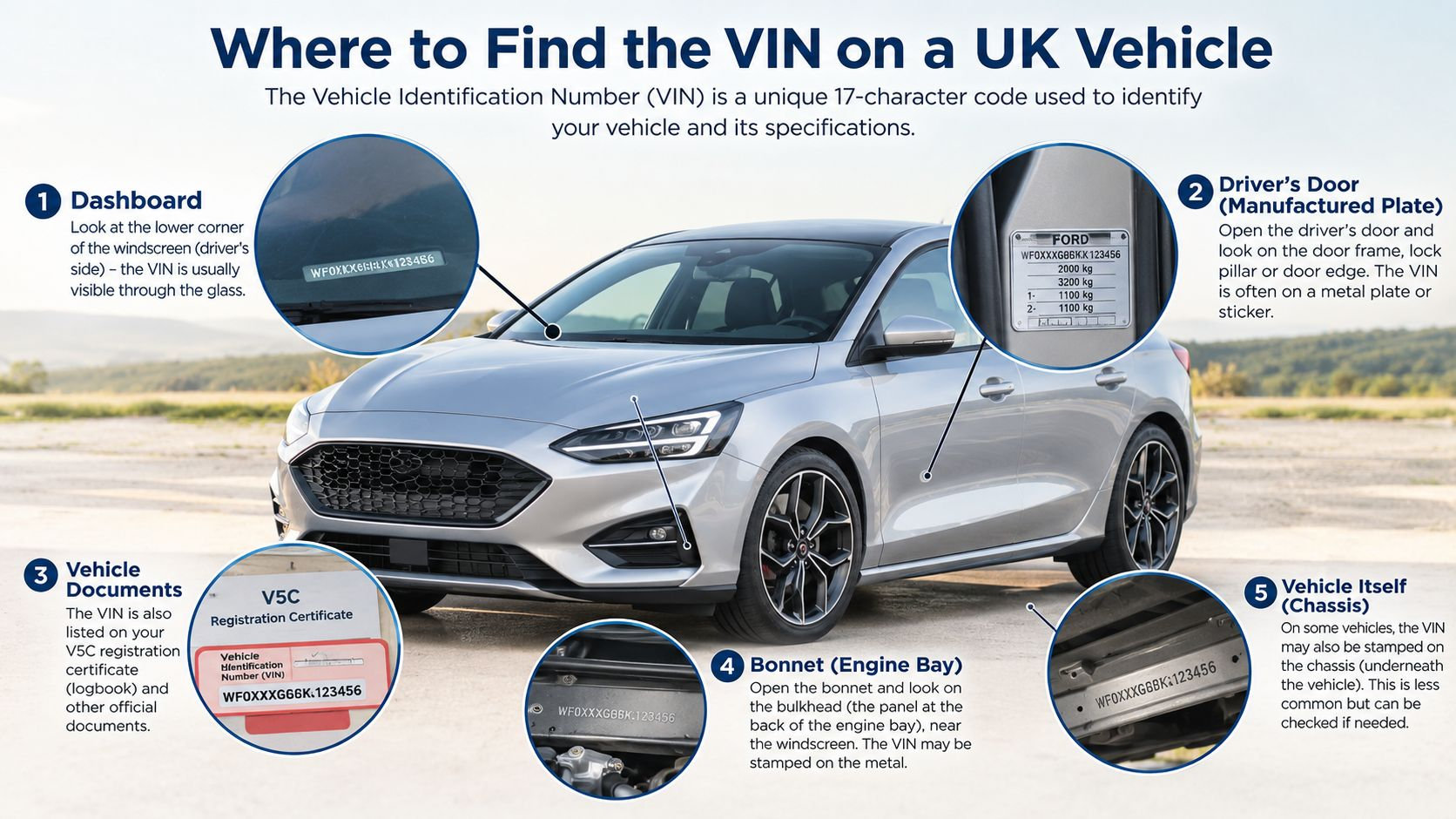
The VIN shouldn't be hiding in only one place. On a UK vehicle, you want to find it in several locations so you can compare the physical identity against the paper trail and see whether someone has altered, replaced, or obscured anything.
Start with the visible and stamped locations
The easiest place to check is the dashboard VIN plate visible through the windscreen. After that, move to the stamped VIN on the chassis or bulkhead, then look for door-shut labels and engine bay plates. UK guidance and industry references also note that the VIN can appear on the windscreen base, door frame, engine bay, chassis stamping, V5C, and MOT certificate, so one sighting is never enough on its own. GOV.UK vehicle information browsing guidance
A stamped number is more useful than a loose label, because labels can be swapped more easily than a permanent mark. That doesn't make a stamp foolproof, it just makes it harder to fake quickly. If the font looks off, the surface around it has been ground back, or the number doesn't sit where you'd expect for that model, treat it as a physical warning rather than a paperwork issue.
Match the car to its documents
The V5C logbook should carry the same VIN as the vehicle, and the current and previous MOT certificates often help confirm the same identity over time. Manufacturer data plates under the bonnet or in the service book can help too, especially if the car has been repaired or restored. Where the model year format is relevant, the current-style UK registration format, 2 letters, 2 numbers, then 3 letters, can help anchor the vehicle to the correct era and registration pattern.
A trader shouldn't ask, “Is there a VIN?”. The better question is, “Do all the visible and recorded VINs tell the same story?”
For a deeper practical walk-through of the physical number locations, use AutoProv's VIN location guide as a reference point, then verify the car itself before you buy.
Running the Cross Check Between VIN, V5C, MOT and DVLA
A real vehicle history check UK process starts with the physical car and ends with the records, not the other way round. The most reliable workflow is simple, but it has to be done in order, because a good seller can talk through paperwork while the car itself tells a different story.
The sequence that actually works
First, read the VIN off the vehicle in multiple places, then compare it with the V5C. Next, pull the MOT history by registration number and check the mileage trail against what's on the car and in the file. After that, verify the DVLA-held details, because official records can confirm what the state says about the vehicle, including make, model, colour, first registration, tax, MOT expiry, V5C issue date, and export status, even though that still doesn't prove the physical car in front of you is the same one.
The MOT system is useful, but it's only a snapshot of what was logged at test time. The AA notes that the current MOT certificate format, introduced in 2012, includes the car's current mileage and up to three previous recorded mileages, which gives you a timeline, but only around MOT events. The AA on MOT certificate mileage
Use the record trail, not just the headline result
The government MOT history service gives pass and fail results and the mileage recorded at each test, but it doesn't tell you why mileage moved or whether a record was later corrected. DVSA also says that if an MOT mileage entry is wrong and the test was more than 28 days ago, the correction must be reported online with supporting evidence, and that evidence has to show what the mileage should be and be dated within one day of the MOT test. DVSA MOT correction guidance
That means a mileage check UK workflow needs judgement, not blind acceptance. If the paper trail looks awkward, document the exact point of mismatch in the buying file and hold the decision until the source documents make sense. If you're using a structured tool like AutoProv's V5C explainer, the key thing is still the same, compare the document, the vehicle, and the database entry as one unit.
Cross-check matrix Source VIN Mileage Keeper Issue date Physical inspection Vehicle itself Yes Sometimes visible No No V5C logbook DVLA document Yes No Yes Yes MOT history GOV.UK MOT record Usually yes Yes No No DVLA vehicle data Official record Yes No Yes, where held Yes, where relevant
What counts as a real mismatch
The strongest warning sign is any difference between the physical VIN and the DVLA-recorded VIN. UK guidance on vehicle genuineness says the DVLA bulk data set is used by buyers to check whether a vehicle is genuine, and industry references treat a mismatch as a major warning sign of cloning or identity tampering. Keep the check file neat, because if the deal later gets challenged, your own record of what you verified matters almost as much as the result.
Interpreting Flags, Codes and Red Flags
A history report only has value when you read the flags properly. Traders often focus on the headline result, but the buying decision comes from the detail behind the labels and whether the risk is live, historical, or still unresolved.
The flags that change the decision
A stolen marker should stop the deal until it's resolved. That's not a pricing issue, it's a possession issue. The same applies to a hard VIN mismatch, because if the physical identity and the record don't agree, you're no longer looking at a straightforward used car.
Write-off categories need more judgement. Cat A and Cat B are the sort of markers that usually push a trader away from the car entirely, while Cat S and Cat N can still leave room for a trade decision if the repair evidence, structure, and resale route all make sense. A finance flag is different again, because an old-looking marker can still represent live risk if the lender's data hasn't been settled cleanly.
What the report label really means in practice
Mileage discrepancies often look technical, but they usually need a practical answer. Some come from recording mistakes, others from clocking, and some from record corrections that were never properly understood by the buyer. A plate change or colour change isn't automatically sinister, but it should make you ask why the identity had to shift at all.
Trade response rule: if the flag affects ownership, identity, or value integrity, treat it as a buying issue, not an admin note.
For a dealer, that usually means one of four actions, pass, discount, demand physical inspection, or hold pending clarification. If the unit also shows a suspicious keeper pattern or a VIN irregularity, the safest response is to stop and verify before the next stage of the process. For a useful MOT-focused risk lens, see AutoProv's red flag guide.
Common chassis check flags and trade responses What It Really Means Recommended Trade Response Stolen The vehicle may not be lawful to trade Stop purchase Cat A or Cat B Severe historical damage or dismantling risk Stop purchase Cat S Structural repair history with resale impact Inspect carefully, price accordingly Cat N Non-structural damage, still affects confidence Inspect carefully, consider discount Outstanding finance Another party may still have an interest Hold pending clearance Mileage discrepancy Logged mileage doesn't fit the trail Verify source records Plate change Identity or plate history has changed Check thoroughly VIN mismatch Physical and recorded identity don't agree Stop purchase Colour change Car's identity or presentation has altered Confirm it's declared and documented Keeper changes Ownership pattern may be unusual Review context, don't assume benign
Why a Clean History Check Is Not the Full Picture
A clean report can make a buyer too relaxed. The trouble is that a report only reflects what the databases know at that moment, and several risk categories don't show themselves properly through a basic check screen. That's why a green result isn't the same thing as a safe unit.
Ownership pattern tells you what the database can't
Short keepers, rapid resales, and odd gaps between transfers can all point to a car that's been moved around for a reason. The record may still look technically clean, but the ownership logic feels wrong when you read it as a whole. In the trade, that sort of pattern deserves a closer look, especially if the seller can't explain why the car changed hands quickly.
Mileage needs context, not just a figure
A steady year-on-year climb in mileage is easy to accept. What needs more attention is a sequence that looks artificially neat, a sudden plateau, or a set of rounded numbers that don't feel like normal use. The government MOT history service is useful here, but remember it only shows what was logged at test time, not the full provenance story.
Physical checks still matter when the report looks fine
A history report can't inspect a VIN stamp, look for panel replacement, or check whether an engine number matches the rest of the car. It also can't tell you if a plate has been reworked or if someone has swapped a part from a different vehicle after damage. Even insurer and police databases can lag, and finance markers depend on the lender reporting accurately.
If the paper file feels clean but the car feels odd, trust the inconsistency and keep digging.
That's where better trade vehicle intelligence earns its place. A basic vehicle history check UK can tell you what's on record, but the buying decision comes from combining record data with physical evidence and ownership logic. That's the difference between a tidy report and a defensible provenance verdict.
Fitting Chassis Checks Into Your Buying Workflow
The easiest way to reduce motor trade risk is to stop treating chassis checks as an occasional extra. They should sit inside the buying process at fixed points, so every unit gets the same discipline whether it came from a main dealer remarketing lane, a private seller, or a wholesale contact.
Before you travel or bid
Pull a provisional history report first. Review the flags, the plate history, and the keeper timeline before you commit time or transport. If the report already shows something awkward, you want to know that before the auction hammer falls or before you stand on the forecourt with cash tied up.
At the vehicle
Physically inspect the VIN stamp on the chassis, the dashboard plate, and the engine block where applicable. Compare each one against the report and the V5C. If the seller can't explain a mismatch immediately, don't talk yourself into it.
During the appraisal
Check the mileage against the MOT history, then look at service book stamps and panel or glass date-code inconsistencies. That combination doesn't prove a fault on its own, but it helps you see whether the car's story is coherent. A neat file can still hide a messy past if the physical evidence doesn't line up.
Before and after purchase
Confirm the keeper details and check for any outstanding finance before you commit. After purchase, run a final check so you're not blindsided by a last-minute marker change, then keep the report with the vehicle file for later disclosure or dispute handling. That paper trail helps with valuation, warranty conversations, and any return discussion that comes back after handover.
A structured workflow also makes handovers cleaner across the team. The buyer knows what was checked, the prep team knows what to flag, and the sales desk has a record that can survive a customer challenge.
Bringing Provenance Checks Together with AutoProv
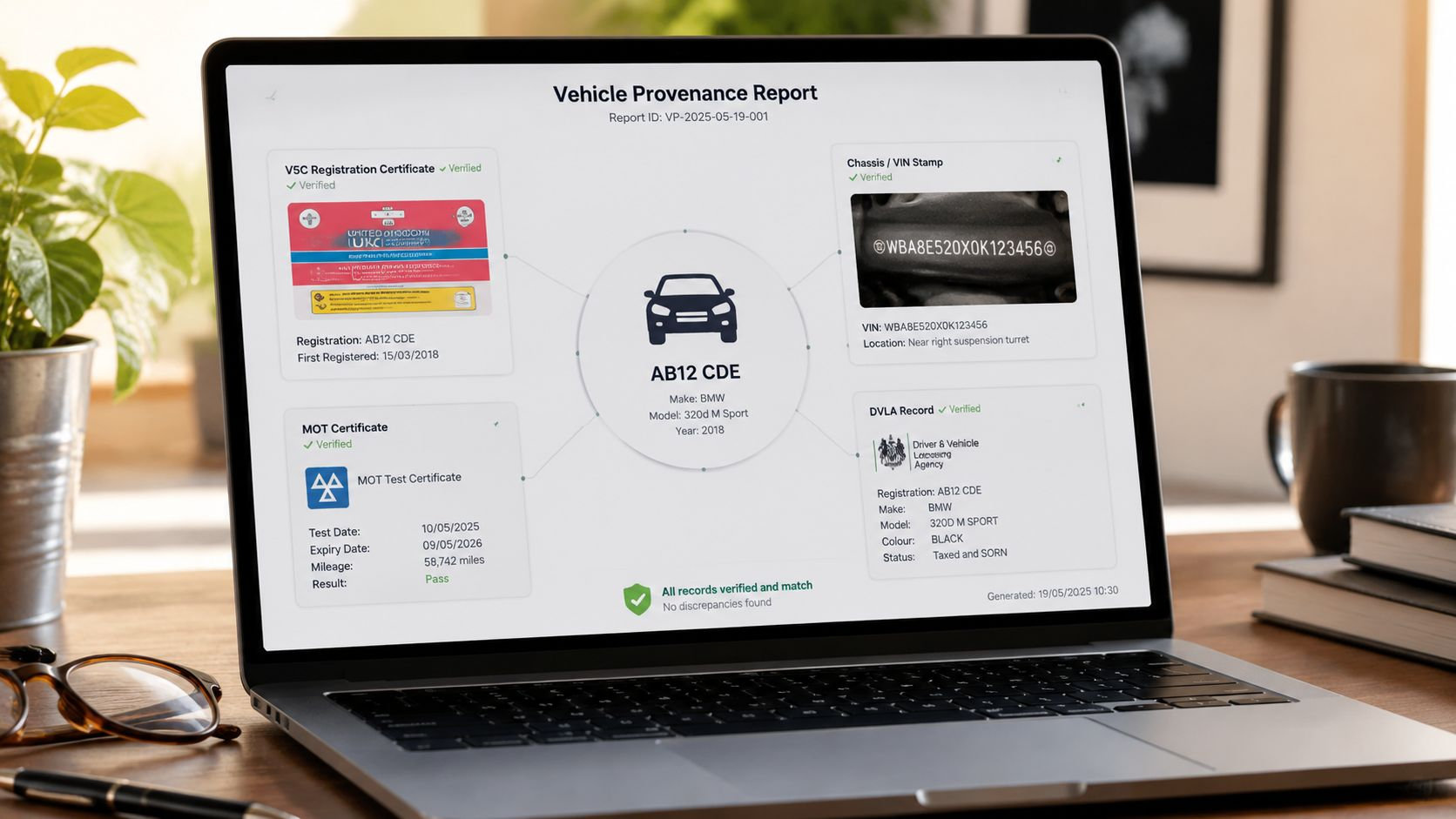
A clean-looking chassis check still falls apart if the evidence does not agree. On a trade car, the test is whether the stamped VIN, the V5C, the MOT mileage trail, DVLA details, keeper changes, finance status, and any write-off or stolen markers all point to the same unit. If one of those strands is off, treat it as a buying problem, not admin noise.
One workflow, fewer blind spots
Checking all of that by hand eats time. You jump between systems, retype registrations, and try to hold small mismatches in your head while the car is still live. That is where dealers lose margin, because the longer you spend reconciling paperwork, the more likely you are to miss the point that matters.
A trade-ready report should keep the identity fields, mileage trail, keeper pattern, and risk flags together in one file you can show to the next person who touches the car. It also needs to make mismatches easy to spot, because that is where the buying decision changes. AutoProv's process overview shows how the report brings those checks into one place before a deal is signed off.
What tighter provenance handling changes
When the checks sit together, appraisal calls get quicker, stock files stay consistent, and disputes are easier to defend later. It also helps the team talk from the same record. The buyer, prep bay, and sales desk can all see the same provenance trail, which matters when a customer pushes back after handover.
For a junior buyer, the useful test is simple. Run your first AutoProv report on the next trade purchase, then compare the VIN-to-MOT reconciliation with the physical identity check. If those do not line up, you have found an issue a standard glance often misses, before cash is tied up in the unit.
Frequently Asked Questions
AI-Generated Content Notice
This article was created with the assistance of artificial intelligence technology. While we strive for accuracy, the information provided should be considered for general informational purposes only and should not be relied upon as professional automotive, legal, or financial advice. We recommend verifying any information with qualified professionals or official sources before making important decisions. AutoProv accepts no liability for any consequences resulting from the use of this information.
From our AI insights
- Navigating UK Grey Imports: A Trader's Guide
Understand the complexities and opportunities of UK grey imports for savvy motor traders.
- Navigating Private Plate Challenges in UK Vehicle Checks
Learn how private plates affect UK vehicle checks and how traders verify provenance and spot cloning risks.
- Navigating VIN Checks Post-Brexit: What UK Traders Need to Know
Discover how Brexit impacts VIN checks for UK traders and the crucial data to review.
Related Articles

Essential Vehicle Checks Before Buying a Used Car
Learn essential checks to ensure your used car purchase is safe and sound in the UK market.

Why a Provenance Check is Essential for Used Car Buyers
Ensure your used car is a smart investment by understanding the importance of a provenance check and how AutoProv can help.

A Guide to Vehicle Check with VIN Number
A vehicle check with vin number is easily the most important thing you can do before buying a used car. Think of it as your first line of defence—a quick, simple step that pulls back the curtain on a vehicle's past, protecting you from expensive mistakes, legal headaches, and downright dangerous cars.
Published by AutoProv
Your trusted source for vehicle intelligence