A vehicle arrives at the dealership looking commercially attractive. The purchase price works, the photographs are good, and a basic history check returns no immediate reason to reject it. The problem appears later, perhaps when a mileage inconsistency is raised, an ownership timeline doesn't make sense, or a customer asks for evidence that the vehicle was assessed properly before sale. By then, the stock has already entered the system, the valuation may be difficult to defend, and staff are searching through inboxes and spreadsheets for records that should have been captured at the point of purchase.
That is the practical motor trade case for compliance workflow automation. It isn't about replacing experienced buyers with software. It's about making vehicle provenance, risk assessment, evidence collection, and escalation consistent enough that important signals don't depend on who happened to process the vehicle or how busy the team was that day.
Table of Contents
- The Hidden Cost of Manual Compliance Workflows
- Why periodic checks miss context
- The operational cost
- What Compliance Automation Actually Means
- From evidence chasing to continuous traceability
- Logs are compliance evidence
- Essential Data Sources and Risk Signals
- Build the record from several sources
- Treat mileage as a sequence
- Integrating Vehicle Intelligence with Compliance Logic
- Put the control at the decision point
- Design for exceptions, not perfect data
- Manual Checks Versus Automated Provenance Workflows
- A practical comparison
- What the table means in practice
- Regulatory Complexity and Market Fraud Risks
- Fraud signals need operational response
- Govern the automation itself
- Implementation Roadmap for UK Dealers
- Start with one controlled workflow
- Add rules in stages
- Test before expanding
- Measuring Success Through Compliance KPIs
- Measure the work between alert and decision
- Review the KPI, not just the dashboard
The Hidden Cost of Manual Compliance Workflows
A vehicle can pass through a dealership with its compliance evidence scattered across a buyer's folder, a stock spreadsheet, and an email thread. The buyer may have checked the history on Monday, while a stock controller approves preparation on Friday. If a customer later questions the mileage, the business may hold the underlying records but still struggle to show what was reviewed, when it was reviewed, who made the decision, or why the risk was accepted.
That weakness affects more than administration. Manual compliance separates the commercial decision from the evidence supporting it. During the gap, the vehicle can be transported, prepared, advertised, valued, sold, and delivered without anyone returning to the assumptions made at intake.
Why periodic checks miss context
A single vehicle history check UK report offers useful evidence, but it remains a point-in-time view. It may show a mileage entry or keeper change without explaining whether the pattern reflects a clerical error, an unusual usage history, or a wider provenance concern. Several minor signals can also appear harmless when reviewed separately, yet become significant when combined.
The wider operational cost is documented in UK workflow research. Eighty-three per cent of organisations surveyed in 2026 reported moderate or major delays caused by manual compliance work (UK compliance automation findings), while 53% said they dedicated the equivalent of a full-time employee to evidence collection. For a dealer, staff time spent retrieving records leaves less capacity to examine the vehicle history itself.
The result is a blind spot around stock provenance. A buyer may remember checking a vehicle, but memory and an email attachment are weak foundations when a customer, lender, auditor, or trading partner asks for a defensible record.
Practical rule: Record the risk trigger, evidence reviewed, responsible person, and decision outcome when the decision is made.
The operational cost
Manual workflows also produce inconsistent thresholds. One buyer may escalate a short ownership period, while another treats it as ordinary. One stock controller may investigate a mileage reduction across the MOT sequence, while another accepts the latest figure without checking earlier entries. The process then depends on individual judgement, workload, and experience rather than a consistent treatment of provenance risk.
An approach to process automation gives the dealership a repeatable route from vehicle intake to review, approval, exception handling, and evidence retention. Rules can flag unusual ownership timelines, mileage sequences, or missing records, while staff decide whether the explanation is credible and what action follows.
The objective is practical: routine stock should keep moving, and unusual records should receive informed human attention before capital is committed. A documented exception is far easier to defend than an undocumented assumption.
What Compliance Automation Actually Means
Compliance workflow automation means embedding repeatable controls into the systems and decisions that already run the dealership. It can collect records, apply rules, preserve timestamps, assign responsibility, trigger escalation, and assemble an audit trail. Human judgement remains important, particularly where the data is incomplete or the commercial context changes the risk decision.
The technical shift is from periodic sampling to continuous, event-driven evidence collection. A vehicle record can be connected to relevant data sources, with each artefact timestamped, categorised, and mapped to the control or buying rule it supports. That creates a usable history of what the workflow saw and what happened next.

From evidence chasing to continuous traceability
UK compliance research shows why this matters operationally. Eighty-five per cent of organisations in a 2026 report had delayed or eliminated governance, risk, and compliance activities because of resourcing constraints, while 44% had postponed control testing and monitoring. Only 28% monitored controls continuously, according to the same UK report on automating compliance.
A dealer applying that lesson to vehicle provenance shouldn't wait until month-end, an internal review, or a customer complaint to assemble the record. The workflow should capture the vehicle identifier, source responses, review time, triggered signals, decision owner, and any follow-up evidence as the transaction progresses.
A strong design also follows a collect-once, use-many principle. One evidence event should be available to support acquisition, valuation, internal approval, preparation records, and post-sale dispute handling, rather than being copied manually into separate folders.
Logs are compliance evidence
Every automated action needs context. The system should show what happened, when it happened, which inputs were used, what result was produced, and whether a person overrode or accepted the outcome. A dashboard alone isn't enough if the underlying decision trail can't be reconstructed.
Dealers reviewing the wider principles of workflow design may find this Loopfour finance workflow guide useful for its treatment of approvals, evidence, and repeatable process controls. In a motor trade setting, those principles need to be adapted to vehicle data, stock movement, customer records, and human review thresholds.
Essential Data Sources and Risk Signals
A reliable vehicle compliance workflow starts with the data available before purchase. A basic pass or fail result isn't a provenance assessment. The buyer needs enough context to understand how the vehicle's records fit together and whether the apparent story is internally consistent.
Build the record from several sources
Start with the vehicle identity and core registration information. Then bring together MOT history, mileage entries, ownership timelines, insurance-related events, and any available risk indicators. These sources answer different questions:
- MOT mileage history: Does the recorded progression make sense, and are there reductions or unusual gaps requiring investigation?
- Ownership timeline: Has the vehicle moved between keepers unusually quickly, or changed hands in a pattern that deserves commercial scrutiny?
- Insurance-related events: Is there evidence of an event that could affect condition, valuation, or the explanation given by a supplier?
- Vehicle identity data: Do the registration, make, model, and other identifiers align across the records being assessed?
The value comes from cross-referencing, not merely collecting more fields. A short ownership period might be ordinary for one vehicle and concerning when combined with a recent resale, a mileage anomaly, or an unexplained change in condition.
The vehicle data sources used for provenance checks should therefore be assessed by coverage, freshness, provenance, and how easily their records can be linked to a specific decision.
Treat mileage as a sequence
A mileage check UK search should examine the complete sequence rather than only the latest figure. DVSA says an incorrect MOT mileage entry can affect vehicle value by up to 8%, illustrated as about £800 on a vehicle normally valued at £10,000. If the error is found within 28 days of the MOT, the MOT centre can correct it. After that period, it must be reported to DVSA for fixing, as explained in DVSA guidance on incorrect MOT mileage.
The wider data also shows why context matters. An analysis of 62.7 million vehicles found 3.42 million, or 5.45%, showed a mileage reduction between MOT tests after anomalies were removed. It identified 1.43 million reductions that appeared to be straightforward data-entry errors, according to Great Britain MOT mileage analysis.
That doesn't make a reduction harmless. It means the workflow should flag it for proportionate review rather than treating one data point as conclusive proof of misconduct.
Integrating Vehicle Intelligence with Compliance Logic
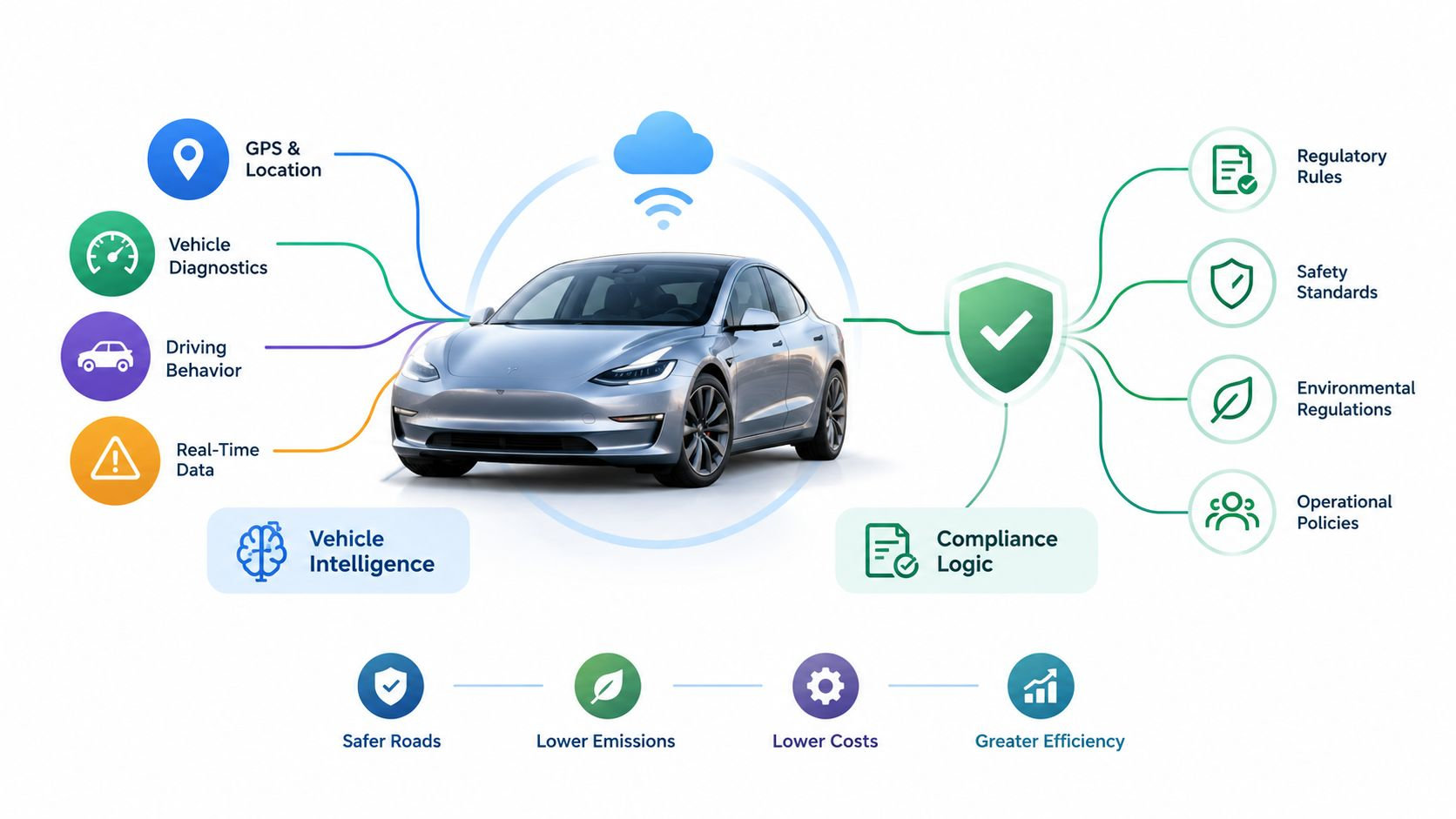
Vehicle intelligence supplies evidence. Compliance logic decides what the dealership does with that evidence. Without rules, a platform may produce a large report that still leaves the buyer to interpret every signal under time pressure. With rules, the same information can trigger a clear next action.
A stock-acquisition workflow might route a vehicle for immediate human review if it detects a mileage reduction, a compressed ownership timeline, an insurance-related event, or conflicting identity information. A vehicle with no material exception can continue through the normal buying and preparation process, with the evidence retained automatically.
Put the control at the decision point
The control belongs where the risk is created. If the concern is acquisition, the review should happen before the buyer commits capital. If it concerns valuation, the vehicle's risk status should be visible before a price is approved. If it concerns customer disclosure, the relevant provenance record should be connected to the sales and delivery process.
This approach is more useful than a retrospective monthly audit because it gives staff a chance to act while options remain open. The buyer might renegotiate, request documents, seek clarification from the supplier, or reject the stock. The system shouldn't make that judgement in every case. It should make sure the judgement is prompted, documented, and assigned.
Design for exceptions, not perfect data
Automated rules need an exception path. A flagged mileage reduction could be caused by a genuine data-entry error. A short ownership period could reflect a specific commercial circumstance. A historic insurance event may already be fully understood and reflected in the valuation.
The workflow should record the human explanation and supporting evidence, not just allow a buyer to dismiss the alert. A useful vehicle data integration model connects source records, risk scoring, workflow status, and decision notes so the dealership can distinguish an unresolved anomaly from an investigated and accepted exception.
Automation should make unusual vehicles easier to review, not make ordinary vehicles harder to buy.
Manual Checks Versus Automated Provenance Workflows
Manual verification remains useful for judgement, supplier communication, and unusual cases. It becomes weak when the dealership expects people to remember every check, transfer the same evidence between systems, and recognise patterns across records without structured support.
An automated provenance workflow doesn't remove the need for a used car history report. It changes how the report is used. Instead of treating it as a final answer, the dealership treats it as one input in a controlled decision process.
A practical comparison
Feature Manual Verification Automated Provenance Timing Usually performed at purchase or during a later review Triggered at defined points in acquisition, valuation, and sale Data handling Staff retrieve and re-enter records Connected sources are collected and linked to the vehicle record Risk assessment Often based on a single report or individual judgement Combines signals, rules, history, and escalation thresholds Evidence trail Reports may sit in email, folders, or spreadsheets Timestamps, inputs, decisions, and overrides remain connected Exceptions A buyer decides whether to investigate further The workflow routes defined conditions for human review Reuse The same evidence may be copied for different purposes One source event can support several internal controls Review quality Varies with workload, training, and experience Consistent processing, with human judgement retained for exceptions
What the table means in practice
Manual checking is often faster for a single straightforward vehicle. It can also be appropriate when the business is dealing with a rare case that needs direct conversation and careful interpretation. Its weakness appears at volume, where repeated copying and inconsistent notes make the control difficult to manage.
Automated provenance is stronger when the dealership needs repeatability across buyers, sites, or stock channels. It preserves provenance metadata and normalises records, so the business can see not only a result but also the source event and the reasoning path behind the review.
The distinction matters because a basic report is a snapshot. A trade vehicle intelligence workflow provides traceability around how the snapshot was assessed, what other signals were present, and whether someone accepted or escalated the risk. Dealers considering that distinction can review the difference between automated and traditional provenance checks before changing their buying process.
Regulatory Complexity and Market Fraud Risks
Used vehicle compliance spans data protection, evidence retention, quality control, supplier checks, and customer interactions. In the UK motor trade, provenance adds another layer. A vehicle can pass a standard identity or finance check while its mileage history, ownership trail, write-off status, or recorded use still raises questions. Automation supports these controls only when the workflow defines how each signal is assessed and who owns the decision.
The regulatory burden is also becoming harder to manage. A 2025 UK fintech compliance survey found 91% of organisations said compliance had become more complex, while 75% said that complexity had negatively affected profitability, according to the UK compliance industry analysis. For dealers, overlapping obligations make spreadsheet-based evidence harder to maintain and harder to defend during a dispute or review.
Fraud signals need operational response
The FCA's 2025 motor insurance claims analysis recorded theft claims in its sample rising from 42,437 in 2019 to 51,120 in 2023. Confirmed fraud cases rose from 4,423 to 6,263, while the total value of vehicle theft claims increased from £19.7 million to £21.5 million, according to the FCA motor insurance claims analysis.
These figures do not establish that any individual vehicle is fraudulent. They do show why a mileage conflict, inconsistent provenance record, or unexplained ownership change needs a defined response before the vehicle reaches sale. A fraud detection system can route those signals to a named reviewer, record the decision, and prevent risk data from sitting unused in a report library.
Govern the automation itself
The workflow must control lawful data use, minimisation, retention, access, and human oversight. HMRC reported 76.2% of customer interactions in 2024 to 2025 were handled through automated or digital self-serve channels, and 78% in 2025 to 2026, while skilled caseworkers remained involved in final decisions, as summarised in PwC's discussion of reinventing compliance.
Dealers should apply the same discipline at a smaller operational scale. Assign a purpose to every data source, limit access by role, log rule changes, and give staff a clear route for investigating exceptions. Automation strengthens consistency. Accountability still belongs to the business.
Implementation Roadmap for UK Dealers
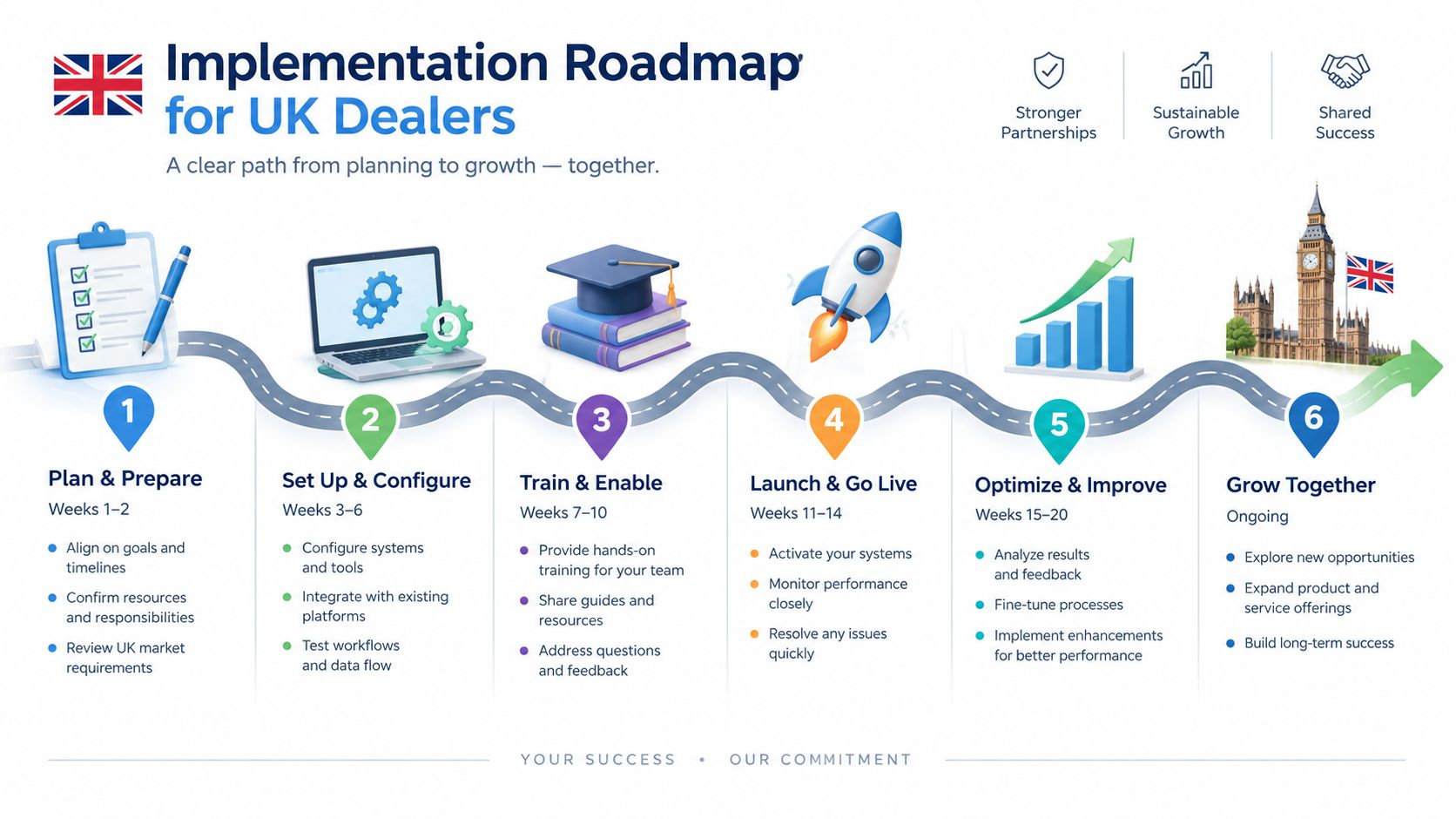
The safest implementation starts with the existing stock journey, not with a software feature list. Map where a vehicle enters the business, who checks it, which data is collected, where evidence is stored, and when a decision becomes difficult to reverse.
Start with one controlled workflow
Choose a high-volume process with visible risk, such as trade-in intake or wholesale acquisition. Document the current path from vehicle identification to approval. Look for repeated copying, missing timestamps, unclear ownership, and decisions that depend on a buyer remembering to perform an extra check.
Then define the minimum evidence required before approval. That might include the vehicle identity, MOT mileage sequence, ownership context, relevant event indicators, reviewer, decision, and reason for escalation. Keep the first version narrow enough that staff can use it under normal trading pressure.
Add rules in stages
Begin with clear signals that the team already understands. For example, route an unexplained mileage reduction or a conflict between source records to a named reviewer. Don't automate a vague instruction such as “assess overall risk” without defining the evidence and decision options behind it.
A practical rollout can follow this sequence:
- Map the current process: Record every handoff from sourcing to stock approval.
- Set risk thresholds: Separate routine cases from records that require human review.
- Connect data sources: Bring relevant vehicle and event information into the same record.
- Create decision states: Use statuses such as pending review, accepted with rationale, declined, or awaiting evidence.
- Train the team: Show buyers how alerts are generated and how exceptions must be documented.
- Review outcomes: Adjust rules when repeated false positives or missed signals appear.
The workflow should fit dealer operations rather than forcing buyers to work around it. A useful trade platform can sit alongside existing stock and valuation tools, provided the handoff preserves the vehicle identity and the evidence trail.
Test before expanding
Run the process with a defined group of users and inspect the exceptions. Check whether buyers understand the alerts, whether managers can reconstruct decisions, and whether records remain accessible after the vehicle moves from acquisition to sale. Expand only when the control works during busy periods, not just in a demonstration.
Measuring Success Through Compliance KPIs
A dealership can say its process is automated while still carrying the same risks in a different interface. Measurement should focus on whether the workflow improves decisions, preserves evidence, and resolves exceptions before they become expensive problems.
Start with the time required to prepare an audit or internal stock review. A UK professional-services automation source reports that automating extraction, capture, and storage of compliance records can reduce annual audit preparation from weeks to hours, as described in its professional-services workflow example. The result depends on event-driven collection, structured records, timestamps, and evidence that can be retrieved without manually rebuilding the file.
Measure the work between alert and decision
Track how quickly staff review an exception, how often the reviewer records a clear rationale, and how many cases remain unresolved when the vehicle moves forward. A high alert volume isn't automatically a failure. It may indicate that the rules are identifying genuine uncertainty. The useful question is whether the dealership can distinguish valid exceptions from noise and improve the thresholds over time.
Other practical measures include:
- Evidence completeness: Can the business retrieve the source records, timestamps, decision owner, and rationale for sampled vehicles?
- Exception resolution: Are flagged mileage, ownership, or event anomalies resolved before acquisition or sale approval?
- Post-sale disputes: Are provenance-related complaints becoming easier to investigate because the original decision record is available?
- Rule quality: Do reviewers accept the alerts as relevant, or are they routinely bypassing them?
- Process consistency: Do different buyers follow the same control path for comparable vehicles?
- Audit preparation: Can managers assemble a defensible stock file without chasing individual inboxes and folders?
Review the KPI, not just the dashboard
A monthly review should examine false positives, missed signals, delayed decisions, and manual overrides. If buyers repeatedly override a rule, investigate whether the threshold is too broad, the source data lacks context, or the team needs clearer guidance. If no exceptions ever appear, test whether the workflow is connected to the right sources and whether alerts are being recorded correctly.
The forward-looking measure is confidence with evidence. A mature compliance workflow lets a dealer explain what was known at the point of purchase, which risk signals were present, what action followed, and who made the final judgement.
AutoProv provides UK vehicle history, provenance, and risk intelligence for dealers, motor traders, wholesalers, and automotive buying teams, including mileage analysis, ownership patterns, insurance-related events, and anomaly detection. Use AutoProv to strengthen the evidence around acquisition and valuation decisions, then build those checks into a workflow your team can apply consistently.
Frequently Asked Questions
AI-Generated Content Notice
This article was created with the assistance of artificial intelligence technology. While we strive for accuracy, the information provided should be considered for general informational purposes only and should not be relied upon as professional automotive, legal, or financial advice. We recommend verifying any information with qualified professionals or official sources before making important decisions. AutoProv accepts no liability for any consequences resulting from the use of this information.
From our AI insights
- Navigating DVLA Conviction Checks: Dealer Compliance
Understand DVLA conviction checks and lawful access for UK dealers.
- Streamlining Compliance: Automated Checks for Dealers
Discover how UK car dealers can automate compliance checks, reduce risk, and build trust with AutoProv.
- Avoiding Towing Missteps: Legal Checks for Dealers
Protect your dealership by ensuring vehicle weight and towing capacity compliance before listing stock.
Related Articles

Understanding the Consumer Rights Act 2015 in the UK Motor Trade
Explore the Consumer Rights Act 2015 and its impact on UK car buyers and sellers, offering essential protections and insights.

Understanding UK Automotive Regulations
Explore the complexities of automotive regulations in the UK, covering DVLA, FCA, MOT, and more.
What is a V5C Document: A Quick UK Log Book Guide
If you've ever bought or sold a car in the UK, you've definitely come across the V5C. It's often just called the 'log book', and it’s the official Vehicle Registration Certificate issued by the DVLA.
Published by AutoProv
Your trusted source for vehicle intelligence