
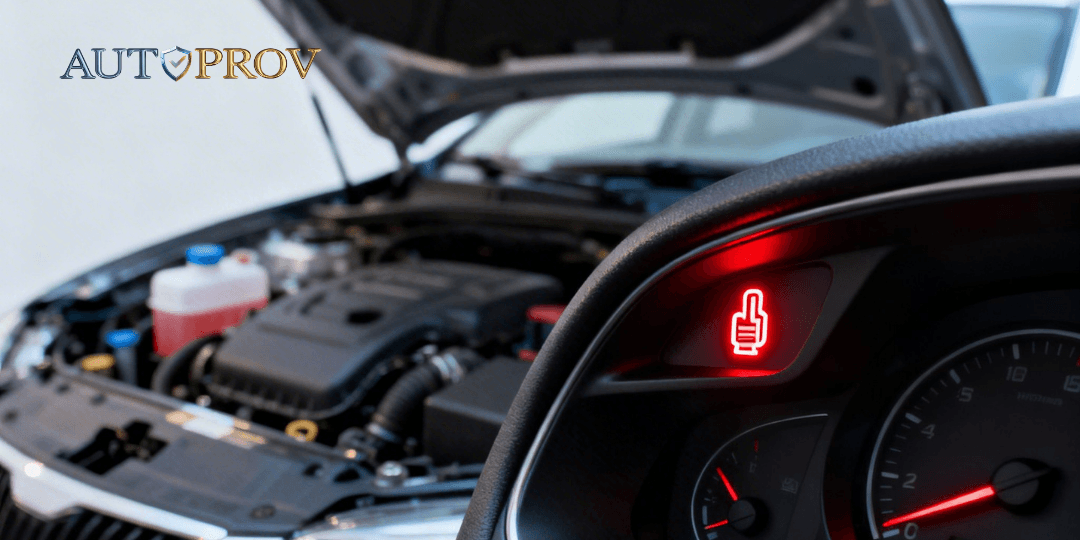
For any motor trader, the coolant warning light is not just another dashboard icon. It is a critical signal that can instantly determine a vehicle's profitability. While it might indicate a simple fluid top-up, it often points to deeper, costlier issues such as a cracked radiator or head gasket failure—faults that can eliminate a dealer's margin entirely. This warning is a crucial piece of a vehicle's history, and understanding its implications is essential for making sound buying decisions.
What a Coolant Warning Light Means for Your Bottom Line

When assessing potential stock, an illuminated coolant light demands immediate and thorough attention. It is a clear sign that the engine's cooling system—the mechanism preventing catastrophic overheating—is compromised. For a trader, this light represents a significant financial crossroads.
The critical question is whether it signals a low-cost fix or a terminal fault that renders the vehicle commercially unviable. A fluid top-up is one matter; a warped cylinder head is another entirely. Accepting this warning at face value without deeper investigation is a risk no professional buyer can afford.
Understanding the Immediate Risk
The financial impact of a cooling system problem extends beyond the initial repair cost. A vehicle driven with an active warning light, even for a short distance, could have sustained significant hidden damage. It is not uncommon for drivers to ignore such warnings, often leading to a complete breakdown and catastrophic engine failure.
This presents a substantial risk when sourcing used stock. An overlooked coolant issue can turn a promising wholesale acquisition into a workshop liability, consuming both time and capital. For more context on real-world consequences, trade forums such as Gumtree's driver advice section contain numerous accounts of such failures.
For the motor trade, a coolant light is never just a light. It is a potential indicator of neglect, a history of poor maintenance, or a seller attempting to offload a known liability before it results in total engine failure.
Provenance as a Predictive Tool
This is a scenario where a standard mechanical check is insufficient, and vehicle provenance becomes an essential tool. A basic dealer vehicle check will confirm a vehicle's identity but will not reveal the full story behind the warning light.
Has this vehicle been sold multiple times in the last year? Does its MOT history show repeated advisories for a "slight coolant leak"?
These are the patterns that trade vehicle intelligence is designed to uncover. By analysing ownership cycles and comprehensive historical data, it is possible to build a clear picture of the vehicle’s operational life. This context helps a trader determine whether a warning light is an isolated issue or the latest symptom of a chronic, expensive problem.
A vehicle's history is the best predictor of its future, and a problematic cooling system will significantly impact its value. Our guide on how to calculate vehicle depreciation effectively provides further detail. This deeper insight, powered by a robust used car history report, is fundamental to managing motor trade risk.
Decoding the Common Causes of a Coolant Light

When the coolant warning light illuminates, it signals the start of a diagnostic investigation. For a motor trader, the difference between a simple fix and a financial liability can be hundreds, if not thousands, of pounds. The ability to diagnose the root cause quickly is what protects the margin.
This involves a methodical process of elimination, starting with the simple and inexpensive faults before moving to the complex and catastrophic. Here is a breakdown of the typical culprits encountered in the trade.
Low Coolant Level: The Obvious Starting Point
The simplest reason for the light is a low coolant level. However, a professional never just tops up the fluid and considers the job done. The critical question is not if the coolant is low, but why. Is it a case of poor maintenance, or is the empty expansion tank a symptom of a more significant problem?
A cooling system is a closed loop; fluid should not disappear. If the level has dropped, the coolant has escaped somewhere. This simple observation should immediately lead to an investigation of the next, most common cause.
Coolant Leaks: The Common Offender
Physical leaks are responsible for the vast majority of cooling system issues. As vehicles age, rubber and plastic components perish, creating numerous potential failure points. A rapid inspection needs to focus on these key areas:
- Perished Hoses: Rubber becomes brittle with heat cycles and age. Inspect every coolant hose, paying close attention to the clips and connection points where they meet the radiator, engine, and heater matrix.
- Failing Radiator: Look for classic signs of corrosion, particularly on the bottom corners and seams. Any dampness, staining, or "tide marks" in the engine bay indicate a slow leak that may only manifest when the system is hot and pressurised.
- Cracked Expansion Tank: These plastic tanks are notorious for developing hairline cracks after years of thermal stress. Examine the seams and hose connections for any evidence of weeping.
From a trade perspective, a simple hose replacement is a minor cost. A leaking radiator, however, represents a more significant expense that must be factored directly into an offer price. A quick visual check can prevent a costly post-purchase surprise.
Faulty Thermostat: The Gatekeeper Failure
The thermostat manages the flow of coolant to the radiator. When it fails, it typically gets stuck in either an open or closed position, each creating a different set of problems.
A thermostat stuck closed is the most dangerous failure. It traps coolant in the engine, preventing it from reaching the radiator to be cooled. This will cause the engine to overheat rapidly, even on a short test drive, and can lead to a warped cylinder head.
Conversely, a thermostat stuck open allows coolant to circulate continuously. This means the engine never reaches its optimal operating temperature, resulting in poor fuel economy, higher emissions, and increased long-term engine wear.
Failing Water Pump: The Heart of the System
The water pump circulates coolant through the engine. A failure here is often a gradual process, providing clues before a complete breakdown. A classic sign is a whining or grinding noise from the front of the engine, indicating worn bearings.
A key diagnostic check is to look for leaks from the pump’s “weep hole.” This is a design feature intended to drip coolant as an early warning when the internal seals are failing. If coolant is dripping from this spot, the water pump is on borrowed time and requires immediate replacement. Ignoring it risks the pump seizing, which can snap the auxiliary belt and cause a cascade of expensive damage. For more on proactive checks, learn about essential car maintenance tips for UK drivers in our related article.
Head Gasket Failure: The Ultimate Red Flag
This is the diagnosis every trader wants to avoid. A blown head gasket is a major engine failure, allowing coolant and oil to mix or letting combustion gases enter the cooling system. A vehicle with this problem is an immediate commercial liability.
The tell-tale signs to look for during an inspection are:
- Emulsified Oil: A creamy, mayonnaise-like sludge under the oil filler cap or on the dipstick is a definitive sign.
- Excessive White Smoke: This is not a small amount of steam on a cold day. It is persistent, sweet-smelling white smoke from the exhaust, which means coolant is being burned in the cylinders.
- Constant Bubbling: With the engine running, look for a steady stream of bubbles in the coolant expansion tank. This is exhaust gas being forced into the cooling system under pressure.
Spotting any of these signs is a red flag. The repair is extremely expensive and labour-intensive, making the vehicle a high-risk acquisition that is almost always best avoided.
Your On-the-Lot Diagnostic Workflow
When a coolant warning light is present, an efficient diagnostic process is required. This is not about speculative repairs; it is about a professional trade workflow that quickly differentiates a minor fix from a major financial problem. A methodical approach separates a smart buy from a serious liability.
It is also worth noting that good preventative maintenance practices, such as maintaining a clean engine bay, make this process easier. A clean engine allows for instant identification of fresh fluid leaks, stained hoses, or corroded parts, turning a visual check into a powerful diagnostic tool.
Meticulous Visual Inspection
The first step is always a thorough visual assessment. A trained eye can often pinpoint the root cause without turning the key.
- Fluid Level and Condition: Check the coolant level in the expansion tank. Note if it is low or empty. Observe the fluid's colour; if it is rusty or murky, this indicates neglect and potential internal corrosion.
- Visible Leaks and Stains: Use a torch to scrutinise the engine bay. Look for damp spots, dried coolant residue (often a crusty white, green, or pink stain), or active drips. Pay close attention to the radiator, hoses, thermostat housing, and water pump.
- Cap and Hose Condition: Check the radiator or expansion tank cap. A brittle or cracked seal means it cannot hold pressure, allowing the coolant to boil at a lower temperature. Squeeze the main coolant hoses (when cold); they should be firm, not rock-hard or spongy.
Engine Running and System Tests
If visual checks reveal no obvious issues, start the engine to observe how the system behaves under pressure. This is when more subtle faults tend to become apparent.
A critical mistake is to dismiss a coolant warning light that extinguishes after a few seconds. This intermittent signal can be an early warning of a failing sensor, an airlock in the system, or a water pump that is beginning to fail—all problems that will inevitably worsen.
From a cold start, monitor the temperature gauge. Observe whether it climbs smoothly to its normal position, shoots into the red, or fails to move. Listen for unusual whining or grinding noises from the front of the engine—a classic sign of a failing water pump bearing. Finally, confirm the cooling fans engage as the engine warms up. If they do not, the vehicle will overheat in traffic.
Pressure Testing and Deeper Analysis
For any vehicle raising suspicion, a cooling system pressure test is non-negotiable. This tool pressurises the system to its operating level, forcing out slow or hidden leaks that are invisible during a visual check. It is the definitive method to confirm the entire system is sealed, from the radiator core to the heater matrix.
At the same time, look for the ultimate red flag: a blown head gasket. This requires a closer inspection of the exhaust and oil.
- Exhaust Check: Look for thick, persistent white smoke from the exhaust. A sweet smell is a clear sign that coolant is being burned inside the engine.
- Oil Analysis: Carefully check the oil filler cap and dipstick. Any sign of a creamy, 'mayonnaise-like' residue means coolant and oil are mixing—a classic and costly symptom.
- OBD-II Scan: A scanner provides invaluable data. Look for cooling-system fault codes (e.g., P0128 - Coolant Thermostat Below Threshold) and cross-reference them with physical symptoms. Our guide explains how to effectively use an OBD-II reader in your diagnostic process.
While these physical checks are vital, they are only half the story. Combining this hands-on assessment with robust trade vehicle intelligence from AutoProv provides the full picture, allowing you to determine if a low coolant level is a one-off issue or the latest chapter in a long history of recurring and expensive cooling system problems.
Calculating the True Financial Risk of Coolant Repairs
Let us transition from the workshop to the balance sheet. The coolant warning light does not just signal a mechanical fault; it is a direct threat to the bottom line. Assessing potential repair costs is not merely about settling a workshop invoice. It is about determining how much to deduct from a buying price, setting an absolute limit at auction, and protecting your margin.
What appears to be a minor drip can quickly escalate, tying up both cash and workshop space. For a trader, time is money. A leaking hose might be a quick one-hour fix, but a failing water pump can involve stripping down the front of the engine, becoming a full-day job. That downtime is a tangible cost to the business.
This decision tree outlines the thought process required when faced with a warning light, helping you separate a small, fixable problem from a major red flag that means walking away.

As the flowchart shows, symptoms like a simple leak often point to a manageable repair. However, signs of oil mixing with coolant indicate a high-risk scenario where the repair bill will almost certainly destroy any potential profit in the vehicle.
Repair Costs and What They Mean for Your Margin
The financial stakes are high, with costs ranging from minor expenses to a complete write-off. Understanding real-world costs and their impact on your margin is crucial. Below is a breakdown of what to expect and how it affects the business.
UK Coolant System Repair Costs and Trader Implications
Fault Typical Repair Cost (UK) Impact on Margin Risk of Further Damage Faulty Coolant Sensor £60 - £120 Minimal, but a frustrating fix. Low, but masks real issues. Split/Leaking Hose £80 - £200 Low. A routine job. Medium. A sudden failure will cause overheating. Thermostat Failure £150 - £350 Moderate. Can erode profit quickly. High. A stuck-closed thermostat will overheat an engine fast. Radiator Leak/Failure £250 - £500+ Significant. A large portion of the margin is lost. High. A major leak leads to rapid coolant loss. Water Pump Failure £300 - £700+ Very high. Often part of a timing belt job. Critical. Total loss of circulation means catastrophic overheating. Blown Head Gasket £800 - £2,000+ Catastrophic. Makes the vehicle unprofitable. Terminal. Warped heads, damaged block, complete engine failure. These figures are not just invoice line items; they are direct impacts on profitability. A water pump failure can easily eliminate the entire margin on a standard trade-in, while a head gasket is almost always a financial non-starter.
The Knock-On Effect: Long-Term Headaches
Beyond the immediate repair bill, consider the long-term impact. A vehicle with a known history of cooling system problems, even if rectified, can be harder to retail. Buyers are becoming more informed, and a used car history report showing previous overheating issues can be a significant obstacle during a sale.
The absolute worst-case scenario is a blown head gasket. The repair bill is substantial, often involving a cylinder head skim, new bolts, and extensive labour. For an in-depth look at these costs, our guide on head gasket repair costs in the UK is a valuable resource. For most vehicles acquired for stock, a confirmed head gasket failure renders the car commercially unviable.
This is precisely where a proper vehicle history check UK proves its worth. It delivers the vehicle provenance needed to spot patterns of recurring faults or neglect. A platform like AutoProv provides this trade vehicle intelligence instantly, enabling you to identify high-risk vehicles before committing capital and turning a potential disaster into a smart pass.
Connecting the Dots with Vehicle Provenance

A physical inspection and diagnostic scan are vital, but they only report on a vehicle's condition today. They do not reveal the history of how it reached that state. The coolant warning light might be the final symptom of a long history of neglect, recurring faults, or temporary fixes designed to last just long enough to transfer the problem to the next owner.
This is where vehicle provenance becomes the most important tool for risk management. It connects the dots between the fault observed on the forecourt and the hidden history that truly defines whether that vehicle is a sound investment or a recurring liability. Without this context, you are buying with incomplete information.
Red Flags in a Vehicle History Report
A standard dealer vehicle check often misses the subtle patterns that indicate a chronic problem. When assessing a vehicle with any sign of cooling system trouble, you must know how to spot the red flags that only appear in a full historical timeline. This is what effective trade vehicle intelligence is designed to do.
Look for these tell-tale signs:
- Short-Term Ownership Cycles: A vehicle changing hands multiple times in 12-24 months is a major red flag. This often signifies that previous owners encountered an expensive, intermittent fault—such as an overheating issue—and chose to sell it on rather than fund a proper repair.
- Repairs Before Resale: Service history showing a new radiator, water pump, or coolant flush just weeks before the vehicle is marketed should be treated with suspicion. While it could be diligent maintenance, it is more often a seller patching up a known problem just long enough to move it on.
- MOT Advisory Clusters: Look for repeated MOT advisories like "slight coolant leak" or "coolant level low." A single advisory is one thing. Two or three over consecutive years suggest a persistent issue that the owner has failed to address properly.
A single coolant-related MOT advisory might be easy to dismiss. However, when that advisory is followed by a rapid change of ownership, it tells a much more concerning story. This is the kind of insight that separates a standard check from true provenance analysis.
Uncovering Hidden Liabilities
A seller offloading a vehicle with a known cooling system liability is a classic motor trade risk. They rely on the buyer focusing on cosmetic condition and the vehicle's current state, hoping its past will not be investigated. A simple coolant flush can hide the early signs of head gasket failure, and a topped-up expansion tank can mask a slow leak.
Data from UK motoring forums shows a worrying trend where a simple coolant warning light escalates into system-wide failure, sometimes logging over 40 different fault codes in subsequent diagnostic scans. This is especially critical for traders, as some data suggests 35% of wholesale imports have hidden cooling defects that a basic used car history report completely misses. Platforms like AutoProv can spot these by flagging rapid resale activity within six months of a known coolant-related event—a pattern we see in 14% of high-risk vehicles. The complexity of these issues is evident on dedicated forums like those found on Ross-Tech's site.
By analysing a vehicle’s complete history, you can identify these red flags for what they are: clear signals of a high-risk asset. An advanced vehicle provenance report is designed to assemble these disparate data points from the DVLA, MOT history, and ownership records into a single, clear risk profile. Learn more about how a complete vehicle provenance report delivers this deeper level of insight. This intelligence enables a decision based on the vehicle's entire life, not just its presentation on the day.
Turning Data Into Your Best Defence
A good physical inspection is second nature to a trader, but effective risk management begins long before any money changes hands. The coolant warning light is a classic example. The dashboard indicates a problem now, but it reveals nothing about the vehicle's past, which is where the real story lies. To protect your business, you must look beyond the engine bay and deep into a vehicle's history.
This is where data analysis becomes a core part of the buying process. It is not about replacing mechanical instinct; it is about reinforcing that instinct with the hard facts needed to spot a high-risk vehicle before it becomes your problem. A professional vehicle provenance report provides the vital context that a simple check can never offer.
Looking Past the Obvious
A standard dealer vehicle check will confirm a vehicle’s basic identity but rarely connects the dots in its history. That’s where intelligent platforms like AutoProv come in. They are built to dig deeper, turning raw data into actionable insights.
This level of analysis is about spotting patterns and red flags that hint at bigger problems:
- Ownership Velocity: How frequently has the vehicle been sold? A vehicle changing hands every 6-12 months is a significant red flag for a recurring, unsolved fault that previous owners grew tired of addressing.
- MOT Advisory Trajectory: It is not just about a one-off advisory. Seeing a note for a "slight coolant leak" on three consecutive MOTs paints a clear picture of a persistent problem and a history of neglect.
- Mileage and Usage Patterns: Mileage must be viewed in context. A significant drop in miles between owners might not just mean it was used infrequently; it could mean it was off the road for major, expensive repairs.
How Provenance Intelligence Protects Your Profit
This kind of trade vehicle intelligence is your best defence against the expensive surprises a coolant warning light often signals. It allows you to piece together a vehicle’s entire life story, flagging potential liabilities that other dealers might completely miss.
For the professional trader, advanced vehicle intelligence is not a magic bullet. It is a critical decision-support platform that transforms the buying process from a reactive diagnosis into a proactive risk assessment.
By integrating this intelligence into your buying process, you can make far sharper decisions at the point of purchase. For example, imagine you see a recent coolant flush in the service history. A used car history report from AutoProv can instantly show if that service occurred right after a long period of inactivity or was immediately followed by a quick sale.
That context is everything. It provides the evidence needed to question a seller’s narrative, adjust your offer to cover potential motor trade risk, or simply walk away from a deal that does not add up. Ultimately, it’s about buying smarter, pricing with more confidence, and protecting your profit from the hidden costs of a problem vehicle.
Frequently Asked Questions for Motor Traders
In the trade, time is money, and warning lights are red flags. Here are direct answers to the questions we hear most from motor trade professionals about the coolant light.
Is a Coolant Warning Light an Automatic MOT Fail?
No, the light itself is not a specific failure item on a UK MOT test. However, the underlying problem causing it almost certainly is. An MOT tester will fail a vehicle for an ‘Engine coolant leak (major leak)’ without hesitation.
Furthermore, if the engine has been running hot enough to activate the light, there is a strong possibility it will fail the emissions test. While the light is not a direct fail, it is a significant indicator that an MOT rejection is likely. It is a critical signal that cannot be ignored when appraising stock.
Can I Trust a Recent Coolant Flush in the Service History?
A fresh coolant flush can be a sign of a well-maintained vehicle. For a trader, however, it warrants suspicion. All too often, it is a low-cost attempt to mask a deeper, more expensive problem, such as a partially blocked radiator or the initial signs of head gasket failure.
You must cross-reference that service record with the vehicle's full history. Was the flush performed just before it was offered for sale? Or after a series of short-term owners? A professional vehicle history check UK connects these dots, helping you determine whether it was good maintenance or a temporary fix.
How Does Vehicle Provenance Help Predict Future Coolant Issues?
Vehicle provenance reveals the story behind the vehicle, and that story is your best guide to future reliability. When assessing the cooling system, a deep dive into the ownership timeline and MOT history can reveal critical red flags.
For example, a vehicle passed between three different owners in 18 months is a classic sign of a recurring fault being passed on. MOT advisories for a 'slight coolant leak' that appear year after year point to a persistent issue someone has been ignoring.
Advanced trade vehicle intelligence platforms are designed to spot these patterns. They link disparate data points, flagging high-risk histories that a basic check would miss and helping you sidestep vehicles that are likely to cause future problems.
Gain a decisive advantage in a competitive market. AutoProv delivers the advanced vehicle history, provenance, and risk intelligence UK motor traders need to buy smarter, price more accurately, and protect their bottom line. Make your next buying decision with complete confidence by visiting https://autoprov.ai.
Frequently Asked Questions
AI-Generated Content Notice
This article was created with the assistance of artificial intelligence technology. While we strive for accuracy, the information provided should be considered for general informational purposes only and should not be relied upon as professional automotive, legal, or financial advice. We recommend verifying any information with qualified professionals or official sources before making important decisions. AutoProv accepts no liability for any consequences resulting from the use of this information.
From our AI insights
- The Importance of Tyre Verification for UK Motor Traders
Discover why verifying tyre specs is crucial for UK traders to ensure safety and compliance.
- Decoding CO2 Emissions: A Trader's Guide
Learn how traders can verify CO2 data using factory build sheets to prevent disputes.
- Navigating Recall Compliance for UK Car Traders
Ensure compliance with recall regulations: essential steps for UK car traders.
Related Articles
The Importance of Car Maintenance and Provenance Checks
Discover why regular car maintenance and proper provenance checks are essential for vehicle quality and longevity.
Essential Car Maintenance Tips for UK Drivers
Discover vital car maintenance tips to keep your vehicle roadworthy and compliant in the UK.
How Much Is a Car Service? Complete UK Price Guide
Trying to pin down exactly "how much is a car service?" can feel a bit like asking "how long is a piece of string?". Prices vary quite a bit, but to give you a ballpark figure, an interim service will usually set you back around £100 to get started. A more thorough full service often begins at £180, while a major service for many cars can easily top £300.
Published by AutoProv
Your trusted source for vehicle intelligence
