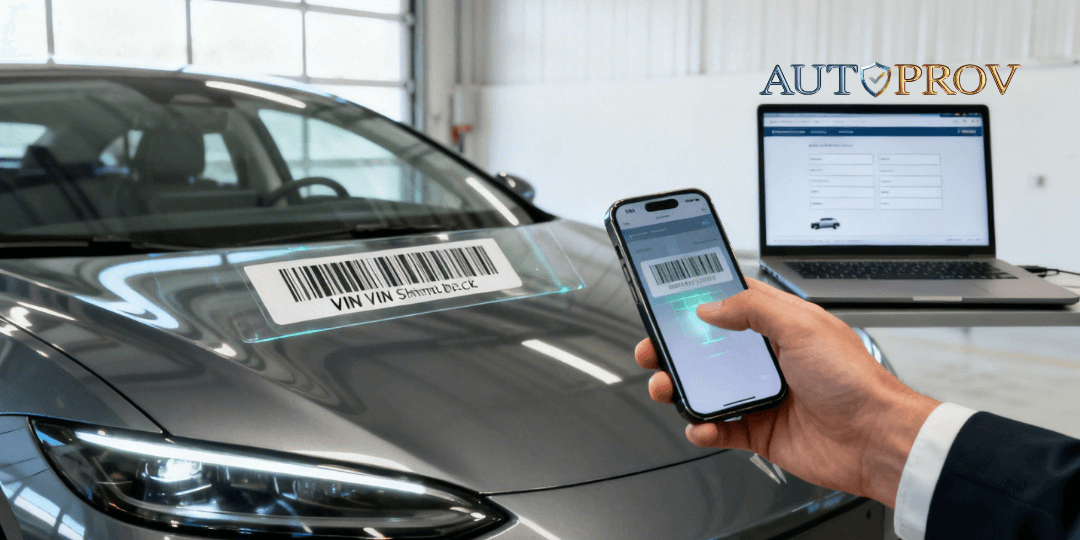
For any professional motor trader, the free chassis number check is more than a procedural step; it's the initial, critical phase in vetting potential stock. Before committing capital or significant time, this preliminary check using official sources like the DVLA and MOT history service provides a no-cost method to validate a vehicle’s fundamental identity. It serves as the first line of defence against acquiring problematic assets.
Your First Step in Vehicle Provenance
Within the trade, it is understood that a registration plate can be misleading. Plates are transferred, cloned, or placed on retention. The chassis number—or Vehicle Identification Number (VIN)—is the vehicle's permanent, unique identifier. It is the only constant.
This 17-digit code forms the bedrock of any professional vehicle provenance assessment. Initiating an appraisal with a free check against this number is a non-negotiable standard in today’s market. It functions as an essential filter, helping to instantly differentiate promising vehicles from obvious liabilities.

The primary objective is validation: does the physical vehicle match the official record? This rapid cross-reference can immediately highlight major red flags, from a simple administrative error on the V5C to a sophisticated cloning operation. Before proceeding, it is imperative to know where to find the chassis number on the vehicle and confirm it matches the V5C document.
What an Initial Free Check Is Really For
It is important to manage expectations. A free check is not a comprehensive vehicle history report. It is a rapid screening tool designed to answer several critical questions at the outset, without any financial outlay:
- Vehicle Identity: Do the make, model, colour, and engine capacity listed on the DVLA database align with the V5C and the physical vehicle?
- MOT History: Are there significant mileage discrepancies? Is there a history of recurring failures on major systems? Does the record show a pattern of concerning advisories?
- Basic Data Anomalies: Does the date of first registration or tax status appear inconsistent for a vehicle of its age and type?
Obtaining clear answers to these questions builds a solid foundation for your appraisal. If the data aligns, you can proceed to the next stage with greater confidence. If a red flag emerges, you can withdraw from the transaction immediately.
This is the essence of effective risk management in the motor trade: identifying and eliminating obvious liabilities as early and cost-effectively as possible, allowing resources to be focused on viable opportunities.
How to Use Government Sources for Foundational Checks
For any trade professional, the first port of call for a free chassis number check should always be the primary government services. These represent the foundational layer of due diligence. They are free, fast, and provide the raw data needed to instantly validate a vehicle against its V5C and physical presentation.
The two principal services are the DVLA's 'Vehicle Information Checker' and the GOV.UK 'Check MOT History' service.
The process is straightforward. Enter the vehicle’s registration number to receive an official data snapshot in seconds. The first action is a crucial cross-reference: do the make, model, colour, and engine size match the logbook and the vehicle itself? If the DVLA record indicates a blue saloon but the vehicle is silver, that is an immediate red flag that requires further investigation.
Scrutinising the MOT History
Beyond a basic identity check, the MOT history is where the vehicle's operational story begins to unfold. This freely accessible data provides a timeline of its roadworthiness, usage patterns, and potential underlying issues.

The interface is simple and efficient. The registration number is all that is required to access a wealth of historical data that is invaluable for any trade assessment.
Detailed analysis can flag future problems and directly inform your valuation. Pay close attention to recurring advisory notes, which often point to persistent issues that may have been neglected. For instance, advisories for "slight play in front suspension" or "minor oil leak" appearing year after year suggest that significant repair costs may be imminent.
To an experienced trader, an MOT history is more than a pass or fail certificate; it's a risk assessment tool. It indicates how a vehicle has been maintained—or not maintained—and where the next major expense is likely to arise. A consistent pattern of advisories on brakes and tyres often indicates operation on a minimal budget.
Analysing Mileage Progression
One of the most powerful features of the MOT history is the ability to track a vehicle's mileage over time. This allows you to build a clear picture of its usage and, crucially, spot the indicators of mileage fraud—or 'clocking'. This remains a significant problem in the used car market.
Analysis of millions of MOT records indicates that mileage discrepancies appear in as many as 15-20% of vehicles checked. With over 40 million MOT tests conducted in the UK annually, this dataset is an incredibly rich source for identifying such anomalies.
What you are looking for is a logical, steady increase in mileage from one MOT to the next. Alarm bells should sound if you observe:
- Significant Drops: A mileage reading that is lower than the previous year's test is an almost certain sign of tampering.
- Long Periods of Stagnation: If a car has covered minimal mileage between MOTs, it could indicate it was off the road for an extended period (perhaps for major repairs) or that the odometer was disconnected.
- Inconsistent Usage: Wildly different annual mileage figures—for example, 2,000 miles one year and 20,000 the next—might suggest a history as a private hire vehicle, which results in accelerated wear.
These government tools are an essential first step in any professional vehicle provenance check. However, they are only a first step. They will not provide critical details such as outstanding finance. For that complete picture, a more powerful solution is required. You can explore the scope of free services in our guide on the free DVLA vehicle owner check.
Spotting Critical Risks a Free Check Can Uncover
Extracting raw data from free government sources is one thing; the real skill lies in interpreting it to identify serious risks at an early stage. For a professional trader, a free chassis number check is your first line of defence. It is the initial opportunity to detect discrepancies that could signal anything from a simple administrative error to outright fraud, thereby protecting your capital and reputation.
The most immediate and severe threat a physical VIN inspection helps to mitigate is vehicle cloning. This is not a theoretical problem in the UK used car market; police records show over 10,000 reports of cloned number plates annually as of 2025. Your process must include physically checking the VIN on the windscreen and door jamb, ensuring it matches the V5C logbook and the data returned by the DVLA's online tool. Any mismatch is an instant reason to halt the appraisal.

Uncovering Deception in Vehicle Data
Beyond basic cloning checks, your analysis must go deeper to spot more subtle, yet equally damaging, forms of deception.
A VIN check is the only practical defence against a 'cut and shut'—a dangerous vehicle constructed from two separate, often badly damaged, cars welded together. While a free check will not explicitly flag this, it provides the vehicle's core identity. If you have any suspicions about structural integrity, the first step is to verify that the VIN stampings appear factory-original and have not been tampered with.
Consider a real-world scenario: a trader appraises a vehicle where the V5C lists a 1.6-litre engine, but a visual inspection reveals a 2.0-litre unit. The DVLA data from the free check confirms the 1.6-litre registration. This is not merely a performance upgrade; it is a major red flag indicating a potential engine swap, possibly involving stolen parts, or a vehicle that has been rebuilt from salvage.
Interpreting MOT History for Hidden Issues
The MOT history provides a timeline that can expose significant mileage discrepancies and unexplained periods where the vehicle has been off the road.
A common tactic to conceal high mileage is to keep a vehicle off the road and untaxed for a year or two before its next MOT, creating a data void. When reviewing the MOT timeline, long gaps between tests should always prompt further questions. They could be masking thousands of miles or major, undisclosed repairs.
Look for patterns in mileage readings that are illogical. A sudden drop is the most obvious sign of 'clocking', but extended periods where the mileage barely changes are also a major concern. For example, a vehicle that covered only 500 miles between two MOTs may have been stored pending repairs or, more problematically, had its odometer disconnected.
Beyond basic checks, the ability to track legal cases linked to a vehicle's past can be crucial for uncovering hidden risks like theft, salvage fraud, or ongoing ownership disputes.
By treating the data from a free chassis number check UK as evidence in an investigation, you can significantly sharpen your ability to spot fraud before commitment. However, these free tools only scratch the surface. They will not confirm if a vehicle is stolen, has been written off, or has outstanding finance attached.
The Next Steps: Recalls and Valuation
Having obtained the DVLA and MOT data, the process is incomplete. Two further steps are essential: checking for outstanding safety recalls and conducting a preliminary valuation. Neglecting these can transform a seemingly good deal into a significant liability.
An unresolved safety recall is a major compliance and safety issue. For a trader, retailing a vehicle with a known, unfixed safety defect is an unacceptable risk. Fortunately, most manufacturers provide public portals to check for these issues.
Using the Chassis Number to Identify Recalls
This step is non-negotiable in the modern motor trade. The chassis number (VIN) is essential, as recalls are often tied to specific production batches, not just a model year.
- Locate the Manufacturer's Portal: Search online for "[Vehicle Brand] recall check UK".
- Enter the VIN: Accurately input the full 17-digit chassis number.
- Review the Results: The system will report any outstanding safety campaigns. If a recall is identified, you must factor in the time and logistics of rectification at a main dealer before determining the vehicle's acquisition value.
For a detailed analysis, see our guide on why a vehicle recall check for UK traders is so important. This simple search elevates a basic free chassis number check UK into a more robust risk assessment.
Tying It All Together with a Valuation
The final part of this free-check process is to ground all findings in commercial reality. Use a free online valuation tool to obtain a rough trade and retail figure. The objective is not to accept this number at face value, but to cross-reference it with the history you have uncovered.
This is where professional experience and instinct become critical. A free valuation tool might suggest a strong price, but if you have already identified a patchy MOT history with recurring advisories, you know the data does not align.
A high valuation is meaningless if the vehicle's provenance is weak. This is a common trap: an attractive price masking a problematic history. An astute trader uses free data to challenge the initial valuation, not simply accept it.
For example, a vehicle may be valued at £8,000, which appears attractive. However, if your checks reveal a high number of keepers and a suspicious gap in its MOT record, its true trade value is likely much lower. This is how you transform a few simple free checks into a powerful appraisal tool, allowing you to quickly decide if an asking price is justified or unrealistic.
The Limits of a Free Vehicle History Check UK
While using government sources for an initial lookup is a prudent first step, it is vital for any trade professional to understand where this basic check ends and where comprehensive risk intelligence begins. Relying solely on these free reports to acquire stock is a high-risk strategy that leaves a business exposed to significant financial and reputational damage.
A free check provides a useful snapshot, confirming the vehicle's basic identity and its MOT history. However, it creates a major blind spot around the most costly and complex issues that affect used vehicles. This is where the true commercial risk lies.
What a Free Check Will Never Tell You
The information available from free government sources is limited by design. It cannot and will not provide insight into the critical risk factors that define a vehicle's true history and, ultimately, its value. This information gap is precisely where dealers incur losses.
A free check leaves you blind on several business-critical points:
- Outstanding Finance: You will have no visibility of any hire purchase or conditional sale agreement attached to the vehicle. Acquiring a vehicle with outstanding finance means you do not hold legal title, creating a severe and costly risk.
- Insurance Write-Off History: There is no mention of whether a vehicle has been declared a total loss by an insurer. You could unknowingly purchase a Category S (structurally damaged) or Category N (non-structurally damaged) vehicle.
- Stolen Vehicle Status: Free government checks do not interface with the Police National Computer (PNC). You cannot confirm if a vehicle is recorded as stolen—a risk that could lead to seizure of the asset and legal complications.
- Private Plate History: While you can see the current registration, the history of previous private plates is often obscured, making it harder to construct a complete timeline and identify potential red flags.
- Full Ownership Provenance: Free data does not provide a detailed log of keeper changes, which is crucial for spotting patterns like short-term ownership or rapid resale—key indicators of risk.
Relying on a free check alone is analogous to reading only the first chapter of a book and assuming you know the ending. It provides the initial setup but misses the critical plot points that define the vehicle's true story and value.
This is a fundamental point of motor trade risk management. The very details omitted by a free vehicle history check UK are those that lead to the most significant financial losses. For a complete overview, see our detailed guide on what a professional free UK VIN number check should encompass.
A free lookup is the starting point. A professional, trade-focused report from a provider like AutoProv is the essential tool required to make a secure and informed buying decision.
Free vs. Professional Vehicle Checks for UK Traders
This table provides a clear comparison of what free checks can and cannot do for a professional trader. The gaps represent where your profit and reputation are exposed.
Risk Area Covered by Free Checks? Covered by AutoProv? Outstanding Finance No Yes Insurance Write-Off (Cat S/N) No Yes Stolen Vehicle (PNC) No Yes Scrapped/Exported Status No Yes Mileage Discrepancies Partially (MOT Only) Yes (Full History) V5C & Plate Change History No Yes Basic MOT & Tax Status Yes Yes As illustrated, the most severe financial risks—finance, write-offs, and stolen status—are completely invisible on a free check. For any serious trader, bridging that information gap is not a luxury; it is a business necessity.
When to Escalate to a Professional Vehicle Check
A free chassis number check is your first line of defence, serving as an initial, no-cost method to disqualify vehicles with obvious identity issues or a problematic MOT history. However, every experienced trader understands this is merely the beginning.
Knowing when to commission a full, professional vehicle check is a critical business decision. This is the point at which you transition from a cursory overview to robustly protecting your capital.
The trigger for escalation should be any anomaly, red flag, or intuition that something is not right. If the V5C details do not perfectly match the DVLA record, that is a trigger. If you identify unexplained gaps in the MOT history, that is a trigger. An unusually high number of keepers for the vehicle's age is another.
These are not just minor administrative errors; they are potential indicators of much larger, more expensive problems that a free check will not reveal.
Managing this escalation is a core component of modern motor trade risk management. You must know when to proceed and when to invest in deeper intelligence.
This flowchart outlines the basic decision-making process.

It is a simple two-step process: use free tools for initial validation, but the moment any ambiguity or financial risk is detected, invest in a full dealer vehicle check without hesitation.
Protecting Your Investment
Ultimately, the decision rests on a single question: is your capital at risk? If you are acquiring a vehicle for resale, the answer is always yes.
The modest cost of a comprehensive vehicle provenance report is not an expense; it is an investment in risk mitigation. It is the cost of conducting business professionally in a market where a hidden history can eliminate profit margins instantly.
A professional check from a service like AutoProv is designed to uncover the business-critical information that free tools cannot access, including outstanding finance, undisclosed insurance write-offs, and police interest.
This is about equipping you with the trade vehicle intelligence needed to make a secure, informed, and profitable buying decision. Without it, you are not trading on data; you are trading on hope.
Your Questions Answered
Motor trade professionals require direct, factual answers. Here are common questions regarding vehicle checks and their application during appraisal.
Is a Free Chassis Number Check Enough to Buy a Car for Trade?
No. A free check is an effective starting point for confirming a vehicle's basic identity and reviewing its MOT history. It serves as a preliminary screening tool.
However, for a trade acquisition, it is insufficient. It will not reveal critical deal-breakers such as outstanding finance, insurance write-off status (e.g., Cat S/N), or if the vehicle is recorded as stolen. Relying solely on free checks exposes your business to significant capital and reputational risk. A professional report is a non-negotiable part of due diligence before any funds are committed.
What Is the Difference Between a Chassis Number and a VIN?
For modern vehicles, there is no functional difference. The terms are used interchangeably.
VIN is the standardised term for Vehicle Identification Number—the unique 17-character code. ‘Chassis number’ is an older, colloquial term that has persisted. Both refer to the same unique identifier stamped on the vehicle's frame, used to track its history from manufacture.
Can I Check if a Car Is Stolen with a Free Check?
No, you cannot. Free government services do not have access to the Police National Computer (PNC).
Checking for a stolen marker is one of the primary reasons to upgrade to a professional, paid vehicle history check. Only providers with official access to police databases can provide this confirmation. Operating without this check is an unacceptable risk for any stock acquisition.
Where Do I Find the Chassis Number on a Vehicle?
Manufacturers place the VIN in several standard locations to deter tampering. It is best practice to check all of them.
The most common locations are:
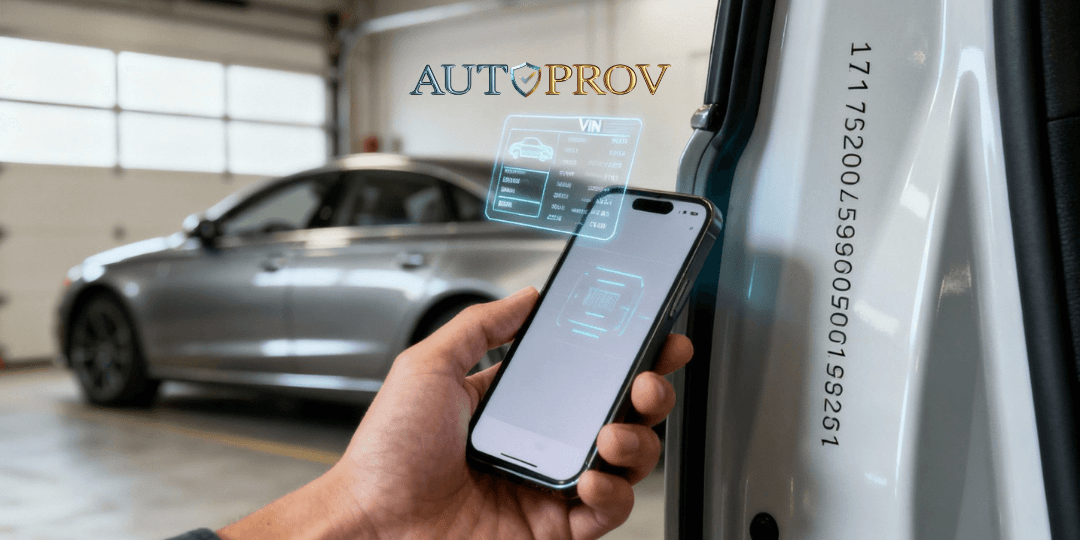
- On a plate at the base of the windscreen, typically on the passenger side.
- On a sticker inside the driver's side door jamb.
- Stamped directly into the vehicle's chassis, often in the engine bay or a footwell.
It is absolutely vital that the VIN is identical in all locations and that it perfectly matches the V5C logbook. Any discrepancy is a major red flag that requires immediate and thorough investigation before proceeding.
To obtain a complete vehicle history—including finance, write-off status, and police interest—you require more than a basic check; you need professional motor trade risk intelligence. AutoProv delivers the comprehensive vehicle provenance reports that UK traders trust to acquire stock with confidence and protect their business. See what you're missing at https://autoprov.ai.
Frequently Asked Questions
AI-Generated Content Notice
This article was created with the assistance of artificial intelligence technology. While we strive for accuracy, the information provided should be considered for general informational purposes only and should not be relied upon as professional automotive, legal, or financial advice. We recommend verifying any information with qualified professionals or official sources before making important decisions. AutoProv accepts no liability for any consequences resulting from the use of this information.
From our AI insights
- Navigating UK Grey Imports: A Trader's Guide
Understand the complexities and opportunities of UK grey imports for savvy motor traders.
- Navigating Private Plate Challenges in UK Vehicle Checks
Learn how private plates affect UK vehicle checks and how traders verify provenance and spot cloning risks.
- Navigating VIN Checks Post-Brexit: What UK Traders Need to Know
Discover how Brexit impacts VIN checks for UK traders and the crucial data to review.
Related Articles

Essential Vehicle Checks Before Buying a Used Car
Learn essential checks to ensure your used car purchase is safe and sound in the UK market.

Why a Provenance Check is Essential for Used Car Buyers
Ensure your used car is a smart investment by understanding the importance of a provenance check and how AutoProv can help.
A Guide to Vehicle Check with VIN Number
A vehicle check with vin number is easily the most important thing you can do before buying a used car. Think of it as your first line of defence—a quick, simple step that pulls back the curtain on a vehicle's past, protecting you from expensive mistakes, legal headaches, and downright dangerous cars.
Published by AutoProv
Your trusted source for vehicle intelligence