
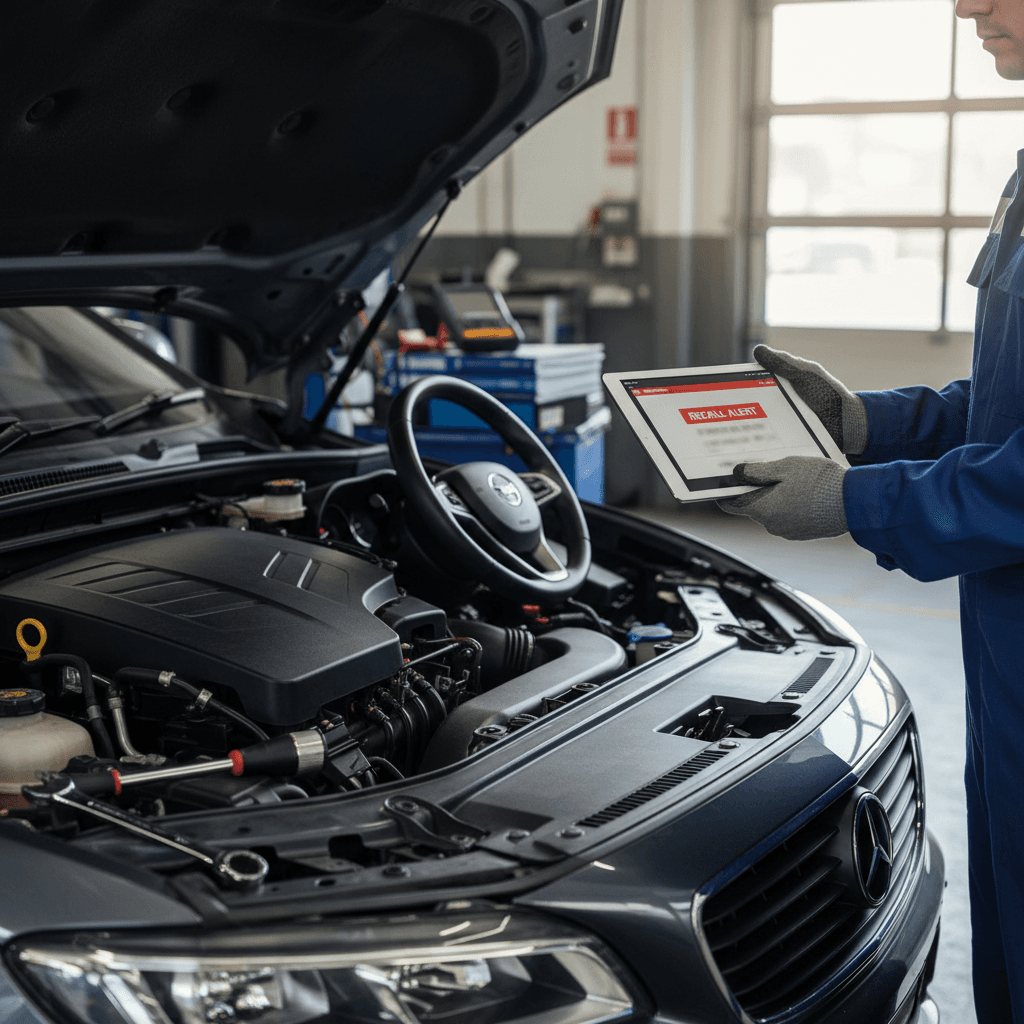
Learn how UK motor traders can identify vehicles affected by Takata airbag recalls, verify completion status, and manage stock liability under safety regulations.
What Are Takata Airbag Recalls and Why They Matter to Traders
Takata airbag recalls represent the largest automotive safety recall in history, affecting millions of vehicles worldwide and creating significant liability exposure for UK motor traders. The defective inflators can explode with excessive force during deployment, projecting metal fragments into the vehicle cabin. For dealers, selling a vehicle with an outstanding Takata recall creates potential Consumer Rights Act 2015 liability, as the vehicle may not be of satisfactory quality if a known safety defect remains unaddressed. The recall programme spans multiple manufacturers and model years from 2000 onwards, making systematic verification essential for any dealership handling used stock from this period.
The scale of the Takata recall programme means traders cannot rely on manufacturer age or perceived quality to exclude risk. Premium German marques, Japanese manufacturers, and volume brands all issued recall notices. Unlike cosmetic recalls, airbag defects directly impact vehicle safety and passenger protection, elevating the legal and reputational consequences of selling affected stock without verification. The defect worsens over time as moisture degrades the ammonium nitrate propellant, making older vehicles in humid climates particularly hazardous.
Which Manufacturers and Models Are Affected
The Takata airbag recall affects vehicles from at least 19 manufacturers sold in the UK market between 2000 and 2019. Major affected brands include Honda, Toyota, Nissan, Mazda, BMW, Mercedes-Benz, Volkswagen Group (including Audi, VW, and Seat), Ford, and Jaguar Land Rover. The recall is not limited to budget vehicles or specific market segments. High-value stock including BMW 3 Series, Mercedes C-Class, and Range Rover models from certain production runs all appear on recall lists.
Honda vehicles represent a disproportionately high percentage of affected stock, with multiple model lines across extended production periods requiring inflator replacement. Civic, Accord, CR-V, Jazz, and FR-V models from 2001 to 2016 appear frequently on outstanding recall databases. Toyota issued recalls for Corolla, Yaris, Avensis, and various Lexus models. Nissan's affected vehicles include Qashqai, Micra, Note, and X-Trail variants from specific manufacturing periods.
The complexity increases because recalls were issued in phases based on geographic risk assessment and parts availability. A vehicle registered in a high-humidity region may have been recalled earlier than an identical model in a drier climate. Some manufacturers issued multiple recall campaigns for the same model as the scope of the defect became clearer, meaning a vehicle that received one airbag replacement may still have other affected inflators fitted.
How to Check for Outstanding Takata Recalls
Verifying Takata recall status requires checking multiple data sources because no single database captures all manufacturer programmes comprehensively. Start with the DVSA vehicle recall checker, which aggregates manufacturer-reported recall campaigns for UK-registered vehicles. Enter the VRN to retrieve any outstanding safety recalls, including Takata airbag notices. This check is free and provides the official record of whether the manufacturer has notified DVSA of an open recall for that specific vehicle.
Manufacturer-specific recall portals provide additional detail and campaign status. BMW, Mercedes-Benz, Honda, and Toyota all operate VIN-based recall checkers on their UK websites. These systems often show recall completion dates and replacement part fitment, information not available through generic recall databases. For high-value stock or bulk purchases, checking both DVSA and manufacturer portals reduces the risk of missing phased recalls or recently issued campaigns.
Comprehensive vehicle provenance reports include recall verification as part of the data aggregation process, cross-referencing VIN and VRM against manufacturer databases and DVSA records. This approach integrates recall checks into standard due diligence workflows rather than requiring separate manual lookups for each vehicle. When evaluating stock at auction or during remote appraisals, systematic recall verification prevents costly oversights that manual checking might miss under time pressure.
Verifying Recall Completion Status
Confirming that a Takata recall has been completed requires documentary evidence, not seller assurance. Acceptable proof includes manufacturer service records showing the specific recall campaign number, replacement part numbers, and completion date. Digital service history verification from manufacturer databases provides the most reliable confirmation, as these records cannot be altered or fabricated in the same way paper documentation can.
When verifying digital service history across different manufacturers, look for recall work listed separately from routine maintenance. Manufacturers typically record recall campaigns using specific internal codes (R-codes or campaign numbers) that differ from standard service job codes. A genuine recall completion entry will reference the campaign number, describe the work performed (driver airbag inflator replacement, passenger airbag inflator replacement), and show zero cost to the customer.
Beware of vehicles where the seller claims recall work was completed but cannot produce supporting documentation. Some traders attempt to clear affected stock by asserting that "all recalls have been done" without verification. In dispute scenarios under CRA 2015, the burden of proof sits with the dealer to demonstrate the vehicle was of satisfactory quality at the point of sale. Unverified recall claims provide no protection if a subsequent check reveals outstanding safety campaigns.
For vehicles purchased at auction, request recall status confirmation before bidding. Reputable auction houses increasingly provide this information in vehicle descriptions, but verification remains the buyer's responsibility. What to verify when buying vehicles at auction should always include recall status alongside finance, mileage, and category marker checks.
Legal Obligations When Selling Vehicles with Outstanding Recalls
Under the Consumer Rights Act 2015, vehicles must be of satisfactory quality, fit for purpose, and as described. An outstanding safety recall, particularly one as serious as Takata airbags, directly impacts whether a vehicle meets the satisfactory quality threshold. The Act does not explicitly prohibit selling vehicles with open recalls, but dealers must ensure customers are fully informed and the defect does not render the vehicle unsatisfactory.
Transparency is the minimum legal requirement. If a vehicle has an outstanding Takata recall, this fact must be disclosed clearly to the customer before sale. Burying recall information in dense terms and conditions or failing to mention it during the sales process creates mis-selling liability. The disclosure should be specific: which airbag(s) are affected, the nature of the defect, and the availability of free rectification through the manufacturer's recall programme.
Some dealers adopt a policy of not retailing any vehicle with an outstanding safety recall, instead sending affected stock directly to the manufacturer network for rectification before sale. This approach eliminates CRA 2015 risk and removes the reputational damage of selling vehicles with known safety defects. The cost is the time delay and potential storage expense while waiting for manufacturer appointment availability and parts supply.
Alternatively, dealers may sell vehicles with outstanding recalls at a disclosed discount, documenting the customer's informed consent and the availability of free manufacturer rectification. This approach requires robust paperwork: a signed acknowledgement that the customer understands the recall, has been informed of the free repair availability, and accepts the vehicle in its current condition. Even with signed disclosure, dealers face reputational risk if the customer later claims they did not understand the severity of the defect.
Practical Steps for Trade Stock Management
Integrate recall checking into your standard vehicle intake process. Every vehicle entering stock should undergo recall verification alongside finance checks, mileage verification, and outstanding HP or PCP agreement searches. Treating recall checks as optional or conducting them only when a customer asks creates gaps in due diligence that expose the business to liability.
For affected vehicles, decide immediately whether to retail with disclosure or send for rectification. Delaying this decision ties up stock and forecourt space without generating revenue. If rectification is chosen, contact the manufacturer's recall hotline to book the earliest available appointment. Parts availability varies significantly by manufacturer and model. Honda and Toyota generally maintain good parts supply for Takata campaigns, while some European manufacturers face longer lead times for specific inflator types.
Document all recall-related activity in the vehicle's stock file. Record the date recall status was checked, the sources consulted (DVSA, manufacturer portal, provenance report), and the findings. If the vehicle is sent for rectification, retain copies of the manufacturer's completion certificate and updated service records. If sold with an outstanding recall, keep signed customer acknowledgements and disclosure documents for at least six years to cover the CRA 2015 limitation period.
Consider the impact on vehicle valuation and days-to-sell metrics. Vehicles with outstanding safety recalls typically take longer to sell and may require price adjustments to compensate for the inconvenience of manufacturer rectification. Market intelligence for stock purchasing decisions should factor recall status into initial acquisition pricing, particularly for high-risk models with known Takata campaigns.
Understanding Airbag System Verification Beyond Recalls
Takata recalls represent one specific defect type, but comprehensive airbag system verification extends beyond recall databases. MOT history provides indirect evidence of airbag system integrity through airbag warning light failures. A vehicle that repeatedly fails MOT on airbag warning lamp illumination may have underlying electrical faults, previous accident damage affecting airbag sensors, or deployed airbags that were not properly replaced.
Factory build sheet verification confirms which airbag systems were originally fitted to the vehicle. This matters because some Takata recalls affect specific seating positions (driver, passenger, side curtain) depending on the inflator supplier for that production batch. Knowing the original equipment specification helps identify whether aftermarket replacements or repairs have altered the airbag system from factory configuration.
What to verify about vehicle airbag safety systems includes checking for airbag deployment indicators in the vehicle's history. Insurance databases, salvage registers, and detailed MOT advisory notes sometimes reveal previous airbag deployment events. A vehicle that has had airbags deployed and replaced may have been subject to recall rectification during the repair process, or conversely, may have had non-genuine or incorrect replacement parts fitted that do not address the original Takata defect.
Dashboard warning lights during test drives provide immediate airbag system status. An illuminated airbag warning lamp indicates a fault detected by the vehicle's diagnostic system. This could be a sensor issue, wiring fault, or a more serious problem with the airbag control module. Any vehicle displaying an airbag warning light requires diagnostic investigation before retail sale, regardless of recall status.
Regional and Climate Considerations
The Takata defect is moisture-sensitive, with inflators in humid climates degrading faster than those in dry environments. While the UK is not classified as a high-humidity region compared to tropical climates, coastal areas and vehicles with water ingress history face elevated risk. Vehicles previously registered in high-humidity regions overseas before import to the UK may have accelerated inflator degradation.
Grey import vehicles and parallel imports require particular attention. A Japanese domestic market vehicle imported to the UK may have been subject to recall campaigns in Japan that differ from UK manufacturer programmes. Verification becomes more complex because UK recall databases do not capture Japanese domestic recall history, and manufacturer portals may not recognise VINs from non-European markets.
Vehicles with non-standard modifications to the dashboard, steering column, or interior trim may have had airbag systems altered during the modification process. Aftermarket steering wheels, dashboard replacements, or custom interior work can affect airbag deployment geometry and may have involved removing or replacing original Takata inflators with non-genuine parts that bypass recall rectification.
How Provenance Reports Integrate Recall Verification
Comprehensive vehicle intelligence platforms integrate recall checking into the standard data aggregation workflow, pulling information from DVSA databases, manufacturer feeds, and safety campaign registries. This approach ensures recall verification happens automatically for every vehicle checked, rather than relying on traders to remember to conduct separate manual lookups.
Provenance reports that include recall data typically show the campaign number, affected component description, issue date, and completion status if the manufacturer has reported rectification back to central databases. This information appears alongside finance status, mileage verification, and MOT history, creating a single consolidated view of the vehicle's provenance and outstanding issues.
The advantage of integrated recall checking is consistency and audit trail. When every vehicle entering stock receives the same comprehensive check, gaps in due diligence are eliminated. The report timestamp and data sources provide documentary evidence that recall status was verified at the point of acquisition, supporting CRA 2015 compliance if a dispute arises later.
Common Pitfalls and How to Avoid Them
Assuming that newer vehicles are not affected by Takata recalls is a frequent error. While the defect predominantly affects vehicles manufactured between 2000 and 2016, some manufacturers continued fitting Takata inflators into 2018 and 2019 model year vehicles. Always verify recall status regardless of registration date or perceived vehicle age.
Relying solely on the DVSA recall checker without checking manufacturer-specific portals creates verification gaps. DVSA data depends on manufacturers reporting campaigns promptly and accurately. Some manufacturers operate phased recall programmes where specific VIN ranges are called back in batches. A vehicle may not appear on the DVSA system but show as affected when checked against the manufacturer's own database.
Accepting verbal assurances from private sellers or trade sources that "recalls have been done" without documentary proof is a liability risk. Service stamps can be forged, and sellers may genuinely believe recall work was completed based on incorrect information. Only manufacturer service records or digital service history verification provide reliable confirmation.
Failing to disclose known recalls to customers, even when offering free manufacturer rectification, breaches CRA 2015 transparency requirements. The disclosure must be clear, specific, and documented. Generic statements in terms and conditions are insufficient. The customer must understand which specific safety campaign affects their vehicle and what action they need to take.
FAQ
How long does Takata airbag recall rectification take?
Rectification time varies by manufacturer and parts availability. Most airbag inflator replacements take between one and three hours of workshop time once parts are available. However, booking availability and parts supply can extend the total process to several weeks. Honda and Toyota typically offer shorter lead times, while some European manufacturers face longer parts delays for specific inflator types. Contact the manufacturer's recall hotline with the VIN to get current timescales for that specific vehicle.
Can I sell a vehicle with an outstanding Takata recall?
You can legally sell a vehicle with an outstanding recall, but you must disclose the recall clearly to the customer and ensure the vehicle still meets CRA 2015 satisfactory quality requirements. Best practice is either to have the recall completed before sale or to provide written disclosure that the customer signs, acknowledging the outstanding recall and the availability of free manufacturer rectification. Failing to disclose known safety recalls creates mis-selling liability and reputational risk.
Do all Honda vehicles from 2000-2016 have Takata airbag recalls?
No. While Honda issued extensive Takata recalls affecting many models from this period, not every Honda vehicle is affected. Recall status depends on the specific model, production date, and which supplier provided the airbag inflators for that production batch. Some Honda models used alternative inflator suppliers that were not affected by the Takata defect. Always verify recall status using the VIN or VRM through DVSA or Honda's recall portal rather than making assumptions based on make and model alone.
Will a vehicle fail MOT if it has an outstanding recall?
No. The MOT test does not check for outstanding manufacturer recalls. A vehicle can pass MOT and still have open recall campaigns. MOT tests the vehicle's current condition and safety systems at the point of inspection. It will fail if the airbag warning light is illuminated, indicating a current fault, but an outstanding recall that has not yet caused a system fault will not trigger an MOT failure. This is why separate recall verification is essential for trade due diligence.
How do I verify recall completion on a vehicle I am buying?
Request documentary evidence from the seller, ideally manufacturer service records showing the recall campaign number, completion date, and replacement part numbers. Digital service history verification from manufacturer databases provides the most reliable confirmation. If the seller cannot provide documentation, check the manufacturer's recall portal using the VIN. Some manufacturers show completion status in their online systems. For high-value stock, consider making the purchase conditional on verified recall completion or factor the rectification time and cost into your acquisition price.
Published by AutoProv
Your trusted source for vehicle intelligence
