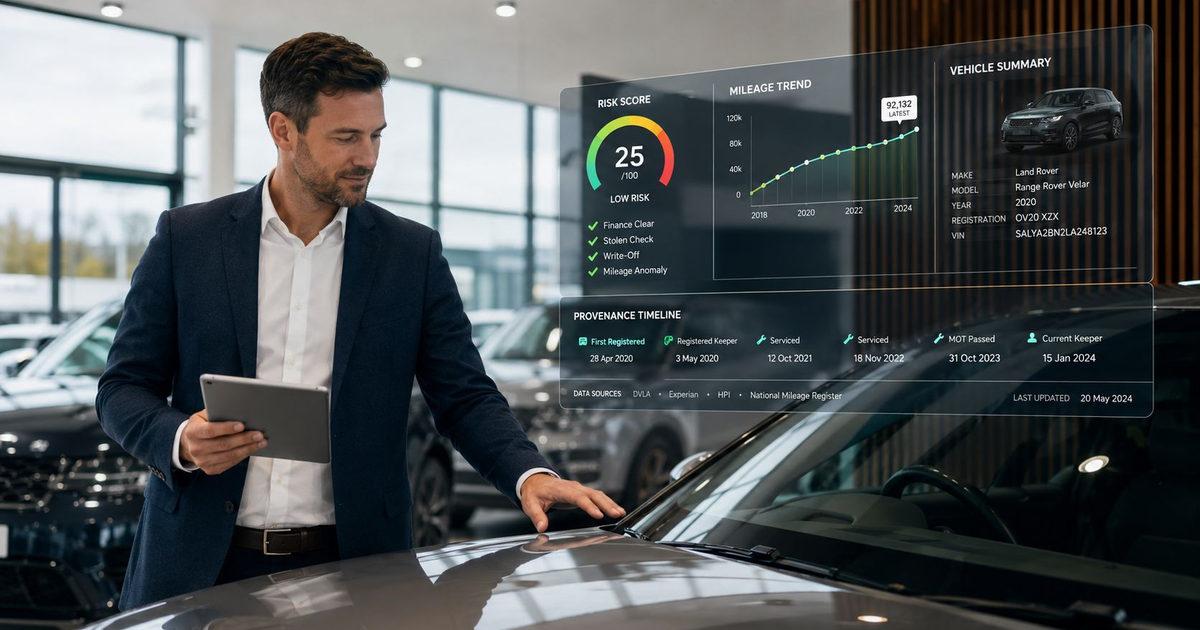
You're probably looking at stock right now that appears clean enough to buy. The price works, the photos are presentable, the spec is saleable, and the margin looks decent on paper. Then the problems start after the deal is done. A mileage pattern doesn't sit right, an ownership sequence raises questions, or a write-off marker appears later than it should have. That's inventory risk management in the UK motor trade. Not as an abstract stock-control exercise, but as the discipline of stopping one bad unit from contaminating profit, cash flow, and reputation.
Most guidance on inventory risk management stays at stock turn, ordering, and forecasting. That matters. But for dealers and wholesalers, the sharper risk often sits inside the individual vehicle. A car can look like profitable stock and still be a hidden liability. If you want a fuller view of how stock decisions affect profitability across a fleet context, this guide on how to optimise your fleet's total cost is a useful companion read. The same principle applies at unit level. A cheap buy is expensive when the provenance is wrong.
Table of Contents
- The True Cost of Hidden Vehicle Risk
- Why one bad vehicle distorts the whole stock profile
- What basic stock control misses
- Identifying Key Risks Beyond Basic Checks
- Vehicle provenance gaps
- Short-term ownership cycles
- Mileage anomalies and inconsistent timelines
- Undisclosed salvage history
- A Framework for Assessing and Scoring Vehicle Risk
- Start with context, not isolated flags
- Use a simple risk matrix
- Apply deeper due diligence before you commit
- Implementing Acquisition and Pricing Controls
- Turn risk signals into buying rules
- Price for the risk you can explain
- Where traders lose discipline
- Integrating Risk Intelligence into Your Workflow
- Make the check mandatory
- Train for consistency
- Build accountability into the process
- Monitoring KPIs and Building a Resilient Inventory
- What to monitor every month
- A practical checklist for stronger inventory risk management
The True Cost of Hidden Vehicle Risk
A dealer rarely gets hurt by the car that obviously looks wrong. Instead, damage comes from the one that looks normal enough to pass through appraisal without much friction. It books in, gets prepared, ties up working capital, and only then reveals the sort of history that weakens buyer confidence or triggers a dispute.
That's why inventory risk management in the motor trade starts before a vehicle reaches the forecourt. A stock unit isn't just metal and mileage. It's a financial position. If the history behind that position is weak, the margin was never real in the first place.
The wider commercial backdrop makes this more urgent. In the UK, manufacturing profit margins fell by as much as 25% during Q2 of 2024, and the average UK business holds USD 142,000 worth of inventory above what is required, trapping capital and weakening profitability, according to Unleashed Software's inventory management statistics. Dealers aren't manufacturers, but the lesson is directly relevant. Excess or misjudged stock punishes margin and drains liquidity.
Why one bad vehicle distorts the whole stock profile
A problematic unit does more than sit. It absorbs preparation spend, sales attention, advertising time, and management energy. If the issue surfaces after sale, it also creates comeback risk and reputational drag.
Practical rule: Treat every vehicle as a separate inventory risk case, not just one line in your stock book.
That's where many buying teams get caught out. They still think in volume terms. “How many units do we need?” matters, but “what exactly are we holding?” matters more. One vehicle with hidden provenance issues can undo the economics of several straightforward deals.
What basic stock control misses
Traditional stock control tells you ageing, price point, source, and days in stock. Useful, but incomplete. It won't tell you whether the car's ownership pattern is unusual, whether mileage progression is coherent, or whether the vehicle's background deserves a pricing adjustment before you bid.
A standard pass/fail mindset also creates false comfort. Some issues don't show up as dramatic alerts. They show up as patterns, gaps, and inconsistencies. That's where proper dealer vehicle checks become commercially valuable.
For a closer look at how those hidden issues change the economics of a deal, this breakdown of the true cost of buying a vehicle with hidden history is worth reviewing before your next buying session.
Identifying Key Risks Beyond Basic Checks
A basic vehicle history check UK workflow might confirm enough to keep a deal moving. That doesn't mean the vehicle is low risk. In practice, the strongest buyers don't stop at whether a report returns something obvious. They read the context around the record.

Vehicle provenance gaps
Vehicle provenance is the story that links registration data, ownership sequence, MOT history, mileage progression, insurance events, and selling behaviour into something coherent. If that story has holes, the commercial risk rises.
A gap doesn't always mean fraud. Sometimes it means incomplete records, delayed updates, or a benign explanation. The issue for a dealer is different. If you can't explain the gap clearly to yourself, you probably won't explain it cleanly to a retail buyer either.
That's the first test. Not “can I still buy it?” but “can I defend this stock decision later?”
Short-term ownership cycles
Rapid changes in keepership deserve attention. A short ownership period on an older cheap part-exchange may not mean much. The same pattern on a newer retail-grade car can be a warning sign.
Short-term ownership can point to dissatisfaction, attempted flip activity, unresolved faults, or previous buyers trying to move the vehicle on quickly. It doesn't prove a problem. It does justify caution, especially when paired with other signals.
If a vehicle changes hands quickly more than once, stop treating each event as separate. Read the pattern as a whole.
Mileage anomalies and inconsistent timelines
Mileage fraud isn't always detected through one dramatic discrepancy. More often, traders run into mileage patterns that don't fit the age, use case, service record, or MOT sequence.
That's where outlier thinking helps. Dealers don't need to become data scientists, but they do need to recognise when a number or timeline sits outside the expected pattern. If you want a plain-English primer on the logic behind unusual data points, learn outlier analysis and apply that mindset to stock appraisals. In practical terms, a mileage check UK process should ask whether the pattern is plausible, not just whether one reading appears lower than another.
For a more detailed trade-focused approach, this guide on how to spot clocked mileage using MOT and service history data is a useful reference.
Undisclosed salvage history
The most severe hidden risk is often salvage history that hasn't been properly surfaced during buying. The specific risk of inventory gap-downs caused by undisclosed Category S or Category N history is a primary cause of immediate capital loss. Data from MIAFTR indicates these hidden write-offs can render a vehicle virtually unsellable, and standard checks can miss that risk if they are not explicitly cross-referenced, as outlined in AutoProv's guide to UK motor trade vehicle history and provenance risk.
Here's the commercial point. Once a vehicle's true history changes market perception, your book value drops faster than your asking price can adjust. That's not a stock-turn issue. It's a capital protection failure.
Risk signal Why it matters to a dealer What usually goes wrong Provenance gap Weakens confidence in the vehicle story Buyer hesitation or valuation pressure Short keepership pattern Suggests unresolved issue or unstable ownership Harder retail conversion Mileage inconsistency Creates credibility and pricing risk Dispute after sale Hidden Cat S/N history Can destroy saleability Immediate write-down exposure
A Framework for Assessing and Scoring Vehicle Risk
Good buyers don't rely on instinct alone. They use instinct to notice something, then they use process to decide what to do with it. A simple risk-scoring framework gives your team a repeatable way to judge stock before emotion, competition, or time pressure takes over.
Start with context, not isolated flags
A risk flag only matters in context. Five former keepers on a mature vehicle may be unremarkable. Five former keepers on a relatively young vehicle can materially change how you view provenance, desirability, and future buyer confidence.
The same applies to mileage, service gaps, and sale pattern. Stop scoring issues in isolation. Score them in relation to age, price point, vehicle type, intended retail channel, and who your likely buyer will be.
A workable appraisal discussion usually starts with three questions:
- Is the history coherent?
- Do the records tell one believable story?
- Is the pattern commercially acceptable?
- Even if the data is explainable, will the market still push back?
- Can the risk be priced?
- Some issues are manageable if the buy is right. Others aren't worth carrying at any margin.
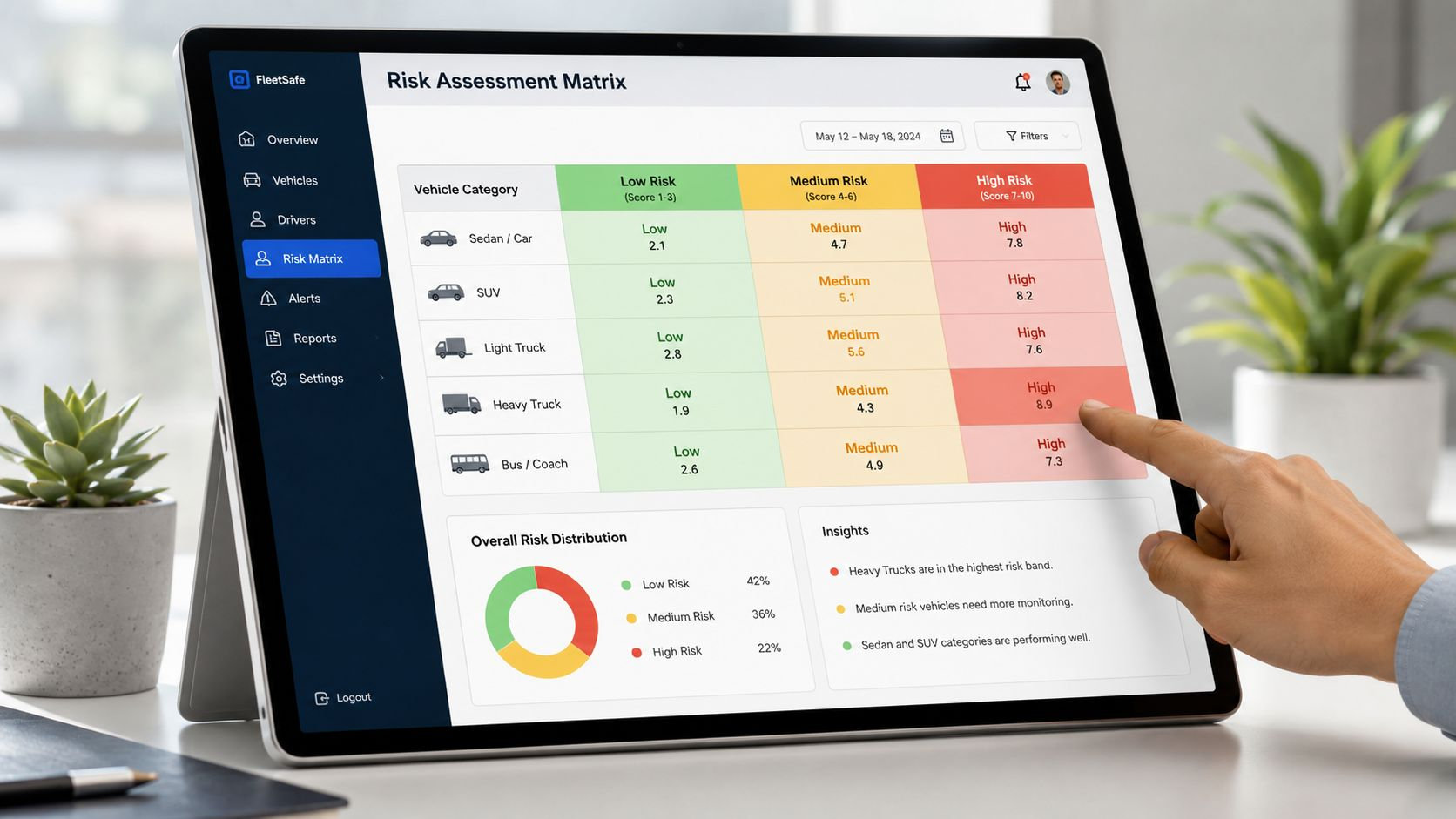
Use a simple risk matrix
You don't need complicated software to apply discipline. A practical matrix with Low, Medium, and High risk works well if your team uses it consistently.
Risk band Typical characteristics Commercial response Low Clean, coherent, explainable history Buy within normal parameters Medium One or two concerns that need pricing in Buy selectively with margin protection High Multiple concerns or one serious provenance issue Escalate or walk away This only works if the scoring rules are written down. Otherwise one buyer calls a car “interesting” and another calls the same car “fine”.
Apply deeper due diligence before you commit
The strongest lesson from wider supply-chain risk also applies here. Industry data shows that 50% of UK firms fail to conduct sufficient due diligence beyond their immediate Tier-1 suppliers, leaving deeper risks unchecked, according to Swiss Re's review of supply-chain due diligence and sub-tier exposure. For dealers, that's a useful parallel. The most serious issues in a used car often sit beyond the first layer of information.
Dealer discipline: Don't stop at the first clean-looking result. The risk often sits further down the provenance chain.
To standardise that deeper view, your buying team should work from a fixed evidence list, not memory. A proper trade check should draw on multiple records rather than one headline answer. This overview of 10 data sources a trade vehicle check should include is a sensible benchmark for building that process.
A risk score isn't there to make the decision for you. It's there to stop rushed decisions pretending to be judgement.
Implementing Acquisition and Pricing Controls
A risk score has no value unless it changes behaviour. Too many dealerships gather useful intelligence, then ignore it when the car looks shiny enough or the lane feels competitive. That's where margin leaks start.
The fix is straightforward. Turn appraisal findings into buying rules that the team follows every time.

Turn risk signals into buying rules
The rule doesn't need to be elaborate. It needs to be hard to dodge.
Examples that work in actual trade include:
- High-risk stock needs sign-off: If provenance concerns are material, a senior buyer or director approves the deal before purchase.
- Unclear history triggers a pause: No one buys first and investigates later.
- Mixed-signal vehicles have a capped bid: If the story is explainable but not clean, the number must reflect that.
- Retail stock standards stay separate: Trade disposal logic should never creep into retail acquisition standards.
Those controls matter because buyers are under pressure. They're making decisions quickly, often in competitive conditions. A written rule protects the business from mood-based buying.
Price for the risk you can explain
Not every concern makes a vehicle unbuyable. Some concerns mean the car belongs in a different risk-adjusted valuation.
That's the point many dealers miss. They think risk intelligence is there to say yes or no. More often, it should influence what you pay, how you prep, where you retail it, and how much explanation the eventual sale will require.
A vehicle with a slightly awkward ownership profile may still fit stock if the margin, channel, and buyer expectation align. A vehicle with unclear salvage-related questions usually belongs in a much stricter category.
If you want tighter thinking on this side of stock sourcing, the commercial logic in this guide on the cost of acquisition in the motor trade is directly relevant. Buy price isn't your true cost. Risk-adjusted holding, preparation, time, and dispute exposure contribute to the total cost.
Where traders lose discipline
The weak point usually isn't the data. It's the decision culture around the data.
Common failures look like this:
- The exception becomes routine: A buyer gets one awkward car away, so the threshold slips.
- The bid leads the evidence: The team wants the car, then starts minimising the warning signs.
- Retail confidence is overestimated: Staff assume a future buyer will accept a story they haven't tested properly.
- Documentation is poor: Months later, nobody remembers why the vehicle was judged acceptable.
Buy with a written reason. If you can't record the rationale clearly, the decision probably isn't sound enough.
Integrating Risk Intelligence into Your Workflow
A dealership doesn't improve inventory risk management by telling buyers to “be more careful”. It improves by making the right checks unavoidable. That means the risk review sits inside the workflow, not beside it.
The direction of travel across inventory systems is clear. The UK inventory management software market is projected to reach USD 276.8 million by 2033, growing at 8.2% annually, reflecting a broader shift toward digital tools and risk intelligence, according to Grand View Research's UK inventory management software outlook. For the motor trade, that doesn't mean generic software solves everything. It means disciplined businesses are moving away from memory, informal judgement, and fragmented checks.
Make the check mandatory
A proper used car history report and provenance review should happen before the bid is final, not after transport is booked. If your team only runs deeper checks when something feels wrong, you don't have a process. You have a hunch-based exception system.
The practical workflow is simple:
- At appraisal stage: review history, provenance, and anomalies before commercial commitment.
- At approval stage: require a documented risk decision for anything outside normal tolerance.
- At pricing stage: make sure the stock valuation reflects the quality of the vehicle story, not just book and spec.
- At handover to sales: pass forward relevant context so the retail team isn't surprised later.
Train for consistency
The issue isn't just access to data. It's interpretation. One buyer may spot a pattern instantly. Another may look at the same timeline and see nothing unusual.
That's why training should focus on signal recognition and commercial response. Teach buyers what a normal ownership sequence looks like. Teach them what an implausible mileage pattern looks like. Teach them when a vehicle should be escalated, repriced, or rejected.
For dealer groups and multi-site operators, consistency matters even more. Without it, one branch accumulates riskier stock than the rest.
Build accountability into the process
A clean workflow leaves a trail. It should be obvious who reviewed the vehicle, what they found, what risk band they assigned, and why the business proceeded.
That record protects more than the deal. It protects management standards. It also lets you review outcomes later and improve the process with evidence rather than opinion.
If your team is building a more data-led buying operation, this piece on automotive data analytics for better dealer decisions is a sensible next read.
Monitoring KPIs and Building a Resilient Inventory
If your acquisition process improves, the evidence shows up in stock performance. Not overnight, and not always in one dramatic number. It shows up in cleaner exits, fewer awkward cars, stronger confidence in pricing, and fewer post-sale surprises.
That's why inventory risk management needs measurable outputs. Otherwise the business falls back into anecdotal thinking.
What to monitor every month
Start with operational indicators that connect directly to buying quality:
- Average days in stock: Longer holding periods often reveal stock that looked acceptable at purchase but met resistance in the market.
- Gross margin quality: Don't just look at headline margin. Look at how much was surrendered through repricing or late discounting.
- Post-sale issues: Track which disputes connect back to history, provenance, mileage, or prior damage concerns.
- Stock write-downs: Review where the business had to reduce expectation because the original buy case was too optimistic.
- Buyer-level patterns: Some buyers consistently source clean, defendable stock. Others create avoidable noise. Measure both.
A resilient inventory isn't only one that turns quickly. It's one that turns without repeated correction.
The best KPI review isn't about blaming buyers. It's about identifying where the buying standard drifted from the commercial standard.
A practical checklist for stronger inventory risk management
Use this as a working discipline, not a poster on the office wall:
- Check provenance early: Don't wait until after purchase to review ownership and history context.
- Read patterns, not just flags: A clean-looking report can still contain commercially awkward signals.
- Score every vehicle consistently: Use the same low, medium, high framework across the team.
- Escalate serious concerns: Hidden salvage, incoherent timelines, or unresolved anomalies shouldn't be waved through.
- Adjust price to risk: If the issue is manageable, it still needs paying for at the bid stage.
- Record the rationale: Buyers should document why a questionable unit was still acceptable.
- Review outcomes monthly: Look for links between acquisition quality and stock performance.
- Improve forecasting alongside unit-level checks: Wider stock planning still matters. For a broader view of how better planning methods support stock resilience, Doczen's AI demand forecasting guide is a useful read.
Dealerships that remain strong in a challenging market aren't just buying cheaper or stocking less. They're making fewer unforced errors on the vehicles they choose to back with capital. That's a key advantage of disciplined inventory risk management in the motor trade.
AutoProv helps UK dealers, traders, and wholesalers make better point-of-decision buying calls with deeper vehicle provenance, used car history report analysis, mileage check UK signals, and trade vehicle intelligence built for the motor trade. If you want a clearer view of hidden stock risk before you commit capital, explore AutoProv.
Frequently Asked Questions
AI-Generated Content Notice
This article was created with the assistance of artificial intelligence technology. While we strive for accuracy, the information provided should be considered for general informational purposes only and should not be relied upon as professional automotive, legal, or financial advice. We recommend verifying any information with qualified professionals or official sources before making important decisions. AutoProv accepts no liability for any consequences resulting from the use of this information.
From our AI insights
- Advanced Mileage Verification for UK Dealers
Explore innovative mileage verification tactics for UK car dealers to mitigate risks and enhance negotiations.
- Harnessing Real-Time Data in UK Motor Trading
Explore how real-time data aids UK traders in identifying vehicle risks swiftly.
- Predictive Insights: Using DVLA Data for Stock Risk Analysis
Explore how DVLA data transforms into predictive insights for UK car dealers managing stock risk.
Related Articles

Navigating the UK Used Car Market
Explore the latest trends in the UK used car market and how AutoProv can reveal true vehicle values.

Understanding Market Insights for Vehicle Pricing
Learn how market insights can guide UK traders in setting the right vehicle prices.

7 Best Second Hand Cars to Buy UK: A 2025 Guide
The search for the best second hand cars to buy in the UK can feel like navigating a maze of private listings, vast online showrooms, and conflicting advice. With prices fluctuating and new models constantly entering the used market, how do you identify a reliable, fairly-priced vehicle that truly suits your needs? This guide is designed to cut through the noise and provide clear, actionable insights for your next purchase.
Published by AutoProv
Your trusted source for vehicle intelligence