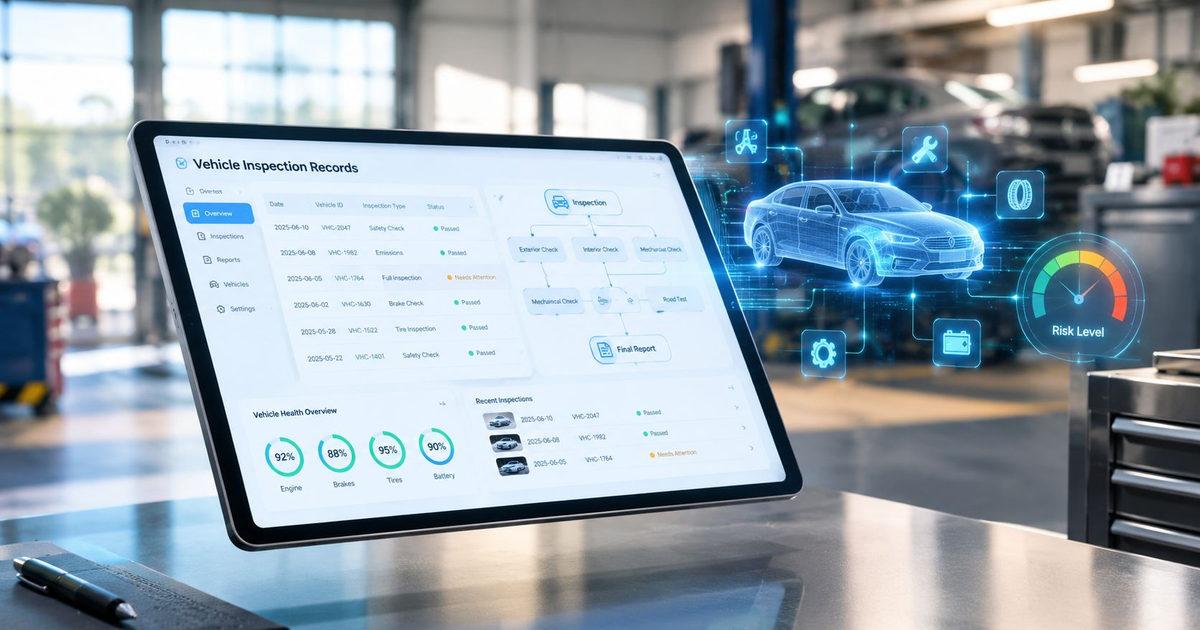
A clean MOT record can still get a dealer into trouble. You see a tidy pass history, a believable mileage line, and no obvious warnings, so the car clears intake and the price gets defended. Then a later review turns up advisory clusters, a mileage jump, and ownership signals that don't fit the story, and the stock looks very different.
That's why the MOT history API matters in the UK motor trade. It gives you regulated inspection history at vehicle level, but it's only one signal in a wider vehicle provenance check. Used properly, it helps you separate low-risk stock from cars that merely look tidy on the surface.
Table of Contents
- Why the MOT History API Matters for UK Dealers
- API Coverage, Endpoints, and Vehicle Classes
- What the service covers
- Authentication, Rate Limits, and Access Lifecycle
- What production access actually looks like
- MOT Payload Fields and What Each One Tells You
- Read the record as a timeline, not a verdict
- Single Lookups Versus Bulk and Delta Downloads
- Pick the access model that matches the workflow
- Integration Patterns for Dealer and Platform Workflows
- Build for traceability, not just response speed
- Why More MOT Data Does Not Mean Better Decisions
- Three limits that most buyers underplay
- Combining MOT Data with Provenance and Ownership Signals
- Match the keys before you score the car
- Real Trade Scenarios Where Combined Intelligence Wins
- Quick Reference for Anomalies and Follow-Up Checks
- API Endpoint and Field Summary
- Frequently Asked Questions for UK Dealers
Why the MOT History API Matters for UK Dealers
A dealer who buys on a clean MOT printout alone is taking a lazy risk. The car may pass the check, the mileage may look smooth, and the advert may sound convincing, but the underlying story can still be wrong. That's how bad buying decisions happen, not because the data was absent, but because it was read as a verdict instead of evidence.
The DVSA MOT history API is valuable because it's the closest thing the trade gets to a structured, regulated inspection record for each vehicle. The official service is now a combined national dataset covering multiple vehicle classes and geographies, with the longest digital coverage for mainstream cars and light vans, and shorter coverage for some heavy vehicles and Northern Ireland records before the stated start dates in the dataset. The point is simple, coverage depth varies, so the age and class of the vehicle changes how much trust you can place in the trail.
Practical rule: treat MOT data as a high-value input, not a clearance certificate.
For dealers, that means three things. First, it helps speed up intake decisions when you're triaging stock. Second, it supports the history claims you make in the advert and in your internal buy file. Third, it feeds automated risk models, but only if those models also use ownership, finance, and provenance signals. A used car history report that leans on MOT alone will miss context, and context is where motor trade risk usually hides.
API Coverage, Endpoints, and Vehicle Classes
The MOT history API surface is straightforward once you stop thinking like a consumer and start thinking like an integrator. You've got trade access behind authorisation, lookup endpoints for individual vehicles, and bulk download paths for batch use. That matters because the best endpoint depends on whether you're checking one part-exchange or refreshing an entire stock file.
What the service covers
DVSA states the service includes cars, motorcycles and vans tested in Great Britain since 2005, Northern Ireland since 2017, and HGVs, trailers, buses and coaches in Great Britain since 2018 and Northern Ireland since 2017 DVSA MOT history documentation. That breadth is useful, but it's not uniform history. If you're assessing a car, you usually have the deepest trail. If you're assessing heavier vehicles, expect a shorter and more class-specific record.
For trade teams, the endpoint family matters more than the marketing label. A sensible engineering approach is the same one recommended in Ryware's enterprise API strategies, keep the interface narrow, map each request to a known business action, and don't let the integration grow into a mess of one-off calls.
Endpoint Primary use Vehicle classes Historical window Vehicle lookup by registration Point-of-sale or appraisal checks Covered MOT vehicle classes Digital MOT history, strongest for post-2005 mainstream records Page-based retrieval by MOT test number Test-level inspection and audit workflows Covered MOT vehicle classes Historical test record as stored in the service Bulk download and delta files Stock refresh, warehousing, scoring Whole dataset exposed through trade bulk access Full history in bulk, then daily deltas A specific caveat matters for wholesalers and specialist traders. If you work across light commercial stock, the class details matter, and for heavier vehicles you should verify the test regime before assuming the data means the same thing as a car MOT. For class-specific context, the Class 5 MOT guide is the kind of reference you want alongside your internal buying rules.
Authentication, Rate Limits, and Access Lifecycle
Trade access isn't a casual lookup tool. DVSA says authorised third parties need an API key and an access token for production integration, and that access is granted through an application and approval process DVSA trade documentation. If your system still treats MOT access like a public consumer endpoint, the integration will fail the first time it hits a production control.
What production access actually looks like
Your request flow should be boring and predictable. Register the integration, store the key securely, exchange for the token, and send authenticated requests with the required headers. Then build the system so expired tokens, revoked credentials, and denied requests don't break your buying workflow.
The rate limit posture should be handled as a design constraint, not an afterthought. For practical guidance on building for throttled APIs, the API rate limiting guide is useful because it reinforces the basics, retry carefully, back off cleanly, and never assume a failed request means a failed vehicle check.
The other lifecycle issue is bigger than throttling. The older MOT history service is deprecated as of 1 September 2025 DVSA trade documentation. If you still have legacy calls in live dealer software, they need a migration plan now, not after an outage.
Operational standard: store tokens securely, refresh them before expiry, and treat 401 and 429 responses as recoverable states, not fatal ones.
That mindset matters because dealer systems don't run one check at a time. They batch, queue, retry, and reconcile. If your workflow drops lookups during transient failure, you'll create avoidable gaps in the audit trail and leave the sales team working from stale data.
MOT Payload Fields and What Each One Tells You
The payload looks simple until you try to use it properly. DVSA exposes structured fields including MOT test date, expiry date, result, mileage reading, test number, failure reasons, advisory notices, first MOT due date, vehicle ID, registration date, manufacturing date, and engine cylinder capacity DVSA trade documentation. Each field matters, but none of them should be treated in isolation.
Read the record as a timeline, not a verdict
The key analytical move is to line up test dates and mileage readings in sequence. A smooth rising line is useful. A gap, a jump, or a flat spot tells you something else, and that something might be clerical error, off-road time, a stock movement, or a genuine risk signal. The public DfT guidance makes that caution explicit, because mileage readings can be wrong and negative or implausible mileages may come from mis-keyed odometer entries rather than real distance travelled DfT MOT data analysis.
Advisories need the same discipline. A cluster of brake, tyre, or suspension advisories doesn't automatically mean a bad car. It can just mean the vehicle has seen hard urban use and the tester has recorded the evidence. A clean pass also doesn't mean the car is mechanically sound today, it only means it met the standard on the test date.
Dealer rule: failure reasons describe the symptom at test time, not the root cause you'll fix in stock prep.
That distinction is where many traders go wrong. They read the payload as a binary, then either overpay for a polished problem car or reject a perfectly usable vehicle because the raw text looks intimidating. If you're building a buyer-facing or internal risk view, surface the payload as structured history, not as a pass/fail badge.
Single Lookups Versus Bulk and Delta Downloads
Single lookup checks are fine when a buyer is standing at the desk and wants an answer now. They're also useful for a quick mileage check UK workflow on one reg at a time. But they're the wrong tool for batch stock intake, because they create latency, invite rate-limit pain, and don't scale cleanly across a whole dealer group.

Pick the access model that matches the workflow
Bulk files and daily deltas are the right fit when you're refreshing your own stock database, building remarketing rules, or keeping a provenance layer current. DVSA says the bulk file is generated every Sunday and delta files are produced daily, with the deltas covering the previous 24 hours of changes DVSA history documentation DVSA trade documentation. That cadence is much better for pipeline design than repeated one-by-one polling.
AutoProv's MOT history check app is the kind of workflow reference that makes this distinction obvious, because it aligns the lookup style to the buying task instead of forcing every use case through one interface.
Approach Best for Strength Weakness Single lookup Ad hoc appraisal and point-of-sale checks Fast to use on one vehicle Poor fit for stock-wide refresh Bulk download Warehousing and full dataset ingestion Stable batch processing Heavier storage and ETL work Daily delta file Incremental updates Current without full re-downloads Snapshot timing still matters The wrong choice creates avoidable rework. If you run stock refresh through one-off lookups, you'll get throttled and your team will work from inconsistent views. If you try to use bulk files for a one-off appraisal, you'll add needless complexity.
Integration Patterns for Dealer and Platform Workflows
The cleanest dealer integration is thin, local, and easy to swap out later. Don't hardwire MOT calls deep into your CRM screens or your stock management logic. Put them behind a small adapter, and let that adapter own batching, retries, caching, and response normalisation.
Build for traceability, not just response speed
Start with registration matching, then cross-check the VIN before you write anything into the stock record. That stops simple transcription errors from polluting the buy file. After that, cache by VRM and last seen test date so you aren't hammering the API with identical requests every time a buyer opens the same vehicle record.
Persistent local storage matters more than is generally recognized. Keep the last seen payload, then diff each new result against your stored copy. That lets you spot new advisories, changed mileage, or a fresh test result without guessing what changed.
AutoProv's data integration platform fits naturally into that kind of architecture because the whole point is to join vehicle datasets without creating a brittle one-off chain.
A practical operating pattern looks like this:
- Batch by registration list: Group checks for intake, not screen refresh, so you can control load.
- Retry idempotently: Handle 429 and 5xx with backoff, not repeated bursts.
- Log every call: Keep request timestamp, response status, and vehicle identifier for audit evidence.
- Surface flags, don't block everything: A suspicious history should create a workflow task, not necessarily kill a buy.
- Separate the adapter: If DVSA changes the endpoint shape, your core stock system shouldn't need a rewrite.
That setup gives you resilience and evidence. It also stops the MOT integration from becoming a hidden dependency that only one developer understands.
Why More MOT Data Does Not Mean Better Decisions
More fields and more history can make a bad decision look more informed. That's the trap. The dataset is broad, but it still depends on what testers entered, when the file refreshed, and how your team interprets the output.
Three limits that most buyers underplay
First, mileage only helps if the odometer was entered correctly. The DfT has been clear that mileage readings can contain errors, and that implausible values may come from simple mis-keying rather than fraud DfT MOT data analysis. So a neat rising mileage line proves consistency in the record, not authenticity in the world.
Second, delta files are snapshots. DVSA's daily delta process keeps the dataset current, but it still means you are never looking at a live ledger DVSA trade documentation. A vehicle checked before a new test, new mileage, or new advisory lands in the feed can still be misread.
Third, advisory volume is not the same as danger. A long list can reflect the way the vehicle is used, inspected, and maintained. It can also reflect tester caution. Either way, the raw count on its own is a weak basis for a trade decision.
Data limit What it looks like Dealer risk Keying error Odd mileage jump or negative movement Wrong fraud call Snapshot timing New test not yet reflected Stale buy decision Advisory volume Long list of minor items Overpricing or overrejection That's the discipline in trade vehicle intelligence. Don't ask whether the MOT data is good. Ask what decision it can support, and what else you need before you spend money.
Combining MOT Data with Provenance and Ownership Signals
MOT history is strongest when it sits beside keeper history, finance markers, and provenance evidence. A registration-mark trail alone won't tell you who controlled the car, and a keeper chain alone won't tell you whether the mileage behaves sensibly across tests. You need both.
Match the keys before you score the car
The MOT record is anchored to the registration mark. Provenance systems often anchor to VIN, VRM, and ownership chain. If your platform doesn't reconcile those identifiers cleanly, you'll misattribute data and mis-score the vehicle. That's how good records end up attached to the wrong stock line.
The useful pattern is straightforward. Check the MOT timeline, compare it with keeper continuity, and then line up servicing or provenance events around the same periods. If the mileage jumps, the keeper count changes, or the vehicle disappears and returns in a way that doesn't make sense, send it for manual review.

The refresh cadence also needs discipline. MOT data updates daily, keeper data doesn't necessarily move on the same schedule, and provenance records often arrive as events. If you treat every feed as if it refreshes in the same way, your scoring logic will drift and your risk flags will become noisy instead of useful.
That's where a platform such as AutoProv can sit in the stack. It can combine MOT history, provenance, mileage patterns, and ownership signals into one trade-facing risk view, which is far more useful than a standalone vehicle history check UK lookup.
Real Trade Scenarios Where Combined Intelligence Wins
A three-year-old hatchback comes in with a perfect MOT pass history. On the surface, it looks like easy stock. The trouble starts when the keeper pattern is short, the finance position changes at point of sale, and the mileage gap between two tests doesn't sit comfortably with the rest of the story. A single-source check would have waved it through. A combined check stops the overpay.
A premium saloon creates the opposite problem. The MOT notes show clustered brake and suspension advisories, and a rushed buyer might label it neglected. Cross-reference the keeper continuity and the provenance service trail, though, and it reads more like genuine urban use than abuse. The car is still a buy, but only because the dealer used context instead of reacting to raw advisory text.
A van can be even trickier. Rising MOT mileage can look suspicious at first, especially if the stock file is thin. If the provenance record shows fleet servicing at regular intervals, the pattern makes sense. The record is not just acceptable, it's coherent.
Those examples all point in the same direction. The MOT API on its own would have produced the wrong call in each case. Combined intelligence gave the buyer enough context to decide properly, and that is the whole point of professional dealer vehicle checks.
Quick Reference for Anomalies and Follow-Up Checks
When a record looks off, don't rerun the whole history check from scratch. Triage the symptom, then query the next most relevant dataset.
AutoProv's MOT history red flags guide is a useful companion when your team wants a faster internal rulebook for what to inspect next.
Anomaly in MOT record Likely cause Follow-up check or field Mileage discrepancy Mis-keyed reading, clocking, or record mismatch HPI-style mileage markers, provenance mileage trail Clustered advisories Wear, heavy use, or a structural issue Chassis inspection, workshop appraisal Short ownership cycle Finance pressure, quick resale, or hidden issue Keeper history, provenance timeline Missing test entries Off-road gap or data gap SORN status, stock movement history Trailer or class confusion Wrong vehicle class interpretation Test class field, commercial vehicle record Use the symptom as a trigger, not an outcome. If the next dataset clears the concern, move on. If it deepens the anomaly, escalate it before the buyer sees it.
API Endpoint and Field Summary
This is the reference block to keep open while you build or review the integration. It's deliberately compact, because the detail lives in the earlier sections.
AutoProv's check MOT and tax guide is a handy side reference if your team also needs a simpler consumer-style comparison point for training or internal support.
Endpoint family Method Key fields returned Vehicle lookup GET-style authenticated lookup Registration, make, model, test result, test date, expiry date Test history lookup GET-style authenticated lookup Odometer reading, advisory list, failure reasons, test number Bulk download File download Full historical dataset for trade ingestion Daily delta download File download Previous 24 hours of changes The main payload fields to remember are registration, vehicle identifiers, test result, mileage reading, advisory notices, failure reasons, test date, and expiry date. Some fields are conditional by vehicle class, so always normalise the response before you display or score it. Don't let your front end assume every record is identical.
Frequently Asked Questions for UK Dealers
Who can get trade access? Authorised third parties can apply for access, but it isn't open to everyone. DVSA controls approval and expects the integration to be used for legitimate business purposes DVSA trade documentation.
What happened to the older service in September 2025? It was deprecated, which means live integrations should already be on the newer endpoint family. If you still have legacy calls, treat that as a production risk, not a minor tidy-up.
Can MOT data stand alone in a due diligence file? No. Use it alongside DVLA keeper evidence, provenance checks, and your own stock notes if you want a defensible trade file.
Can I reuse cached MOT data after a stock turn? Only if you know the vehicle identity hasn't changed and the cached record is still current enough for the decision you're making. For trading workflows, stale cache is better than no cache, but it's never a substitute for a fresh check where the risk is material.
If you want a cleaner way to combine MOT history, provenance, mileage patterns, and ownership signals in one trade workflow, review AutoProv and see how it fits into your stock intake, appraisal, and risk-review process. Use it as the layer that turns raw MOT data into something your buyers can trust at point of decision.
Frequently Asked Questions
AI-Generated Content Notice
This article was created with the assistance of artificial intelligence technology. While we strive for accuracy, the information provided should be considered for general informational purposes only and should not be relied upon as professional automotive, legal, or financial advice. We recommend verifying any information with qualified professionals or official sources before making important decisions. AutoProv accepts no liability for any consequences resulting from the use of this information.
From our AI insights
- MOT History: Understanding Seasonal Trends
Explore how seasonal trends impact MOT history and what it means for vehicle checks in 2026.
- Predicting Mechanical Issues with MOT Patterns
Learn how to analyse MOT patterns to foresee potential mechanical issues and make informed buying decisions.
- Mastering MOT Data for Smart Stock Acquisitions
Unlock the potential of MOT data to make smarter stock decisions and reduce risks.
Related Articles

Understanding the MOT History: A Comprehensive Guide
Explore everything you need to know about MOT history, including its significance, how to check it, and what to look out for.

Understanding MOT History: A Key to Smart Used Car Purchases
Discover how MOT history can guide your used car buying decisions and ensure you make an informed choice.

How to View MOT History and Make Smarter Buying Decisions
For anyone in the UK motor trade, a vehicle's Ministry of Transport (MOT) history is much more than a simple pass or fail certificate. It's the car's diary, a detailed logbook of its life on the road. Glancing only at the latest MOT is a rookie mistake, and a costly one at that. To really get under the bonnet of a vehicle's past, you need to view MOT history in its entirety—it’s the only way to see the true timeline of maintenance versus neglect.
Published by AutoProv
Your trusted source for vehicle intelligence