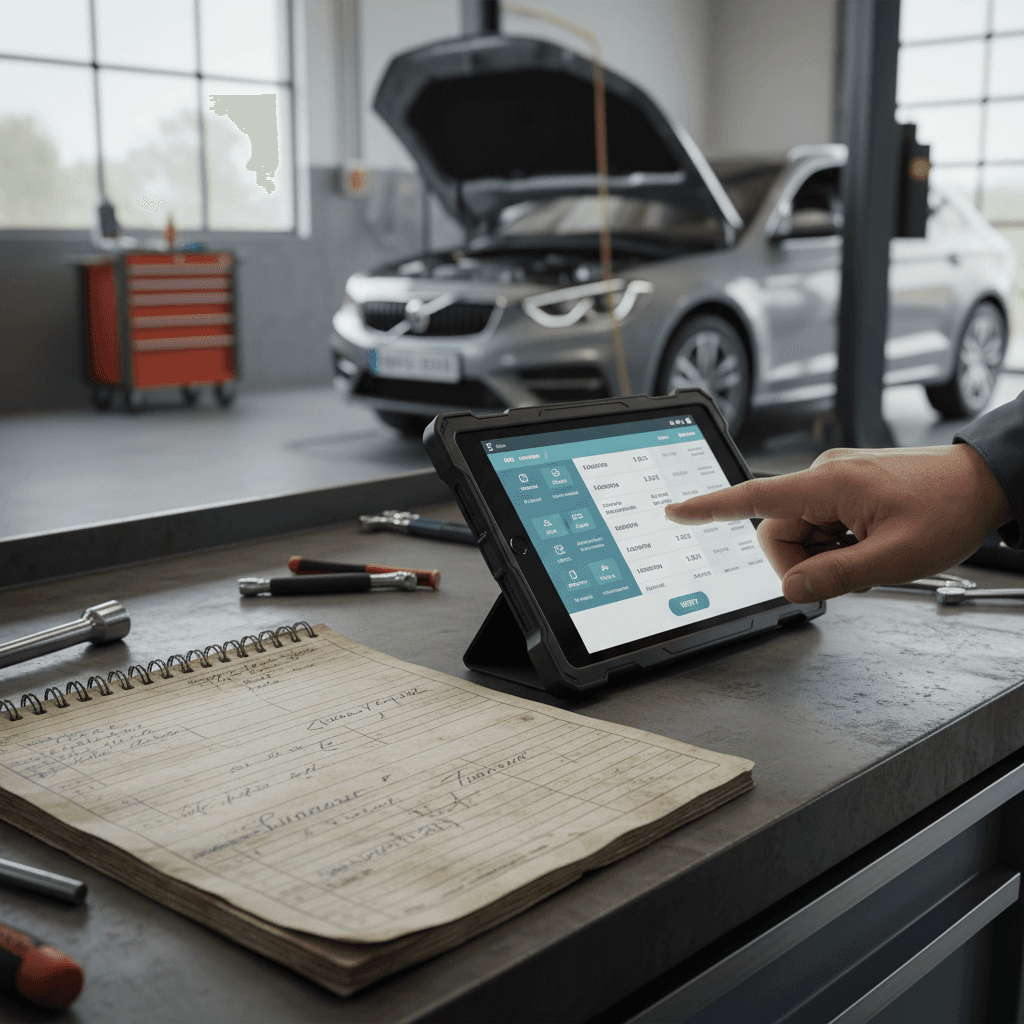
Paper service books are becoming obsolete as manufacturers move to digital systems. Discover why UK motor traders are switching to verifiable electronic service records.
By CiteFlow
The Shift from Paper to Digital Service Records
Manufacturers across the UK are systematically phasing out paper service books in favour of digital service history systems stored directly in their dealer networks. This transition addresses fundamental flaws in paper-based record keeping: physical logbooks get lost, damaged, or separated from vehicles, whilst service stamps can be forged with minimal effort. Digital systems create tamper-proof records that remain accessible regardless of whether the physical book survives, fundamentally changing how motor traders verify maintenance history during stock acquisition.
The move to digital represents more than technological convenience. It eliminates the single biggest weakness in traditional service verification: the ease with which paper records can be manipulated. A stamped service book proves only that someone possessed a stamp, not that work was completed. Digital records stored in manufacturer databases provide independently verifiable proof that specific work occurred at specific mileages on specific dates, creating an audit trail that cannot be retrospectively altered.
Why Paper Service Books Are Becoming Obsolete
Paper logbooks suffer from structural vulnerabilities that make them increasingly unsuitable for professional trade use. The physical book travels with the vehicle rather than remaining in a secure system, exposing it to loss, theft, or deliberate destruction when service history becomes inconvenient to a seller. Stamps themselves carry no authentication mechanism; any garage can purchase stamp sets, and unscrupulous sellers have been known to create entirely fictitious service histories using purchased stamps and blank books.
The verification burden falls entirely on the trader. When you examine a stamped logbook, you must independently contact each garage listed to confirm the work occurred, a process that consumes time and often yields incomplete results when garages have closed, changed ownership, or lack records from years past. This verification gap creates risk: you either accept the stamps at face value or invest significant effort attempting to validate them, with no guarantee of success.
Manufacturers recognised these limitations years ago. Premium brands led the transition, with manufacturers like BMW, Mercedes-Benz, and Audi establishing digital systems that automatically record every dealer service. Mass-market brands followed, and the coverage now extends across brands representing the majority of UK vehicle parc. Understanding what manufacturer databases reveal about service history shows the depth of information now available through digital systems compared to paper alternatives.
How Digital Service History Systems Work
Digital service history operates through manufacturer-controlled databases that franchised dealers access and update during service appointments. When a vehicle arrives for maintenance, the dealer logs into the manufacturer's system using the VIN, records the work completed, parts fitted, mileage at service, and date. This information writes directly to a central database that remains accessible to any authorised party with the VIN, creating a permanent record independent of any physical documentation.
The system architecture prevents retrospective alteration. Once a service entry is recorded, it carries a timestamp and dealer identifier that cannot be changed without leaving an audit trail. This immutability provides assurance that records reflect actual work rather than convenient fiction. The database also captures technical details: software updates, warranty claims, recalls completed, and manufacturer-specific maintenance items that paper books never tracked comprehensively.
Access to these records previously required dealer relationships or manufacturer contact, creating friction for independent traders. Modern vehicle intelligence platforms aggregate data from multiple manufacturer systems, allowing traders to retrieve digital service history for vehicles across brands through a single interface. This consolidation makes digital verification practical for daily trade operations rather than an occasional luxury for high-value stock.
The Verification Advantage for Motor Traders
Digital service records transform the due diligence process by replacing trust-based assessment with data-based verification. When you check a vehicle's digital service history, you receive independently confirmed information about maintenance intervals, whether services occurred at manufacturer-recommended mileages, and which specific dealer performed the work. This verification happens in minutes rather than the hours required to telephone multiple garages about stamped entries.
The data quality exceeds what paper books provide even when genuine. Digital records include precise mileage figures at each service, allowing you to identify discrepancies that suggest clocking. They show the specific work completed rather than generic stamps, revealing whether a 'full service' actually included all manufacturer-specified items or represented a basic oil change. They confirm parts provenance, showing whether genuine manufacturer parts were fitted or alternatives used.
This verification capability directly addresses trade risk. Why paper service stamps cannot be trusted explains how easily physical records can be manipulated, whilst digital systems eliminate most fraud vectors. You cannot forge an entry in a manufacturer database, cannot backdate a service that never occurred, and cannot create a fictitious maintenance history for a vehicle that received minimal care.
Coverage Limitations and Hybrid Verification
Digital service history coverage remains incomplete across the UK vehicle parc. Older vehicles predate digital systems, with most manufacturers implementing electronic records within the past decade. Independent garages operating outside franchised networks typically lack access to manufacturer databases, meaning vehicles serviced exclusively at independents may show no digital history despite receiving proper maintenance. Some manufacturers maintain better digital records than others, with premium brands generally offering more comprehensive systems than budget marques.
This coverage gap requires hybrid verification approaches for much trade stock. A vehicle may have partial digital history from franchised dealer services combined with independent garage stamps in a paper book. Your verification process must account for both, using digital records where available and traditional validation methods for gaps. How to verify digital service history across different manufacturers provides manufacturer-specific guidance for navigating these variations.
The trend direction is clear despite current limitations. Manufacturers continue expanding digital coverage, newer vehicles enter the used market with comprehensive electronic records, and the proportion of trade stock with verifiable digital history increases annually. Paper books are not yet extinct, but their relevance diminishes as digital systems mature and market composition shifts toward younger vehicles.
Impact on Stock Valuation and Customer Confidence
Digital service history affects vehicle values measurably. Buyers recognise that verifiable maintenance records reduce risk compared to paper alternatives, creating price premiums for vehicles with comprehensive digital histories. This premium reflects reduced uncertainty: a buyer examining digital records knows definitively what maintenance occurred rather than hoping stamped entries are genuine.
The valuation impact extends beyond simple presence or absence of history. Digital records that show consistent servicing at manufacturer-recommended intervals command higher prices than incomplete records with large gaps. Records showing work at franchised dealers typically attract more buyer confidence than independent garage stamps, even when the independent work was competent. The data quality and verification ease that digital systems provide translates directly into market value.
Customer confidence follows similar patterns. Retail buyers increasingly expect digital service history verification, particularly for premium and near-new stock. Providing independently verified digital records as part of your sales documentation differentiates your stock from competitors relying on paper books. It demonstrates transparency and reduces post-sale disputes about whether vehicles received claimed maintenance.
Legal and Compliance Considerations
The Consumer Rights Act 2015 requires vehicles to match their description, including claims about service history. Relying on paper logbooks that later prove fraudulent exposes you to rejection claims and potential legal action. Digital service history provides defensible evidence that you conducted reasonable due diligence before making service history claims to customers.
This evidential value matters during disputes. When a customer challenges your description of a vehicle's maintenance, producing independently verified digital records from manufacturer databases carries substantially more weight than presenting a paper book. The records demonstrate that you verified claims rather than accepting a seller's word, showing you took reasonable steps to ensure accuracy.
Compliance documentation benefits from digital integration. Why paper service books are no longer enough for trade due diligence examines how regulatory expectations have evolved alongside available technology. Courts and trading standards increasingly expect traders to use available verification tools, making reliance on paper alone potentially insufficient to demonstrate reasonable care.
Regional Variations in Digital Adoption
Digital service history adoption varies across UK regions, influenced by local dealer density, vehicle demographics, and market characteristics. Metropolitan areas with high concentrations of franchised dealers typically show stronger digital coverage, whilst rural regions with fewer main dealers and more independent garages see more paper-based records. Regional market dynamics affect how you weight digital history during stock assessment.
London and the South East lead digital adoption, reflecting high premium vehicle concentrations and dense dealer networks. The Midlands and North West show strong coverage for volume brands, whilst more rural regions like Wales and the South West retain higher proportions of paper-serviced vehicles. Understanding these patterns helps calibrate expectations when sourcing stock from different areas.
Regional service history patterns also affect stock movement. Vehicles with comprehensive digital records from metropolitan dealers often sell more readily when moved to regions with lower digital coverage, as the verified history provides assurance that local paper-based alternatives cannot match. This creates arbitrage opportunities for traders who understand regional verification standards.
Practical Implementation for Trade Operations
Integrating digital service history verification into your buying process requires systematic approaches rather than ad-hoc checks. Establish protocols that automatically trigger digital history retrieval for vehicles meeting specific criteria: age, value, brand, or customer segment. This ensures consistent verification without relying on individual buyers to remember checks during time-pressured auction decisions.
The cost-effectiveness of digital verification improves with volume. Subscription-based access to manufacturer databases reduces per-check costs for high-volume operations compared to pay-per-report models. For smaller dealers, selective verification focused on higher-value stock or specific brands with strong digital coverage provides better returns than attempting universal coverage.
Staff training ensures your team understands what digital records show and what they omit. Digital history confirms franchised dealer work but may miss independent garage services. It shows scheduled maintenance but not always repairs or bodywork. Training prevents both over-reliance on digital data and unnecessary scepticism about its value, helping buyers make informed assessments that combine digital verification with traditional inspection.
The Future of Service History Verification
Manufacturer investment in digital infrastructure continues accelerating, with newer systems offering enhanced functionality beyond basic service records. Connected vehicle technology enables automatic service reminders, predictive maintenance alerts, and real-time data transmission to manufacturer databases. These developments will further reduce paper's role whilst expanding the information available through digital channels.
Independent garage integration represents the next frontier. Some manufacturers now offer independent garages limited access to digital service systems, allowing them to record work in manufacturer databases when using approved parts and procedures. This integration could eventually eliminate the coverage gap between franchised and independent servicing, creating comprehensive digital records regardless of where maintenance occurs.
Blockchain and distributed ledger technologies are being explored for vehicle history recording, potentially creating manufacturer-independent systems that provide similar verification benefits without requiring access to proprietary databases. These developments remain experimental, but they indicate industry recognition that verifiable, tamper-proof service records deliver value worth pursuing through multiple technological approaches.
Making the Transition in Your Dealership
Adopting digital service history verification does not require abandoning paper logbooks immediately. Begin by using digital checks to validate paper records on higher-value stock, building familiarity with manufacturer systems and understanding how digital and paper records complement each other. This gradual approach allows your team to develop expertise whilst maintaining existing processes.
Customer communication about digital verification adds value to your offering. Explain that you verify service claims through manufacturer databases rather than accepting paper at face value, positioning this as quality assurance that protects their purchase. This transparency builds trust and justifies any price premiums for vehicles with verified digital histories.
The transition ultimately reflects changing market standards rather than optional enhancement. As digital coverage expands and customer expectations evolve, verification through manufacturer databases becomes table stakes for professional trade operations. Early adoption provides competitive advantage; delayed adoption risks falling behind market standards as they shift.
Frequently Asked Questions
AI-Generated Content Notice
This article was created with the assistance of artificial intelligence technology. While we strive for accuracy, the information provided should be considered for general informational purposes only and should not be relied upon as professional automotive, legal, or financial advice. We recommend verifying any information with qualified professionals or official sources before making important decisions. AutoProv accepts no liability for any consequences resulting from the use of this information.
From our AI insights
- The Importance of Tyre Verification for UK Motor Traders
Discover why verifying tyre specs is crucial for UK traders to ensure safety and compliance.
- Decoding CO2 Emissions: A Trader's Guide
Learn how traders can verify CO2 data using factory build sheets to prevent disputes.
- Navigating Recall Compliance for UK Car Traders
Ensure compliance with recall regulations: essential steps for UK car traders.
Related Articles

The Importance of Car Maintenance and Provenance Checks
Discover why regular car maintenance and proper provenance checks are essential for vehicle quality and longevity.

Essential Car Maintenance Tips for UK Drivers
Discover vital car maintenance tips to keep your vehicle roadworthy and compliant in the UK.
How Much Is a Car Service? Complete UK Price Guide
Trying to pin down exactly "how much is a car service?" can feel a bit like asking "how long is a piece of string?". Prices vary quite a bit, but to give you a ballpark figure, an interim service will usually set you back around £100 to get started. A more thorough full service often begins at £180, while a major service for many cars can easily top £300.
Published by AutoProv
Your trusted source for vehicle intelligence