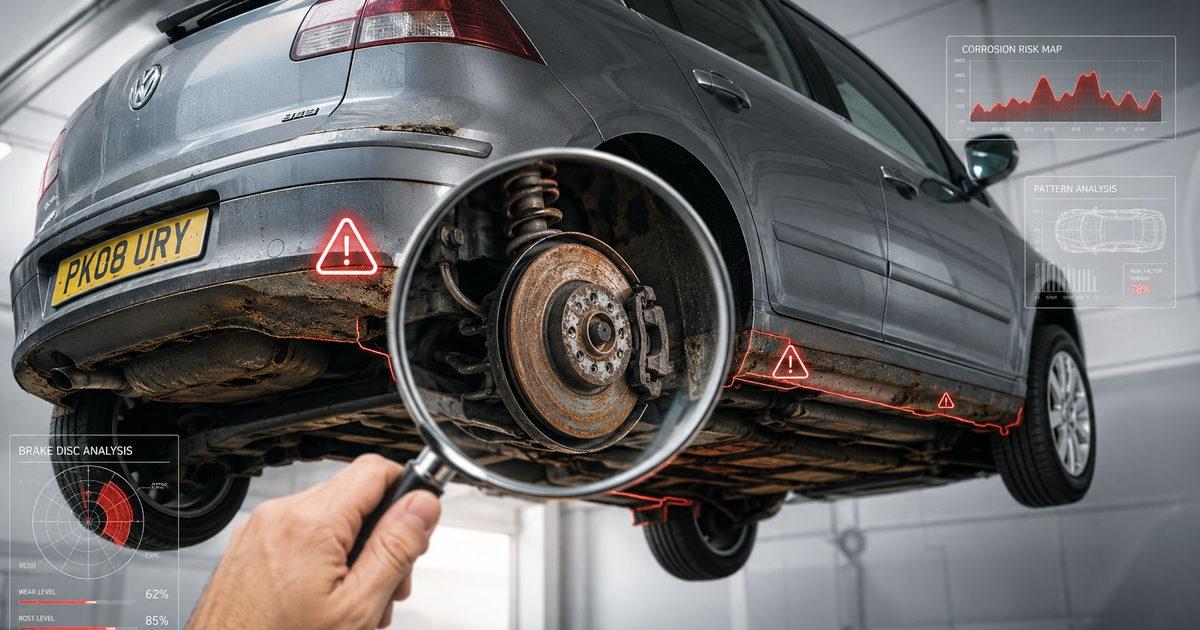
A recent MOT pass does not make a used car low risk. In trade buying, the warning signs sit in the timeline, repeated failures, unresolved advisories, mileage changes, keeper churn and record gaps that don't line up cleanly with the vehicle's story. A worst MOT history is rarely one bad test on its own, it's usually a pattern of connected signals that needs context before you decide to buy, renegotiate or walk away.
That matters because the official MOT record is a point-in-time dataset, not the full life of a vehicle. GOV.UK says MOT history only goes back to 2005 for cars, motorcycles and vans, and 2017 for Northern Ireland, so any vehicle provenance review has to account for missing early history and off-cycle use GOV.UK MOT history guidance. DVSA also says the history service shows test dates, results, mileage readings, failure reasons and advisory notices, which makes it useful for risk analysis, but only when it's read as part of a broader vehicle history check UK workflow DVSA MOT history dataset.
For dealers, that means a used car history report should be treated as one input, not the answer. AutoProv fits that trade workflow by combining MOT chronology with provenance signals that help flag when the evidence doesn't quite line up. The seven patterns below focus on when a basic pass, or even a clean-looking run of passes, hides a stronger motor trade risk story underneath.
Table of Contents
- 1. Rapid MOT Pass After Major Structural Damage Claims
- What traders should verify before money changes hands
- 2. Consistent Brake System Failures Across Multiple MOT Cycles
- Read wear against the mileage, not just the fail line
- 3. MOT Advisory Items Never Addressed, Then the Vehicle Disappears from Test Records
- Gaps matter more when the advisories were never closed out
- 4. Multiple MOT Fails Under One Keeper, Then an Immediate Pass Under the New Owner
- Ask who paid for the repair and when
- 5. Mileage Inconsistency Concurrent with an MOT Failure Pattern
- Treat wear-to-mileage mismatches as a trade warning
- 6. Alternating MOT Passes and Fails at the Same Test Centre with Identical Defect Categories
- What makes this pattern risky in the trade
- 7. MOT History Gaps Coinciding with Insurance Write-Off or Salvage Declaration
- Read the gap as a provenance event
- 7-Case Comparison of Suspicious MOT Histories
- Turn the Worst MOT History Into a Buying Decision
1. Rapid MOT Pass After Major Structural Damage Claims
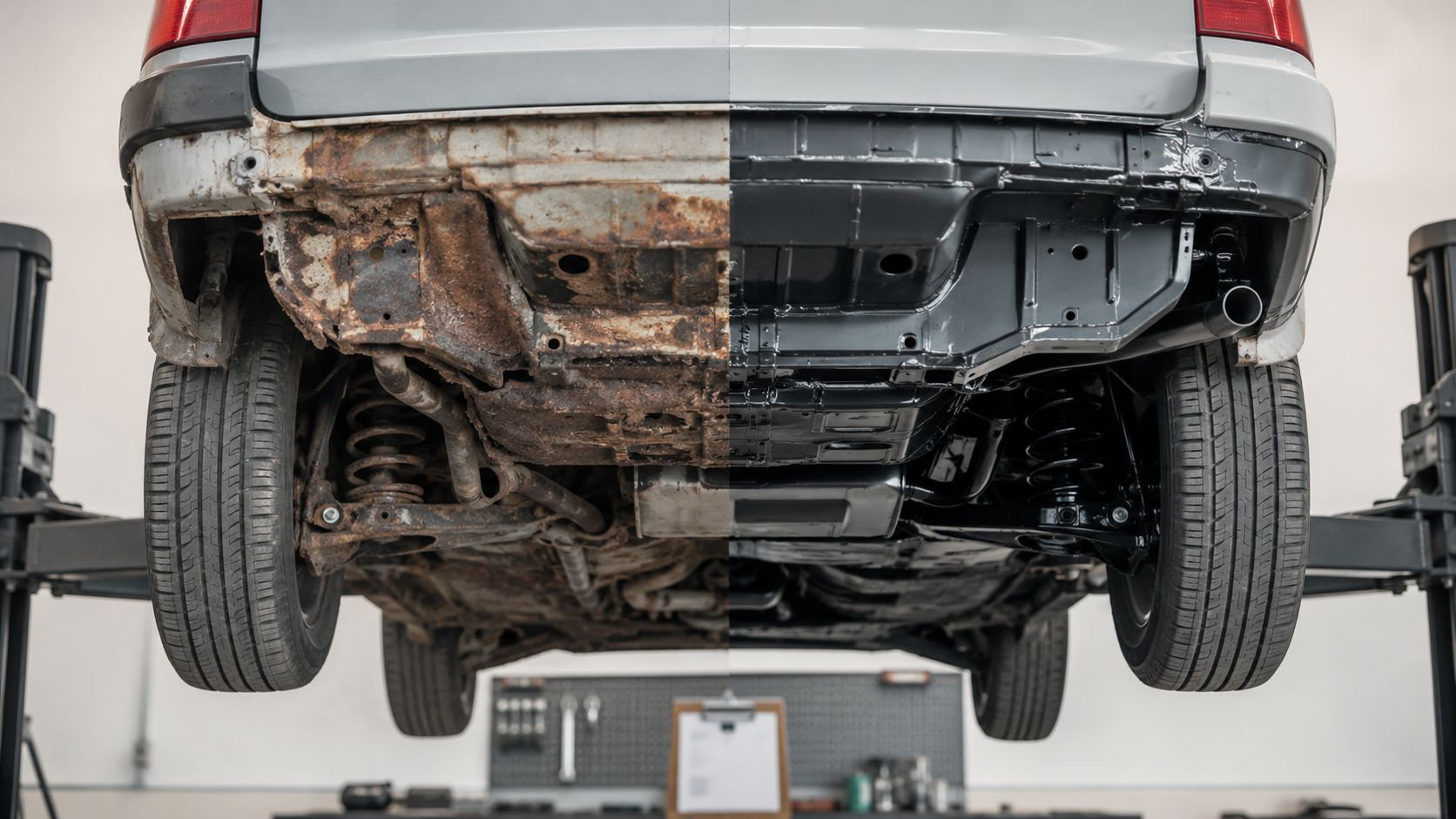
A structural failure followed by a quick pass is one of the clearest reasons to slow down. If a vehicle fails for major corrosion, structural damage or subframe issues, then returns with a pass only weeks later and no convincing repair trail, the pass itself is less concerning than the missing bridge between fail and pass. That gap can point to undocumented work, remarketing between traders, or a vehicle whose identity and repair story need closer checks.
Trade risk sits in the evidence chain. Structural repairs are expensive, hard to verify, and difficult to judge from a short MOT line alone. A vehicle can move from auction to forecourt quickly, but if there is no invoice trail, no independent inspection and no insurance context, the buyer may be taking on a hidden liability rather than a clean repair record.
For buyers sourcing stock with structural history, a specialist resource on car frame damage Oregon shows how frame-on repairs are assessed and why documentation matters.
What traders should verify before money changes hands
Practical rule: if the timeline between failure and pass is compressed, the burden of proof shifts to the seller.
- Repair evidence first. Ask for garage invoices, parts receipts and photos of the work, not just a statement that it was “fixed”.
- Keeper and insurance context. Cross-reference the MOT dates with keeper changes and any insurance markers. A quick pass after a major fail matters more when the vehicle moved through auction or remarketing.
- Independent structural inspection. If the timeline looks too neat, pay for an external survey before purchase.
- Valuation logic. A genuine repair should usually be reflected in the pricing story. A strong discount with no documentation can mean the stock was bought with the problem already understood.
AutoProv's insurance write-off check is relevant here because structural MOT failures and salvage-style provenance often overlap. If the seller cannot explain the repair path clearly, treat the pass as a screening result, not reassurance.
2. Consistent Brake System Failures Across Multiple MOT Cycles
Brake-related fails should be read as a maintenance pattern, not a one-off inconvenience. DVSA-linked reporting shows Great Britain had 43,678,099 MOT tests in 2023 and 9,873,386 failures, a 22.6% failure rate, while RAC Foundation reporting notes that more than 9 million failures still occurred in 2023 RAC Foundation MOT data. In that environment, repeated brake failures don't look unusual in isolation, but they do tell you something about how the vehicle has been managed.
The important point for trade buyers is the repetition. Brake pad wear, brake fluid condition and stopping-distance issues can recur if a vehicle has been neglected, run hard or cycled through the market without consistent maintenance. If the MOT record shows the same brake theme appearing again and again, and the service file doesn't back up the repairs, the car may be telling you that the previous keeper delayed work or that the mileage story doesn't reflect the wear you're seeing.
Read wear against the mileage, not just the fail line
A brake failure on a low-mileage car can be more revealing than the same defect on a tired higher-mileage stock unit. If the recorded usage doesn't match the level of wear, you're looking at either heavy use, poor maintenance or a mileage story that needs further validation. That's where a good mileage check UK process matters, because wear patterns often expose what the odometer alone won't.
Use dealer vehicle checks to compare:
- Service entries against MOT dates. If repairs are genuine, they normally leave traces.
- Wear severity against recorded mileage. Brake wear that feels too advanced for the mileage should be treated as a risk signal.
- Ownership movement. Repeated brake fails under different keepers can indicate stock that has been moved on without proper correction.
AutoProv's brake and clutch fluid guidance is a useful next step when the MOT pattern points to brake-system neglect. A clean recent pass doesn't cancel an older brake history, it just means someone got the car through a test on the day.
3. MOT Advisory Items Never Addressed, Then the Vehicle Disappears from Test Records
Advisories are often more revealing than fails because they show what was drifting out of tolerance before the vehicle became an immediate problem. When suspension wear, corrosion or brake pad wear keeps appearing across several tests, then the vehicle vanishes from the record and later reappears with a history that looks reset, the pattern deserves attention. Beyond the advisories themselves, the silence that follows them is the main concern.
That silence can point to several different outcomes. The car may have been exported, stored off-road or repaired outside the UK test cycle. It can also mean the history has been made to look cleaner than the underlying condition supports, especially if the vehicle returns to market under a new keeper with no matching repair evidence. For a dealer, that is a provenance problem because the record has stopped telling a continuous story.
Gaps matter more when the advisories were never closed out
A clean-looking return to the MOT record is not proof that the earlier defects were solved.
The practical response is to map the full MOT timeline against keeper changes and any other record you can verify. If the vehicle disappears after repeated advisories and returns much later with no documentation, treat the gap as an explanation required, not a harmless pause. That matters most for used stock that has already moved through auction, because the trading path can obscure the repair sequence.
Use a guide to viewing MOT history and making smarter buying decisions alongside the test record, service file and ownership trail. The question is not whether the car passed later, it is what happened to the known defects during the gap. If the answer is vague, the purchase still carries open risk.
4. Multiple MOT Fails Under One Keeper, Then an Immediate Pass Under the New Owner
Repeated MOT fails under one keeper, followed by an immediate pass after the vehicle changes hands, can point to two very different stories. The car may have been repaired properly after months of deferred work, or the new keeper may have cleared only enough defects to move it on. The pattern matters because the MOT record is showing a change in behaviour, not just a single repaired fault.
For trade buyers, the key question is what changed at the handover. A long run of the same defects suggests the first keeper was postponing work, but a quick pass after the vehicle enters trade can also mean the car was reconditioned fast and the paper trail never caught up. If the same categories keep returning, service records should confirm the repair, not just the final pass.
Ask who paid for the repair and when
- Check for invoices, not just claims. Parts and labour receipts should match the MOT timeline.
- Review the keeper change date. A fast pass after ownership transfer needs closer checking of the buying channel.
- Inspect the defect category. Emissions, suspension, tyres and structural issues carry different follow-up risk.
- Compare the purchase price to the repair burden. If the discount appears built around the defects, verify the repair story first.
AutoProv's previous keeper analysis helps here because ownership history explains why defects may have stayed open. A single pass after repeated failures can support the sale, but it does not remove earlier trade risk unless the repair evidence is clear.
5. Mileage Inconsistency Concurrent with an MOT Failure Pattern
Mileage anomalies matter most when they appear alongside defect patterns. DVSA says MOT mileage-entry software can flag a warning when a reading is higher than the last test or is “considerably different”, but it also warns that some errors are still missed DVSA mileage warning note. That makes the record useful, but not immune to oddities, and it's exactly why dealers shouldn't stop at a clean MOT printout.
The danger is the combination. A vehicle that shows a backwards mileage reading, an implausibly low annual increase or a jump that doesn't fit the ownership timeline, while also carrying brake or tyre wear advisories, deserves a deeper inspection. Wear and mileage should usually move together. When they don't, the vehicle may have been clocked, used more heavily than the odometer suggests, or presented with incomplete history.
Treat wear-to-mileage mismatches as a trade warning
A mileage story can look tidy while the condition story looks tired. If the tyres, brakes and suspension feel more worn than the recorded distance suggests, the issue may sit in the records rather than the hardware. That's the point where a used car history report needs to be combined with service invoices, keeper dates and any insurer-linked mileage data the seller can supply.
AutoProv's mileage anomaly guide is useful here because mileage inconsistency is most persuasive when it sits beside another risk signal. The practical buying rule is to escalate any vehicle where the mileage and wear pattern don't tell the same story.
6. Alternating MOT Passes and Fails at the Same Test Centre with Identical Defect Categories
A car that keeps flipping between pass and fail for the same defect category is not behaving like a well-understood vehicle. If brake pad wear, tyre tread depth or another repeat issue appears, disappears and reappears at the same centre over short intervals, the pattern raises questions about whether the underlying problem was corrected or merely managed enough for the next test.
This does not prove wrongdoing by itself. It can reflect genuine fast repair work, simple retest timing or variations in how the defect was presented. But for a motor trader, the practical concern is whether the same vehicle is being shown as repaired without a strong external record to back it up. If the repairs were real, there should usually be invoices, parts evidence or at least a sensible maintenance trail.
If the defect category keeps coming back, assume the vehicle was not fully resolved until the documentation proves otherwise.
What makes this pattern risky in the trade
The risk is confidence decay. Repeated pass/fail cycling at the same centre can make a vehicle look easy to retail, when in fact the history shows a problem that never settled properly. That matters for valuation, warranty exposure and customer trust. It's exactly the sort of pattern where trade vehicle intelligence should sit ahead of the purchase decision, not after the deal is done.
A practical response is to compare defect descriptions line by line, ask for the physical evidence of the repair and, if the story still feels thin, send the vehicle to a different approved centre for an independent read. If the defect keeps changing shape but never really disappears, the stock is signalling unresolved maintenance rather than a clean return to roadworthiness.
7. MOT History Gaps Coinciding with Insurance Write-Off or Salvage Declaration
A quiet stretch in the MOT record can matter more than a clean pass before or after it. When that gap lines up with an insurance marker, salvage declaration or auction movement, it often maps the vehicle's transfer from one risk state to another. The question for a buyer is simple, was the car rebuilt, or did it re-enter the market with only partial evidence behind it?
That matters because the MOT record only becomes useful from the point it was computerised. GOV.UK says all MOT tests and outcomes, including odometer readings and reasons for failure, have been captured since 2005 GOV.UK anonymised MOT dataset. A vehicle can therefore look ordinary within the MOT window while a separate salvage or insurance story sits outside it. The gap functions as a buying signal rather than a blank.
Read the gap as a provenance event
- Cross-check the MOT silence with insurance markers. A gap is far more meaningful when a write-off trail sits beside it.
- Ask for structural repair records. Cosmetic invoices do not explain a salvage period.
- Inspect panel alignment, welds and mounting points. A pass only confirms roadworthiness at test, not how the car was rebuilt.
- Treat auction movement as part of the timeline. If the vehicle moved through remarketing during the gap, the paper trail should be stronger.
AutoProv's guide to spotting MOT-history buying risks is useful here because the missing period rarely stands alone. It needs to be read alongside salvage status, repair evidence and any ownership shift. If those signals line up and the documentation is thin, the vehicle is carrying unresolved provenance risk, not just an awkward pause in test history.
7-Case Comparison of Suspicious MOT Histories
Pattern Complexity to Investigate 🔄 Resource Requirements ⚡ Expected Outcome / Confidence 📊 Ideal Action / Use Case 💡 Key Advantage ⭐ Rapid MOT Pass After Major Structural Damage Claims High, forensic timeline + structural verification High, insurance/write-off checks, independent structural survey High, likely undisclosed salvage or false repairs when invoices absent Request full repair invoices, loss adjuster report, independent structural inspection Strong signal from sequential MOT + write-off markers, ⭐⭐⭐⭐ Consistent Brake System Failures Across Multiple MOT Cycles Medium‑High, needs mileage and service-context analysis Medium, service history, brake inspection, mileage correlation tools Medium, indicates poor maintenance or potential clocking when combined with mileage anomalies Obtain full service history, independent brake inspection, analyze mileage progression Clear maintenance red flag, easy to trace via MOT history, ⭐⭐⭐ MOT Advisory Items Never Addressed, Then Vehicle Disappears from Test Records Medium, timeline mapping and gap investigation Medium, DVLA keeper checks, export/auction intelligence, insurance check Medium, suggests export, undocumented repair or intentional record obscuring Investigate gaps >12 months, request repair receipts, cross‑check auctions/exports Straightforward timeline pattern when combined with ownership data, ⭐⭐⭐ Multiple MOT Fails Under Single Keeper, Then Immediate Pass Under New Owner Medium, verify defects vs. repair timeline and ownership transfer Medium‑High, invoices, independent inspection, contact previous keeper Medium‑High, may indicate rapid undocumented repairs or test variance Verify invoices, commission mechanical survey, compare test centres and repair costs Clear chronological indicator supporting risk assessment, ⭐⭐⭐⭐ Mileage Inconsistency Concurrent with MOT Failure Pattern High, advanced mileage analysis and cross‑validation required High, mileage analytics, insurer records, independent mileage inspection High, strongly indicative of clocking or deliberate odometer manipulation Cross‑reference all mileage entries, use mileage‑analysis tools, commission independent validation Strong legal and commercial risk signal (clocking), ⭐⭐⭐⭐⭐ Alternating MOT Passes and Fails at Same Test Centre with Identical Defect Categories Medium, pattern recognition plus test centre enquiry Low‑Medium, obtain full MOT notes, contact test centre, independent re‑test Medium, indicates tester inconsistency, informal retest arrangements, or cosmetic fixes Request tester notes, seek independent MOT re‑test, obtain repair receipts Very clear sequential pattern when present, fast to spot, ⭐⭐⭐ MOT History Gaps Coinciding with Insurance Write‑Off or Salvage Declaration High, needs insurance/loss adjuster and structural inspection High, write‑off data, auction records, detailed structural survey Very High, likely salvage history and significant post‑sale risk Demand loss adjuster report, full structural surveys, and comprehensive repair documentation Definitive evidence when write‑off marker aligns with MOT gap, ⭐⭐⭐⭐⭐
Turn the Worst MOT History Into a Buying Decision
The right way to read a bad MOT record is to stop treating each entry as a stand-alone event. Review the full timeline, then classify the fails and advisories by severity, compare the mileage against the keeper changes, and look for gaps that coincide with insurance markers, auction movement or unexplained record resets. A vehicle history check UK only becomes useful when it's read with provenance context, not when it's treated as a simple pass-or-fail stamp.
That workflow should be consistent across stock sourcing. Request the repair invoices, parts receipts and inspection notes that sit behind any major change in condition. If the MOT history shows repeated defects, mismatched mileage or a return from a gap with a cleaner-looking record, don't assume the seller has the whole story. Commission an independent inspection where the risk remains material, and record why you accepted, renegotiated or rejected the vehicle.
For dealerships, the value is in disciplined decision-making. A vehicle with a rough MOT past can still be buyable if the repair trail, ownership chain and mileage progression all make sense. A vehicle with a neat-looking pass can still be high risk if the earlier timeline never adds up. That's why dealer vehicle checks, provenance analysis and mileage verification need to sit together at the point of purchase.
AutoProv is built for that kind of buying process. Its reports bring MOT history, ownership context, mileage patterns and other trade-relevant risk signals into one place, so buyers can judge whether a vehicle's story is supported by evidence or just by a recent test result. Keep the evidence on file, tie it to the valuation rationale, and make the decision before capital is committed.
If you're buying stock where the MOT history looks uneven, use AutoProv to review the vehicle's MOT timeline, mileage pattern and provenance signals before you commit. It's a practical way to support trade decisions when a pass alone doesn't tell you enough.
Frequently Asked Questions
AI-Generated Content Notice
This article was created with the assistance of artificial intelligence technology. While we strive for accuracy, the information provided should be considered for general informational purposes only and should not be relied upon as professional automotive, legal, or financial advice. We recommend verifying any information with qualified professionals or official sources before making important decisions. AutoProv accepts no liability for any consequences resulting from the use of this information.
From our AI insights
- MOT History: Understanding Seasonal Trends
Explore how seasonal trends impact MOT history and what it means for vehicle checks in 2026.
- Predicting Mechanical Issues with MOT Patterns
Learn how to analyse MOT patterns to foresee potential mechanical issues and make informed buying decisions.
- Mastering MOT Data for Smart Stock Acquisitions
Unlock the potential of MOT data to make smarter stock decisions and reduce risks.
Related Articles

Understanding the MOT History: A Comprehensive Guide
Explore everything you need to know about MOT history, including its significance, how to check it, and what to look out for.
Understanding MOT History: A Key to Smart Used Car Purchases
Discover how MOT history can guide your used car buying decisions and ensure you make an informed choice.

How to View MOT History and Make Smarter Buying Decisions
For anyone in the UK motor trade, a vehicle's Ministry of Transport (MOT) history is much more than a simple pass or fail certificate. It's the car's diary, a detailed logbook of its life on the road. Glancing only at the latest MOT is a rookie mistake, and a costly one at that. To really get under the bonnet of a vehicle's past, you need to view MOT history in its entirety—it’s the only way to see the true timeline of maintenance versus neglect.
Published by AutoProv
Your trusted source for vehicle intelligence