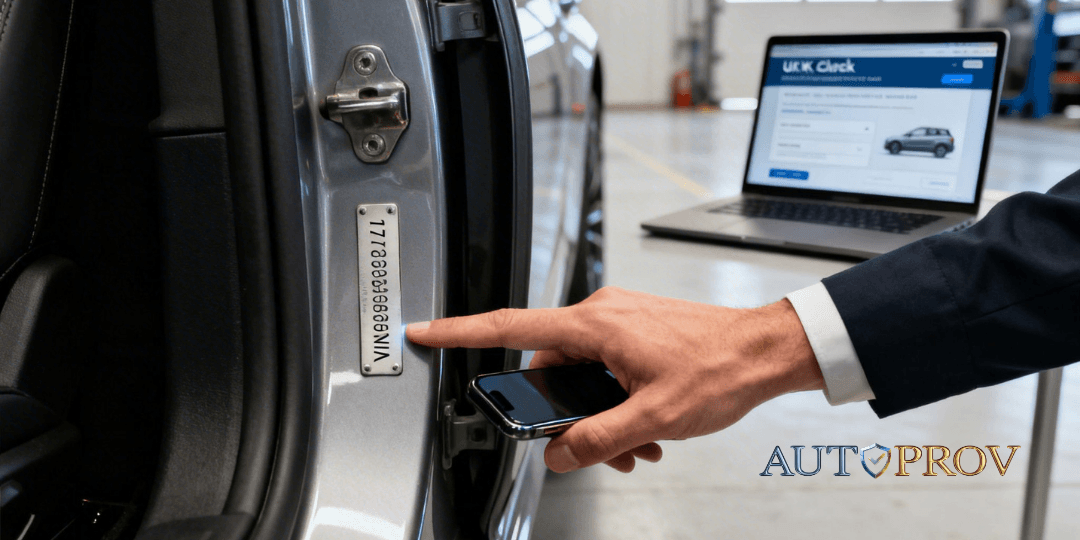
For any professional in the UK motor trade, the vehicle registration mark (VRM) is an unreliable identifier. Plates can be changed, cloned, or put on retention. The true, immutable identity of a vehicle is its 17-digit Vehicle Identification Number (VIN), often referred to as the chassis number. Effective due diligence starts with the VIN. It is the first, non-negotiable step in assessing a vehicle and managing commercial risk.
Why the VIN is a Trader's Primary Risk Assessment Tool
The 17-digit VIN is the only globally unique identifier a vehicle possesses. It is the foundation of modern vehicle provenance, providing a reliable anchor for any credible history check.
Before committing capital to a unit, the VIN allows you to confirm its fundamental identity against official records. It is the key that unlocks a vehicle's verifiable history. For those new to the trade, it is essential to be familiar with understanding what a VIN number is and its critical role in risk assessment.
The Standardised Identifier for Vehicle Intelligence
While the term 'chassis number' persists in trade vernacular, the standardised 17-character VIN was a pivotal development for the UK motor trade. This global standard enabled the creation of the interconnected vehicle data systems that are now essential for professional operations.
Professional vehicle history providers and forensic services base all their intelligence on the VIN. Its consistent format is the only reliable method for flagging risks, from mileage discrepancies to complex ownership patterns that indicate a problematic asset.
For a trader, the VIN is the primary key for assessing a vehicle's history and risk profile before acquisition. A mismatched or altered VIN is a definitive red flag that requires an immediate halt to the transaction pending further investigation.
The DVLA's adoption of the global VIN format made it the universal code for all modern vehicles in the UK. This move away from inconsistent, manufacturer-specific numbers is what enables dependable cross-referencing against official, commercial, and law enforcement databases.
Every vehicle appraisal must begin with the VIN. It establishes the baseline facts upon which all subsequent checks are built. A preliminary, free check is a useful starting point, but it is only the first step. For a complete understanding, see our guide on conducting a free UK VIN number check. AutoProv provides motor trade professionals with the tools to move beyond basic data, delivering the risk intelligence required to protect capital.
The First Layer of Due Diligence: Free Government Vehicle Data
Before investing in a comprehensive provenance report, the initial step should always be to utilise the free data provided by UK government services. These checks are immediate, draw information directly from official sources, and are cost-free, making them an essential first layer in any vehicle appraisal process.
The two primary services are the DVLA's 'Vehicle Information Checker' and the GOV.UK 'Check MOT History' service. By entering the vehicle's registration number, you receive an instant snapshot of official data.
The first task is a critical cross-reference: does the make, model, colour, and engine size returned by the service match the details on the V5C logbook and the physical vehicle? Any discrepancy is an immediate stop signal, indicating a potential identity issue that must be resolved before proceeding.
This process is the first line of defence in verifying a vehicle's identity before investing further time or capital.

Following this sequence ensures the core identity is validated against official records before deeper analysis.
Here is a summary of these free resources and their application in a professional workflow.
Official UK Free Vehicle Check Sources
Tool/Source Information Provided Primary Use for Traders DVLA Vehicle Information Checker Make, model, colour, engine size, tax status, date of first registration, year of manufacture. Instantly verifying the vehicle's core identity against the V5C and physical car. GOV.UK Check MOT History Full MOT history including passes, fails, advisory notes, and mileage recorded at each test. Identifying recurring mechanical issues, signs of neglect, and potential mileage anomalies. While these free tools provide a crucial starting point, they are insufficient for a complete risk assessment. They lay the groundwork for a more comprehensive investigation into a vehicle's full provenance.
Uncovering Risk Signals in the MOT History
Beyond a basic identity match, the MOT history provides insight into a vehicle's mechanical condition, usage patterns, and potential underlying faults that directly impact valuation and risk.
Pay close attention to recurring advisory notes. They often indicate persistent issues the previous owner may have ignored. An advisory for "slight play in front suspension" or "minor oil leak" that appears across multiple tests suggests a future repair cost that will impact your margin. For an experienced trader, the MOT history is a risk assessment tool, not just a pass certificate.
Identifying Mileage Anomalies with MOT Data
One of the most valuable features of the MOT history service is the ability to track a vehicle's recorded mileage over time. This helps build a picture of its operational life and, crucially, can highlight the signs of mileage fraud, or 'clocking', a persistent problem in the UK used car market.
Look for a logical, steady increase in mileage between tests. The following patterns are significant red flags:
- Mileage Reversals: A mileage reading that is lower than a previous year's entry is a near-certain indicator of tampering and a deal-breaker.
- Prolonged Stagnation: A vehicle covering minimal mileage between MOTs may suggest it was off the road for an extended period, possibly due to major repairs or an unresolved fault.
- Erratic Usage Patterns: Significant fluctuations in annual mileage—for example, 2,000 miles one year and 20,000 the next—could suggest undisclosed use, such as periods as a private hire vehicle.
While the MOT history provides valuable clues, a truly comprehensive DVLA mileage check requires cross-referencing data from multiple sources to build a complete picture.
For a trader, physical VIN inspection is the ultimate safeguard against cloning. Your process must include physically checking the VIN on the windscreen and chassis, ensuring it matches the V5C and the data returned by the DVLA's online tool. Any mismatch is an instant reason to walk away.
Interpreting Free Data: From Information to Intelligence
Accessing free vehicle data from government sources is straightforward. The professional skill lies in interpretation—identifying the risks that are often hidden in plain sight.
A clean MOT pass, in isolation, provides limited value. The real intelligence is found in the patterns, advisories, and unexplained gaps that reveal a vehicle's true operational history. This is the shift from data gathering to genuine vehicle intelligence, which is essential for protecting a business from acquiring stock with expensive, latent problems.

Analysing MOT History Patterns
An MOT history is more than a pass/fail record; it's a vehicle's mechanical diary. A professional analysis involves scanning the entire timeline for patterns that indicate underlying issues.
A common scenario is a vehicle that passes its last three MOTs but carries a recurring advisory for "slight play in o/s/f suspension ball joint" on each test. An amateur might dismiss this. A professional recognises it as a persistent, ignored fault that will require a costly replacement, directly impacting the unit's profitability.
For a trader, MOT advisories are indicators of owner behaviour. A long list of minor advisories, even on a passed test, often signals a vehicle maintained on a minimal budget, with only essential repairs being addressed.
The Risk of Unexplained Gaps
The free MOT data offers a basic mileage check UK traders can use. It is effective for catching blatant clocking where mileage drops, but more subtle and often more significant risks are found in data gaps.
An unexplained void in a vehicle's MOT history is a major red flag. A vehicle that is not tested for 18 months requires serious questions:
- Was it involved in a major accident? The gap could conceal a lengthy, undocumented repair, potentially of poor quality.
- Was it stored due to a critical failure? The previous owner may have been unable or unwilling to fund a major engine or gearbox repair.
- Was the odometer disconnected? A vehicle can be run for a year without logging miles, creating a data black hole before the odometer is reconnected for the next test.
These gaps represent unverified, high-risk periods in a vehicle’s life. A professional must assume a worst-case scenario, as the trader inherits any problem the previous owner successfully hid from the official record.
The Limitations of a Free Mileage Snapshot
It is crucial to understand that a free chassis number check free UK government sites offer only provides mileage data at fixed points in time—the annual MOT. It reveals nothing about what happened in the thousands of miles a vehicle may have covered between those tests.
A vehicle could be used intensively as a private hire car for 11 months, accumulating high mileage, only to be clocked back to a plausible figure just before its MOT. The official history would show a logical annual increase, completely masking its true working life. This is precisely why cross-referencing MOT data with a full used car history report is a non-negotiable part of professional due diligence. Learn more about what a full check includes in our guide to getting a complete car history check for free.
Only by combining the signals from free reports with the deeper intelligence from a professional service like AutoProv can a trader build an accurate picture of a vehicle's provenance and make a truly informed acquisition decision.
The Critical Blind Spots of Free Vehicle Checks
For any motor trade professional, relying solely on free government data to source stock is an unacceptable risk. A free chassis number check free uk traders can perform is a useful first step, but it only provides a superficial view. It completely misses the complex and costly issues that can turn a profitable unit into a significant loss.
A quick check on GOV.UK confirms basic vehicle details and MOT history. However, the data stops there, leaving dangerous blind spots around the factors that define a vehicle's true commercial value and legal status.
What Free Reports Will Not Disclose
Free government checks are, by design, limited. They are not intended for professional risk assessment, and the resulting information gap is where dealers most often incur financial losses and reputational damage.
A free check provides no visibility on several business-critical data points:
- Outstanding Finance: There is zero information on any hire purchase (HP), Personal Contract Purchase (PCP), or other finance agreement secured against the vehicle. Acquiring a vehicle with outstanding finance means you do not obtain good title; the finance house remains the legal owner and can repossess the asset.
- Insurance Write-Off History: There is no disclosure of whether a vehicle has been declared a total loss (write-off) by an insurer. It is easy to unknowingly purchase a Category S (structurally damaged) or Category N (non-structurally damaged) vehicle, which significantly reduces its value and raises safety concerns.
- Stolen Vehicle Status: The free services do not cross-reference with the Police National Computer (PNC). You have no way of knowing if a vehicle is recorded as stolen, a risk that results in asset seizure and serious legal complications. A stolen vehicle is a total loss, as our guide on how to check for a stolen vehicle explains.
- Scrapped or Exported Markers: You will not be alerted if a vehicle has been officially marked as scrapped (end-of-life) or registered for permanent export, both of which render it illegal to sell within the UK.
Relying on a free check is analogous to reading only the first chapter of a book. You understand the premise but miss the critical plot points that define the vehicle's true story, value, and risk.
This is precisely why the commercial vehicle intelligence market exists. Professional services were developed because the DVLA’s free data, while useful for the public, is insufficient for trade due diligence. These paid services cross-reference a vehicle's identity not just with the DVLA, but also with crucial datasets from finance companies, insurers, and the police. The fact that providers have conducted over 400 million checks for the UK market demonstrates how many dealers refuse to operate with these blind spots. For a full breakdown of what is covered, review what a professional provenance check covers.
The Financial Impact of These Blind Spots
Understanding these limitations is fundamental to risk management. The very details a free vehicle history check UK government site omits are those that cause the most significant financial damage to a dealership.
Consider a common scenario: a trader appraises a clean, three-year-old hatchback. The free check confirms a valid MOT and plausible mileage. The vehicle is acquired for £12,000. Two months later, a letter arrives from a finance company regarding the previous owner's defaulted PCP agreement. The finance house retains legal title and repossesses the vehicle, resulting in a total loss of the initial investment plus associated costs.
This is not a rare occurrence; it is a daily operational risk. The nominal cost of professional dealer vehicle checks is not an expense but an essential investment in business security. It provides the trade vehicle intelligence needed to protect capital. At AutoProv, we focus on delivering this precise level of motor trade risk assessment, providing clarity where free checks leave critical, unanswered questions.
From Basic Checks to Professional Intelligence
Elevating a motor trade operation involves moving beyond a simple, free chassis number search and adopting a risk assessment model based on provenance intelligence. This requires analysing patterns, context, and a vehicle's complete ownership history to build a comprehensive risk profile before committing capital.
This shift in approach is what protects your investment. It means scrutinising a vehicle's ownership timeline for high-risk signals that free reports cannot detect.

Scrutinising Ownership Timelines
One of the most revealing datasets in a professional report is the detail surrounding keeper changes. While a V5C states the number of previous keepers, true intelligence lies in the timing of those changes. This context helps identify high-risk patterns.
- Short-Term Ownership: A vehicle that has changed hands three times in the last 18 months is a significant red flag. This is a classic indicator of a known, persistent fault being passed on before a major repair bill becomes due.
- Rapid Resale Activity: If a vehicle was acquired by another dealer and immediately sent to auction, you must question why. It is highly likely they discovered a significant issue during their own appraisal and opted to dispose of the asset quickly to mitigate their loss.
These ownership patterns, invisible in a basic check, are powerful indicators of underlying risk. This is the motor trade risk intelligence required to avoid inheriting another party's problem.
From Cost Centre to Essential Investment
Viewing a professional used car history report as an overhead is a fundamental error. It is an essential investment in due diligence. The small outlay for a comprehensive check is insignificant compared to the potential loss from acquiring a vehicle with hidden finance, an undisclosed write-off history, or a latent major mechanical fault.
A professional check is not an expense; it is a mechanism for protecting the thousands of pounds being invested in an asset. It is the core of responsible capital management in the motor trade.
This is precisely where advanced dealer vehicle checks, such as those from AutoProv, become indispensable. By delivering deep insights into a vehicle's complete background, these tools enable smarter, more confident acquisition decisions. They transform the buying workflow from a simple data-gathering exercise into a sophisticated risk assessment process.
This level of intelligence protects capital, enables accurate valuations based on true history, and safeguards your business's reputation. To understand the full scope of a professional report, see the ultimate guide to a car provenance report in the UK.
Frequently Asked Questions for the Motor Trade
Detailed vehicle data analysis often raises specific questions. Here are clear, trade-focused answers to common queries regarding chassis number checks and vehicle due diligence in the UK.
Is a Free Chassis Number Check Legally Sufficient for a Dealer?
No. A free check from a government source like the DVLA is a preliminary step, but it falls far short of the due diligence expected of a motor trade professional. These checks are not designed for commercial risk assessment.
They leave significant and costly blind spots by omitting critical data required for a safe acquisition decision. They do not include information on:
- Outstanding finance agreements.
- Insurance write-off history (Category S/N).
- Stolen vehicle markers from the Police National Computer (PNC).
Relying on this limited data alone exposes a business to unacceptable financial and legal risk. A professional dealer vehicle checks service is a non-negotiable component of responsible trading.
What Is the Single Biggest Risk Free Checks Miss?
Without question, the most significant financial risk missed by a free check is outstanding finance. A vehicle with an active hire purchase or loan agreement does not belong to the keeper named on the V5C; legal title rests with the finance company.
If you acquire and subsequently sell that vehicle, the finance house is legally entitled to repossess it from your customer. In this event, your business is liable for the full financial loss. This is a catastrophic outcome that is entirely avoidable with a proper vehicle history check UK report.
Outstanding finance is the number one hidden threat for traders. It can instantly negate the entire value of an asset, turning a potential profit into a total loss. This risk alone makes professional checks essential.
How Can a Full VIN Check Help Price a Vehicle More Accurately?
A comprehensive VIN check provides the detailed vehicle provenance intelligence necessary for precise valuation. It moves beyond basic data to uncover a car’s true history, including any previous damage, import status, and granular detail from its service and MOT records.
This level of trade vehicle intelligence allows you to price an asset based on its specific, verifiable history, not on assumptions. You can confidently avoid overpaying for a unit with a problematic past or, conversely, identify a vehicle with exceptional provenance and price it at the premium it warrants. It is the difference between hoping a valuation is correct and knowing it is.
For motor trade professionals who need to move beyond basic checks and protect their capital, AutoProv delivers the advanced vehicle history, provenance, and risk intelligence required to buy smarter and trade with confidence. Discover how our platform can strengthen your due diligence at https://autoprov.ai.
Frequently Asked Questions
AI-Generated Content Notice
This article was created with the assistance of artificial intelligence technology. While we strive for accuracy, the information provided should be considered for general informational purposes only and should not be relied upon as professional automotive, legal, or financial advice. We recommend verifying any information with qualified professionals or official sources before making important decisions. AutoProv accepts no liability for any consequences resulting from the use of this information.
From our AI insights
- Navigating UK Grey Imports: A Trader's Guide
Understand the complexities and opportunities of UK grey imports for savvy motor traders.
- Navigating Private Plate Challenges in UK Vehicle Checks
Learn how private plates affect UK vehicle checks and how traders verify provenance and spot cloning risks.
- Navigating VIN Checks Post-Brexit: What UK Traders Need to Know
Discover how Brexit impacts VIN checks for UK traders and the crucial data to review.
Related Articles

Essential Vehicle Checks Before Buying a Used Car
Learn essential checks to ensure your used car purchase is safe and sound in the UK market.

Why a Provenance Check is Essential for Used Car Buyers
Ensure your used car is a smart investment by understanding the importance of a provenance check and how AutoProv can help.
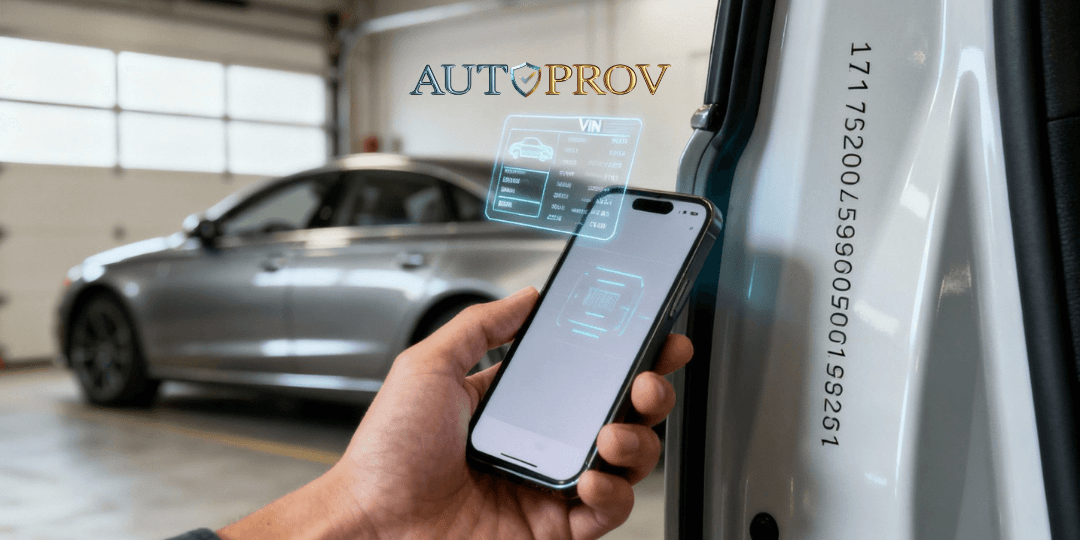
A Guide to Vehicle Check with VIN Number
A vehicle check with vin number is easily the most important thing you can do before buying a used car. Think of it as your first line of defence—a quick, simple step that pulls back the curtain on a vehicle's past, protecting you from expensive mistakes, legal headaches, and downright dangerous cars.
Published by AutoProv
Your trusted source for vehicle intelligence