
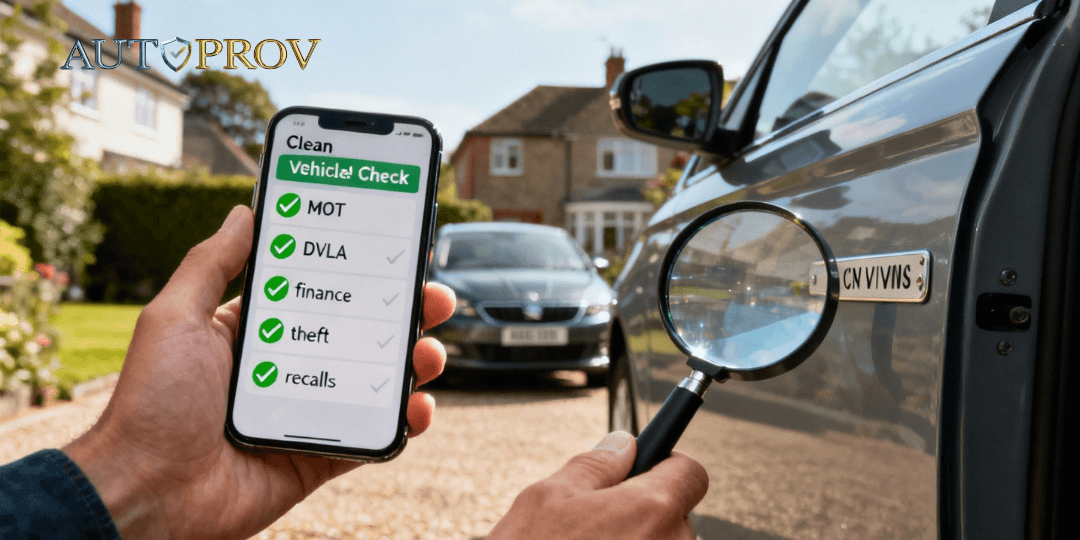
Getting the full story on a used car is easily the most important thing you can do before handing over any money. It’s about digging deeper than a quick MOT check to uncover the hidden history that really affects a car's safety, value, and even its legality. Think outstanding finance, theft records, and insurance write-offs. Using a service like AutoProv gives you all these crucial insights in one go, protecting you from some truly costly mistakes.
Getting the full story on a used car is easily the most important thing you can do before handing over any money. It’s about digging deeper than a quick MOT check to uncover the hidden history that really affects a car's safety, value, and even its legality. Think outstanding finance, theft records, and insurance write-offs. Using a service like AutoProv gives you all these crucial insights in one go, protecting you from some truly costly mistakes.
Why a Full Car Check Is Non-Negotiable
Let's be honest, buying a used car can feel like walking through a minefield. That gleaming paintwork could be hiding a history of serious accidents, a looming finance debt, or worse, a cloned identity. Getting the full picture isn't just about dodging a bad deal; it's about keeping you safe and protecting your wallet. If you skip a proper check, you're buying blind and just taking the seller's word for it.
This is where a detailed vehicle history report from AutoProv becomes your best friend. It’s an unbiased background check, pulling in data from official sources to give you a clear, honest account of the car’s life so far.
Looking Beyond a Quick Once-Over
A visual inspection and a test drive are essential, of course, but they only tell you what the car is like right now. They won’t tell you if an insurer wrote it off six months ago or if a finance company is the legal owner.
A comprehensive check will flag several major issues:
- Outstanding Finance: A shocking number of used cars are still on finance. If you buy one, the finance company has every right to come and repossess it, leaving you with no car and no money. Our services at AutoProv run a real-time check to prevent this. We've written more about the importance of vehicle history checks for finance if you want to dive deeper.
- Stolen Vehicle Status: Clever criminals can make a stolen car look perfectly legitimate by 'cloning' its identity. The only way to be sure is to check it against the Police National Computer, a core feature of an AutoProv report.
- Insurance Write-Off History: A car that's been declared a write-off (like a Cat S or Cat N) might have serious structural damage. Knowing this is absolutely vital for judging its safety and what it's actually worth.
As you can see below, getting started with AutoProv is dead simple. You just pop in the registration number.
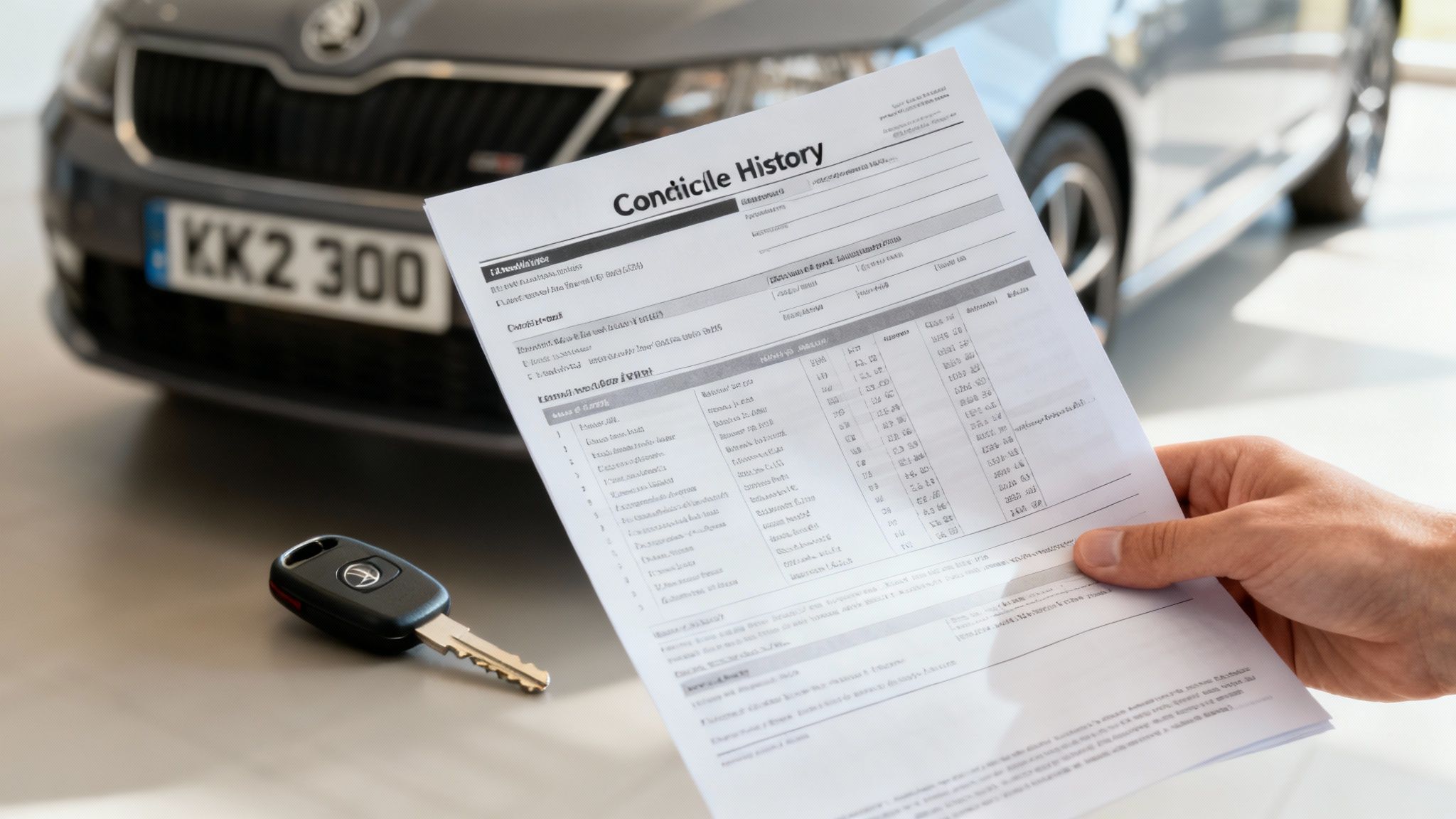
That one simple action unlocks a mountain of data that would otherwise be completely hidden, giving you instant peace of mind.
The UK Car Market Is Busier Than Ever
The roads are getting more crowded and the mix of cars is constantly changing. In the second quarter of 2025 alone, 610,000 new vehicles hit the road. By June 2025, the total number of licensed vehicles in Great Britain reached a massive 42.3 million, which includes a fast-growing number of electric cars. These numbers show just how huge and varied the market is, making a thorough check more critical than ever to confirm everything from a car's emissions status to its true ownership history.
A car check is your insurance policy against the unknown. It turns a risky gamble into a smart, confident decision, giving you the certainty you need to buy the right car at the right price.
At the end of the day, spending a few quid on a complete report from a service like AutoProv can genuinely save you thousands down the line. It's not an extra cost; it's a fundamental part of the buying process that gives you clarity and security.
Every used car has a story, and its official DVLA and MOT records are the opening chapters. I always tell people this is where the real investigation begins. Understanding these documents is fundamental to verifying what the seller is telling you and spotting red flags before you get emotionally invested.
Think of it as the car's official timeline on UK roads.
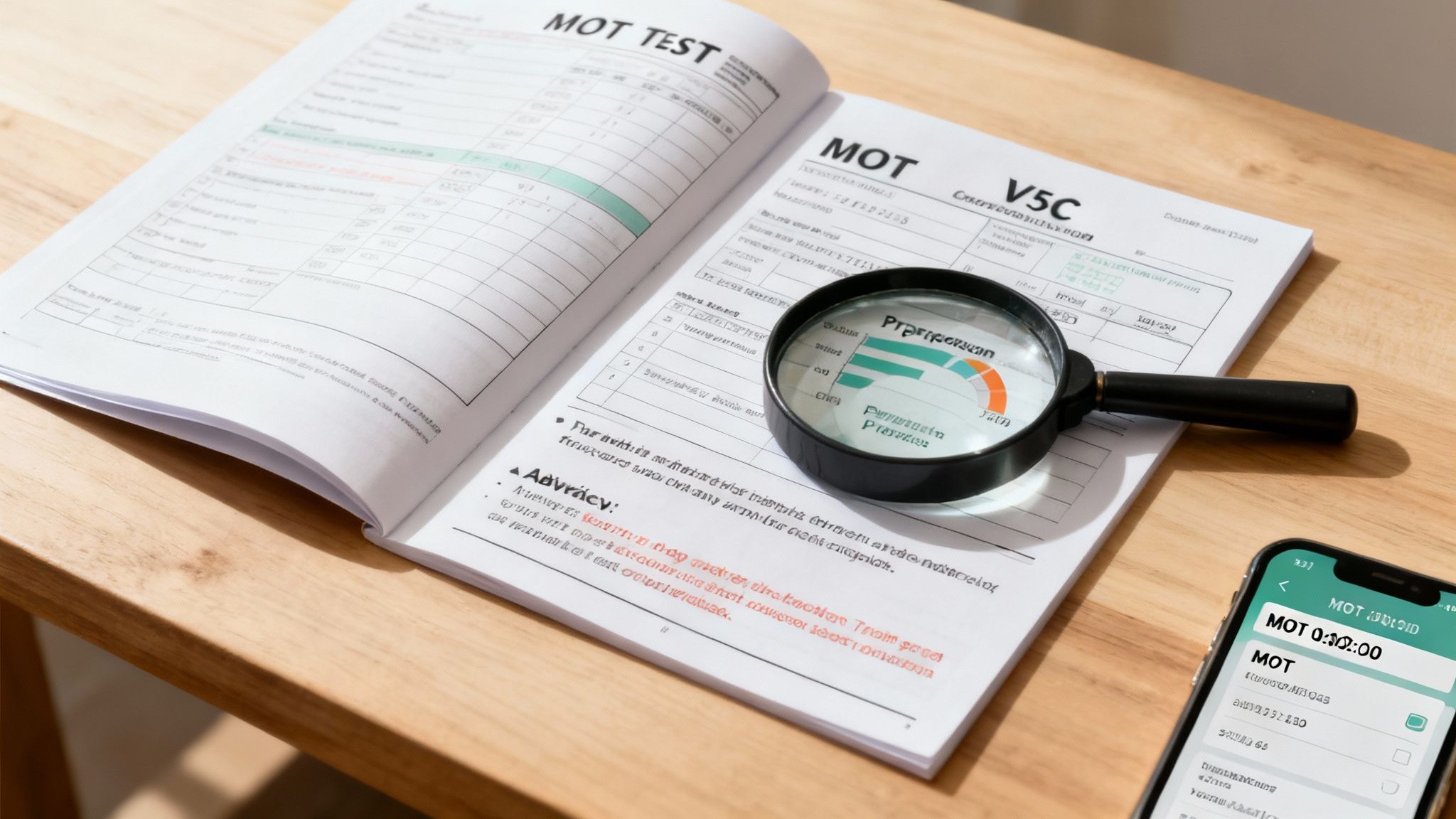
The V5C logbook, for instance, holds key details like the registered keeper, first registration date, and how many people have owned it. But on its own, it's not concrete proof of ownership or history. An AutoProv report instantly cross-references these details against live DVLA data, immediately flagging discrepancies that could point to a cloned vehicle or dodgy paperwork.
Reading Between the Lines of an MOT Report
A fresh MOT pass certificate only tells you one thing: the car met the minimum legal standards on that particular day. The real gold is in the history of passes, fails, and advisories. This is what truly paints a picture of how the car has been cared for—or neglected.
Just looking at the latest MOT is like reading a single page of a book; you completely miss the plot. A recurring advisory, for example, is a massive warning sign for me. If I see "slight corrosion on brake pipes" popping up year after year, it screams of a neglectful owner who kicks the can down the road. That small issue is just waiting to become a costly—and dangerous—failure.
Here’s what I always look for in the MOT history:
- Recurring Advisories: Items that show up repeatedly, like worn suspension bushes or deteriorating tyres, are a dead giveaway. It suggests only the bare minimum is being done to scrape a pass. These are future repair bills, plain and simple.
- Failure Items: Dig into why a car failed. Was it something simple like a blown bulb, or was it something more sinister like excessive structural rust or emissions problems? The pattern of failures reveals the car's overall health.
- Mileage Gaps: Watch out for big, unexplained gaps between tests. A car that sits idle for long periods can develop its own unique set of problems, from seized brakes to perished rubber components.
An MOT history is more than a pass/fail record; it's a diagnostic tool. Consistent advisories for the same component over several years are often a clear indicator of a significant underlying problem that previous owners have chosen to ignore rather than fix properly.
For a deeper dive, our complete guide to understanding MOT history has even more expert tips on what to spot. It’s an essential read for any serious buyer.
Analysing Mileage Progression for Signs of Clocking
Mileage is one of the biggest factors in a car's value and mechanical condition, which is exactly why it’s a prime target for fraud. Vehicle clocking—the illegal act of winding back the odometer—is still a huge problem in the used car market. The MOT history is your best line of defence.
When you get your car check details, you should see a clear, logical climb in the recorded mileage at each test. Any entry that’s lower than a previous year's reading is an immediate, serious red flag. For instance, if a car had 75,000 miles in 2023 but the 2024 test shows 55,000 miles, something is very, very wrong.
Let’s take a real-world scenario. You see a 2018 Ford Focus advertised with 40,000 miles. A quick check reveals its MOT history shows it had 65,000 miles just 18 months ago. This doesn't just mean the car is worth a lot less; it also means it has 25,000 miles of unrecorded wear and tear on its engine, gearbox, and suspension.
An AutoProv report does this detective work for you, comparing MOT mileage with data from service histories and old sales listings to build a trustworthy mileage timeline. This protects you from overpaying for a clocked car and makes sure the vehicle's condition actually matches what the advert claims.
Uncovering Hidden Financial and Theft Risks
Beyond the mechanics and MOT history, some of the biggest risks you face when buying a used car are completely invisible. Two threats loom largest: outstanding finance agreements and the surprisingly sophisticated world of vehicle theft and cloning. These problems can turn your dream car into a legal and financial nightmare overnight, which is why our AutoProv checks put them under the microscope.
Picture this: you find the perfect car, agree on a great price, and drive it home, buzzing with excitement. A month later, a letter lands on your doormat from a finance company. They’re the legal owner, they say, and they're coming to repossess their car. This isn't some rare scam; it's a real and all-too-common danger for unwary buyers across the UK.
The Serious Threat of Outstanding Finance
When a car is bought using a finance deal like Hire Purchase (HP) or Personal Contract Purchase (PCP), the finance company legally owns it until the very last payment is made. If the seller offloads the car without settling that debt, the lender’s ownership doesn't just disappear.
This means that even with the V5C logbook in your name and the keys in your pocket, you are not the legal owner. The finance company is well within its rights to track down its asset—the car—and take it back. You’re left with no car and no money. It's a brutal reality that has caught out countless buyers.
An AutoProv report cuts through the uncertainty. By checking national finance databases in real-time, it gives you a definitive answer on whether the car is clear of any existing agreements. It’s the essential 'all clear' you need before you commit a single penny. You can dive deeper into this topic by reading our detailed article on the importance of finance checks when buying a car.
Protecting Yourself from Stolen and Cloned Vehicles
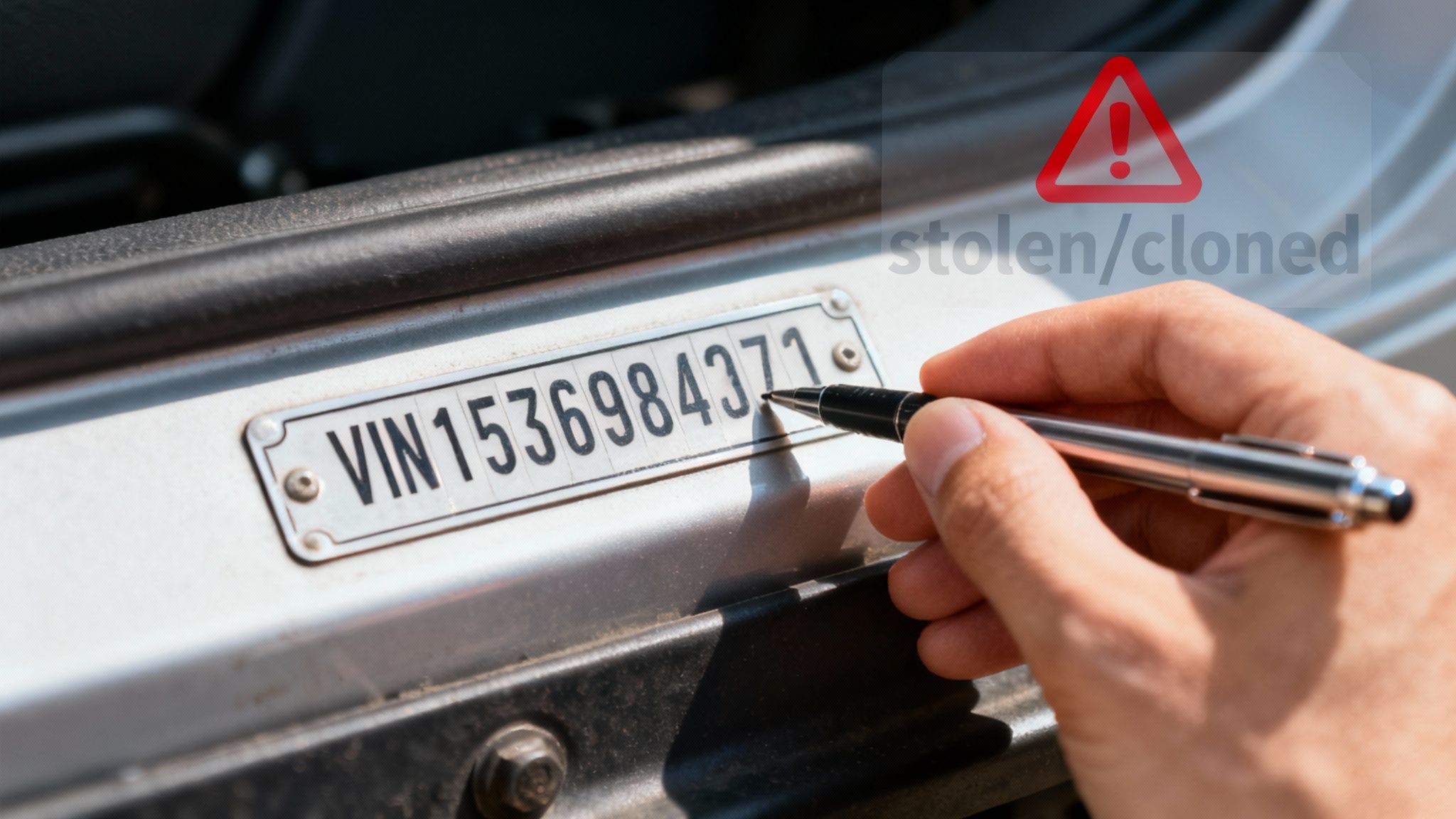
Modern vehicle theft is highly organised. Criminals often try to legitimise a stolen car by giving it a new identity—a process called cloning. They’ll take the Vehicle Identification Number (VIN) from a road-legal car of the same make and model and slap it onto the stolen one, sometimes even forging a V5C document to match.
To the average buyer, the stolen car looks completely genuine. The consequences, however, are severe. If you unknowingly buy a stolen vehicle, the police will eventually seize it and return it to its rightful owner or their insurer. You lose the car, you lose the money you paid, and you have almost no chance of getting it back.
So, how do you protect yourself? You have to verify the car's identity from multiple angles.
- Check the VIN: The VIN should be present and untampered with in several places—usually on the dashboard (visible through the windscreen), inside the driver's door jamb, and stamped onto the chassis in the engine bay.
- Cross-Reference the Numbers: Make sure the VIN on the car perfectly matches the VIN on the V5C logbook. Any difference, no matter how small, is a massive red flag.
- Run an Official Database Check: This is the only way to be certain. Our professional history check runs the car’s details against the Police National Computer (PNC) to see if it has been reported as stolen.
A cloned car is designed to fool you. Criminals are betting that you'll trust paperwork that looks right. Only by cross-referencing the physical VIN with official police and DVLA records can you expose the fraud.
AutoProv handles this entire verification process for you. Our report pulls data directly from police and DVLA records, instantly confirming the vehicle’s identity and stolen status. This gives you a powerful shield against even the most convincing scams.
Checking for Write-Offs and Safety Recalls
A car’s physical history is just as important as its paper trail. Now that we've confirmed it's clear of finance and hasn't been reported stolen, it's time to dig into its structural integrity and safety record. This brings us to two absolute deal-breakers: insurance write-offs and outstanding manufacturer safety recalls.
An insurance write-off means a vehicle was once damaged so badly that the insurer decided it just wasn't worth fixing. Even if it’s been put back on the road, that history sticks to it, permanently affecting its value, safety, and how much you'll pay for insurance. Skipping this check could mean buying a car with hidden, potentially dangerous weaknesses.
An AutoProv report puts this information front and centre, so you know exactly what you’re looking at from the get-go.
Understanding Insurance Write-Off Categories
In the UK, write-offs get classified into categories that tell you just how serious the damage was. For years, we had Cat A, B, C, and D. That system was updated to focus more on the type of damage, not just the repair cost.
When you're looking at used cars, you'll most likely come across these two:
- Category S (Cat S): This is the serious one. It means the vehicle has suffered structural damage and has since been professionally repaired. The 'S' is for structural, covering crucial parts like the chassis or crumple zones.
- Category N (Cat N): This stands for non-structural damage. The issue might have been cosmetic, like banged-up panels and bumpers, or maybe an expensive electrical fault. The key thing is that the car's core safety structure wasn't compromised.
A Cat S car demands a much closer, professional inspection to ensure the repair work is up to scratch. And while a Cat N might sound less risky, you still need to know precisely what was damaged and how it was put right. You can get into the nitty-gritty in our comprehensive UK guide to insurance write-offs.
Knowing a car’s write-off status is crucial for two reasons. First, it gives you immense negotiating power—these cars are worth significantly less. Second, and far more importantly, it’s your cue to get an independent mechanical inspection to verify the quality and safety of the repairs.
AutoProv’s report cuts through the confusion. It clearly shows any write-off history, including the category and the date of the incident. This lets you make a properly informed decision, rather than finding out about the car's troubled past when it's already too late.
The Importance of Checking Safety Recalls
Beyond accident damage, there’s another hidden danger lurking: unresolved manufacturer safety recalls. A recall happens when a car maker or a safety authority finds a defect that could be a real risk. We're talking about everything from faulty airbags and braking systems to fire hazards from dodgy wiring.
These aren't minor things. An outstanding recall means the car has a known fault the manufacturer has deemed critical enough to fix for free. The catch? It's on the owner to actually take the vehicle to a dealership to get the work done. Many simply don't bother, leaving dangerous faults unfixed for years.
When you're checking a car's details, you absolutely have to verify its recall status. Buying a car with an unresolved recall means you're taking on that risk yourself. An AutoProv check scans for any outstanding safety recalls specific to that exact vehicle using its VIN, ensuring the car isn't just roadworthy, but actually safe for you and your family.
Getting an Accurate Vehicle Valuation
So, you’ve done the hard work. You've confirmed the car is safe, legal, and doesn't have a dodgy past. Now comes the final, crucial hurdle: is the asking price actually fair?
This is where you shift from detective work to market analysis. Nailing the valuation is what separates a decent deal from a truly great one, giving you the confidence and the hard data you need to negotiate properly.
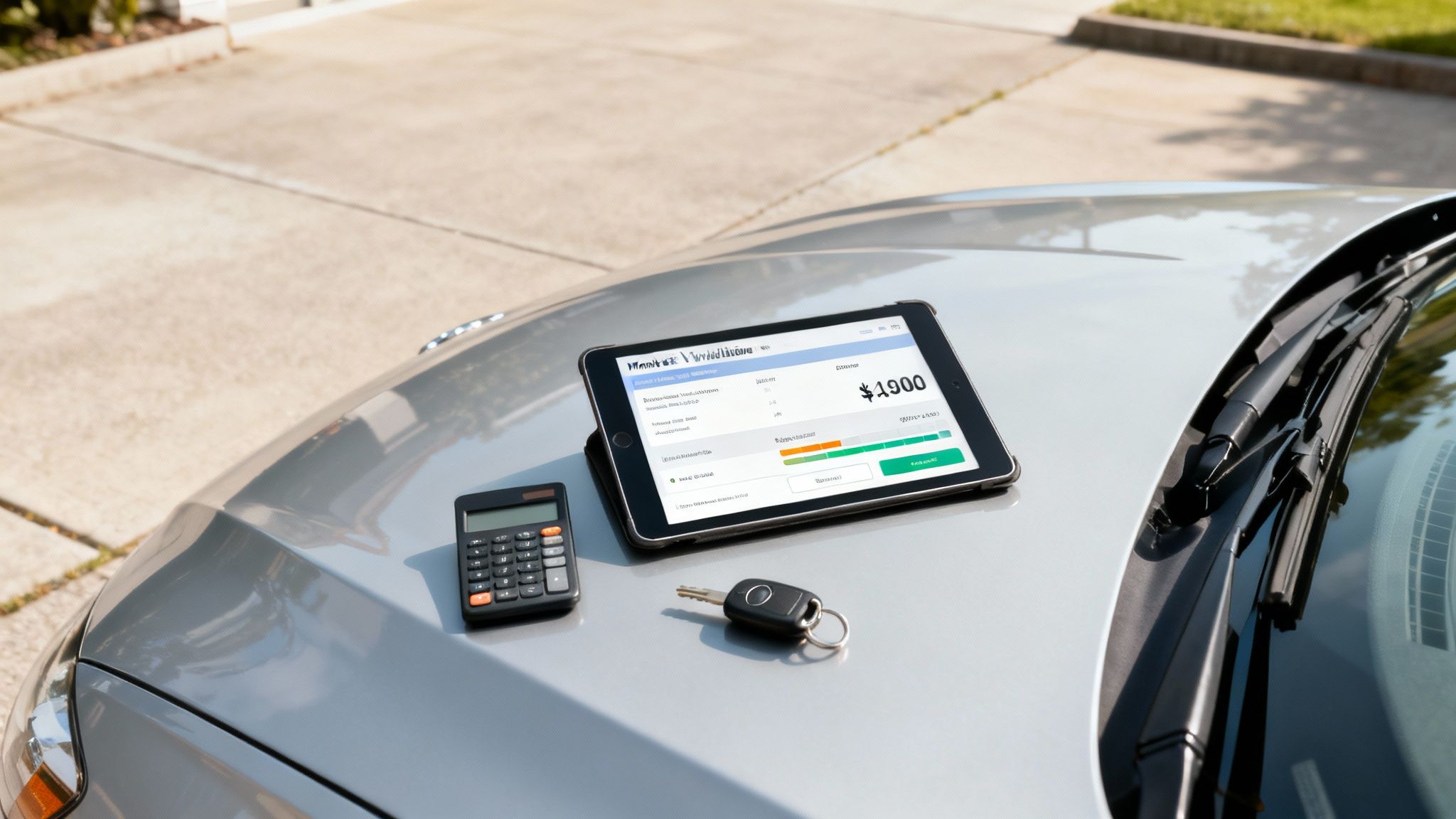
Figuring out a used car's real value isn't just about its age and mileage. It’s a messy equation with dozens of variables. Everything from the specific trim level and optional extras to its colour—and even the time of year—can swing the price. One basic hatchback might look the same as another on paper, but if one has £3,000 worth of desirable factory options, its market position is entirely different.
Guesswork just won’t cut it here. To make a smart purchase, you need data-driven insights. That’s exactly why every AutoProv report includes a current market valuation, cutting through the noise by analysing real-time data from thousands of UK sales listings.
Factors That Shape a Car's Price
It’s easy to get lost in the details, but a few key things carry the most weight when it comes to a car's price tag. Understanding how they all fit together is your best tool for spotting an overpriced vehicle or a hidden bargain.
These are the big ones:
- Age and Mileage: The most obvious, of course. Newer cars with fewer miles are generally worth more. But don't be fooled—a well-maintained, high-mileage car is often a much better bet than a neglected, low-mileage one.
- Specification and Trim: A top-of-the-range ‘Titanium X’ model will always fetch a higher price than an entry-level ‘Style’ version of the same car. Things like leather seats, a panoramic roof, or an upgraded sound system make a huge difference.
- Condition and Service History: A car with a complete, stamped-up service book and immaculate bodywork is far more desirable. This paper trail is proof of care, and buyers will absolutely pay a premium for that peace of mind.
- Depreciation Curve: Different cars lose value at wildly different rates. To get a proper handle on this, check out our simple guide on how to calculate vehicle depreciation, which breaks down why some models hold their value so much better than others.
Moving Beyond the Sticker Price
A car's true cost goes way beyond what you pay on day one. Ongoing ownership costs can quickly turn an apparent bargain into a long-term financial headache. This is especially true today, with emissions rules and running costs at the front of every buyer's mind.
An AutoProv report gives you a complete financial picture, including the little details that directly hit your wallet. This covers road tax (VED) bands and, crucially, ULEZ (Ultra Low Emission Zone) compliance. Knowing a car is ULEZ-compliant is now a massive selling point in many UK cities, directly boosting its desirability and its value.
The shift to electric vehicles (EVs) has also added a new layer of complexity. As of September 2025, the UK used car market had 124,076 electric vehicles listed for sale. Their average price? A hefty £26,094, well above the £18,662 average for petrol or diesel cars. This data shows just how fast demand for EVs is growing and highlights the need for specific checks, like battery health, which directly impacts their value.
A car's valuation isn't a static number. It's a live snapshot of market supply and demand, influenced by everything from fuel prices to local clean air zone policies. Having access to real-time data is the only way to stay ahead.
By combining a vehicle's history, its technical specs, and live market data, you get the whole story. This complete set of car check details from AutoProv doesn't just tell you what a car is worth today; it helps you understand its future value and total cost of ownership. This is the information that lets you buy smarter, price your own stock more accurately, and secure the best possible deal, every single time.
Your Top Car Check Questions Answered
Even after years in the motor trade, you still run into tricky situations and fresh questions about vehicle checks. Getting the right answers fast is what separates a good deal from a bad one. Here, we'll tackle the most common queries we hear, showing why a complete car check from AutoProv is non-negotiable every single time.
How Fast Can I Actually Get a Report?
When you’re at an auction or sizing up a part-exchange on the forecourt, every second counts. You can't be left hanging while a potential deal slips away. So, it's fair to ask if a proper, deep-dive check is going to slow you down.
The answer is a definite no. With a professional service like AutoProv, the whole thing is practically instant.
Once you punch in the reg number, our system gets to work, firing off queries to dozens of official UK databases in real-time—we’re talking DVLA, the Police National Computer, finance registers, the lot. You'll have a comprehensive, easy-to-scan report on your screen in seconds. That means you can get the vital intel you need while you're standing right next to the car, letting you make a confident call on the spot. No frustrating delays, just the facts.
Is the Free Government MOT Check Good Enough?
Lots of people wonder if the free GOV.UK MOT check is all they need. While it’s a decent first glance, relying on it alone is a massive gamble.
The government check is very limited. All it gives you is the basic MOT history and mileage records. Crucially, it will never warn you about the most costly and dangerous hidden problems that can sink a deal.
You are completely blind to a number of things with the free check:
- Outstanding Finance: It won’t breathe a word about a finance company being the legal owner.
- Stolen Status: There’s no link to the Police National Computer, so you won't know if it's stolen.
- Insurance Write-Offs: It won't flag a vehicle as a Cat S or Cat N write-off.
Think of the free check as one piece of a big jigsaw puzzle. It shows you a corner, but a professional check from AutoProv puts all the pieces together for you, revealing the complete, true picture of the car’s history.
What Happens if I Buy a Car with Outstanding Finance?
This is probably the most critical question of all because the fallout is so severe. Buying a car that still has an active finance agreement attached is one of the biggest financial landmines in the motor trade. In the UK, the law is brutally simple: the vehicle belongs to the finance company until every penny of the loan is settled.
That legal ownership gives them the right to repossess the car—not from the person who took out the loan, but from you, the new keeper. You end up with a total loss: no car, and no way of getting your money back. For any dealer, that’s not just a loss of profit; it’s a direct blow to your capital and your reputation.
This is exactly why a finance check is a non-negotiable part of any proper vehicle history report. An AutoProv check gives you a definitive all-clear, confirming the car is free from any financial baggage. It’s the only way to get the legal security and peace of mind you need to protect your business.
Frequently Asked Questions
AI-Generated Content Notice
This article was created with the assistance of artificial intelligence technology. While we strive for accuracy, the information provided should be considered for general informational purposes only and should not be relied upon as professional automotive, legal, or financial advice. We recommend verifying any information with qualified professionals or official sources before making important decisions. AutoProv accepts no liability for any consequences resulting from the use of this information.
From our AI insights
- Navigating UK Grey Imports: A Trader's Guide
Understand the complexities and opportunities of UK grey imports for savvy motor traders.
- Navigating Private Plate Challenges in UK Vehicle Checks
Learn how private plates affect UK vehicle checks and how traders verify provenance and spot cloning risks.
- Navigating VIN Checks Post-Brexit: What UK Traders Need to Know
Discover how Brexit impacts VIN checks for UK traders and the crucial data to review.
Related Articles

Essential Vehicle Checks Before Buying a Used Car
Learn essential checks to ensure your used car purchase is safe and sound in the UK market.

Why a Provenance Check is Essential for Used Car Buyers
Ensure your used car is a smart investment by understanding the importance of a provenance check and how AutoProv can help.
A Guide to Vehicle Check with VIN Number
A vehicle check with vin number is easily the most important thing you can do before buying a used car. Think of it as your first line of defence—a quick, simple step that pulls back the curtain on a vehicle's past, protecting you from expensive mistakes, legal headaches, and downright dangerous cars.
Published by AutoProv
Your trusted source for vehicle intelligence
