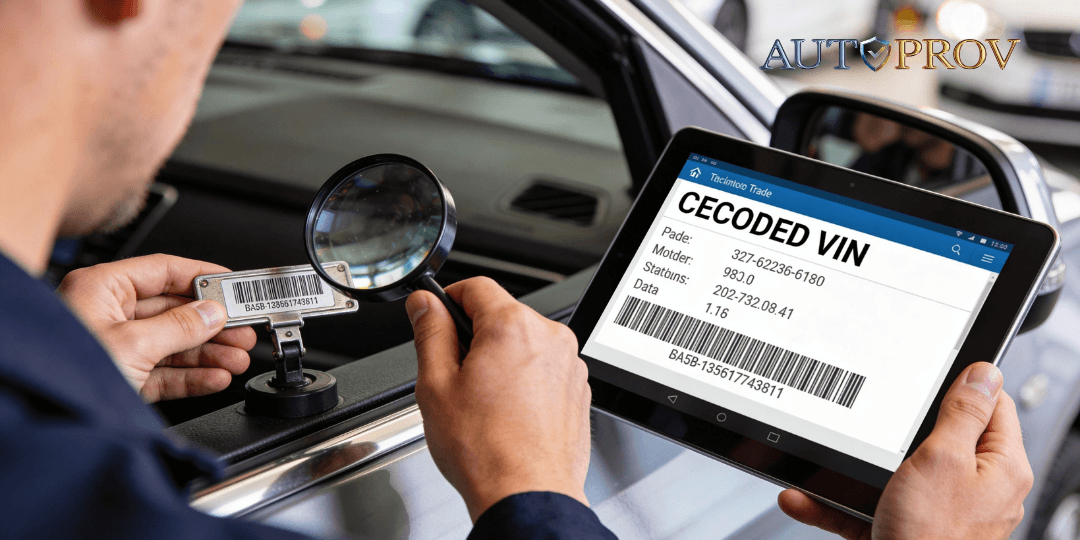
You’re at an auction lane, phone in one hand, catalogue in the other, and a car looks tidy enough to justify a quick bid. The paint’s straight, the interior is presentable, and the seller’s description sounds plausible. That’s exactly the point where traders get caught out. A vehicle can look commercially sound and still carry identity issues, mileage concerns, or ownership patterns that turn a margin buy into a dispute.
In the UK motor trade, finding VIN numbers isn’t admin. It’s the first practical step in knowing whether the vehicle in front of you is the same vehicle described on the screen, in the paperwork, and in the history record. If that first step is rushed, every decision that follows rests on weak ground.
A proper VIN process goes further than checking a plate through the windscreen. You need to locate multiple VIN points, read the number correctly, match it across documents, and use it to access deeper vehicle provenance and trade vehicle intelligence. That’s where a routine inspection becomes a proper vehicle history check UK workflow.
Why Finding the VIN Is Your First Line of Defence
At trade speed, most mistakes happen because someone accepts the first answer that looks good enough. A visible dashboard VIN often becomes that answer. It shouldn’t.
The VIN is the identity key for the car. If that identity is wrong, cloned, altered, or mismatched to the paperwork, every later check becomes less reliable. A clean-looking used car history report tied to the wrong vehicle doesn’t protect your capital. It only creates false confidence.
The UK market gives traders plenty of reasons to take this seriously. Police-recorded data for 2023 showed 142,000 motor vehicle thefts, with 22% involving VIN tampering or cloning, and the motor trade cost was put at £500 million annually by the Insurance Fraud Bureau, according to the VIN overview cited here. That’s not a theoretical compliance issue. It’s a buying risk.
What a fast appraisal often misses
A trader under time pressure usually checks three things first. The registration, the visible condition, and whether the seller’s story feels coherent. None of those confirms identity on their own.
What tends to get missed is simple:
- A swapped plate can make a stolen vehicle look ordinary at first glance.
- A cloned identity can match one visible location but fail at a secondary stamping.
- A mileage issue can sit behind a perfectly respectable presentation.
- A document mismatch can look minor until it becomes your problem after sale.
Practical rule: If you’ve only seen one VIN location, you haven’t verified the vehicle. You’ve only read one label.
Why wholesalers need a stricter standard
Retailers can sometimes absorb a bad buy through time, workshop effort, or margin on another unit. Wholesalers usually can’t. Stock turns quickly, buyers rely on your description, and disputes travel fast through trade networks.
That’s why dealer vehicle checks need to start at the physical vehicle itself. The VIN isn’t the whole answer, but it is the starting point for every serious check that follows. When you treat it as a gateway rather than a detail, you make better buying decisions and avoid wasting time analysing the wrong car.
The Anatomy of a VIN A Trader's Reference
Every UK-registered modern vehicle should carry a unique 17-digit VIN under the ISO 3779 standard adopted from 1981. Before that, formats varied widely. Standardisation is what made modern vehicle history check UK processes viable in the first place, as outlined in this VIN background reference.

If you want a fuller primer, AutoProv has a concise explainer on what a VIN is. For trade use, the important point is understanding what each part tells you during appraisal.
The first three characters
Positions 1 to 3 are the World Manufacturer Identifier, usually shortened to WMI. This tells you who built the vehicle and gives you an immediate sense of origin.
For a UK trader, this matters because it helps you sanity-check the seller’s description. If the car is being presented as one thing but the WMI points somewhere else, stop and verify before going further. The first character can also indicate country grouping, including “S” for UK plants such as Nissan or Vauxhall in the example cited in the source above.
The middle section
Positions 4 to 8 describe the vehicle itself. This area usually reflects things such as model line, engine, body style, or restraint configuration, depending on manufacturer coding.
This is useful in two ways:
- It helps confirm whether the vehicle in front of you matches the written description.
- It helps you catch basic identity manipulation and less dramatic, but still expensive, data entry errors.
If a seller describes a particular engine or trim and the VIN decode suggests otherwise, don’t assume it’s harmless. Sometimes it is. Sometimes it points to a more serious problem with identity, repair history, or listing accuracy.
The check digit and final positions
Position 9 is the check digit. In practice, this is one of the most useful quick validation points when you’re trying to spot an incorrect or suspect VIN. It won’t replace a full provenance review, but it’s a strong first-pass filter.
The final part of the VIN works like this:
- Position 10 identifies the year code
- Position 11 identifies the plant
- Positions 12 to 17 are the serial sequence
A trader doesn’t need to memorise every manufacturer code. You do need to know what should be consistent and what deserves a second look.
What matters on the ground
When you read a VIN, don’t approach it as a puzzle to solve for its own sake. Use it as a live reference point:
- Confirm origin against the seller’s description
- Check specification clues against the actual car
- Validate the structure before spending time on history
- Use the serial section to ensure you’re looking at one unique unit, not a generic match
That habit improves every later stage of motor trade risk assessment.
Systematic VIN Location on Cars and LCVs
Finding VIN numbers quickly is a skill. Finding them properly is a process.
UK guidance has long reinforced multi-point checking because VIN tampering is a routine tactic in vehicle crime. provenance data cited in the VIN reference here says 4% of used cars have altered VIN plates, which is why checking the dashboard, door pillar, and engine bay matters for traders.
Start with the locations you should always inspect
On most cars and LCVs, the first checks are straightforward. You’re looking for the places manufacturers expect inspectors, police, and buyers to use first.
Use this sequence:
- Dashboard through the windscreen
- Usually the fastest visual check. It’s useful for speed, but it should never be your only VIN point.
- Door pillar or door shut label
- Commonly on the driver’s side. Check the print quality, fixing, and consistency with the dashboard number.
- Engine bay or bulkhead area
- This often tells you more than the easy-access labels, especially where there’s been prior interference.
Where a more careful trader keeps looking
Secondary locations are where many weak inspections stop, and where many identity issues start to show.
Look for additional markings or stampings around:
- Offside inner wing
- Nearside suspension turret
- Bulkhead stampings
- Chassis areas on LCVs
- Under trim or less obvious body locations where applicable
- Vehicle paperwork, especially the V5C, for exact character matching
A missing secondary marking doesn’t always mean fraud. Age, corrosion, accident repair, or manufacturer variation can all affect what you find. But a trader should be uncomfortable when primary and secondary identity points don’t tell the same story.
Check what’s hard to alter, not just what’s easy to read.
Common VIN locations by vehicle type
Vehicle Type Primary Locations Secondary Locations Hatchback and saloon Dashboard through windscreen, driver door pillar Inner wing, bulkhead, suspension turret SUV and 4x4 Dashboard, door shut label Engine bay stampings, chassis areas, bulkhead Coupe and convertible Dashboard, door pillar Inner wing, under bonnet stampings, structural body points LCV and van Dashboard, door pillar or aperture label Chassis rail, bulkhead, engine bay, load area structural points A separate guide on what a VIN plate is is useful if you’re training buyers or stock appraisers and want them to understand what they’re looking at physically.
What to watch while you’re locating the VIN
A proper physical search isn’t just about where the numbers are. It’s about whether those numbers look original.
Pay attention to:
- Fixings and rivets. Do they look factory, or recently disturbed?
- Surrounding paint and metal. Scratches, grinding, or refinishing around a plate deserve scrutiny.
- Character consistency. Uneven spacing, odd fonts, or poor alignment can indicate interference.
- Condition mismatch. A brand-new label on an otherwise weathered area should trigger questions.
The practical aim is simple. Every location should support the same vehicle identity. If one point conflicts, the burden of proof shifts immediately. At that stage, don’t explain the mismatch away. Hold the stock, verify it, and only proceed when the vehicle identity is coherent across all physical points.
The Professional's Workflow for VIN Verification
Trade audits have shown a 12% incidence of mismatched VINs across plates and documents, and combining physical checks with DVLA and MOT cross-referencing can reach an 85% fraud detection rate for issues such as mileage discrepancies, according to this step-by-step VIN verification reference. That’s why experienced buyers work to a repeatable workflow, not instinct.

Step one is physical agreement
Before touching a database, make the car agree with itself.
The dashboard VIN, the door label, any stamped locations, and the visible chassis references should all line up exactly. Character-for-character means exactly that. Similar isn’t enough. One wrong character can be a transcription mistake, but it can also be something much worse.
If you’re delegating appraisals across sites or field buyers, process discipline is crucial. Teams that inspect stock on the road often borrow habits from other operational workflows, and good routing can make that more consistent. If you manage mobile buyers or inspectors, the logic behind sales route planning software is relevant because route structure affects how much time a buyer has to perform proper checks on each stop.
Step two is document matching
Now bring in the paperwork. The VIN on the vehicle needs to match the VIN on:
- The V5C
- MOT records
- Service paperwork where available
- Any stock intake or auction listing record
Don’t just glance at the start and end of the sequence. Traders get caught because they check the first few characters and assume the rest follows. Read the full number.
Step three is digital verification
Once the physical VIN and documents align, use digital checks to confirm the identity has a credible record behind it.
A free VIN check in the UK can be useful as an early filter before you commit more time. It helps confirm that the number you’re working with is structurally and contextually worth investigating further.
Use official portals and record systems to compare:
- Registration and vehicle details
- MOT history continuity
- Mileage progression
- Whether the specification shown digitally matches the car in front of you
A good buyer isn’t looking for one dramatic red flag every time. Most profitable risk work comes from spotting small inconsistencies before they become expensive.
The strongest verification process is boring by design. It follows the same order every time, even when the car looks clean.
Step four is tamper inspection
Here, surface-level checks usually fail.
Look closely at the physical presentation of the VIN points. The concern isn’t only whether the number matches. It’s whether the plate, label, or stamping looks original to the shell.
Look for:
- Non-standard rivets or fixings
- Fresh adhesive or disturbed backing
- Scratches around plate edges
- Grinding marks near stamped numbers
- Uneven fonts or spacing
- Paint or finish differences around the identity area
These signs don’t all prove fraud. But they do mean the vehicle’s identity needs more scrutiny before purchase.
Step five is a buying decision, not just a verification result
A professional workflow doesn’t end with “VIN matched”. It ends with “Do I want to own this risk?”
That distinction matters. A car can pass basic identity verification and still carry enough mileage, ownership, or event concerns to make it the wrong stock for your book. VIN verification is the gate. It isn’t the whole investment case.
From Verification to Provenance Intelligence
A correct VIN only proves that a set of identifiers can line up. It doesn’t prove the vehicle is low-risk stock.
That’s the gap many traders run into. They complete the identity check, pull a standard history report, and treat the result as enough. In reality, the serious work starts after verification, because the VIN is what enables broader vehicle provenance analysis.
Research cited in this UK-focused discussion of secondary VIN guidance points to a significant gap in trader practice. It notes that 23% of UK used cars sold had suspected mileage discrepancies linked to VIN tampering, while few traders check beyond primary locations. The underlying lesson is simple. Basic verification is necessary, but it isn’t sufficient.

What a VIN should unlock for a trader
Once identity is credible, the VIN becomes the key to context. That’s where proper dealer vehicle checks become commercially useful.
A trader should use the VIN to review:
- Mileage continuity across recorded events, especially MOT history
- Ownership timelines that suggest short holding periods or unusual movement
- Vehicle provenance that supports or conflicts with the seller’s presentation
- Insurance-related events and other data signals that may affect value or saleability
- Specification consistency so the car is described and priced correctly
Why context beats pass or fail thinking
Many buying mistakes happen because a check returns no obvious stop signal, so the trader assumes the vehicle is fine. Stock selection doesn’t work like that.
A vehicle might have a correct VIN, no immediate theft marker, and no visible tampering, yet still show patterns that make it unattractive trade stock. Repeated short-term ownership can suggest unresolved faults. Inconsistent mileage progression can damage confidence even before you decide whether the discrepancy is innocent or not. A car can be legally saleable and still be the wrong unit to buy.
That’s where a proper car provenance report guide for the UK motor trade becomes more useful than a simple decode.
A VIN tells you who the vehicle is. Provenance tells you what kind of risk comes with owning it.
Where trade-focused analysis adds value
This is the point in the process where a trade platform can help. AutoProv analyses DVLA records, MOT history, mileage patterns, ownership timelines, insurance-related events, and anomaly signals to support point-of-decision buying. The practical value isn’t that it replaces physical inspection. It connects the VIN to deeper context that manual checks and isolated data points can miss.
For a wholesaler, that changes the decision from “does this car have a VIN that looks right?” to “does this vehicle’s full profile fit my risk tolerance, my buyer base, and my pricing strategy?” That’s a much better question.
Integrating Rigorous VIN Checks into Your Buying Process
A proper VIN routine only works if it’s built into buying, not left to individual preference.
That matters because the risk is still real. In high-risk imports, VIN cloning has been reported as rising 18% year over year, while 70% of independent dealers rely on visual checks alone, according to the reference on detecting incorrect VINs. Visual checks are part of the job. They aren’t the job.
Build the process into every acquisition path
The strongest buying teams use the same logic whether the stock comes from auction, part exchange, private purchase, or wholesale network.
Keep the sequence fixed:
- Locate every accessible VIN point on the vehicle.
- Verify the full number across physical locations and paperwork.
- Cross-reference through DVLA and MOT records.
- Analyse the broader risk picture before setting bid or buy price.
If you’re dealing with suspect stock, imported vehicles, or cars with poor paperwork, raise the threshold rather than relaxing it. If you need a practical checklist for theft-related concerns, this guide on how to check a stolen vehicle is a useful operational reference.
What this changes commercially
The immediate gain isn’t only fraud prevention. It also improves appraisal quality.
When buyers identify identity concerns, mileage anomalies, or ownership issues earlier, they can:
- Price with more confidence
- Avoid marginal stock with hidden downside
- Reduce post-sale disputes
- Protect reputation with trade buyers and retail customers
- Support cleaner compliance records
That’s the ultimate purpose of finding VIN numbers properly. You’re not just locating a code. You’re deciding whether the vehicle deserves your money, your preparation spend, and your name on the invoice.
AutoProv helps UK motor traders turn a VIN into a fuller risk picture by analysing vehicle history, provenance, mileage patterns, ownership timelines, and anomaly signals at the point of purchase. If you want a trade-focused way to support stronger buying decisions, you can learn more at AutoProv.
Frequently Asked Questions
AI-Generated Content Notice
This article was created with the assistance of artificial intelligence technology. While we strive for accuracy, the information provided should be considered for general informational purposes only and should not be relied upon as professional automotive, legal, or financial advice. We recommend verifying any information with qualified professionals or official sources before making important decisions. AutoProv accepts no liability for any consequences resulting from the use of this information.
From our AI insights
- Navigating UK Grey Imports: A Trader's Guide
Understand the complexities and opportunities of UK grey imports for savvy motor traders.
- DVLA Keeper Changes: Insight for UK Motor Traders
Understand DVLA keeper change patterns to assess vehicle history and risk factors for UK motor traders.
- Navigating Private Plate Challenges in UK Vehicle Checks
Learn how private plates affect UK vehicle checks and how traders verify provenance and spot cloning risks.
Related Articles

Essential Vehicle Checks Before Buying a Used Car
Learn essential checks to ensure your used car purchase is safe and sound in the UK market.

Why a Provenance Check is Essential for Used Car Buyers
Ensure your used car is a smart investment by understanding the importance of a provenance check and how AutoProv can help.
A Guide to Vehicle Check with VIN Number
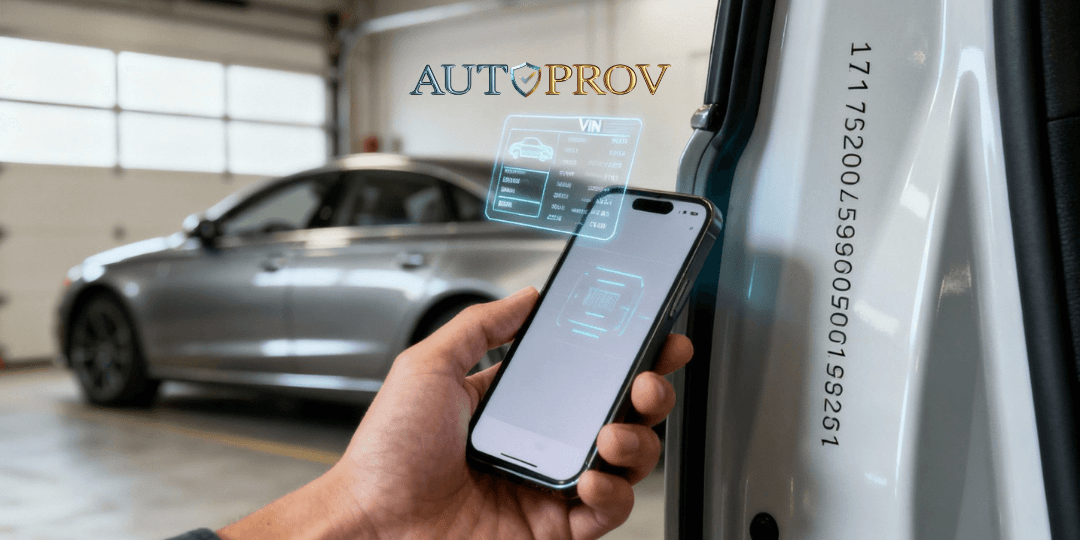
A vehicle check with vin number is easily the most important thing you can do before buying a used car. Think of it as your first line of defence—a quick, simple step that pulls back the curtain on a vehicle's past, protecting you from expensive mistakes, legal headaches, and downright dangerous cars.
Published by AutoProv
Your trusted source for vehicle intelligence