A standard history check on a motorcycle provides basic information: MOT status, tax details, and the vehicle's specification. For professionals in the motor trade, however, relying on such surface-level reports creates a significant blind spot. It is akin to purchasing a property after only viewing the brochure. A motorcycle's true value—and its inherent risks—are found in its provenance. This is the complete, unfiltered record of its operational history.
Why Standard Checks Create False Security

For a professional trader, a consumer-grade history check is insufficient. These reports are designed to identify the most obvious red flags, such as a stolen marker or an active finance agreement, but they seldom provide the context required for a sound commercial decision. The genuine risk to your margin is not just what is on the report, but what is missing between the lines.
The UK motorcycle market is also susceptible to sudden shifts that can distort a bike's apparent history. Consider the new Euro 5+ emission standards, which came into effect on 1 January 2025. This regulation triggered a 122.6% year-on-year surge in registrations in December 2024 as dealers moved to register non-compliant stock.
This rush artificially inflated 2024's figures, creating a scenario that will appear as a misleading market decline in 2025. A standard report will not explain such anomalies, potentially leading to a misinterpretation of a motorcycle's registration date or its true market value.
Gaps in Basic Vehicle Data
A basic check often fails to connect crucial data points. It might show a valid MOT, but it will not flag a pattern of recurring advisories that indicates an impending mechanical failure. This is precisely where deeper, trade-focused vehicle intelligence becomes essential for proper risk assessment.
A trader's true exposure comes from unseen risks. Provenance analysis uncovers the subtle patterns in ownership, mileage, and MOT history that basic checks overlook, turning raw data into actionable intelligence.
For an initial overview, the free government service is a reasonable starting point for basic MOT history. While useful for viewing test results and recorded mileage, it lacks the critical context of keeper changes or write-off history. It is a starting point, not a complete solution.
By aggregating data from multiple sources, platforms like AutoProv provide the clarity needed to make smarter, more profitable acquisition decisions. For a deeper analysis, our guide on the complete bike history check may be useful.
Building a Complete Provenance Picture for Any Motorcycle
Executing a professional history check on a motorcycle is more than a single-click action. It is a systematic process of gathering intelligence from several authoritative sources. A simple pass/fail summary is inadequate for a trade-level risk assessment. To fully understand a bike's history, one must construct a complete provenance picture by connecting all relevant data points.
The process begins by querying key national databases, each offering a unique perspective on the vehicle's past. Relying on only one or two sources leaves significant gaps where costly problems can hide. True expertise lies in spotting inconsistencies between data from different sources.
Core Data Sources for Motorcycle Provenance
A thorough, professional check must draw data from several non-negotiable sources. Each holds vital clues that, when pieced together, reveal the motorcycle’s true history and any potential liabilities.
To obtain the full story, it is necessary to investigate the following essential data sources. These are outlined below, along with the specific risk signals every trader should monitor.
Essential Data Sources for a Professional Motorcycle History Check
Data Source Information Provided Key Risk Signals for Traders DVLA Vehicle registration, keeper history, V5C issue dates. High number of keepers in a short period, significant gaps between owners. MOT Database Full test history, mileage at each test, failure items, advisories. Mileage discrepancies ("clocking"), recurring advisories, long periods off-road. Police National Computer (PNC) Live stolen vehicle markers against the VRM and VIN. An active stolen marker, indicating the vehicle is classified as stolen property. MIAFTR Records of insurance total loss claims (write-offs). Cat A, B, S, or N history, indicating past accident damage. Finance & Asset Registers Outstanding hire purchase (HP) or loan agreements. Active finance marker, preventing you from obtaining clean title to the vehicle. These sources form the foundation of any serious vehicle check. Neglecting any one of them invites unnecessary risk.
The most significant risks are often found not in a single data point, but in the inconsistencies between them. A sudden drop in mileage between MOTs, coinciding with a keeper change recorded by the DVLA, should be an immediate red flag requiring further investigation.
Connecting the Dots for a Clearer Picture
Real intelligence is derived from cross-referencing these datasets. For instance, a motorcycle with several short-term keepers on its DVLA record may not seem significant in isolation. However, when combined with a patchy MOT history showing long gaps or the same advisories appearing year after year, a pattern emerges—suggesting previous owners have tried to quickly offload a problematic machine.
The same logic applies to a MIAFTR entry showing a Category N write-off. This requires context. Was the repair work documented correctly? Does the subsequent MOT history show any related advisories? This level of analysis transforms raw data into a powerful tool for valuation and negotiation. The principles for building a complete picture are consistent for two- and four-wheeled vehicles, as detailed in our guide to the ultimate car provenance report.
Platforms built for the motor trade, like AutoProv, are designed to perform this analysis. By aggregating information from all critical sources and automatically flagging anomalies, these systems deliver the trade-grade intelligence required for fast, informed, and profitable buying decisions. This elevates the process from a basic history check to a full-scale risk assessment on every vehicle considered.
Decoding Write-Off Categories and Salvage History
Accurate valuation and risk assessment are impossible without a solid understanding of insurance write-off categories. A salvage marker on a history check on a motorcycle is one of the most significant factors affecting its value, but it is a mistake to assume all write-offs are equal. Understanding the distinctions is crucial for protecting your margin and separating genuine retail opportunities from hidden liabilities.
The current system of salvage categories (A, B, S, and N), in place since October 2017, replaced the old Cat C/D system. For the trade, this newer system is a significant improvement, providing a clearer indication of the damage sustained. It distinguishes unrepairable scrap from a vehicle with purely cosmetic issues that could represent profitable stock.
A proper check is a process, not a single action. It requires pulling data from the DVLA, reviewing MOT history, and querying the Police National Computer, as this workflow demonstrates.
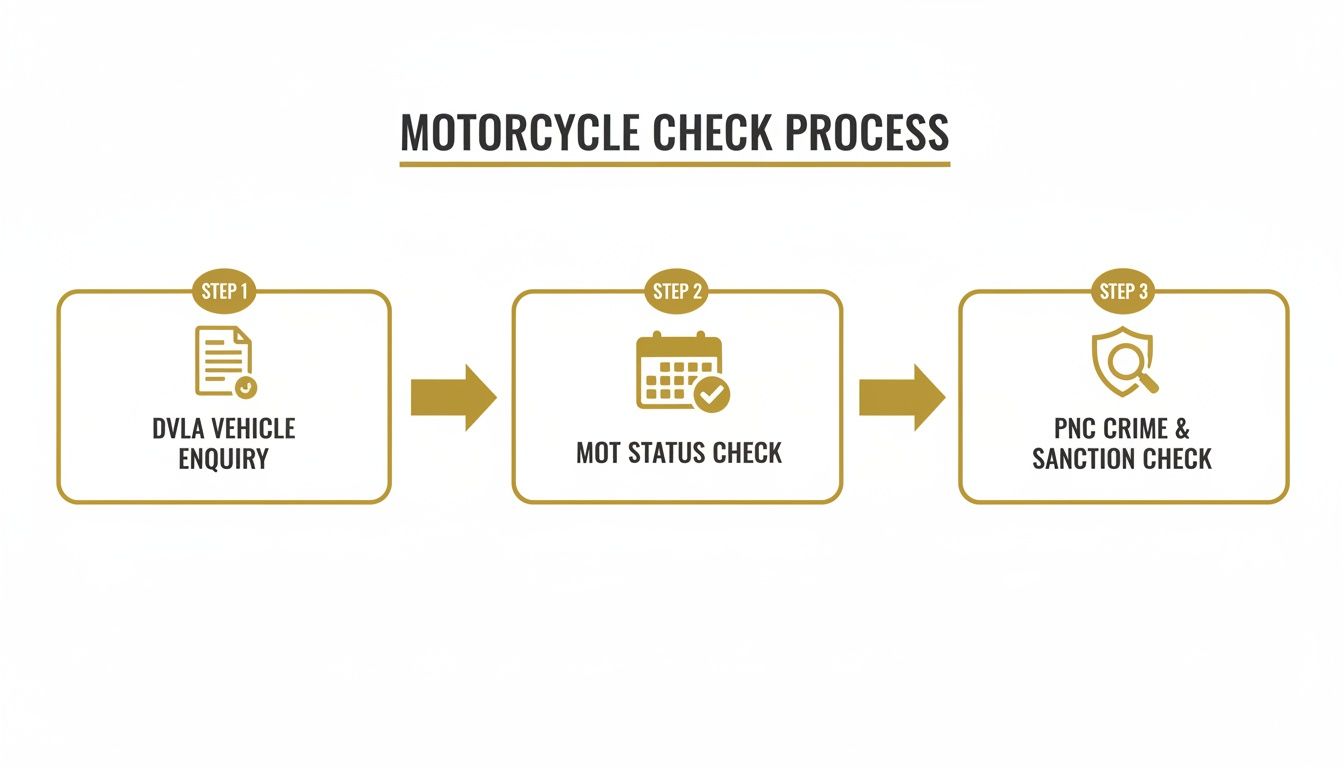
This illustrates the need to integrate critical data from different official sources to build a complete picture of a motorcycle's past before making an acquisition decision.
Understanding the Modern Salvage Categories
Each category directly impacts a motorcycle's legality, potential repair costs, and ultimate resale value. Misinterpreting this information can lead to significant financial loss or, worse, returning an unsafe machine to the road.
Here is a breakdown from a trader’s perspective:
- Category A (Scrap): This signifies the end of the vehicle's life. These motorcycles have sustained such extreme damage that they must be crushed. No parts can be salvaged or reused. They should never reappear on the market; if one does, it is a major red flag for fraud.
- Category B (Break): The motorcycle's frame or bodyshell is compromised and must be destroyed. However, other parts can be professionally removed and resold. A Cat B vehicle must never return to the road, but its components can be legally used to repair other motorcycles.
- Category S (Structural): This marker indicates that the motorcycle has sustained damage to its core structural frame or chassis. It can be professionally repaired and returned to the road, but it requires a forensic-level inspection to ensure its structural integrity is sound. A Cat S marker will always significantly reduce the vehicle's value.
- Category N (Non-Structural): In this case, the damage is cosmetic or to non-essential parts that do not affect the main structure—such as fairings, mirrors, or electronics. Often, these vehicles are written off simply because the repair cost exceeded the insurer's value threshold, not due to the severity of the damage.
For a motor trade professional, a Category N motorcycle can be a solid retail opportunity, provided the repair work is transparent and properly documented. A Category S vehicle, on the other hand, demands a much higher level of scrutiny and a significant price adjustment to account for that structural history.
Verifying the quality of repairs on any salvaged vehicle is non-negotiable. A write-off history requires full disclosure to the next buyer, and any failure to do so can lead to disputes and severe reputational damage. To better understand the legal and valuation implications, you can learn more about UK write-off categories in our detailed guide. Platforms like AutoProv pull MIAFTR data instantly, giving you immediate clarity on a bike's salvage history so you can price it accurately and avoid hidden liabilities.
Finding the Truth in MOT Histories and Mileage Patterns
The odometer reading is a cornerstone of any motorcycle's valuation, but in the motor trade, it is understood that this figure can be deceptive. A comprehensive history check on a motorcycle must go deeper than the number displayed. The real story—the one that protects your margin—is often found in the details of its MOT history.
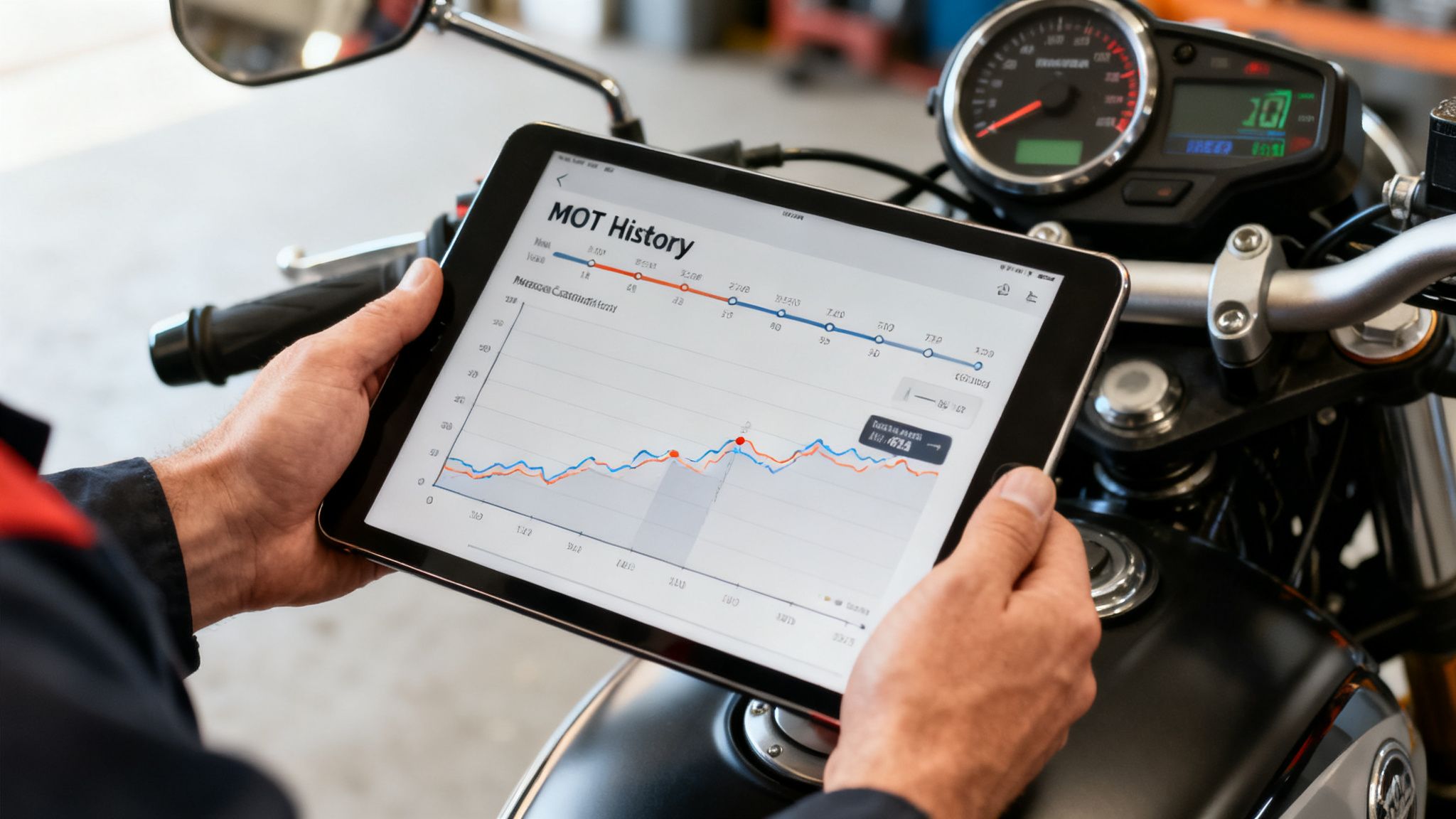
This analysis moves beyond just spotting blatant mileage rollbacks. It is about identifying the subtle patterns and inconsistencies that signal underlying issues, from mechanical neglect to potential fraud. These are the risk signals often invisible to a less experienced eye but are critical for accurate pricing and smart stock acquisition.
Beyond the Pass Certificate
An MOT pass certificate only confirms a motorcycle met the minimum legal standard on a specific day. For a trader, the real intelligence lies in the year-on-year data progression. A proper mileage check UK traders can rely on involves investigating anomalies that tell a more complex story.
There are several key patterns to investigate:
- Unusually Low Mileage Between Tests: A motorcycle that covers only a few hundred miles between annual MOTs could indicate it has been stored for a long period. This can lead to issues such as perished seals, fuel system problems, or seized components. It might also suggest a tampered odometer.
- Extended SORN Periods: Long gaps where a vehicle is declared off-road can be legitimate, but they demand scrutiny. Why was it off the road? Was it stored correctly, or left to deteriorate? This gap in its active history must be factored into your valuation.
- Recurring Advisories: This is a major indicator. A pattern of the same advisory appearing on multiple MOTs—like "slight play in head stock bearings" or "chain and sprockets worn"—is a significant red flag. It points to a persistent fault that previous owners have ignored, leaving the expense for you or your customer to resolve.
The most revealing MOT histories are not those with dramatic failures, but those with a consistent narrative of minor, unresolved issues. This pattern of neglect is a powerful indicator of the motorcycle's overall condition and the likely maintenance costs you will inherit.
Interpreting the Data for Valuation
Consider a real-world scenario. You are assessing a five-year-old sports bike that shows a consistent 3,000 miles added each year, but then the mileage drops to just 200 between its last two MOTs. In isolation, this is not conclusive proof of clocking.
However, if that drop coincides with a keeper change, it raises serious questions. It could suggest the previous owner barely used it before selling, or it could be an attempt to mask its true mileage before a sale.
This is where integrating data from a platform like AutoProv becomes essential. By cross-referencing MOT data with keeper timelines and other risk indicators, you can turn a simple mileage inconsistency into actionable intelligence. This deeper level of analysis allows you to price the vehicle accurately, factoring in potential risks and necessary investigations. To become more proficient in this area, learn more about how to view MOT history and make smarter buying decisions in our related article. This detailed approach is what separates a speculative purchase from a profitable one.
Spotting Red Flags in Ownership Timelines and Keeper Changes
The number of keepers on a V5C only tells part of the story. Any experienced trader knows the real intelligence lies not in the number of owners, but in the timeline of those changes. A proper history check on a motorcycle involves analysing the frequency and duration of ownership to identify high-risk patterns that suggest a vehicle is being passed on quickly to hide a serious fault.
This rapid resale is a classic red flag, often pointing to undisclosed mechanical issues, a hidden history, or even organised fraud. A motorcycle that has changed hands two or three times in less than a year should trigger immediate caution. One must ask: why were previous owners so keen to sell it?
In challenging economic conditions, vigilance is even more critical. In 2025, for example, the UK motorcycle market experienced a significant downturn, with new registrations falling by 18.3% due to squeezed consumer spending. In a shrinking market, a desperate seller is more likely to offload a problematic vehicle cheaply. Further data can be found on British motorcycle market trends on motorcyclesdata.com.
Cross-Referencing Keeper Dates with Vehicle Data
To mitigate these risks, it is essential to connect the dots. This means cross-referencing keeper change dates from DVLA records with other critical data points. The goal is to build a coherent timeline of the motorcycle’s life; any gaps or unusual correlations demand closer inspection.
Align the ownership timeline against these key datasets:
- MOT History: Did a keeper change occur immediately after a long list of new advisories appeared, or a major component failed its test? This could indicate the last owner received a high repair quote and chose to sell instead.
- Service Records: Are there significant gaps in the service history that coincide with a period of short-term ownership? A missing stamp might not be a forgotten service, but a deliberate omission to hide a period of neglect.
- SORN Periods: A vehicle declared SORN just before being sold could mean it was off the road with a fault, not simply stored for the winter.
A motorcycle with multiple keepers in a short period is not automatically a bad investment, but it fundamentally changes the risk profile. Each rapid change adds another layer of unknown history, increasing exposure to problems someone else has tried to conceal.
Identifying High-Risk Ownership Patterns
Suppose you are assessing a motorcycle with four previous keepers in just three years. Upon reviewing the DVLA data, you notice the last two owners each held it for less than six months. When you cross-reference this with the MOT history, you see it passed its last test with advisories for worn suspension and a worn chain.
This pattern is a clear indicator. It strongly suggests the last two owners discovered the impending repair costs and quickly sold the vehicle. Without connecting these data points, one could easily mistake it for a clean machine. For more on investigating keeper history, please see our guide on how to find previous owners of a car.
Platforms like AutoProv are designed to perform this analysis, automatically flagging short-term ownership cycles and other provenance risks. This motor trade intelligence helps you identify these red flags instantly, so you can avoid inheriting someone else’s problem and protect your bottom line.
Making Provenance Checks Part of Your Daily Operations
Understanding data is one thing; using it to create a competitive advantage is another. Integrating a comprehensive history check on a motorcycle as a non-negotiable part of your workflow is not about adding bureaucracy—it is about embedding a risk-aware mindset into every acquisition.
The objective is to move from reacting to problems to proactively avoiding them before an offer is made. Whether appraising a part-exchange or evaluating vehicles at auction, the principles are the same. A systematic approach ensures nothing is missed.
Building a Repeatable Workflow
To be effective, the process must be fast, consistent, and easy for the entire team to follow. This is not bureaucracy; it is fundamental quality control and accountability. This consistency transforms raw data into a genuine strategic asset.
A robust operational framework should include:
- Initial Digital Appraisal: Before investing further time, run the registration number through a trade-focused intelligence platform. This provides an instant snapshot of any major red flags—finance markers, stolen status, or a salvage history.
- Physical Inspection Cross-Reference: With the digital report in hand, conduct your physical inspection. If the MOT history flagged a recurring advisory on chain wear, inspect that area first. If the V5C issue date is suspiciously recent, investigate the reason.
- Escalation Protocol: Establish clear ground rules. For example, any motorcycle with a Category S history or a significant mileage discrepancy automatically gets escalated for senior review. No exceptions.
This structured approach ensures every vehicle is scrutinised through the same lens, reducing the risk of human error and maintaining a disciplined process.
By making provenance intelligence a standard part of your buying process, you shift from making educated guesses to making data-backed decisions. This discipline is what protects your bottom line in an increasingly complex and competitive market.
Ultimately, this level of diligence is not just about avoiding problematic vehicles. It is about confidently identifying good ones, pricing them with precision, and protecting your dealership's reputation with every smart purchase. The right tools make this process seamless, integrating risk assessment directly into your acquisition workflow.
Turn vehicle data into your strategic advantage. AutoProv delivers the advanced provenance intelligence and motor trade risk assessment you need to buy smarter, reduce exposure, and protect your margins. Discover the difference at https://autoprov.ai.
Frequently Asked Questions
AI-Generated Content Notice
This article was created with the assistance of artificial intelligence technology. While we strive for accuracy, the information provided should be considered for general informational purposes only and should not be relied upon as professional automotive, legal, or financial advice. We recommend verifying any information with qualified professionals or official sources before making important decisions. AutoProv accepts no liability for any consequences resulting from the use of this information.
From our AI insights
- Navigating UK Grey Imports: A Trader's Guide
Understand the complexities and opportunities of UK grey imports for savvy motor traders.
- Navigating Private Plate Challenges in UK Vehicle Checks
Learn how private plates affect UK vehicle checks and how traders verify provenance and spot cloning risks.
- Navigating VIN Checks Post-Brexit: What UK Traders Need to Know
Discover how Brexit impacts VIN checks for UK traders and the crucial data to review.
Related Articles

Essential Vehicle Checks Before Buying a Used Car
Learn essential checks to ensure your used car purchase is safe and sound in the UK market.

Why a Provenance Check is Essential for Used Car Buyers
Ensure your used car is a smart investment by understanding the importance of a provenance check and how AutoProv can help.

A Guide to Vehicle Check with VIN Number
A vehicle check with vin number is easily the most important thing you can do before buying a used car. Think of it as your first line of defence—a quick, simple step that pulls back the curtain on a vehicle's past, protecting you from expensive mistakes, legal headaches, and downright dangerous cars.
Published by AutoProv
Your trusted source for vehicle intelligence