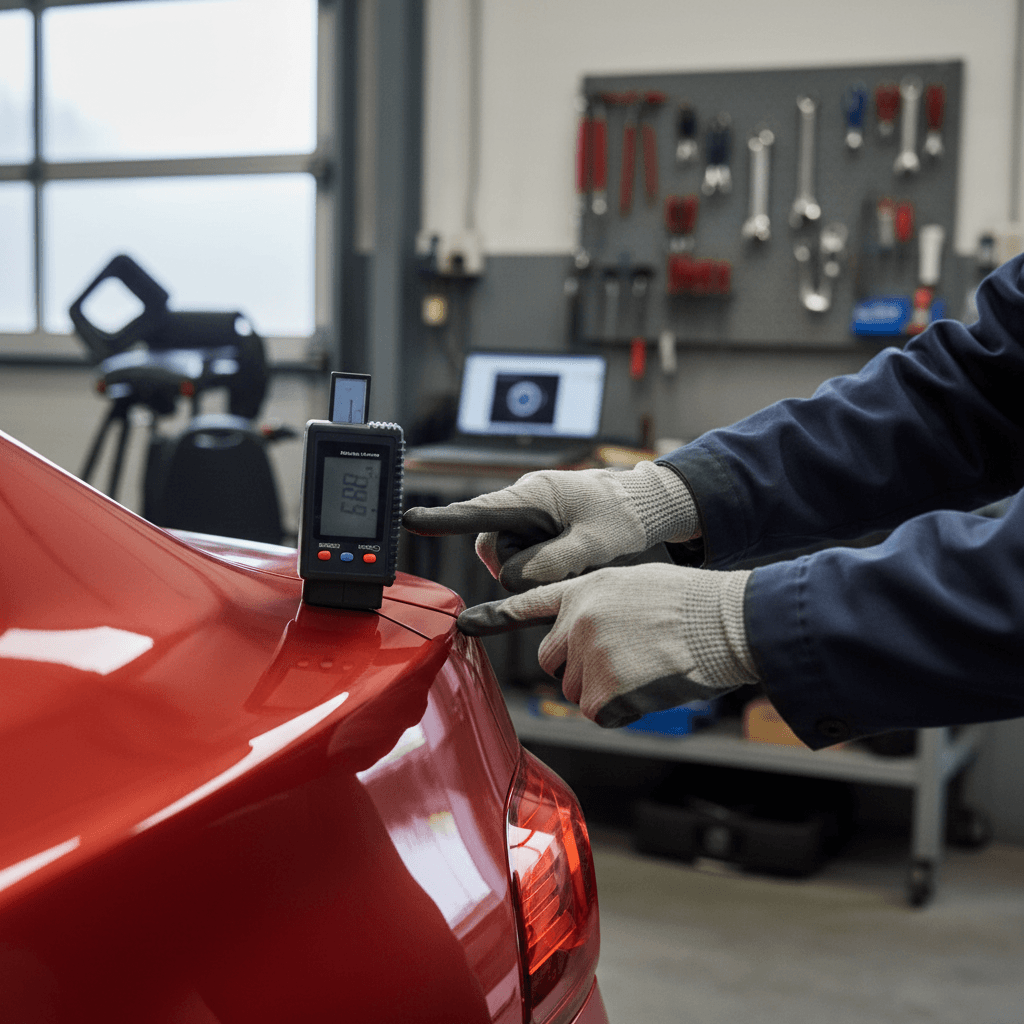
Learn how UK motor traders can identify poorly repaired Cat S and Cat N write-offs through panel alignment checks, paint depth testing, and structural inspection
By CiteFlow
Why Identifying Repaired Write-Offs Matters for Trade Buyers
Identifying poorly repaired insurance write-offs protects your dealership from warranty claims, customer disputes, and reputational damage. A vehicle declared Cat S or Cat N has sustained structural or non-structural damage significant enough for an insurer to write it off, yet many return to the market after repair. The quality of those repairs varies dramatically. Professional traders need systematic inspection methods to distinguish between properly restored vehicles and those with compromised safety, hidden damage, or substandard workmanship that will surface after sale.
The financial risk extends beyond the purchase price. A poorly repaired write-off sold to a customer can trigger rejection rights under CRA 2015 if the vehicle proves unsatisfactory or not as described. Structural repairs done incorrectly compromise occupant safety in subsequent collisions. Paint overspray, misaligned panels, and replacement parts fitted without proper calibration all indicate repair shortcuts that translate into post-sale problems. Knowing what to look for during inspection helps you avoid stock that will cost more to remedy than it generates in profit.
Understanding Cat S and Cat N write-off categories provides essential context, but this guide focuses specifically on the physical inspection techniques that reveal repair quality and hidden damage.
Step 1: Check the Vehicle's Write-Off Status Before Physical Inspection
Run a comprehensive provenance check using data from insurers, salvage databases, and the Motor Insurance Anti-Fraud and Theft Register (MIAFTR) before you physically inspect the vehicle. This establishes whether the vehicle has a recorded write-off history and identifies the category. A write-off check from sources like Experian will flag Cat S (structural damage) and Cat N (non-structural damage) markers, giving you a baseline for what damage the vehicle sustained and when.
Compare the write-off date against MOT history and service records. If a vehicle was written off in January but has MOT advisories from the previous December mentioning accident damage or structural issues, the timeline helps you understand the incident's severity. Check whether the vehicle was re-registered after repair or if it returned to the road without proper documentation. Vehicles that should have been re-inspected but were not represent significant compliance and safety risks.
Knowing the write-off category before inspection focuses your physical checks. Cat S vehicles require intensive structural examination. Cat N vehicles need careful cosmetic and mechanical review but should not exhibit chassis or structural repairs. If the provenance data shows Cat N but you find evidence of structural work, the vehicle may have been mis-categorised or the damage was more severe than recorded.
Step 2: Inspect Panel Gaps and Alignment Across the Entire Body
Panel gaps reveal repair quality immediately. Walk around the vehicle and examine the spacing between bonnet and wings, doors and sills, boot lid and rear quarters. Consistent gaps of 3-5mm indicate factory fit or professional repair. Uneven gaps, wider spacing on one side, or panels sitting proud or recessed suggest poor alignment after replacement or structural distortion that was not corrected.
Open and close each door, the bonnet, and the boot. Properly repaired vehicles close smoothly with even resistance. Doors that require lifting to close, bonnets that sit unevenly, or boot lids that do not align with the rear panel indicate structural misalignment. Check whether the door shuts align with the B-pillar striker plates. Misalignment here often means the door aperture has been pulled out of shape by chassis damage that was not fully rectified.
Pay particular attention to the front wings and rear quarters. These panels are frequently replaced after collisions. If one wing sits slightly forward or the character lines do not align perfectly with the door, the panel has been fitted incorrectly. Run your hand along the seams where panels meet. You should feel a smooth, consistent edge. Steps, ridges, or overlapping metal suggest hasty repair work.
Step 3: Use a Paint Depth Gauge to Identify Resprayed Panels
A paint depth gauge measures the thickness of paint and filler on each panel, revealing which areas have been resprayed or filled. Factory paint typically measures 90-150 microns depending on the manufacturer. Readings above 200 microns indicate respray, while readings above 300 microns suggest filler beneath the paint. Readings below 90 microns can indicate a panel has been stripped and resprayed without adequate primer or topcoat layers.
Take readings at multiple points on each panel: centre, edges, and near seams. Consistent readings across a panel suggest factory finish. Wildly varying readings (150 microns at the centre, 400 microns near the edge) indicate filler applied to smooth out dents or creases. Check both sides of the vehicle. If the nearside front wing reads 120 microns but the offside reads 380 microns, the offside has been repaired.
Compare your findings against the write-off category and recorded damage. A Cat N vehicle with heavy filler on the roof or sills raises questions, as Cat N should involve non-structural damage like bumpers, lights, or glass. Excessive filler in areas not mentioned in the insurance record suggests undisclosed damage or a more serious incident than documented.
Step 4: Examine Welds, Seams, and Structural Join Points
Factory welds are uniform, evenly spaced, and often robotically applied with consistent spot patterns. Repair welds are irregular, with varying bead sizes, discolouration from heat, and gaps between spots. Inspect the inner wings, chassis rails, and bulkhead areas visible when you open the bonnet. Look for fresh welds, grinder marks, or areas where paint has been burned away by welding heat.
Check the door shuts, sill covers, and boot floor. Remove any plastic trim or carpet that covers structural seams. Factory seams are sealed with a consistent bead of seam sealer that is painted over. Repair seams often show fresh sealer applied over paint, or gaps where sealer was not reapplied after welding. If you see bare metal, surface rust, or primer without topcoat in these areas, the repair was incomplete.
Cat S vehicles will have structural repairs by definition. The question is whether those repairs were done to manufacturer specifications with proper jigs, alignment equipment, and certified welding. Evidence of cut-and-shut repairs (where two damaged vehicles are welded together) includes mismatched VIN plates, different paint shades between front and rear sections, and abrupt changes in corrosion patterns. Spotting cut-and-shut vehicles requires careful examination of these join points.
Step 5: Check for Paint Overspray and Masking Errors
Paint overspray is one of the clearest indicators of hasty repair work. Inspect rubber seals around doors, windows, and the boot. Factory paint stops cleanly at these seals. Overspray appears as a fine mist of paint on black rubber, plastic trim, or glass edges. Check the door shuts, under the bonnet, and inside the boot. If body-colour paint appears on areas that should be black or grey, the vehicle was resprayed without proper masking.
Examine the headlights, tail lights, and window glass. Paint on the lens edges or glass seals indicates the lights were not removed before spraying. Professional repairers remove lights and trim; budget repairers mask around them. Look at the wheel arches and underseal. Fresh underseal sprayed over body-colour paint suggests someone tried to hide poor preparation or rust.
Colour match is another tell. Stand back and look at the vehicle in natural light. Panels that do not quite match the rest of the car, particularly metallic or pearlescent colours, reveal resprays. Bonnets, doors, or wings that are slightly lighter or darker than adjacent panels indicate the paint was mixed incorrectly or has faded differently because it is newer.
Step 6: Inspect the Chassis and Subframes for Damage or Distortion
Get the vehicle on a ramp or inspection pit. Examine the chassis rails, subframes, and suspension mounting points for signs of impact damage, bending, or repair. Factory chassis rails are straight, symmetrical, and free from creases or ripples. Bent rails show visible kinks, compression folds, or areas where the metal has buckled.
Compare both sides of the vehicle. Chassis rails, subframes, and suspension turrets should be mirror images. If one side shows fresh paint, welding, or straightening marks while the other is original, the vehicle has sustained structural damage. Check for evidence of heat straightening: discoloured metal, warped surfaces, or areas where the paint has bubbled from excessive heat.
Look at the suspension mounting points and subframe bolts. If bolts are rounded, scratched, or show fresh tool marks, the subframe has been removed and refitted, likely as part of structural repair. Check for cracks around mounting points, particularly on older vehicles where metal fatigue can develop after impact. Cat S write-offs require this level of structural scrutiny because the damage by definition involved the vehicle's structural integrity.
Step 7: Test-Drive the Vehicle and Monitor Handling Characteristics
Poorly repaired write-offs often drive differently from factory-standard vehicles. During the test drive, monitor steering pull, vibration, and tracking. If the vehicle pulls to one side under braking or acceleration, the chassis may be misaligned or suspension geometry was not reset after repair. Vibration through the steering wheel at motorway speeds can indicate wheels that cannot be balanced properly due to bent hubs or suspension arms.
Listen for unusual noises: clunks from suspension, creaks from body flex, or rattles from poorly fitted trim. A vehicle that feels loose or exhibits excessive body roll may have weakened structural joints. Test the brakes hard from speed. If the vehicle pulls sharply or the ABS activates unevenly, brake components may have been replaced without proper calibration.
Check whether electronic systems function correctly. Modern vehicles rely on sensors for stability control, lane assist, and automatic braking. If these systems were not recalibrated after structural repair, they may not function as intended. Warning lights on the dashboard, particularly for airbags, ABS, or stability control, suggest systems that were not properly reconnected or calibrated post-repair.
Step 8: Review MOT History for Advisories Related to Accident Damage
MOT history provides a timeline of the vehicle's condition and can reveal when damage occurred or repairs were carried out. Access the full MOT record from DVSA data and look for advisories mentioning accident damage, structural corrosion, or welding repairs. If an MOT from two years ago notes "offside front suspension arm corroded" but the current inspection shows fresh paint and new components, the vehicle likely sustained damage between those dates.
Check for patterns in advisories. Repeated mentions of alignment issues, uneven tyre wear, or suspension problems suggest underlying structural damage that was never fully corrected. Compare mileage progression against the write-off date. If the vehicle was written off at 45,000 miles but the next MOT shows 46,000 miles with no advisories, the repairer may have rushed it through testing without addressing all issues.
Advisories about welding repairs, corrosion near structural seams, or filler are particularly significant. These indicate the MOT tester noticed repair work and flagged it for attention. If subsequent MOTs continue to mention the same issues, the repairs were inadequate. Spotting clocked mileage using MOT data also applies here, as write-offs are sometimes clocked to disguise the timeline of damage.
Step 9: Verify That Safety-Critical Systems Were Recalibrated After Repair
Modern vehicles with ADAS (Advanced Driver Assistance Systems) require recalibration after structural repair or windscreen replacement. Systems like lane-keeping assist, adaptive cruise control, and automatic emergency braking rely on cameras and sensors mounted in precise positions. If these were disturbed during repair, they must be recalibrated using manufacturer-specific equipment.
Ask for evidence of recalibration. Professional repairers provide certification from the manufacturer or an approved calibration centre. If the seller cannot produce this documentation, the systems may not function correctly. Test the systems during your drive: does the lane-keeping assist work smoothly, or does it ping-pong between lane markings? Does the adaptive cruise maintain safe distances?
Check the airbag system thoroughly. If the vehicle was in a collision severe enough to warrant a write-off, airbags may have deployed. Replacement airbags must be genuine manufacturer parts, and the system must be reset using diagnostic equipment. Warning lights, non-genuine airbag covers, or missing airbag labels suggest substandard repairs. This is a critical safety issue and a potential CRA 2015 breach if the vehicle is sold without disclosure.
Common Red Flags That Indicate Poor Write-Off Repairs
Several indicators collectively suggest a vehicle was repaired to a budget rather than to standard. Mismatched tyres (different brands or tread patterns on the same axle) indicate components were replaced cheaply. Aftermarket parts, particularly lights, bumpers, or grilles, suggest the repairer prioritised cost over quality. Check for non-OEM parts by comparing part numbers and manufacturer logos.
Fresh underseal or stone-chip protection applied liberally over entire sections of the underside often hides poor metalwork or rust. Reputable bodyshops apply underseal selectively; budget repairers spray it everywhere to conceal sins. Similarly, excessive use of seam sealer or filler in areas that should be bare metal suggests someone tried to hide poor panel fit or gaps.
Documentation gaps are another red flag. If the vehicle has no receipts for repair work, no calibration certificates, and no record of parts used, the repair was likely done off-the-books or by a non-approved repairer. Vehicles repaired through insurance-approved networks come with documentation. Private repairs rarely do, and that lack of traceability creates risk.
How AutoProv Provenance Checks Support Write-Off Identification
AutoProv aggregates write-off data from multiple sources including Experian, MIAFTR, and salvage databases, providing a complete picture of a vehicle's insurance history. The platform flags Cat S and Cat N write-offs and cross-references them against MOT history, mileage records, and keeper changes to help you identify inconsistencies or undisclosed damage.
Combining provenance data with physical inspection creates a robust due diligence process. The digital record tells you what happened and when; your inspection reveals whether repairs were completed properly. AutoProv reports also include up to £50,000 Experian indemnity, providing financial protection if a write-off marker was missed in the data. This layered approach reduces the risk of buying vehicles with hidden history or substandard repairs.
For trade buyers working at pace, particularly at auctions or remote appraisals, having instant access to write-off status before you commit to a purchase is essential. AutoProv delivers that intelligence in seconds, allowing you to focus your physical inspection on the areas most likely to reveal problems.
FAQs
Can a Cat S vehicle ever be as good as an undamaged one?
Yes, if repaired by a manufacturer-approved bodyshop using OEM parts, proper jigs, and full recalibration of safety systems. However, most Cat S vehicles are repaired to a budget, and even professional repairs can leave residual issues with alignment, corrosion protection, or long-term structural integrity. The key is verifying repair quality through documentation and thorough physical inspection.
What is the biggest giveaway of a poorly repaired write-off?
Panel alignment and paint depth inconsistencies are the most immediate indicators. If gaps are uneven, panels sit proud or recessed, and paint depth readings vary wildly across the vehicle, the repair was done hastily. These issues are visible within minutes and indicate deeper structural or cosmetic problems.
Should I avoid all Cat S and Cat N vehicles as trade stock?
Not necessarily. Well-repaired Cat N vehicles can be profitable stock if priced correctly and disclosed transparently to customers. Cat S vehicles carry more risk but can work for specific buyers who understand the history. The critical factor is knowing exactly what you are buying, verifying repair quality, and pricing the vehicle to reflect its history and any remaining issues.
How do I explain write-off history to a customer without losing the sale?
Be transparent and factual. Explain what the category means, what damage occurred, and what repairs were carried out. Provide documentation if available. Emphasise that the vehicle has been inspected, is priced accordingly, and comes with the same warranty as other stock. Customers appreciate honesty, and transparency reduces the risk of disputes under CRA 2015.
Can AutoProv identify write-offs that are not on the insurance databases?
AutoProv aggregates data from all major UK sources, but some write-offs, particularly older ones or those handled privately without insurance involvement, may not appear on any database. This is why combining digital checks with physical inspection is essential. No database is exhaustive, but AutoProv provides the most comprehensive trade-level intelligence available.
Frequently Asked Questions
AI-Generated Content Notice
This article was created with the assistance of artificial intelligence technology. While we strive for accuracy, the information provided should be considered for general informational purposes only and should not be relied upon as professional automotive, legal, or financial advice. We recommend verifying any information with qualified professionals or official sources before making important decisions. AutoProv accepts no liability for any consequences resulting from the use of this information.
From our AI insights
- Detecting Poor Repairs in Cat S & N Cars: A Pro's Guide
Learn how UK traders can spot poor repairs in Cat S & N write-offs with these expert techniques.
- Spotting Insurance Frauds: Key Indicators UK Dealers Need
Learn to identify insurance frauds with key risk indicators using AutoProv.
- Navigating Insurance Write-Offs in 2024: What UK Traders Need to Know
Explore how UK traders can navigate insurance write-offs using provenance intelligence in 2024.
Related Articles

Understanding UK Car Insurance: Types and Legalities
Explore the UK car insurance sector, types of coverage, and the legal implications of incorrect coverage.

How to Check If a Car Is Insured in the UK | Easy Guide
The quickest and most reliable way to check if a car is insured is by using the Motor Insurance Database (MID) online. All it takes is the vehicle's registration number to see if a valid insurance policy is on record. Remember, driving without at least third-party insurance is a serious offence here in the UK.

Hit by an uninsured driver: UK accident rights & claim guide
Being hit by an uninsured driver is a deeply frustrating experience. The shock of the accident is bad enough, but finding out the other party has no insurance just adds a whole new layer of stress and confusion. Suddenly, the straightforward path to getting your car fixed seems to vanish. This guide is here to cut through that noise and show you that you're not out of options.
Published by AutoProv
Your trusted source for vehicle intelligence