
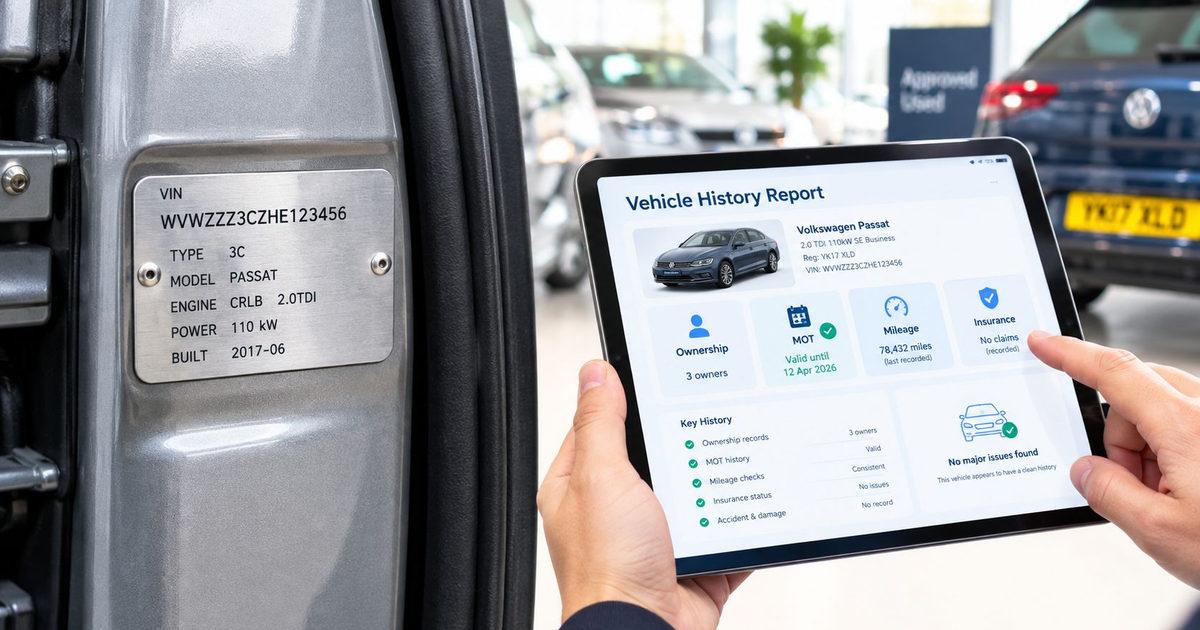
A vehicle arrives at the auction looking right, the seller's description is tidy, and the initial finance and theft checks return nothing alarming. The VIN is entered into a report, the screen shows a plausible identity, and the buying decision starts to feel routine. That's precisely when experienced trade buyers slow down. A clean-looking result can still conceal a mileage reversal, a short ownership cycle, an altered VIN, or a history that doesn't fit the physical car.
A vehicle history report VIN lookup should therefore be treated as a point-of-decision risk assessment, not an administrative tick box. The useful question isn't whether the database returns a problem. It's whether the vehicle's identity, recorded history, mileage progression, ownership pattern and physical condition tell a consistent story.
Table of Contents
- Why a VIN Vehicle History Report Matters at Point of Purchase
- The cost of buying on a partial story
- History data and mechanical condition answer different questions
- Finding and Validating the VIN Before You Pay for Data
- A physical VIN validation routine
- When not to spend more time on the vehicle
- How to Obtain a Vehicle History Report Using the VIN in the UK
- Sequence the checks around the buying decision
- What each source can and cannot prove
- Reading the Report and What Each Data Field Really Means
- Read fields as signals, not verdicts
- Ownership duration changes the question
- Spotting Mileage Discrepancies and Ownership Anomalies With Context
- What the UK data tells a buyer
- Distinguish a data problem from a vehicle problem
- Making Smarter Trade Buying Decisions With Provenance Intelligence
- Apply the evidence to stock decisions
Why a VIN Vehicle History Report Matters at Point of Purchase
A dealer rarely loses money because a VIN is difficult to type into a search box. Losses usually arise when a buyer accepts one clean signal as proof that the whole vehicle is clean. A car can pass a basic check and still require a valuation adjustment, further evidence, or a physical inspection before capital is committed.
The VIN connects the vehicle to records, but records are snapshots. A standard report may identify recorded finance, theft, write-off or mileage events, while a visual inspection may reveal repairs, wear or identity concerns that no database can see. A vehicle history check UK process works best when both forms of evidence are used together, rather than treating either one as complete.
Practical rule: A report should change what you ask, inspect and pay. It shouldn't replace those decisions.
The cost of buying on a partial story
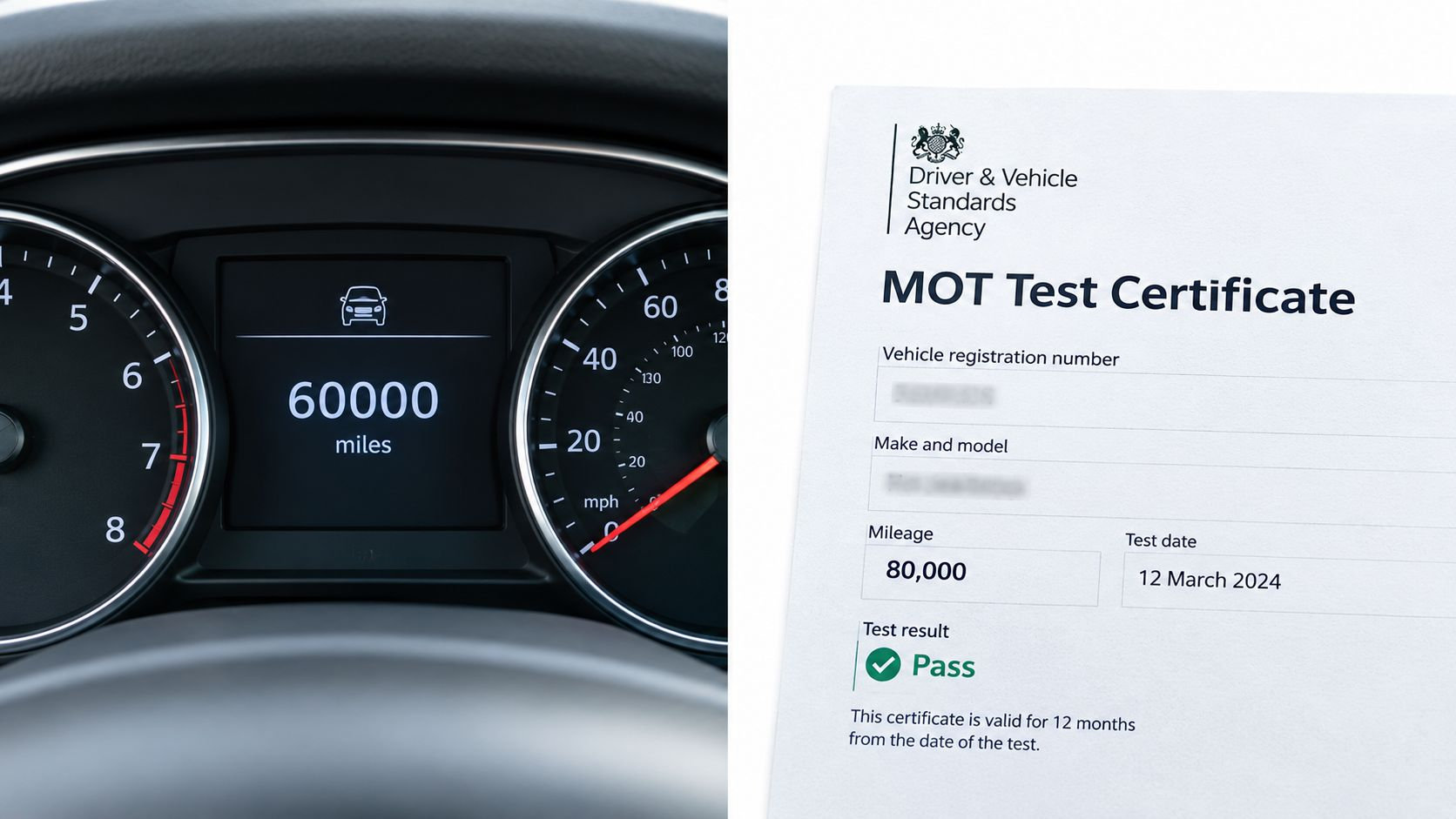
Consider a common trade scenario. A vehicle has an attractive age-to-mileage ratio and no obvious marker on a first-pass lookup. The seller presents a V5C, the registration matches the advert, and the car starts and drives normally. A closer review of the MOT sequence then reveals that a later recorded mileage is lower than an earlier one.
That downward step doesn't prove fraud by itself. It does prove that the vehicle needs reconciliation before you value it as clean stock. You may need service invoices, a corrected test record, prior adverts or a physical assessment of wear. Without that work, the buyer is pricing the seller's narrative rather than the vehicle's evidenced provenance.
A used car history report also supports compliance and post-sale defensibility. If a customer later challenges the mileage or ownership description, a dated record of the checks completed at acquisition is more useful than a vague recollection that “the car came back clear”. Good dealer vehicle checks create an audit trail for the buying decision.
History data and mechanical condition answer different questions
A history check can show recorded past events, such as finance, theft, write-off or mileage information, but it can't assess the vehicle's current mechanical condition. Conversely, a mechanical inspection can identify faults in the car today, yet it can't reveal finance, stolen status, write-off history, mileage discrepancies or ownership patterns, as explained in this comparison of vehicle history checks and mechanical inspections.
That distinction matters at the point of purchase. A clean mechanical inspection doesn't cure an identity concern, and a clean database result doesn't confirm the condition of the engine, gearbox, suspension or safety systems. For a broader explanation of why the identifier matters, see what a VIN is and how it identifies a vehicle.
The trade buyer's objective is consistency. The VIN should identify the same vehicle shown on the paperwork. The history should support the seller's account. The mileage should progress logically. The physical car should look consistent with the recorded use. Where those strands diverge, the decision should become more cautious, not more optimistic.
Finding and Validating the VIN Before You Pay for Data
The first VIN check happens before the paid report. Start with the vehicle itself, not the seller's message, auction description or copied advert. A report built from a mistyped or substituted VIN can be perfectly accurate about the wrong vehicle.
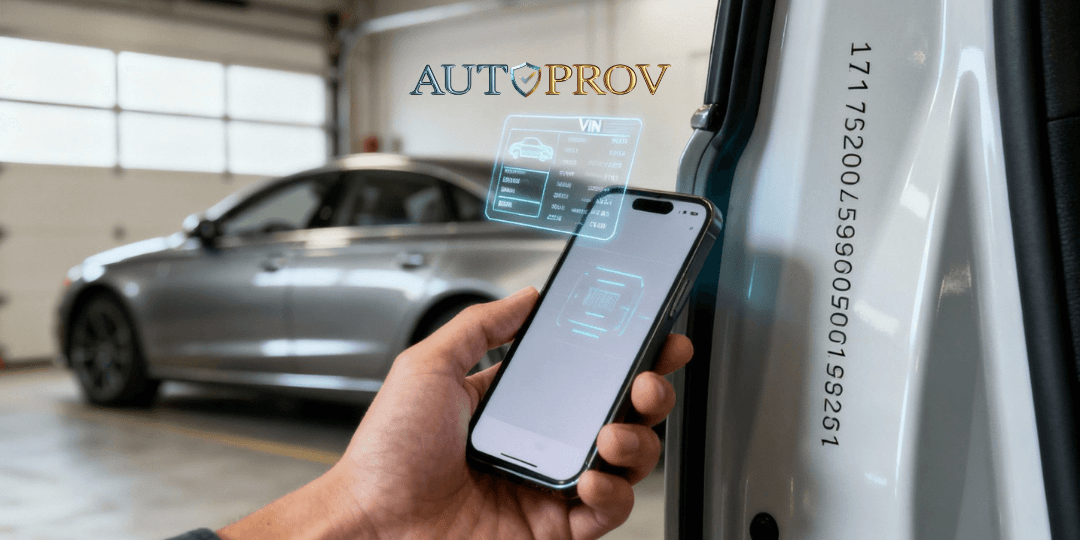
Look for the VIN in the visible dashboard area, the driver's door or door pillar, and the manufacturer's stamped or labelled locations. Exact positions vary by make and model, so use the manufacturer's documentation where necessary. The key is to compare every visible identifier, not to rely on a single plate that could have been replaced.
A physical VIN validation routine
Work through the identity evidence in a consistent order:
- Read the VIN directly from the car: Record it yourself where possible. Don't accept a photograph or typed number as the primary source.
- Compare visible locations: Characters should align across dashboard labels, door-area markings and stamped chassis locations. Look for disturbed fasteners, uneven paint, fresh adhesive, damaged surrounding metal or inconsistent type.
- Match the V5C: The VIN on the vehicle should match the V5C, registration and basic vehicle description. A mismatch is a stop signal until properly explained and verified.
- Check the presentation: Missing documents, limited keys, a seller who can't provide identification or proof of ownership, and a price that sits conspicuously below comparable stock all deserve scrutiny. RAC guidance identifies these as relevant cloning warning signs, alongside inconsistent VINs.
- Separate identity from ownership: The V5C records the registered keeper. It isn't proof of legal ownership, so the seller should still be able to explain their authority to sell and provide coherent supporting evidence.
A cloned vehicle is a stolen vehicle given a false identity. That means a clean database result can relate to the identity being copied rather than the physical vehicle in front of you. Avon and Somerset Police warned in September 2026 about increased cloned vehicles being seized, and BBC reporting on that warning highlighted low prices, missing V5C documents, limited keys and sellers unable to provide ID or ownership evidence as red flags. These points are covered in guidance on identifying car cloning risks.
When not to spend more time on the vehicle
Don't pay for enhanced data to rationalise a physical mismatch. If the VINs don't align, the stamped area looks interfered with, or the seller's identity and paperwork don't make sense, escalate to an appropriate verification process or walk away. The report is a supporting layer. It isn't a substitute for establishing that the vehicle being sold is the vehicle represented.
Use where to find the VIN number on a vehicle as a reference when a location isn't immediately obvious. The practical discipline is simple: validate the physical identity first, then use the VIN to interrogate the records attached to that identity.
How to Obtain a Vehicle History Report Using the VIN in the UK
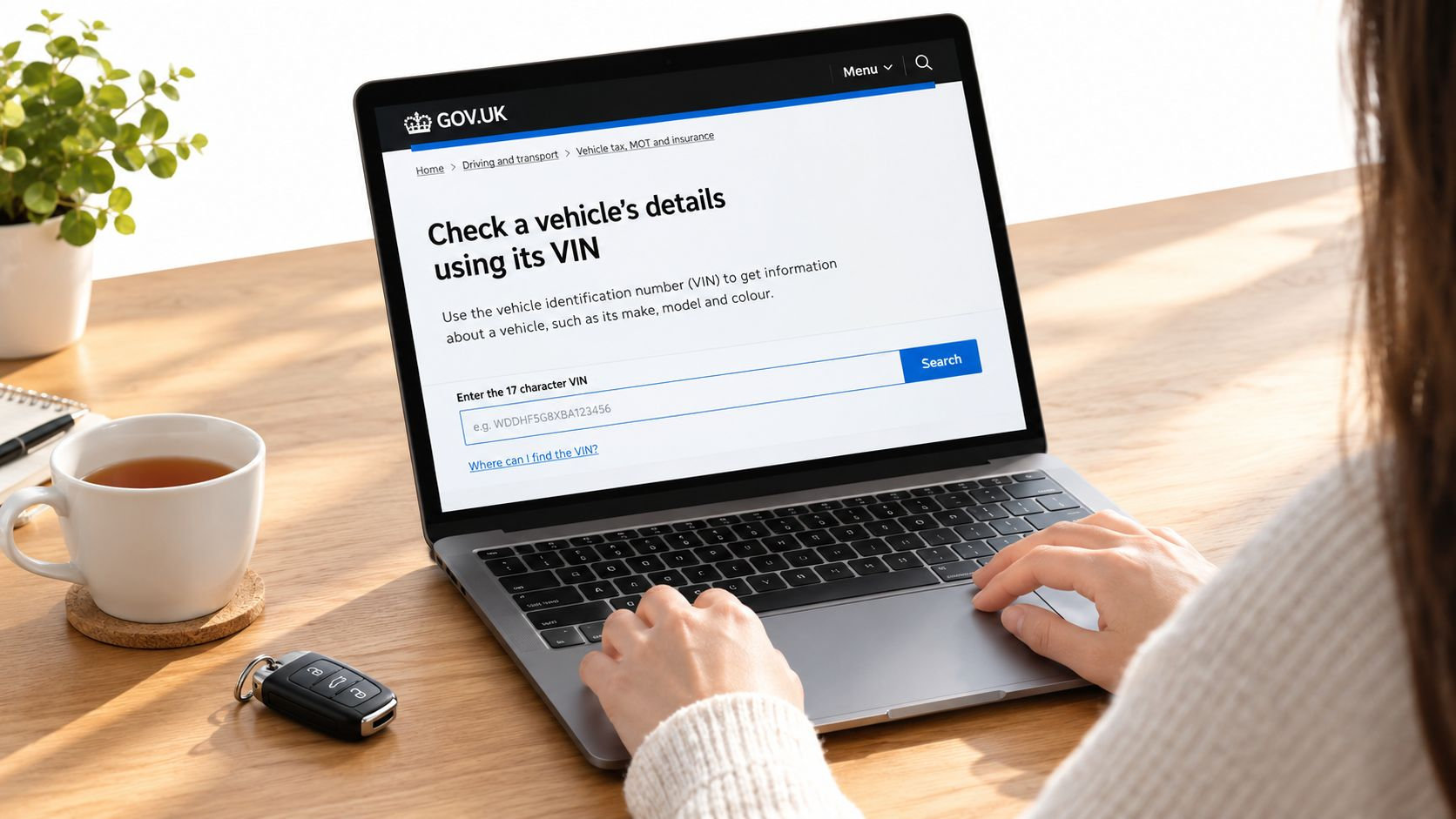
The efficient workflow begins with the registration, then uses the VIN to deepen the picture. UK buyers can access the official MOT trail through GOV.UK by entering the registration. The record shows each test result and the mileage recorded at that test, along with failures and advisories.
Start there because it is quick, authoritative and useful for spotting the shape of the mileage timeline. Review the entries in date order rather than reading only the latest result. A pass confirms a test outcome at that time. It doesn't confirm finance status, ownership stability, current condition or the absence of an odometer issue between test dates.
Sequence the checks around the buying decision
At the forecourt, auction or appraisal desk, use the registration and VIN together:
- Confirm the input: Check every character and make sure the registration belongs to the vehicle being inspected. Plate changes, imports and registration history can create apparent mismatches that need investigation.
- Read the official MOT trail: Review mileage at every available test, pass or fail outcomes, failure reasons and advisories. Note anything that changes how you would inspect or price the vehicle.
- Run an enhanced provenance report: Use VIN and registration-based data to examine recorded finance, theft, write-off, scrapped markers, ownership information, insurance-related events and mileage progression where available.
- Cross-reference the seller's evidence: Compare the report with the V5C, service invoices, repair records, key count, prior adverts and the car's visible wear.
- Save the decision record: Keep the report date, vehicle identifier and material findings with the acquisition file. A current result is evidence of what was checked at the time, not a permanent statement about the vehicle.
A basic DVLA or MOT-style check has important blind spots for dealer risk management. It doesn't show outstanding finance, insurance write-off status, keeper duration or scrapped markers, and it provides only one recorded mileage reading per MOT. Mileage tampering between annual tests can therefore remain invisible in that snapshot, as set out in this explanation of vehicle risk assessment limitations.
What each source can and cannot prove
GOV.UK's MOT record is valuable for test and mileage history, but it isn't a complete provenance file. An enhanced report brings additional datasets into the buying conversation, yet it still depends on recorded events and should be interpreted alongside physical evidence. A service invoice may show work completed, but it can contain a transcription error or relate to a vehicle with a similar registration if the invoice isn't checked carefully.
The right sequence reduces wasted spend. Use the free official trail to identify obvious questions, then obtain deeper trade vehicle intelligence for stock that remains commercially viable. Businesses integrating data into internal workflows can also review the DVLA vehicle check API, provided the implementation preserves input accuracy and a clear record of the decision made.
Reading the Report and What Each Data Field Really Means
A report is useful only when the buyer understands the difference between a fact, a signal and a conclusion. “Two previous keepers” is a fact recorded in a source. “Stable private use” might be an interpretation. “Low risk” is a decision that should reflect all available evidence, not one field.
Ownership deserves particular care. The V5C is a registered keeper document, not proof of legal ownership. It shows current and previous keeper information, which limits its usefulness for cars with three or more owners, and online checks can't identify those individuals because of UK data privacy restrictions, as described in this guidance on how many owners a car has had.
Read fields as signals, not verdicts
Data Field What It Shows Trade Risk Signal VIN and vehicle identity The identifier and recorded specification linked to the vehicle Any mismatch with the physical car, V5C or visible specification requires escalation Finance and theft records Recorded financial interests or theft-related markers A live marker can affect whether the vehicle is suitable for acquisition Write-off and insurance events Recorded insurance-related damage or status information Assess the event alongside repair evidence, condition and intended resale MOT results and advisories Test outcomes, recorded mileage, failures and advisory items Repeated advisories or a pattern of deterioration can affect preparation cost Mileage progression Recorded mileage points over time A downward step, reset or implausible sequence requires reconciliation Keeper timeline Recorded keeper changes and durations where available Short ownership or rapid resale can indicate unresolved issues, although it isn't proof of wrongdoing Scrapped markers A recorded indication that the vehicle has been scrapped Treat as a serious identity and viability issue until verified Service evidence Recorded maintenance activity or supplied invoices Missing evidence isn't automatic proof of neglect, but it weakens confidence in valuation
Ownership duration changes the question
A high keeper count isn't automatically negative. Older vehicles naturally change hands, while a newer vehicle passing through several short periods of ownership raises a different question: why did each keeper move it on? The answer could be a change of circumstances, a failed purchase, a dealer transaction or an unresolved fault. The report can't provide the entire explanation, so the buyer should seek supporting evidence.
Rapid resale patterns matter because they can expose a trader to a problem that has already travelled through the market. Look for alignment between the ownership timeline, MOT advisories, service records and the seller's account. If the vehicle has been acquired and offered again quickly, the buyer needs to know whether it was inspected, repaired, rejected or moved on.
A pass result describes the test. It doesn't describe the commercial risk of the vehicle.
An insurance or write-off marker needs the same measured treatment. The field may alter retailability, preparation requirements and pricing, but the report won't replace a repair-quality assessment. Conversely, a car with no such marker may still have unrepaired mechanical faults or unreported damage.
Spotting Mileage Discrepancies and Ownership Anomalies With Context
Mileage is one of the strongest integrity signals in a UK vehicle history workflow, but it's also one of the easiest to misread. A recorded mileage that moves backwards deserves immediate attention. It doesn't, on its own, establish who altered the odometer or when the change occurred.
Use the official MOT trail as the backbone. GOV.UK publishes each test's pass or fail result and recorded mileage, while RAC's practical process is to enter the registration, open the MOT record, and review mileage, failure reasons and advisories at each test. A downward step between tests is the clearest initial anomaly because recorded use should ordinarily progress forward.
What the UK data tells a buyer
A large UK MOT-record analysis covering 62.7 million vehicles found that 3.42 million vehicles, or 5.45% of the dataset, showed a mileage reduction between MOT tests after data anomalies were removed. The same analysis estimated that affected vehicles were clocked by an average of 46,089 miles, and reported that average annual mileage fell from 7,883 miles in 2007 to 7,262 miles in 2019, a 7.8% decline over 12 years (Total Car Check analysis of MOT records).
A separate recent UK sample reported that 1.2% of vehicles with a full MOT record had odometer readings that went backwards, with a median drop of 16,634 miles, according to the referenced UK mileage-check guidance. The figures come from different datasets and methods, so they shouldn't be treated as interchangeable market rates. They do establish why mileage screening belongs in routine mileage check UK buying practice.
Distinguish a data problem from a vehicle problem
Check the surrounding evidence before assigning fraud risk:
- A single low entry: Ask whether the MOT record was corrected, entered incorrectly or linked to a genuine administrative error.
- A repeated downward pattern: Treat multiple reversals or a reset followed by unusually low readings as materially stronger evidence of an integrity issue.
- Mixed miles and kilometres: Confirm the unit used by the garage, dashboard and service record. A unit mismatch can create an apparent discrepancy without an actual rollback.
- A mileage gap: Investigate it, but don't call it fraud automatically. A missing MOT year can reflect off-road status or an exemption, and mileage records aren't compulsory.
- Wear mismatch: Compare steering wheel, pedals, driver's seat, tyres and suspension wear with the stated mileage. Physical wear can support or challenge the recorded timeline.
- Document mismatch: Compare service invoices, prior adverts and repair records. One inconsistent document may be a clerical error, while several independent mismatches form a pattern.
HPI-referenced UK figures reported 836,214 confirmed discrepancy cases in 2019, an 8.99% hit rate, compared with 607,981 cases and a 7.35% hit rate in 2018. The same reporting described the risk as roughly one in 11 vehicles checked, compared with one in 20 in 2014, in this account of fraud detection in vehicle history data.
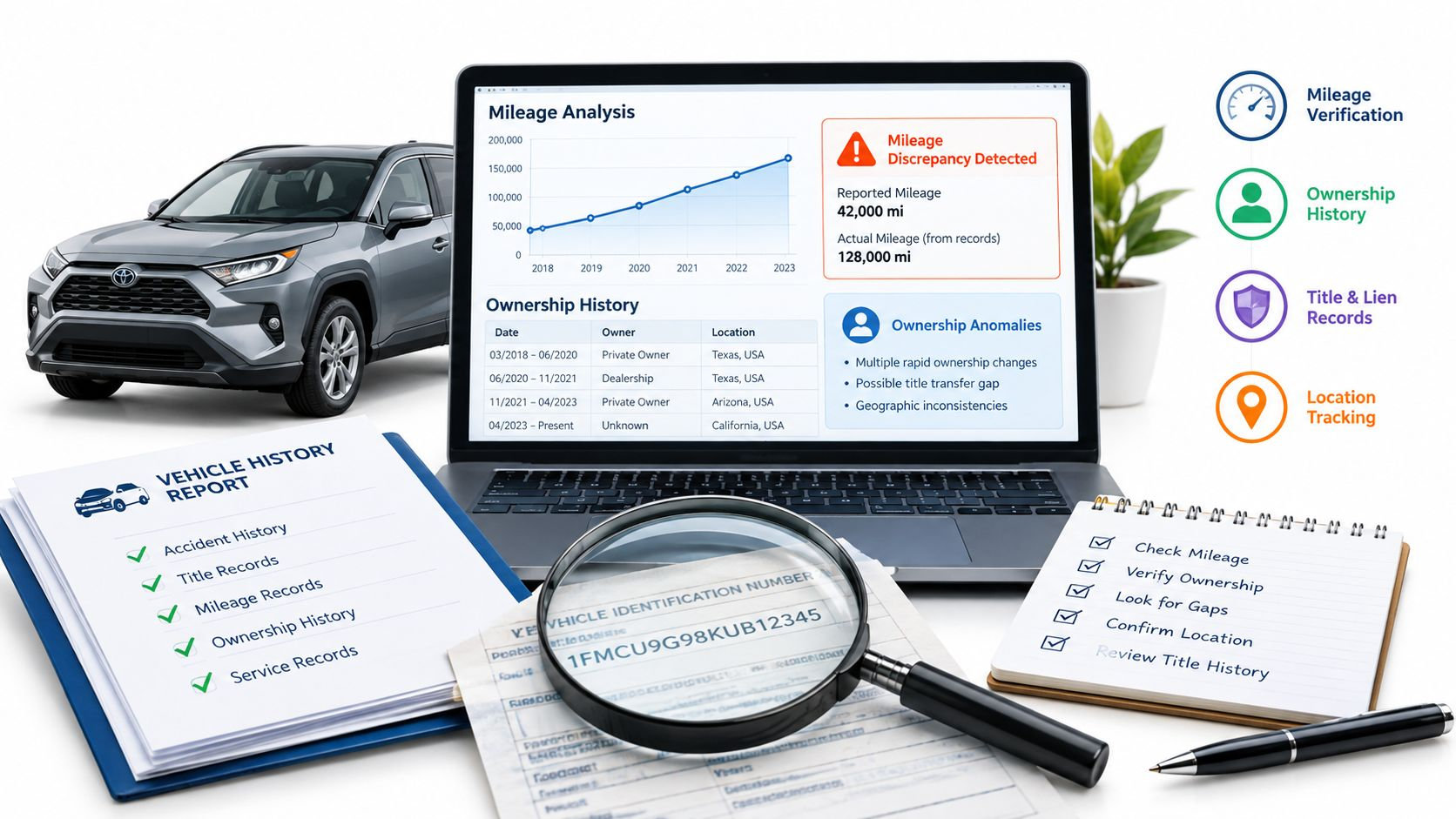
That concentration makes the mileage trail a high-yield filter, but not a standalone decision rule. A vehicle can appear clear on finance or stolen checks and still carry an odometer anomaly. Use the evidence to decide whether to verify, revalue, negotiate, inspect further or decline. For a practical lookup process, see how to check the mileage on a car.
Making Smarter Trade Buying Decisions With Provenance Intelligence
The useful end state is not a report sitting in an inbox. It is a repeatable acquisition routine that puts evidence in front of the buyer before the bid, purchase, or part-exchange valuation is finalised.
For each vehicle, hold a minimum record that includes physical VIN validation, registration match, official MOT sequence, enhanced history findings, ownership context, and any unresolved questions. Give the buyer authority to pause the deal when the evidence does not reconcile. That governance stops auction pressure or forecourt urgency from overriding clear risk signals.
A vehicle history check is also not a mechanical inspection. Keep the two workstreams separate, then combine them at valuation. A mileage concern may justify a lower bid or more paperwork. A strong history with poor current condition may mean extra preparation cost. A physical identity concern may end the transaction, whatever the apparent margin.
Apply the evidence to stock decisions
Use provenance intelligence at three decision points:
- Acquisition: Decide whether the vehicle fits your risk appetite before funds are committed.
- Valuation: Adjust the bid or part-exchange offer for documented uncertainty, preparation needs, and resale limits.
- Compliance and handover: Keep the checks and explanations that support an accurate description for the next buyer.
Incomplete data should not be forced into a pass or fail label. GOV.UK states that mileage records are not compulsory, and gaps can arise when garages do not submit data or when an owner leaves mileage blank on the V5C during a keeper change. An incomplete progression can therefore happen without deliberate fraud, which is why the difference between a provenance check and a full provenance report matters when the vehicle's story needs context.
AutoProv provides UK-focused vehicle provenance and risk intelligence for dealers, motor traders and wholesalers. It combines records such as MOT history, mileage progression, ownership timelines and insurance-related events to support point-of-decision review. Use it as one part of a controlled workflow, alongside physical VIN inspection, paperwork checks and mechanical assessment.
The practical mindset is to buy the evidence, not the explanation. If identity, records, mileage, ownership and condition align, the buyer has a clearer basis for price and preparation. If they do not, the right trade decision may be to pause, renegotiate or leave the stock behind.
Frequently Asked Questions
AI-Generated Content Notice
This article was created with the assistance of artificial intelligence technology. While we strive for accuracy, the information provided should be considered for general informational purposes only and should not be relied upon as professional automotive, legal, or financial advice. We recommend verifying any information with qualified professionals or official sources before making important decisions. AutoProv accepts no liability for any consequences resulting from the use of this information.
From our AI insights
- Navigating UK Grey Imports: A Trader's Guide
Understand the complexities and opportunities of UK grey imports for savvy motor traders.
- Navigating VIN Checks Post-Brexit: What UK Traders Need to Know
Discover how Brexit impacts VIN checks for UK traders and the crucial data to review.
- Navigating Low-Cost Vehicle Checks in the UK
Learn how to safely conduct low-cost vehicle checks and avoid pitfalls.
Related Articles

Essential Vehicle Checks Before Buying a Used Car
Learn essential checks to ensure your used car purchase is safe and sound in the UK market.

Why a Provenance Check is Essential for Used Car Buyers
Ensure your used car is a smart investment by understanding the importance of a provenance check and how AutoProv can help.
A Guide to Vehicle Check with VIN Number
A vehicle check with vin number is easily the most important thing you can do before buying a used car. Think of it as your first line of defence—a quick, simple step that pulls back the curtain on a vehicle's past, protecting you from expensive mistakes, legal headaches, and downright dangerous cars.
Published by AutoProv
Your trusted source for vehicle intelligence
